
By International Desk
Updated: November 10, 2026
Weeks after a devastating aviation disaster shook the state of Florida, federal investigators have announced a critical breakthrough in piecing together the final, terrifying moments of a doomed private flight.

The United States National Transportation Safety Board (NTSB) confirmed the recovery of the cockpit voice recorder (CVR) from the site where a Learjet 60
crashed on November 1, claiming the lives of all nine people on board. The tragedy, which unfolded in a residential neighborhood of Palm Beach County, has drawn intense national and international scrutiny as experts work to uncover how a routine private journey transformed into an unprecedented catastrophe.

With excavation work at the primary impact site now completed, the focus of the multi-agency investigation shifts sharply toward the recovered CVR, a device that may hold the definitive answers to the mystery in the skies over Florida.
Main Facts of the Disaster
On the afternoon of November 1, 2026, a Learjet 60 private business jet operating a flight from Austin, Texas, to the Bahamas plummeted into a residential community in Palm Beach County, Florida. The aircraft was carrying nine individuals—including crew and passengers—none of whom survived the impact.

The jet crashed at approximately 12:50 p.m. local time near the Cresthaven neighborhood, situated less than 11 kilometers from Mar-a-Lago, the private residence of U.S. President Donald Trump. Upon striking the ground, the aircraft erupted into a massive fireball, carving a crater into the pavement and heavily damaging a densely populated area featuring 77 mobile homes. According to local officials, including Palm Beach County Commissioner Joel Flores, the disaster displaced roughly 400 residents, forcing at least 40 individuals into emergency temporary shelters.
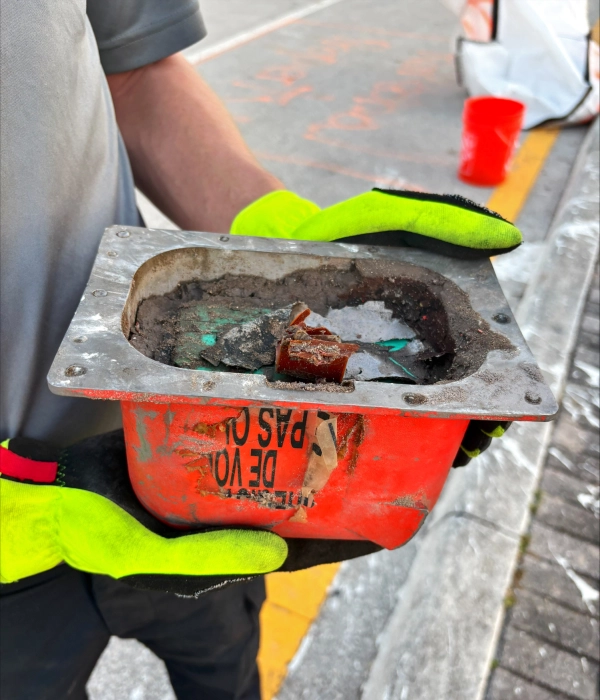
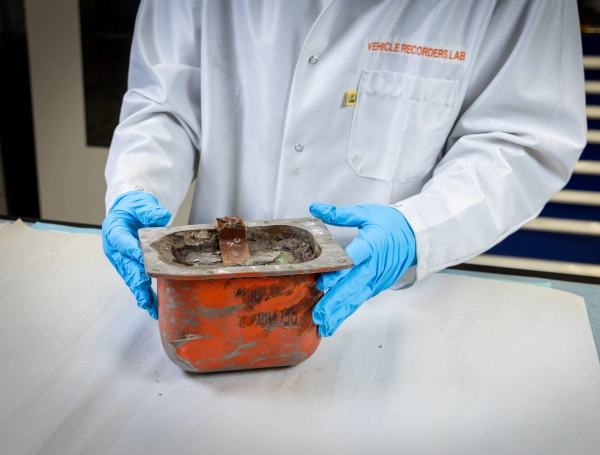
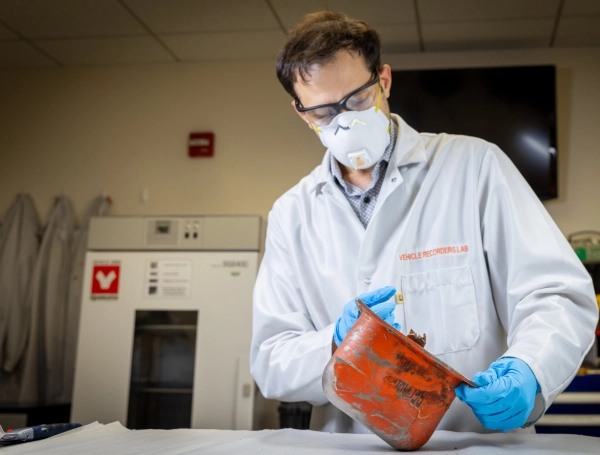
The NTSB announced that its search teams successfully located the CVR—commonly referred to as a "black box"—directly within the initial impact zone. The device was immediately secured and expedited to a specialized NTSB laboratory in Washington, D.C., where audio engineers and safety investigators will assess its physical condition and attempt to extract any retrievable acoustic data.
Chronology of the Flight and Final Moments
To fully comprehend the magnitude of the disaster, investigators have constructed a detailed timeline of the aircraft’s final hours, utilizing air traffic control communications, radar data, and recovered audio snippets.
Departure and Cruise
The Learjet 60 lifted off smoothly from Austin-Bergstrom International Airport in Texas, setting a course for North Eleuthera Airport in the Bahamas. The flight proceeded routinely for the majority of its journey until it reached cruising altitude over the airspace monitored by the Miami Air Route Traffic Control Center.
The Distress Call and Atmospheric Hazards
At a cruising altitude of 35,000 feet (approximately 10.6 kilometers), the flight crew established radio contact with air traffic controllers. According to NTSB board member Tom Chapman, the pilot and co-pilot reported navigating through "moderate turbulence."
Furthermore, the crew communicated that the outside air temperature had plunged to a staggering 47 degrees Celsius below zero, noting that they were actively managing severe icing conditions on the airframe. Weather and extreme atmospheric conditions have quickly emerged as central pillars of the ongoing federal investigation.

The Rapid Descent
Audio recordings from the cockpit, leaked or subsequently released via media reports, depict a sudden, catastrophic shift in the flight’s parameters. The co-pilot, identified as Nathalia Gadelha Filgueiras, can be heard desperately managing an uncontrollable aerodynamic emergency.
Radar telemetry indicated that the aircraft began descending at an astonishing rate of 20,000 feet per minute while rolling aggressively at a 60-degree bank angle.
"We are going to crash! We are going to die! We’ve run out of time!" were among the final harrowing words captured on open communication channels before the transmission abruptly cut out as the aircraft impacted the earth.
Supporting Data and Technical Insights
The investigation centers heavily on the technical capabilities of the recovered equipment and the structural integrity of the aircraft prior to ground impact.

Understanding the CVR
Unlike large commercial airliners, which are federally mandated to carry both a Cockpit Voice Recorder (CVR) and a Flight Data Recorder (FDR), smaller private jets are not always legally required to house both systems. Fortunately, the Learjet 60 involved in this incident was equipped with a CVR.
The CVR features an area microphone typically mounted on the overhead instrument panel between the pilot and co-pilot positions. It captures all radio transmissions, crew conversations, and ambient cockpit sounds, including engine noise, warning chimes, and structural groans.

Condition of the Device
While the external chassis of the CVR sustained visible damage from the high-velocity impact and subsequent inferno, veteran aviation safety expert Jeff Guzzetti expressed optimism to the Associated Press (AP).
"It is highly probable that some information has been preserved inside the protective housing of the recorder," Guzzetti noted. "If they manage to successfully pull the audio and verify it corresponds to the accident flight, it will prove invaluable to the investigative team."

Structural Failure Hypotheses
Compounding the mystery is physical evidence recovered from the debris field. Last week, NTSB member Tom Chapman revealed during a press briefing that preliminary analysis of scattered wreckage points toward a horrifying possibility: the aircraft may have begun breaking apart mid-air before its final descent into Florida.
"We have some indications that the aircraft was breaking up prior to impact, and elements of that remain to be determined," Chapman stated, adding that the extreme meteorological conditions—specifically the severe icing and sub-zero temperatures encountered at 35,000 feet—are under intense microscopic review.

Official Responses and Government Action
Federal and local agencies have mobilized extensive resources to handle both the recovery operation and the humanitarian crisis left in the wake of the crash.
The NTSB leads the technical investigation, supported by the Federal Aviation Administration (FAA) and representatives from Learjet manufacturers. The completion of excavation work at the Cresthaven impact site marks the end of the primary physical recovery phase, allowing forensic teams to pivot fully toward laboratory analysis, metallurgical testing of the airframe fragments, and meteorological profiling.

On the local front, Palm Beach County emergency services have worked tirelessly to assist the hundreds of displaced residents. Temporary housing, psychological support, and medical evaluations have been deployed to aid those whose homes were destroyed or rendered uninhabitable by the falling debris and subsequent fires.
Political leaders at both the state and federal levels have expressed profound condolences to the families of the nine victims, while pledging full transparency as the NTSB works to determine whether mechanical failure, environmental hazards, human factors, or a combination of all three precipitated the disaster.

Implications for Aviation Safety
The Palm Beach County Learjet tragedy carries profound implications for the global aviation community, particularly regarding the operation of private business jets in extreme weather conditions.
Private Jet Regulation and Oversight
While commercial aviation adheres to the strictest possible safety, maintenance, and equipment standards, private aviation operates under a slightly different regulatory framework. Incidents involving structural in-flight breakups driven by severe icing or extreme thermal shocks at high altitudes force regulatory bodies to re-evaluate whether mandatory equipment requirements—such as universal FDR and CVR mandates for all corporate jets—should be tightened.

Weather Awareness and High-Altitude Icing
As global climate patterns shift, high-altitude meteorological anomalies, sudden temperature drops, and severe convective turbulence continue to challenge flight crews. The findings from the CVR, once fully transcribed and analyzed by NTSB specialists, are expected to provide critical training data for private flight operators navigating severe cold-weather phenomena. Ultimately, the lessons learned from the tragic loss of the nine lives aboard the Learjet 60 will help shape future safety directives designed to prevent similar catastrophes in the skies of North America and beyond.