By International Desk Analysis
Updated: September 29, 2026
Main Facts
In the high-stakes theater of modern hemispheric diplomacy, a new moniker has taken root across social media platforms and government corridors alike: "El Quitavisas"—The Visa Stripper.
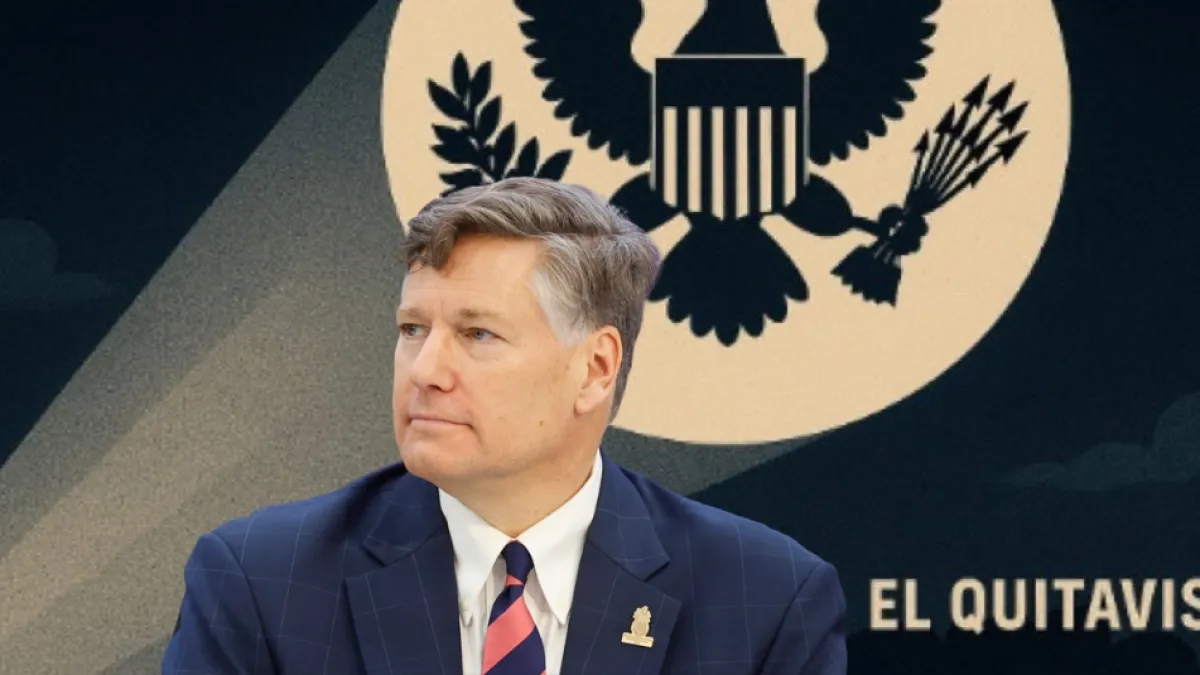
The title belongs to Christopher Landau, the United States Deputy Secretary of State under the administration of President Donald Trump. Operating as the hardline second-in-command to Secretary of State Marco Rubio, Landau has weaponized the revocation of U.S. visas not merely as a bureaucratic tool of immigration enforcement, but as a proactive, highly publicized instrument of foreign policy and ideological deterrence.
The ripple effects of Landau’s aggressive portfolio have shaken political landscapes across Latin America. Most recently, the U.S. State Department announced the high-profile revocation of visas belonging to Colombian Senator Martha Peralta Epieyú and businessman Euclides Torres, both key figures aligned with the political left. Washington justified the move by accusing them of undermining democratic governance in the region. This sweeping action coincided with targeted sanctions against a score of judges, politicians, prosecutors, and high-ranking officials across Peru, Ecuador, and Bolivia, alongside their families.

Rather than hiding behind traditional diplomatic ambiguity, Landau has openly embraced his viral nickname. He routinely uses his digital platforms to announce visa cancellations, dissect the legal rationale behind them, and directly engage with online critics and supporters. By combining career credentials as an elite appellate litigator with populist-leaning digital communication, Landau has transformed himself into one of the most polarizing and powerful architects of the Trump administration’s Latin American agenda.
Chronology
To understand Christopher Landau’s ascent to the upper echelons of Washington power and his current role as the hemispheric enforcer of visa policy, it is necessary to trace a career defined by legal pedigree, deep-seated regional roots, and unwavering loyalty to conservative governance.
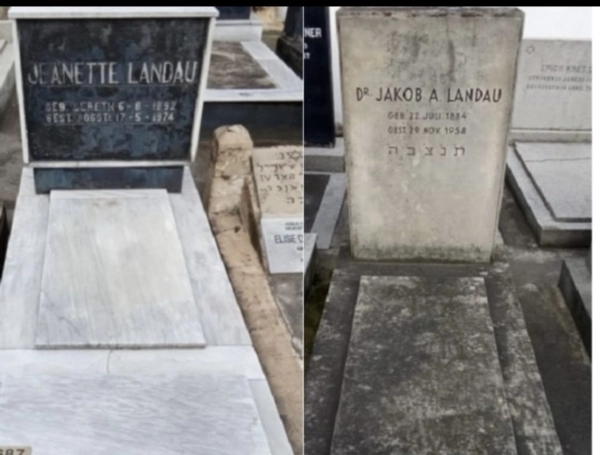
- 1939: Landau’s paternal grandparents, Jakob and Jeanette Landau, flee Nazi-occupied Austria, arriving in Colombia with the assistance of their son George. They successfully rebuild their lives in Bogotá, where their resting place remains today at the Southern Hebrew Cemetery.
- 2019–2021: During the first Trump administration, Landau serves as the U.S. Ambassador to Mexico. He is credited with fostering bilateral cooperation that secures the ratification and implementation of the United States-Mexico-Canada Agreement (USMCA) and protecting cross-border supply chains during the COVID-19 pandemic.
- March 2025: Following Donald Trump’s return to the presidency, Landau is officially sworn in as Deputy Secretary of State, securing the second-highest post in U.S. foreign diplomacy.
- August 2025: During his presidential campaign, conservative Colombian candidate Abelardo de la Espriella broadcasts a live-streamed message directly addressing Landau, providing a dossier of over 30 prominent Colombian figures whom he urges Washington to "keep on the radar."
- August 24–25, 2026: Landau launches direct digital offensives against prominent Colombian critics living in or tied to the U.S. He revokes the visa and publicly denounces digital influencer Beto Coral for a "bogus asylum claim," followed swiftly by the revocation of activist Viviana Marín’s visa after she calls for Colombia to be made "unlivable" following de la Espriella’s electoral victory.
- September 2026: The State Department formally revokes the visas of Senator Martha Peralta Epieyú and businessman Euclides Torres. Concurrently, a wave of punitive visa cancellations hits judges, politicians, and media figures across Costa Rica, Peru, Ecuador, and Bolivia, cementing Landau’s legacy as "El Quitavisas."
Supporting Data
The operational mechanics of Landau’s office rely heavily on a synthesis of strict statutory interpretation, open-source intelligence—including user-generated social media reports—and traditional geopolitical maneuvering.
- Academic and Professional Foundation: A double alumnus of Harvard College and Harvard Law School, Landau spent over three decades in private practice specializing in complex appellate litigation. He also served twice as a judicial law clerk at the United States Supreme Court, cementing a rigid, text-based approach to legal frameworks that now informs his administrative decisions.
- Family Lineage: Born in Spain to former U.S. diplomat George W. Landau, Christopher’s childhood was shaped by transient postings across Paraguay, Chile, Venezuela, and Spain. His ancestral ties to Colombia run deep through his grandparents, giving him a granular, personal familiarity with Latin American socio-political dynamics that distinguishes him from traditional technocrats.
- Target Scope: The current wave of U.S. visa revocations extends far beyond standard counter-narcotics or money-laundering targets. Under Landau’s purview, actions have been levied against:
- Legislators and business magnates accused of democratic subversion (e.g., Colombia).
- Five of the seven board members of La Nación, Costa Rica’s leading newspaper, following the inauguration of pro-Washington President Laura Fernández.
- Political activists and social media influencers accused of exploiting U.S. immigration loopholes or inciting civil unrest abroad.
- Digital Engagement Metrics: Landau’s X (formerly Twitter) account (@DeputySecState) functions as both an official gazette and a digital tribunal. Citizens across the hemisphere routinely tag the Deputy Secretary in videos and exposés of alleged political adversaries, to which Landau frequently replies: "Doesn’t look like the kind of person we want to welcome to our country. I’m going to look into this."
Official Responses
The aggressive deployment of consular sanctions as a political weapon has drawn sharp contrasts between Washington’s stated justifications and the reactions of regional leaders.
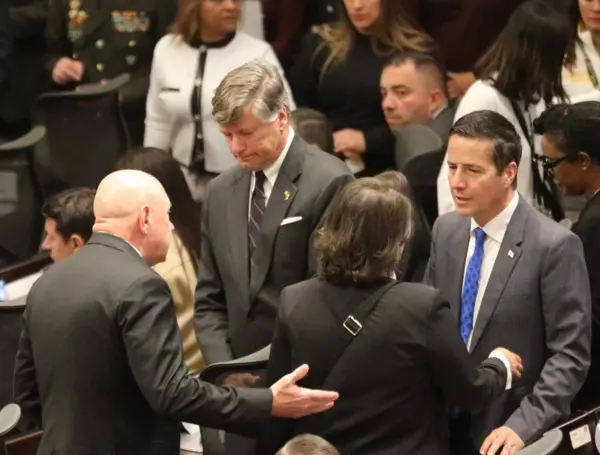
The U.S. State Department maintains that the revocation of visas is a sovereign right designed to protect American national security and uphold democratic integrity abroad. In the cases of Senator Peralta and Euclides Torres, Washington officially defended the actions by characterizing the individuals as active participants in efforts to destabilize constitutional norms in the region.
Regarding individual actions, such as the revocation of Viviana Marín’s visa, Landau offered a robust defense of the administration’s stance on political violence and immigration privileges:
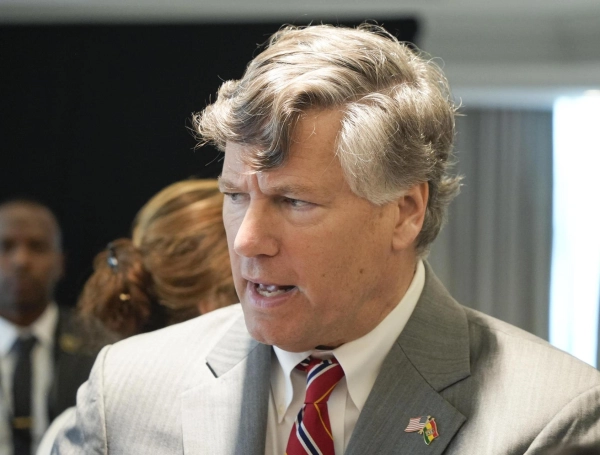
"While she is certainly entitled to her political opinions, she has no right to enter the United States. We do not welcome those who pursue political opposition through violence or intimidation."
Similarly, addressing systemic exploitation of the U.S. asylum apparatus by foreign commentators, Landau remarked on social media:
"People in the US and all over the world are fed up with bogus asylum claims. Asylum isn’t supposed to be a loophole to circumvent immigration laws; rather, it’s supposed to provide a narrow safe harbor for persons persecuted because of their race, religion, nationality…"
Conversely, targeted figures and regional watchdogs have criticized the measures as an overreach of imperial power and an infringement on domestic political sovereignty. Critics argue that utilizing consular tools to punish journalists, newspaper board members, and opposition lawmakers—many of whom were previously highlighted on lists provided by allied regional politicians like Colombia’s Abelardo de la Espriella—blurs the line between legitimate diplomatic enforcement and ideological blacklisting.
Implications
The institutionalization of "El Quitavisas" policy model under Christopher Landau carries profound implications for U.S.-Latin American relations in the second half of the decade.
First, it signals a fundamental shift toward hyper-personalized, digital-age diplomacy. By bypassing conventional, slow-moving diplomatic channels and utilizing public social media trials to vet and punish foreign nationals, the U.S. State Department is effectively crowdsourcing foreign intelligence and border enforcement. This creates a chilling effect among journalists, activists, and politicians across Latin America, who now realize that domestic political rhetoric or activism can carry immediate, extraterritorial consequences regarding their ability to travel, study, or hold assets connected to the United States.
Second, the strategy highlights a deepening alignment between Washington and a newly resurgent conservative political wave in Latin America. The direct pipeline from campaign-trail wish lists—such as the dossier presented by Colombia’s Abelardo de la Espriella—to actual Department of State sanctions demonstrates a high degree of responsiveness between right-wing administrations in the region and the Trump White House.
Finally, these actions raise complex legal and ethical questions regarding due process and freedom of expression. When consular revocations are applied to board members of independent newspapers—such as Costa Rica’s La Nación—or deployed against vocal critics of U.S. foreign policy, it blurs the boundary between punishing criminal corruption and suppressing legitimate political dissent. As Landau continues his crusade, the central question remaining for hemispheric observers is not merely who will land on the next visa-revocation list, but how long regional democracies can sustain political discourse under the looming shadow of Washington’s digital enforcer.