
By Global Policy & Latin America Desk
Updated: September 29, 2026
Introduction: A Collision Course in Colombia’s Post-Conflict Landscape
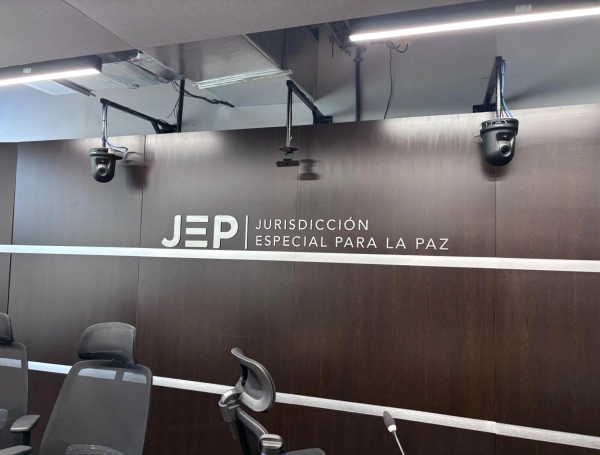
Nearly a decade after the historic 2016 peace accord between the Colombian government and the now-defunct Revolutionary Armed Forces of Colombia (FARC), the architecture of the nation’s transitional justice system is facing its most severe political and financial stress test to date. At the center of the storm is the Special Jurisdiction for Peace (JEP, by its Spanish acronym)—the tribunal established to investigate, judge, and sentence the worst atrocities committed during more than half a century of internal armed conflict.

Tensions have erupted into an open institutional war following intensive fiscal oversight efforts led by opposition lawmakers from the Centro Democrático (Democratic Center) party. Spearheaded by Senator María Clara Posada, the party has trained its sights on the tribunal’s operational costs, multi-billion-peso leasing arrangements, and overall output. What began as routine budgetary discussions in the Congress of the Republic has rapidly devolved into a bitter public feud characterized by accusations of financial opacity, political bias, legislative retaliation, and institutional arrogance.
While supporters of the JEP argue that cutting its budget threatens victims’ rights, historical memory, and the delicate scaffolding of the peace process, critics contend that the court has become a bloated, unaccountable bureaucracy delivering meager judicial outcomes at an exorbitant cost to the Colombian taxpayer.

Main Facts: The Core of the Controversy
The current legislative confrontation stems from a proposed 170,000-billion-peso budget reduction targeted at the JEP during congressional debates. Armed with public records, state contractor databases (SECOP), and property registry titles, Senator Posada and her legislative allies have raised profound questions regarding how the tribunal manages public funds.
The Financial Burden
According to data brought to light during recent First Commission sessions in the Senate, the JEP has cost the Colombian public an estimated 3.8 trillion pesos since its inception. If the tribunal’s initial budgetary requests for the current fiscal cycle had been fully met, that cumulative total would have soared to 4.5 trillion pesos.

To put these figures into perspective, critics frequently compare the JEP’s operational expenditures with traditional arms of the justice system. For instance, the annual payroll for the JEP alone hovers around 400,000 million pesos, whereas the entire budget for Colombia’s Ministry of Justice sits at roughly 52,000 million pesos.
The Torre Squadra Real Estate Scandal
Among the most explosive revelations brought forward by the Centro Democrático is the financial structure behind the JEP’s primary headquarters: the Torre Squadra building in northern Bogotá.

- Lease Costs: Between 2020 and 2026, the tribunal has disbursed 114,202 million pesos in rental payments for the facility, translating to an annual lease expenditure of roughly 16,000 million pesos.
- Property Value vs. Rent Paid: According to property titles and official freedom and tradition certificates, the actual construction cost of the Torre Squadra building—registered by Constructora GAP SAS in 2020—was approximately 20,975 million pesos (with a broader cadastral valuation sitting near 41,176 million pesos). This means the Colombian state has paid more than three times the total construction cost of the building merely in rent over a six-year span.
- Offshore Connections: Investigations into the ownership matrix of Torre Squadra reveal a complex corporate structure involving 18 distinct companies. Of these, 13 are registered in recognized international tax havens, including Delaware (USA), the British Virgin Islands, and Panama. Public records indicate that several of the Delaware-registered entities share identical corporate addresses and incorporation dates—specifically October 2019, approximately one month after the initial JEP lease agreement was finalized. Critics argue this points toward potential asset-shielding or tax evasion schemes involving public resources.
Chronology of Events: How the Crisis Escalated
The friction between the legislative branch and the transitional tribunal did not materialize overnight. It represents the culmination of years of simmering discontent that boiled over during the recent budgetary cycle:
- September 2019: The lease agreement for the Torre Squadra building is officially signed, anchoring the JEP’s primary operations in northern Bogotá.
- 2020–2025: As the JEP processes thousands of transitional cases across its eight macro-cases, recurring concerns regarding its slow judicial output and high operational overhead are periodically raised by conservative lawmakers, though largely sidelined during broader legislative priorities.
- July–September 2026: During routine budgetary hearings before the Senate’s First Commission, various national entities are summoned to present their financial plans in light of Colombia’s broader macroeconomic constraints and fiscal deficit.
- Mid-September 2026: Confronted with demands for austerity and concrete performance metrics, JEP President Magistrate Alejandro Ramelli reportedly resists external legislative oversight, asserting that the autonomous tribunal is not obligated to answer to political bodies in the manner demanded.
- Late September 2026: Outraged by what they perceive as institutional arrogance, Senator María Clara Posada and her research team utilize public transparency tools, SECOP contracting data, and real estate registries to dig into the JEP’s asset management, uncovering the Torre Squadra lease figures and offshore corporate links.
- Current Day: The Centro Democrático officially introduces a legislative reform bill aimed at altering the JEP’s structure, standardizing military penalties, and curbing its judicial autonomy, while public debate intensifies over the future of Colombia’s transitional justice model.
Supporting Data: Output vs. Investment
The backbone of the Centro Democrático’s critique relies heavily on a cost-benefit analysis of the tribunal’s judicial output relative to its massive financial allocation.
Judicial Metrics
- Macro-Cases Opened: 8 primary macro-cases encompassing thousands of individual human rights violations and international crimes.
- Total Imputations: 432 formal imputations issued to date. Of these, approximately 38% target former FARC combatants, while 58% target members of the Colombian Public Force (military and police personnel).
- Sentences Delivered: Out of its years of operation, the JEP has issued a mere 21 total sentences stemming from its macro-cases.
- Sentences in Firm Legal Status: Only 4 of those 21 sentences are fully finalized and executed. Among these final rulings, 3 target members of the Public Force, and only 1 targets former members of the FARC.
The "Back-of-the-Napkin" Calculation
Using these figures, critics point out a staggering ratio: divided by the trillions spent, each finalized judicial sentence delivered by the JEP costs the Colombian state approximately 180,000 million pesos. For conservative critics, this output underscores what they describe as a profound disconnect between the tribunal’s operational expenditures and the concrete delivery of justice for victims.
Official Responses and Institutional Defense
Unsurprisingly, the leadership of the Special Jurisdiction for Peace has forcefully rejected the allegations leveled by the Centro Democrático, characterizing the political offensive as an existential attack on the 2016 peace accords and an intimidation campaign designed to hobble judicial independence.

The Defense of Magistrate Alejandro Ramelli
JEP President Magistrate Alejandro Ramelli and his supporters have pushed back against the proposed 170,000-billion-peso budget cut, warning that starving the tribunal of resources directly undermines its capacity to process complex cases, locate disappeared persons, and—above all—guarantee the rights and holistic reparation of victims.
Magistrate Ramelli has defended the tribunal’s operational footprint, arguing that investigating decades of systemic, multi-actor violence requires robust infrastructure, extensive investigative teams, and specialized forensic resources that cannot be maintained under arbitrary fiscal restrictions. Furthermore, the tribunal maintains that its administrative structures comply fully with Colombian public contracting laws and that attempts to paint routine operational leasing as corrupt are politically motivated distortions designed to delegitimize transitional justice.

Proponents of the JEP argue that slashing its budget at this advanced stage of its mandate is not an exercise in fiscal responsibility, but rather a calculated political maneuver aimed at unraveling the legal guarantees established under international peace standards.
Implications and the Legislative Counter-Offensive
The standoff has moved well beyond a war of words. Seizing the momentum generated by the financial revelations, the Centro Democrático—with a legislative ponencia led by Senator Rafael Nieto—has formally introduced a sweeping constitutional reform bill (acto legislativo) designed to fundamentally reshape the legal and operational parameters of the JEP.

The proposed legislation centers on three core pillars aimed at rectifying what conservatives describe as an ideological imbalance within the tribunal:
- Capped Prison Sentences for Military Personnel: The initiative proposes reducing the maximum prison sentence for members of the Public Force convicted by the JEP from the current 20-year cap down to a maximum of 5 years, placing a stronger emphasis on restorative justice components.
- External Judicial Review: Under the proposal, tutelas (constitutional writs for the protection of fundamental rights) against JEP rulings would no longer be reviewed exclusively by the tribunal’s own internal panels, but would instead fall under the jurisdiction of the Supreme Court of Justice, ensuring an independent judicial check.
- Military Justice Oversight: The bill mandates that any substantive review or final sentencing concerning members of the Public Force must involve or be vetted by specialized military and police penal tribunals—bodies that proponents argue possess a deeper operational understanding of the realities of armed conflict.
Conclusion: A Nation Divided Over Transitional Justice
As the debate rages on in the halls of the Colombian Congress, the clash over the JEP transcends mere accounting disputes or real estate contracts. It touches upon the raw, unhealed nerves of a society still grappling with the legacies of civil conflict.

To its defenders, the JEP remains an indispensable pillar of reconciliation, offering the country its first true institutional glimpse into the systemic macro-patterns of violence that tore Colombia apart. To its detractors, embodied by the rising political pressure from the Centro Democrático, the tribunal has morphed into an expensive, ideologically skewed enclave that consumes critical national resources while delivering negligible justice—particularly for the members of the military who bore the brunt of defending the constitutional state.
With the proposed budget cuts still under fierce debate and the new constitutional reform bill heading toward high-stakes committee discussions, the coming months will determine whether the JEP can weather the storm of fiscal scrutiny or whether Colombia’s transitional justice model faces a fundamental, structural rewriting.