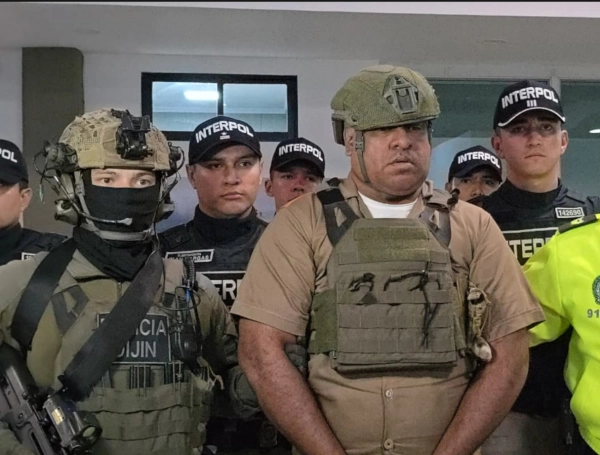
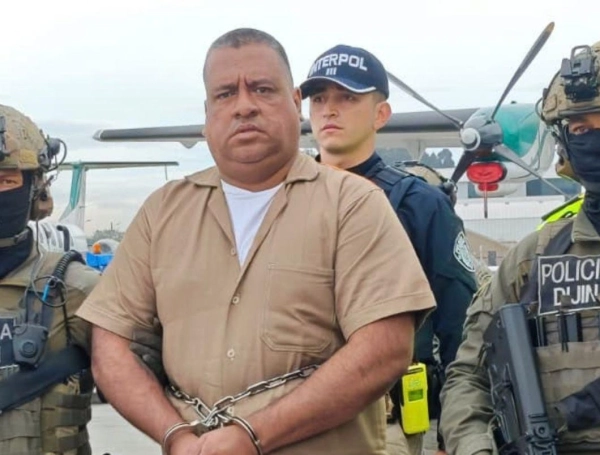
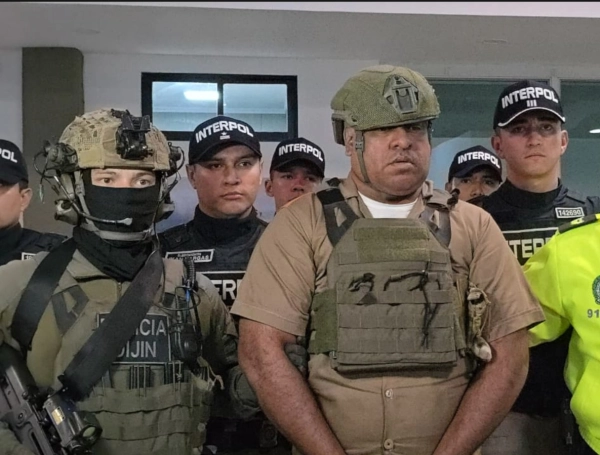
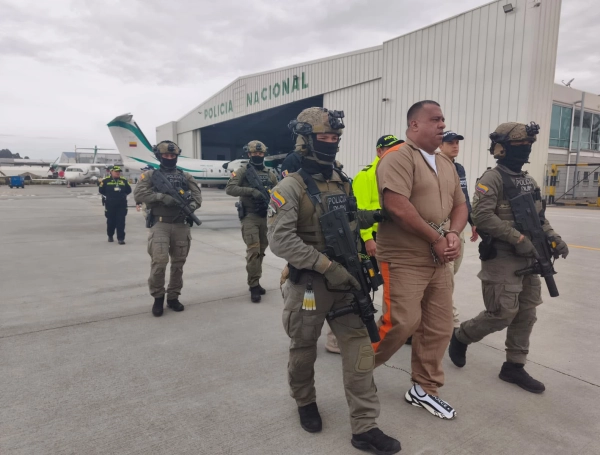
BOGOTÁ, Colombia — In a high-stakes security operation that underscores a hardening stance against transnational organized crime, Colombian authorities successfully extradited Geovany Andrés Rojas, widely known by the alias "Araña," to the United States on Friday, September 25, 2026. Rojas, identified as a principal cabecilla (ringleader) of the criminal structure known as the "Comandos de Frontera," faces severe federal charges in the U.S. related to illicit drug trafficking and conspiracy.
The operation marks a significant milestone for the administration of President Abelardo De La Espriella, who personally oversaw aspects of the transfer and framed the extradition as an unequivocal message to cartels and international criminal syndicates that Colombia will no longer serve as a safe harbor for drug lords.
Main Facts of the Extradition
The logistical execution of the extradition was managed under stringent maximum-security protocols coordinated by the National Police and the Directorate of Criminal Investigation and Interpol (Dijín).
According to verified intelligence from Colombian security forces, the aircraft transporting the 44-year-old high-value target lifted off at 10:39 a.m. on Friday from the Air Naval Station in Malambo, Atlántico, situated within the metropolitan area of Barranquilla. This followed a pre-dawn tactical ground movement that transferred Rojas from the maximum-security facilities of La Picota Prison in Bogotá directly to the Caribbean coast for immediate international transport.
Geovany Andrés Rojas is heavily indicted in U.S. jurisdictions for orchestrating vast drug-trafficking networks responsible for the industrial-scale production and export of multi-ton shipments of cocaine. U.S. federal prosecutors allege that "Comandos de Frontera" operated as a sophisticated apparatus embedded within regional drug corridors, generating millions of dollars in illicit revenues to fuel further violence and corruption.
President De La Espriella confirmed that the Supreme Court of Justice had authorized the extradition, allowing his administration to expedite the final administrative signatures without procedural delay. With this operation, the administration reached a milestone of 94 formal extraditions executed during its ongoing tenure.
Chronology of Events: From Prison Walls to the Atlantic Coast
The complex operation culminating in Rojas’s departure from Colombian soil unfolded across multiple hours and tactical phases:
Pre-Dawn Hours (September 25, 2026): Heavily armored tactical units from the National Police and specialized penitentiary guards initiated a clandestine, high-security ground convoy from La Picota Prison in Bogotá. The route was secured by aerial surveillance and anti-ambush protocols to prevent any potential rescue attempts or attacks by allied criminal elements.
Morning Transfer: The convoy arrived securely at a designated staging point, where Rojas was transferred under tight custody to a specialized aircraft bound for the Caribbean coast.
10:39 A.M. (Malambo, Atlántico): The aircraft carrying alias "Araña" officially departed from the Malambo air facility, clearing Colombian airspace and handing over custody to federal law enforcement authorities of the United States.
Afternoon (September 25, 2026): President Abelardo De La Espriella released an official public statement detailing the operation, followed by a series of statements on digital platforms outlining the broader security doctrines of his administration.
Supporting Data and Context on ‘Comandos de Frontera’
The "Comandos de Frontera" operate primarily in the southern regions of Colombia, near the border zones, where they exert violent control over illicit economies, primarily coca cultivation and cocaine manufacturing laboratories. Historically, these groups have capitalized on regional instability, exploiting the dense jungle topography to shield their operations from state interference.
For years, federal agencies in the United States have targeted these decentralized structures, noting their direct commercial and logistical ties to international cartels. Alias "Araña" functioned not merely as a localized commander, but as a strategic node connecting domestic production zones with international export routes stretching through Central America, North America, and Europe.
Security analysts note that targeting individuals of Rojas’s caliber disrupts the financial architecture of these criminal organizations. The systemic eradication of labs, supply routes, and leadership tiers forms the backbone of the current government’s multi-layered strategy to dismantle the entire narcotics supply chain.
Official Responses and Presidential Declarations
The administration’s response to the extradition was swift and uncompromising. President Abelardo De La Espriella took to public forums and official channels to emphasize that the transfer of alias "Araña" transcends the mere physical relocation of a criminal—it stands as a foundational policy statement.
"As president, I personally made the delivery of Geovany Andrés Rojas, requested by international justice," De La Espriella stated in his official address. He highlighted that his administration bypassed bureaucratic bottlenecks to ensure the prompt execution of the Supreme Court’s authorization.
In a comprehensive thread published on his official social media channels, the president detailed the holistic nature of his administration’s anti-narcotics campaign:
"Narcotics trafficking has financed for decades the violence, terrorism, and organizations that have sown pain in Colombian territory. That is why we are acting against the entire criminal chain: illicit crops, laboratories, routes, finances, and the ringleaders who enrich themselves at the expense of the blood and tranquility of our citizens."
De La Espriella explicitly warned other criminal kingpins that the state maintains an aggressive posture of pursuit, capture, and extradition.
"A los criminales les dejo un mensaje igualmente claro: el Estado los va a perseguir, los va a capturar y, cuando corresponda conforme a la ley, los va a extraditar. La seguridad de Colombia no se delega. Se ejerce con autoridad, con determinación y dentro de la ley," ("To criminals, I leave an equally clear message: the state will pursue them, capture them, and, when appropriate under the law, extradite them… Colombia’s security is not delegated. It is exercised with authority, determination, and within the law,") the president emphasized.
Furthermore, the administration underscored that Colombia will no longer tolerate being utilized as a sanctuary for international fugitives. Anyone attempting to leverage Colombian territory for the production, transport, or commercialization of cocaine will face the absolute, legitimate weight of domestic and international justice.
Implications for Regional Security and Bilateral Relations
The successful extradition of Geovany Andrés Rojas carries profound implications for both domestic security in Colombia and diplomatic relations with the United States.
1. Reassertion of State Authority in Conflict Zones
By striking at the leadership of groups like the "Comandos de Frontera," the Colombian government aims to fracture the command-and-control structures that terrorize rural and border communities. The overarching objective is to systematically degrade these organizations to the point where regional populations can reclaim their autonomy, free from extortion, forced displacement, and localized violence.
2. Strengthening International Judicial Cooperation
The smooth coordination between Colombian institutions—including the Supreme Court, the National Police, and the Dijín—and U.S. federal entities demonstrates a high level of operational efficiency. Reaching 94 extraditions under the current administration signals to foreign allies that Bogotá remains a reliable, steadfast partner in the global war on drugs.
3. Deterrence Against Syndicate Ringleaders
The explicit warnings issued by President De La Espriella serve as a psychological and strategic deterrent. By proving that high-ranking operatives can be swiftly isolated, captured, and sent to face federal sentencing in foreign jurisdictions, the state chips away at the aura of impunity that has historically protected powerful drug lords from facing the full consequences of their actions.
As judicial proceedings against alias "Araña" begin in the United States, the Colombian government vows to maintain its aggressive, uncompromising security framework, signaling a new chapter in the nation’s ongoing struggle against transnational crime.
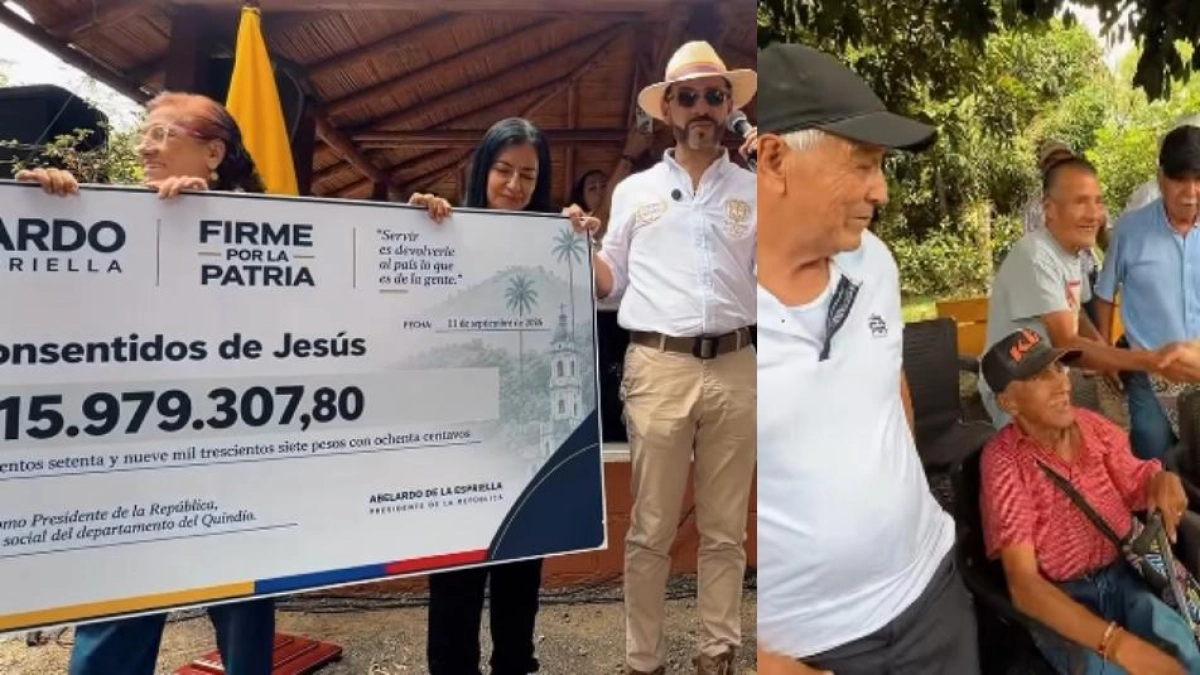
Main Facts In a gesture that blends symbolic weight with immediate philanthropic impact, Colombian President Abelardo De La Espriella has officially fulfilled a central promise from his electoral campaign. During a high-profile working visit to…
Bogotá, Colombia – July 17, 2026 – Colombia’s newly formed government coalition faces its first significant test, even before President-elect Abelardo de la Espriella takes office. Daniel Briceño, the highest-voted congressman-elect for the Democratic Center…
BOGOTÁ, Colombia – July 16, 2026 – Just days before the official inauguration of a new legislative period, President-elect Abelardo De La Espriella’s incoming administration is confronting its inaugural, and potentially most formidable, political challenge:…