By: Environmental and Health Desk
October 15, 2026
In a breakthrough that could reshape our approach to marine conservation, scientists at Stanford University have unveiled a startling mechanism for coral recovery. A new study, published in the October 14 issue of Science Advances, demonstrates that coral fragments pushed to the brink of death by heat stress can be rapidly revitalized through physical contact with genetically identical, healthy counterparts. This discovery marks the fastest documented recovery for heat-stressed corals, offering a glimmer of hope in an era of intensifying marine heatwaves.

The Core Discovery: A Symbiotic Bridge
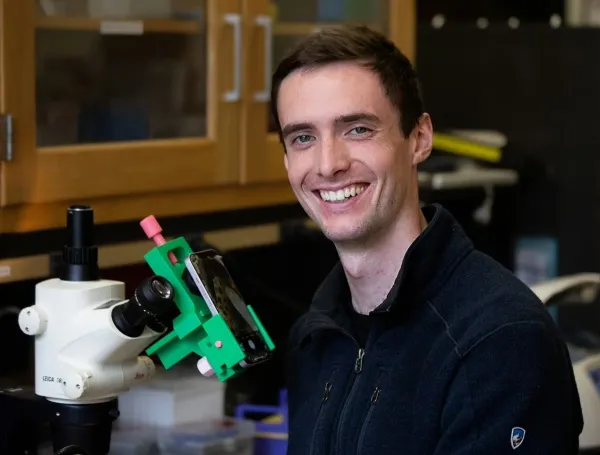
The research, led by Danny Collins, a doctoral candidate in ocean sciences at Stanford’s Doerr School of Sustainability, began with a serendipitous observation in 2025. Steve Palumbi, a professor of marine sciences and co-author of the study, noticed that within a laboratory tank, a healthy coral fragment and a bleached, ailing fragment from the same colony had accidentally come into physical contact.
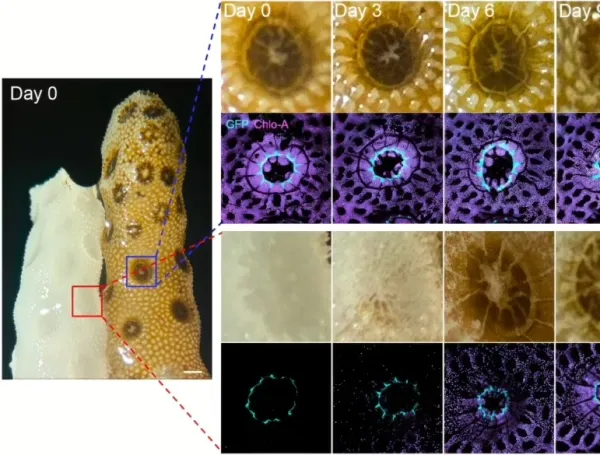
To the surprise of the researchers, the area of the bleached coral touching the healthy specimen began to regain its pigment. This color restoration signaled the return of vital, symbiotic algae—the microscopic organisms that provide corals with energy via photosynthesis. This "contact-based recovery" became the cornerstone of a rigorous experiment designed to test whether physical proximity could act as a transmission vector for life-sustaining nutrients and microbes.

A Chronology of Recovery
To validate their observations, the Stanford team conducted a controlled experiment using ten pairs of coral fragments, each pair derived from the same genetic parent. Five pairs were placed in direct physical contact, while the other five were separated by a gap of several millimeters.
The Timeline of Revival:
- Days 1–3 (The Critical Window): Using high-powered microscopy, researchers observed the formation of microscopic channels connecting the tissues of the two fragments. Within just 72 hours, the transfer of symbiotic algae from the healthy coral to the bleached one began.
- Days 5–7 (The Tipping Point): The team found that even a brief five-to-seven-day period of physical contact was sufficient to initiate the recovery process. Once the "seeding" of the healthy algae occurred, the bleached corals were able to continue their recovery independently, even after being separated from their healthy partners.
- Week 7 (Full Restoration): The fragments that had been in contact with healthy specimens achieved full health within seven weeks. In stark contrast, the control group—those that remained separated—succumbed to the stress and died.
Supporting Data: Why Genetic Identity Matters
The success of this intervention relies heavily on the genetic compatibility between the two specimens. Palumbi likens the process to organ transplantation between identical twins. Because the corals are clones, their immune systems do not reject the fusion of tissues.

Once connected, the corals establish a physiological bridge. During the second week of contact, the team recorded that the symbiotic algae inside the previously bleached fragments were doubling their population every four days—a rate ten times faster than that observed in wild, naturally recovering corals. This rapid proliferation suggests that the healthy coral does more than just "donate" algae; it effectively provides a "jump-start" to the bleached specimen’s internal biological machinery.
The Global Stakes: Why Corals Matter
Coral reefs are often referred to as the "rainforests of the sea." Although they cover less than 1% of the ocean floor, they provide essential habitat for approximately 33% of all known marine species. Beyond their ecological value, they are vital to human survival:
- Coastal Protection: Reefs act as natural barriers, dissipating wave energy and protecting coastal communities from the ravages of storms and flooding.
- Economic Security: Hundreds of millions of people rely on reefs for food security through fishing and for economic stability through tourism.
- The Climate Crisis: As ocean temperatures climb, the fragile balance between corals and their algal symbionts is disrupted. When the water becomes too warm, corals expel these algae—a process known as bleaching. Without the energy from the algae, the coral turns white, starves, and becomes susceptible to disease and death.
Official Responses and Expert Perspective
Fiorenza Micheli, a professor of marine sciences at Stanford and an academic advisor to the project, emphasized the shift in perspective this study provides. "Corals that have been bleached are often written off as dead or unsalvageable," she noted. "This research proves that a ‘bleached’ state does not mean the organism is beyond help."
However, the scientific community remains cautious about the transition from lab-based success to real-world application. The researchers openly acknowledge that the "one-to-one" contact model is difficult to implement at scale. "We cannot realistically go out into the Great Barrier Reef and manually pair every single dying coral with a healthy one," Collins admitted.

Despite this, the implications for restoration are profound. The team is currently exploring "biomimetic" strategies—ways to deliver the necessary algal symbionts to bleached reefs without requiring continuous physical contact. This might involve harvesting algae from healthy corals during cooler periods and developing delivery systems to "re-seed" bleached reefs during heatwaves.
Implications for Future Conservation
The Stanford study provides a vital new tool in the conservationist’s kit, which already includes selective breeding for heat tolerance, the construction of coral nurseries, and the manipulation of microbial communities.
The research suggests that the most effective interventions may be those that occur in the narrow window after a heatwave has peaked but before the coral has completely perished. By understanding the natural, biological mechanisms of recovery, scientists can design "emergency interventions" that stabilize reefs during the most dangerous months of the year.
Challenges to Scaling:
- Genetic Diversity: The requirement for identical genetic material limits the current model. Future research will need to determine if similar benefits can be achieved with compatible but non-identical coral species.
- Environmental Variables: Laboratory conditions are stable, whereas the ocean is volatile. High currents, sedimentation, and predatory pressure in the wild pose significant hurdles to establishing these "tissue bridges."
- Logistics: The cost and labor involved in large-scale transplantation remain the primary barriers to widespread implementation.
Looking Ahead
The funding for this study, provided by the U.S. National Science Foundation and Stanford’s "Big Ideas for Oceans" program, represents an investment in the long-term survival of marine biodiversity. While there is no "silver bullet" for the climate-driven decline of coral reefs, this discovery offers a roadmap for active intervention.

"These new insights into how corals can recover naturally give us a much-needed sense of hope," said Micheli. "We are moving from a passive ‘wait and see’ approach to one of active, informed stewardship. While we must address the root cause of warming, this research provides the time and the tools we need to keep these ecosystems functioning while we work toward global climate solutions."
As the world continues to grapple with the reality of more frequent and intense marine heatwaves, the work of Collins and his team serves as a reminder that science can uncover the hidden resilience of nature—if we provide the right conditions for it to flourish. The next phase of their research will focus on the feasibility of large-scale, non-contact algal supplementation, a move that could turn this laboratory curiosity into a scalable, real-world lifeline for the world’s imperiled reefs.