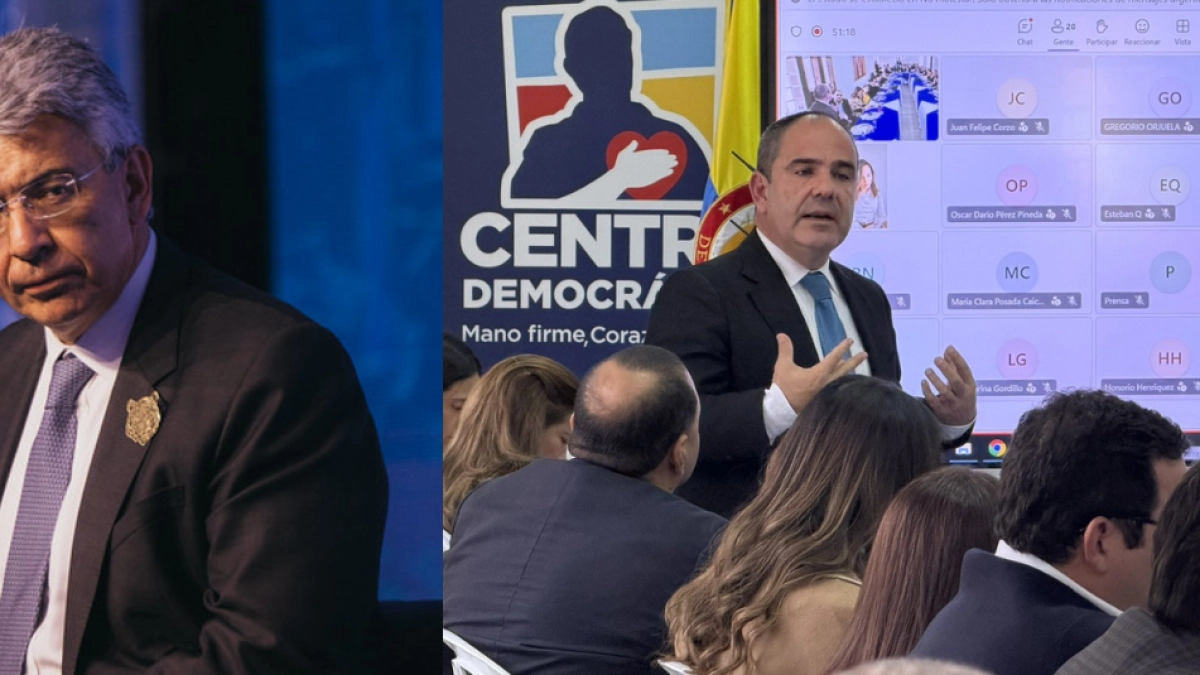
BOGOTÁ — A high-stakes political and institutional confrontation is unfolding in Colombia surrounding the Special Jurisdiction for Peace (JEP). The friction has intensified after the Ombudsman, Iris Marín, formally requested that Senator Germán Rodríguez—a member of the ruling party Salvación Nacional—and Senator María Clara Posada of the Centro Democrático party retract statements targeting the transitional tribunal and one of its senior magistrates.
The controversy brings to the forefront longstanding tensions between conservative political factions and Colombia’s post-conflict transitional justice system. It raises critical questions regarding the boundaries of political oversight, judicial independence, gender-based harassment in public discourse, and the impartiality of state oversight bodies.
Main Facts
The core of the dispute centers on allegations made by Ombudsman Iris Marín, who asserted that lawmakers Germán Rodríguez and María Clara Posada orchestrated a campaign of disinformation and reputational damage directed at JEP Magistrate Julieta Lemaitre Ripoll.
According to the Ombudsman’s Office, the two legislators utilized decontextualized fragments of sensitive judicial proceedings—specifically, closed-door and public hearings involving former FARC-EP combatants—to insinuate inappropriate ties or complicity between Magistrate Lemaitre and former guerrilla leaders. Among the phrases highlighted by the Ombudsman was the assertion that the magistrate "is in love with Timochenko," a remark the office classified as a personal attack rooted in gender-based stereotypes designed to undermine the professional dignity of a female jurist.
In response, Salvación Nacional—a right-wing political party that recently spearheaded legislative efforts to reduce the JEP’s operational budget—swiftly mobilized in defense of Senator Rodríguez. The party rejected the Ombudsman’s demands outright, accusing Marín of abandoning her institutional neutrality by taking sides in a contentious political debate and weaponizing concepts like gender-based violence to shield a judicial institution from public scrutiny.
Chronology of the Controversy
The sequence of events that triggered the current institutional clash unfolded over several weeks in late 2026:
October 5, 2026: Senator María Clara Posada publicly shares restricted recordings from JEP evidentiary hearings involving Rodrigo Londoño, alias "Timochenko." Among the materials circulated is a 2019 declaration presided over by Magistrate Julieta Lemaitre, wherein Londoño discusses the conditions of captives during the armed conflict.
Mid-October 2026: Senators Posada and Germán Rodríguez release synthesized multimedia content merging the aforementioned footage with segments of testimonies given by former hostage and ex-congressman Sigifredo López. The JEP and its supporters characterize this montage as a deliberate distortion intended to call into question Magistrate Lemaitre’s probity and integrity.
Late October 2026: Ombudsman Iris Marín publicly intervenes, issuing a formal reprimand against the lawmakers. She condemns the campaign as an assault on judicial independence and flags the rhetoric as incorporating elements of gender-based violence. She demands a formal retraction from both senators.
October 24, 2026:Salvación Nacional issues a robust official statement backing Senator Rodríguez. The party counters the Ombudsman’s directive by questioning her past professional history as an auxiliary magistrate within the JEP, pointing to a potential conflict of interest and challenging the perceived impartiality of the Defensoría del Pueblo.
Supporting Data and Institutional Context
To substantiate its call for protection of the magistrate, the Ombudsman’s Office invoked official performance metrics from the JEP, emphasizing the substantial body of work produced under Magistrate Lemaitre’s stewardship.
According to data cited by the Defensoría:
The judicial despacho overseen by Magistrate Lemaitre has issued nine distinct indictment resolutions (autos de imputación).
These indictments target 74 high-ranking commanders of the now-demobilized FARC-EP for war crimes and crimes against humanity.
Work originating from Lemaitre’s chamber within Case 01 (focusing on hostage-taking and severe deprivation of liberty) directly contributed to the Tribunal for Peace issuing historic convictions against members of the former FARC Secretariat.
Despite these records of judicial output, critics from conservative sectors maintain that the JEP’s structural design, sentencing parameters, and budgetary allocations warrant continuous and aggressive legislative auditing. Salvación Nacional argues that congressional oversight must not be muzzled by appeals to institutional sanctity or protective safeguards that inadvertently immunize judges from public critique.
Official Responses and Counter-Arguments
The Ombudsman’s Position: Protecting Judicial Independence and Dignity
Ombudsman Iris Marín has maintained that while legislators possess the constitutional prerogative to debate judicial policy, scrutinize rulings, and propose legislative reforms, crossing the line into personal defamation and targeted harassment is impermissible.
In her official communication, Marín stated:
"We reject the campaign of discredit and disinformation that has developed over recent weeks against Magistrate Julieta Lemaitre Ripoll of the Special Jurisdiction for Peace (JEP). These attacks, which include expressions of gender-based violence, not only affect her dignity and good name, but also undermine judicial independence and weaken trust in the administration of justice."
The Ombudsman’s Office insists that framing a female magistrate’s professional execution of duties through the lens of romantic or improper personal alignments with former combatants constitutes a gendered smear tactic designed to diminish female leadership within high courts.
Salvación Nacional’s Defense: Upholding Political Control and Questioning Impartiality
The leadership of Salvación Nacional, spearheaded by figures close to the party’s core structure, launched a multifaceted counter-offensive against the Ombudsman’s intervention.
The party’s official response argued that the Defensoría del Pueblo has overstepped its constitutional mandate by attempting to police political speech:
"We consider that the debate on transitional justice, its decisions, and the performance of its officials must take place with arguments and evidence, without state institutions disqualifying those who legitimately exercise political control."
Furthermore, Salvación Nacional directly targeted Ombudsman Marín’s professional background, highlighting her tenure as an auxiliary magistrate at the JEP prior to her election as Ombudsman. The party argued that this antecedent creates an unavoidable institutional conflict of interest:
"This professional background raises a legitimate question about the need to guarantee and make visible the impartiality of the Ombudsman’s Office when intervening in controversies related to that jurisdiction."
The collective reaffirmed its complete backing of Senator Germán Rodríguez, asserting that freedom of expression for members of Congress encompasses the right to aggressively challenge, question, and expose what they perceive as institutional biases within transitional tribunals.
Broader Implications for Colombian Democracy
This clash highlights deep fissures within the Colombian political and legal landscape regarding the legacy of the 2016 peace accords. Several key implications emerge from the ongoing dispute:
The Limits of Legislative Scrutiny vs. Judicial Independence: The case forces a national conversation regarding where legitimate parliamentary oversight ends and improper intimidation of the judiciary begins. As political actors maneuver ahead of upcoming electoral cycles, the JEP remains a primary flashpoint for ideological polarization.
Institutional Neutrality of Oversight Bodies: By challenging the Ombudsman based on her previous employment within the JEP, political parties are increasingly scrutinizing the personal and professional backgrounds of autonomous officeholders, potentially eroding public trust in traditional watchdog institutions.
Gender Dynamics in Public Debate: The integration of gender-based violence as a framework for evaluating political attacks against female magistrates introduces a novel legal and ethical dimension to Colombian political discourse, setting a precedent for how institutional complaints regarding harassment are managed.
As the debate continues to unfold in congressional sessions, media outlets, and legal forums, the outcome of this standoff will likely set a crucial benchmark for how interactions between the legislative branch and transitional justice institutions are governed in Colombia.
By Juan Pablo Penagos Ramírez / Political Desk Analysis Published: September 14, 2026 Main Facts The political landscape of the Colombian right is undergoing a profound and turbulent restructuring. Months after the presidential triumph of…
By Laura Nathalia Quintero Breaking News Desk Published: September 20, 2026 Main Facts An unprecedented institutional standoff has erupted between the executive branch of Colombia and the nation’s transitional justice system. President Abelardo De La…
Cartagena, Colombia — In what local authorities have hailed as a watershed moment for the region’s development, the government of President Abelardo De La Espriella has pledged an unprecedented financial injection exceeding $1.15 trillion COP…