BOGOTÁ & FREDONIA — In a sweeping policy reversal that signals a definitive shift in national land management, the Ministry of Agriculture has officially dismantled the Áreas de Protección para la Producción de Alimentos (APPAs) across 19 municipalities in the picturesque Suroeste region of Antioquia. The decisive administrative act lifts stringent land-use limitations that had previously blanketed 102,801 hectares—representing roughly 29% of the total territory within the affected jurisdictions.
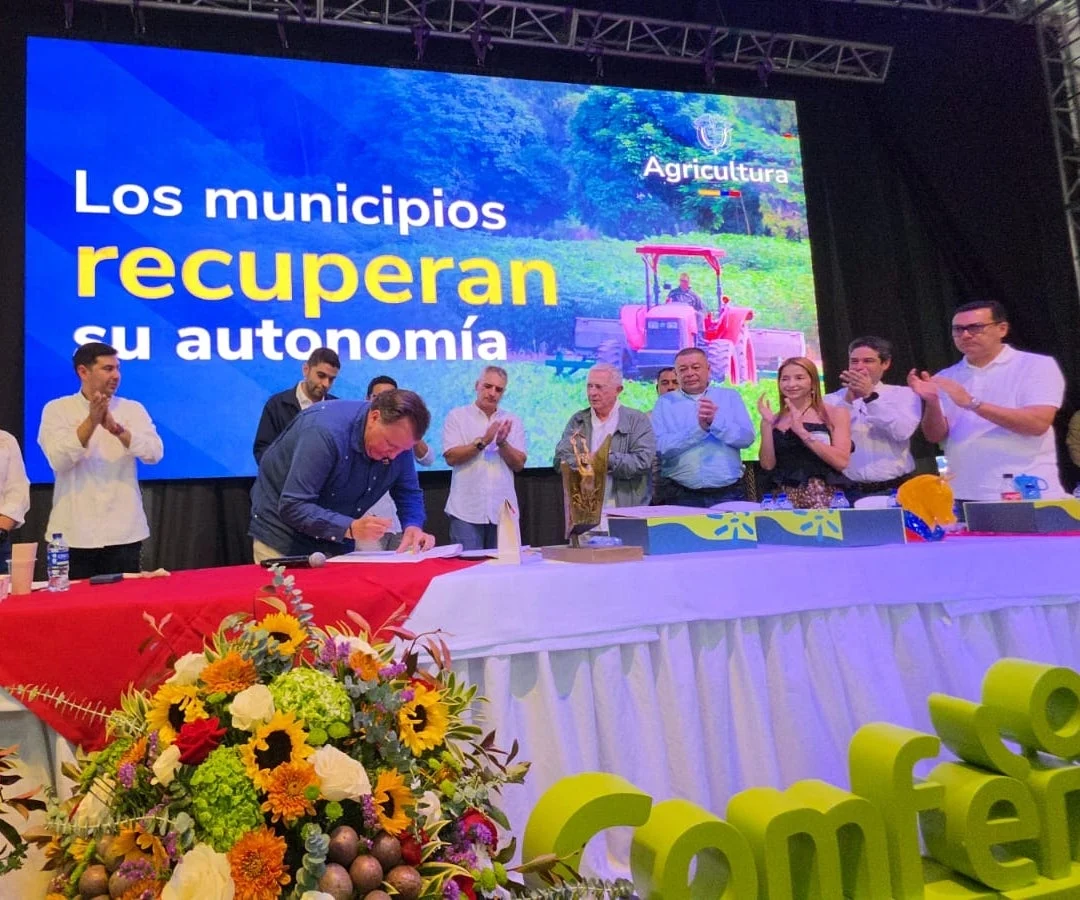
The announcement, delivered by Minister of Agriculture Indalecio Dangond Baquero during the XXXVII Meeting of Leaders of Southwestern Antioquia held in Fredonia, marks the systematic dismantling of a cornerstone agricultural protection framework established during the prior administration of former President Gustavo Petro. According to the government’s strategic roadmap, this move is merely a stepping stone toward a broader national objective: to completely eliminate the APPA designation nationwide.
Main Facts
The core of the government’s recent announcement centers on the formal revocation of the APPA framework across nearly 103,000 hectares in Antioquia’s primary agricultural and mountainous corridors.
- The Scope of the Repeal: The decree immediately restores full land-use autonomy to 19 municipalities in the Suroeste antioqueño, freeing 102,801 hectares from federal restrictions that dictated how landowners and local governments could utilize their property.
- The Justification: The Ministry’s decision is backed by a rigorous technical reassessment conducted by the Rural Agricultural Planning Unit (UPRA). The technical audits revealed severe deficiencies in cartographic precision, incomplete exclusions of pre-existing protected environmental areas, and stark inconsistencies with the actual, on-the-ground productive reality of the soils.
- Political Imperative: Minister Dangond explicitly stated that the measure fulfills a core campaign promise made by President Abelardo de la Espriella. The administration has signaled that similar rollbacks will soon follow in the departments of Córdoba and Tolima, with the ultimate stated goal that "not a single APPA will remain in Colombia."
- High-Level Attendance: Minister Dangond was joined at the landmark announcement by Vice Minister of Rural Development José Leónidas Tobón and UPRA Director Alberto José Esmeral, underscoring the inter-institutional coordination driving the current administration’s rural restructuring agenda.
Chronology of a Controversial Policy
To fully understand the gravity of the recent ministerial decree, it is essential to trace the legal and political timeline that brought the APPA policy into existence and subsequently led to its unravelling.
2023: Legislative Genesis
The framework for the Áreas de Protección para la Producción de Alimentos was born out of the previous legislative cycle. It was formally introduced via Article 32 of the National Development Plan under the government of Gustavo Petro (passed as Law 2294 of 2023). Framed as a progressive environmental and food-security safeguard, the policy aimed to lock in high-quality agricultural soils exclusively for food production, insulating them from urban expansion, real estate development, and industrial extraction.
October 2, 2026: The First Domino Falls
The ideological and administrative offensive against the APPA framework officially kicked off in the Caribbean basin. On October 2, 2026, Minister Dangond stood in the main public square of Urumita, in the department of La Guajira, to sign the very first decree revoking APPA restrictions. That initial stroke of the pen lifted federal land-use constraints off approximately 80,000 hectares distributed across eight municipalities in the southern reaches of La Guajira, setting a clear precedent for subsequent regional rollbacks.
Present Day: The Suroeste Antioqueño Overhaul
Moving from the northern deserts to the coffee-rich, mountainous terrain of Antioquia, the Ministry executed its second major regional repeal. By dismantling the framework governing 102,801 hectares in the Suroeste region, the current administration has demonstrated that its anti-APPA agenda is a coordinated, nationwide strategy rather than an isolated regional adjustment.
Supporting Data and Technical Findings
The legal foundation for overturning the APPA designations relies heavily on data compiled by UPRA. Far from being characterized merely as a political vendetta against the policies of the Petro administration, the Ministry has leaned heavily on technical failures within the original mapping and implementation phases.
- 102,801 Hectares Restored: The sheer volume of land freed from federal constraints in Antioquia alone highlights the aggressive footprint the previous administration maintained over local real estate and agricultural planning. Nearly 30% of the landmass across the 19 targeted municipalities was previously subjected to federal zoning mandates.
- Cartographic and Legal Flaws: According to UPRA Director Alberto José Esmeral, the original mapping process suffered from systemic flaws. The technical audits uncovered that the boundaries mapped in Bogotá failed to align with localized realities, frequently misclassifying rugged topography, depleted soils, or urban peripheries as prime agricultural land. Furthermore, the audits revealed that the policy bypassed critical legal safeguards, specifically noting glaring omissions in mandatory prior consultation processes (consulta previa) with local communities and ethnic groups.
- National Extent to Date: When combining the 80,000 hectares freed in La Guajira in October 2026 with the newly liberated 102,801 hectares in Antioquia, the current administration has already dismantled APPA restrictions across more than 182,000 hectares of Colombian territory, with major agricultural hubs in Córdoba and Tolima next in line for review.
Official Responses and Stakeholder Reactions
The dismantling of the APPA framework has unleashed a wave of polarized reactions across Colombia, drawing sharp contrasts between local autonomy advocates, real estate developers, and agricultural syndicates on one side, and environmentalists and food-security advocates on the other.
The Ministry of Agriculture’s Stance
Defending the administration’s actions during the gathering in Fredonia, Minister Dangond lauded the resilient spirit of Antioquia, framing the removal of federal red tape as an act of economic liberation for rural landowners.
"Antioquia has historically stood as a beacon of effort, enterprise, and genuine rural development," Dangond declared. "We cannot allow heavy-handed, desk-bound decrees drafted in Bogotá to suffocate the economic potential of our farmers and local municipalities under the guise of pseudo-technical protectionism."
Local Governments and Autonomous Authorities
For mayors, municipal council members, and regional planners across the Suroeste, the Ministry’s decision has been met with widespread relief. Under the previous APPA regime, local authorities frequently complained of being stripped of their constitutional autonomy.
Critics of the Petro-era policy repeatedly pointed out that federal administrative resolutions superseded local Land Use Ordering Plans (known in Colombia as Planes de Ordenamiento Territorial or POTs). Municipal councils, which are constitutionally mandated to direct local development and urban-rural zoning, found their hands tied by federal edicts that could not be easily challenged or modified at the local level.
Industry and Legal Perspectives
Business associations, particularly those representing the construction, infrastructure, and mining sectors, praised the rollback for restoring legal certainty. Under the APPA framework, landowners and investors faced a chilling effect: properties designated as protected food-production zones plummeted in commercial value, and obtaining permits for non-agricultural ventures became a bureaucratic nightmare, even in areas where farming was no longer viable.
Conversely, environmental groups and defenders of the former administration’s policies have sounded the alarm. They argue that dismantling the APPA framework strips Colombia of essential long-term safeguards against food insecurity, climate vulnerability, and unmitigated urban sprawl. Critics contend that opening up tens of thousands of hectares of high-potential agricultural soil to potential real estate speculation and industrial extraction compromises the nation’s agrarian sovereignty for short-term economic gains.
Implications for the Future of Colombian Land Use
The systematic revocation of the APPA framework carries profound implications for the legal, economic, and environmental landscape of rural Colombia.
1. Restoration of Municipal Autonomy
The immediate practical impact is the return of zoning power to local institutions. Municipal councils and mayoral administrations in Antioquia—and soon in Córdoba and Tolima—will regain the legal authority to draft, update, and implement their POTs without the shadow of federal vetoes hanging over their agricultural zones. This allows local authorities to tailor development plans to the specific socio-economic needs of their communities rather than adhering to blanket national directives.
2. Economic Revitalization and Real Estate Dynamism
By lifting restrictions on over 100,000 hectares in Antioquia, the real estate, agro-industrial, and construction sectors anticipate a wave of renewed investment. Landowners who were previously locked out of leveraging their properties as collateral or developing alternative economic projects can now re-enter the formal financial and commercial markets. This is expected to inject much-needed liquidity into regional economies that rely heavily on land-based commerce.
3. The Ongoing Battle Over Environmental and Agrarian Policy
Politically, the aggressive dismantling of the APPA policy highlights the deep ideological divides governing land reform and environmental protection in Colombia. As President de la Espriella’s administration presses forward with its promise to eradicate the designation nationwide, it sets up a protracted national debate regarding the balance between national food security, environmental sustainability, and property rights.
With the upcoming reviews and expected repeals in Córdoba and Tolima, the Ministry of Agriculture has made it clear that the pendulum of land governance has swung firmly away from centralized federal restrictions and back toward regional autonomy and market flexibility. Whether this shift will foster sustainable rural prosperity or trigger unintended environmental and agricultural vulnerabilities remains the central question for Colombia’s rural future.