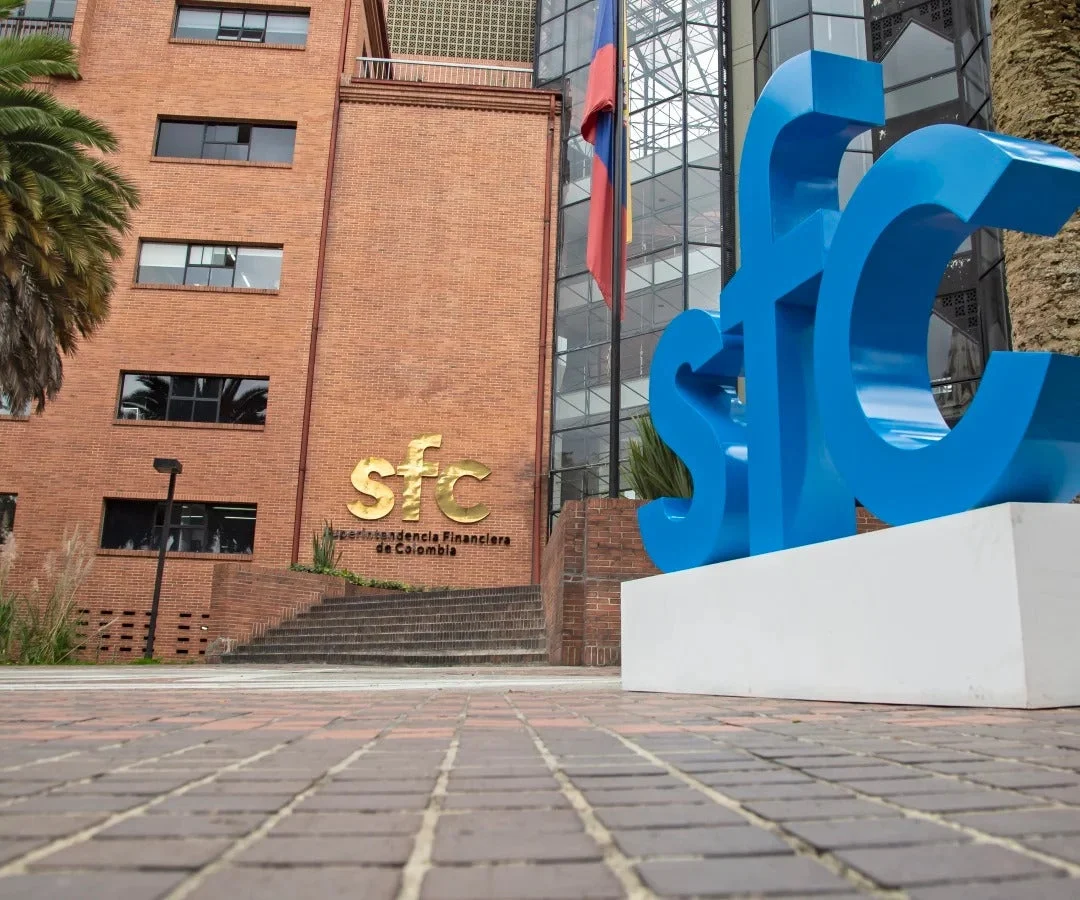
BOGOTÁ, COLOMBIA — In a definitive administrative ruling that underscores the rigorous oversight facing Colombia’s financial sector, the Superintendencia Financiera de Colombia (SFC) has upheld a sanction against Coltefinanciera. The penalty stems from critical vulnerabilities detected in the institution’s Sistema de Administración del Riesgo de Lavado de Activos y de la Financiación del Terrorismo (SARLAFT)—the country’s mandatory framework for preventing money laundering and terrorism financing.
Although the financial regulatory body chose to reduce the monetary penalty on appeal, the confirmation of the sanction marks a notable regulatory milestone. The case highlights systemic vulnerabilities in how financial intermediaries onboard and monitor high-risk clients, particularly Politically Exposed Persons (PEPs), and emphasizes the unforgiving nature of compliance audits in an era of heightened global financial crime scrutiny.
1. Main Facts of the Case
The regulatory enforcement action against Coltefinanciera centers on specific compliance failures identified during a routine inspection conducted by the Superintendencia Financiera de Colombia in early 2024. According to official disclosures, the supervisory visit uncovered operational gaps that directly contravened the stringent parameters established under the SARLAFT framework.
The core of the infraction involves two primary areas:
- Deficiencies in PEP Onboarding: The institution failed to execute robust, exhaustive approval and due diligence processes for two distinct individuals classified as Politically Exposed Persons (PEPs). Given their public status, PEPs present an inherently elevated risk profile for corruption, bribery, and illicit enrichment, requiring heightened scrutiny, senior management approval, and continuous source-of-wealth verification.
- Inadequate User Monitoring: Beyond the PEP onboarding failures, the supervisory team flagged systemic shortcomings in the ongoing transactional monitoring of specific, targeted users. Effective continuous monitoring is a cornerstone of the SARLAFT architecture, designed to flag anomalous transactions, unusual velocity, or structured cash deposits that deviate from a client’s declared economic profile.
The legal consequence of these findings materialized through a sequence of regulatory resolutions. The initial penalty was handed down via Resolution No. 1717 on September 11, 2025. Following an appeal filed by Coltefinanciera’s legal team, the SFC evaluated the arguments and issued Resolution No. 1299 on September 7, 2026. This final resolution officially confirmed the core violations while granting a reduction in the overarching financial penalties, setting the final fine at $295,560,362 Colombian Pesos (COP), payable directly to the National Treasury (Tesoro Nacional).
2. Detailed Chronology of the Regulatory Process
To fully understand the trajectory of the Coltefinanciera enforcement action, it is essential to trace the procedural timeline from the initial on-site inspection to the recent exhaustion of administrative remedies.
[Early 2024] ──> SFC On-Site Visit & Identification of Gaps
       │
[Sept 11, 2025] ──> First-Instance Fine Issued (Resolution No. 1717)
       │
[Late 2025] ──> Coltefinanciera Files Administrative Appeal
       │
[Sept 7, 2026] ──> Appellate Decision & Fine Reduction (Resolution No. 1299)
       │
[Present / Future] ──> Contencioso Administrativo Judicial Challenge- Early 2024: The Superintendencia Financiera de Colombia initiates an on-site inspection at Coltefinanciera’s operational headquarters. During this examination, regulatory auditors review internal compliance files, risk matrices, and client portfolios, ultimately identifying the structural gaps concerning PEP approvals and user monitoring protocols.
- September 11, 2025: Following the due process required under Colombian administrative law, the SFC formally issues Resolution No. 1717. This resolution imposes the initial set of sanctions and monetary fines against Coltefinanciera for breaching SARLAFT mandates.
- Late 2025 (Appellate Phase): Exercising its right to a defense, Coltefinanciera formally challenges the first-instance ruling. The company submits an administrative appeal (recurso de apelación) to the SFC, presenting legal and operational arguments aimed at mitigating or overturning the findings.
- September 7, 2026: The regulatory body issues Resolution No. 1299, resolving the appeal. While the SFC stands firm on the validity of the underlying charges—affirming that the institution failed to adequately manage its laundering and terrorism financing risks—it grants a favorable adjustment by reducing the total financial penalty.
- Post-Resolution 2026: Undeterred by the administrative defeat, Coltefinanciera issues public statements confirming its intention to escalate the dispute beyond the regulatory arena, taking the matter to the Administrative Contentious Jurisdiction (Jurisdicción de lo Contencioso Administrativo).
3. Supporting Data and Financial Implications
While a fine of $295,560,362 COP may represent a manageable fraction of a regulated financial institution’s capital reserves, the broader financial and reputational implications extend far beyond the direct cash outlay.
The Composition of the Penalty
- Destination of Funds: By legal mandate, the entirety of the $295,560,362 COP fine must be transferred directly to the Colombian National Treasury (Tesoro Nacional), contributing to state fiscal resources rather than staying within supervisory or restorative trust funds.
- Severity Scaling: The reduction from the initial penalty introduced in Resolution No. 1717 to the final figure in Resolution No. 1299 indicates that the SFC acknowledged some degree of institutional cooperation or partial compliance argued during the appeal, though not enough to vacate the underlying violations.
Operational Costs of Compliance Remediation
Beyond the statutory fine, an enforcement action of this nature triggers substantial internal expenses for the financial institution:
- Auditing and Consulting Fees: Engaging external forensic accountants and compliance experts to overhaul SARLAFT software and audit historical client portfolios.
- Technological Upgrades: Investing in advanced Automated Transaction Monitoring (ATM) and Know Your Customer (KYC) database tools to ensure future PEP tracking meets modern regulatory expectations.
- Legal Expenses: Retaining specialized administrative law counsel to manage the upcoming litigation in the Contentious-Administrative courts.
4. Official Responses and Institutional Stance
Both regulatory authorities and corporate entities have articulated clear positions regarding the outcome of this administrative process.
The Supervisory Perspective (Superintendencia Financiera de Colombia)
The SFC operates under a strict zero-tolerance mandate regarding anti-money laundering (AML) vulnerabilities. For the regulator, the enforcement action serves a dual purpose: penalizing past non-compliance and sending a deterrent signal to the broader Colombian financial ecosystem. By maintaining the core charges outlined in Resolution No. 1299, the SFC reinforces the principle that financial intermediaries act as the primary gatekeepers of the national economy. Consequently, any lapses in screening Politically Exposed Persons or monitoring suspicious transactional velocity are viewed as direct threats to financial transparency and institutional integrity.
Coltefinanciera’s Position and Defense Strategy
In official corporate communications, Coltefinanciera has maintained a transparent yet defiant posture. The company has openly acknowledged the existence of the sanction while vigorously defending the integrity of its internal operations.
In a statement released following the publication of Resolution No. 1299, the company detailed:
"The sanction was based on two charges related to shortcomings in the approval processes for two Politically Exposed Persons (PEPs), as well as in the monitoring of certain users, identified within the framework of a visit conducted by the Superintendencia Financiera de Colombia at the beginning of 2024."
Rather than accepting the administrative decision as final, Coltefinanciera announced that it will exhaust all available legal avenues to challenge the legality of the penalty. The company confirmed that it will initiate formal lawsuits before the Jurisdicción de lo Contencioso Administrativo. This judicial venue allows corporate entities to request a judicial review of administrative acts, arguing potential misinterpretations of the law, procedural errors, or disproportionate application of regulatory power by state agencies.
5. Broader Implications for the Colombian Financial Sector
The Coltefinanciera case is not an isolated incident; rather, it reflects a broader, highly aggressive regulatory posture adopted by Latin American financial watchdogs in alignment with international standards set by the Financial Action Task Force (FATF / GAFI).
Intensified Scrutiny on PEPs
Politically Exposed Persons represent a perpetual compliance challenge. Because PEPs hold prominent public functions—ranging from elected officials and high-ranking bureaucrats to judicial authorities and military commanders—their access to state funds and influence makes them prime targets for bribery schemes and illicit capital flows. The SFC’s focus on Coltefinanciera‘s PEP approval processes signals that financial institutions can no longer rely on superficial background checks. Regulators now demand comprehensive, documented evidence of source of wealth, ongoing relationship reviews, and explicit senior management sign-offs before onboarding any high-profile political client.
The Evolution of SARLAFT 4.0 and Beyond
Colombia’s SARLAFT architecture has continuously evolved, shifting from rules-based compliance to risk-based supervision. Financial entities are evaluated not merely on whether they possess a compliance manual, but on how effectively that manual is executed in day-to-day operations. When automated transaction monitoring fails to capture anomalies among "certain users," it exposes structural blind spots in the institution’s alert-generation algorithms. This case serves as an urgent wake-up call for mid-sized financial institutions, cooperatives, and specialized credit corporations to audit their transaction-filtering software and ensure their compliance teams are adequately staffed and funded.
Reputational Risk in the Digital Age
In the contemporary banking landscape, regulatory sanctions carry severe reputational repercussions. Even when a fine is financially manageable, public disclosure of AML/CFT compliance failures can erode institutional trust among correspondent banks, institutional investors, and retail depositors. As Coltefinanciera prepares for its upcoming legal battle in the contentious-administrative courts, the case will undoubtedly be closely monitored by compliance officers across the country as a benchmark for how administrative sanctions regarding PEPs and transactional monitoring are contested and adjudicated in Colombia.
Summary of Key Takeaways
- Regulator: Superintendencia Financiera de Colombia (SFC).
- Entity Involved: Coltefinanciera.
- Core Violations: Deficiencies in onboarding/approving two Politically Exposed Persons (PEPs) and inadequate transactional monitoring of specific users under the SARLAFT framework.
- Origin of Case: On-site regulatory inspection conducted in early 2024.
- Key Resolutions: Initial fine imposed via Resolution No. 1717 (Sept 11, 2025); appeal resolved and fine reduced via Resolution No. 1299 (Sept 7, 2026).
- Final Monetary Penalty: $295,560,362 COP, payable to the National Treasury (Tesoro Nacional).
- Next Steps: Coltefinanciera has announced legal challenges before the Administrative Contentious Jurisdiction (Jurisdicción de lo Contencioso Administrativo) to contest the legality of the penalty.