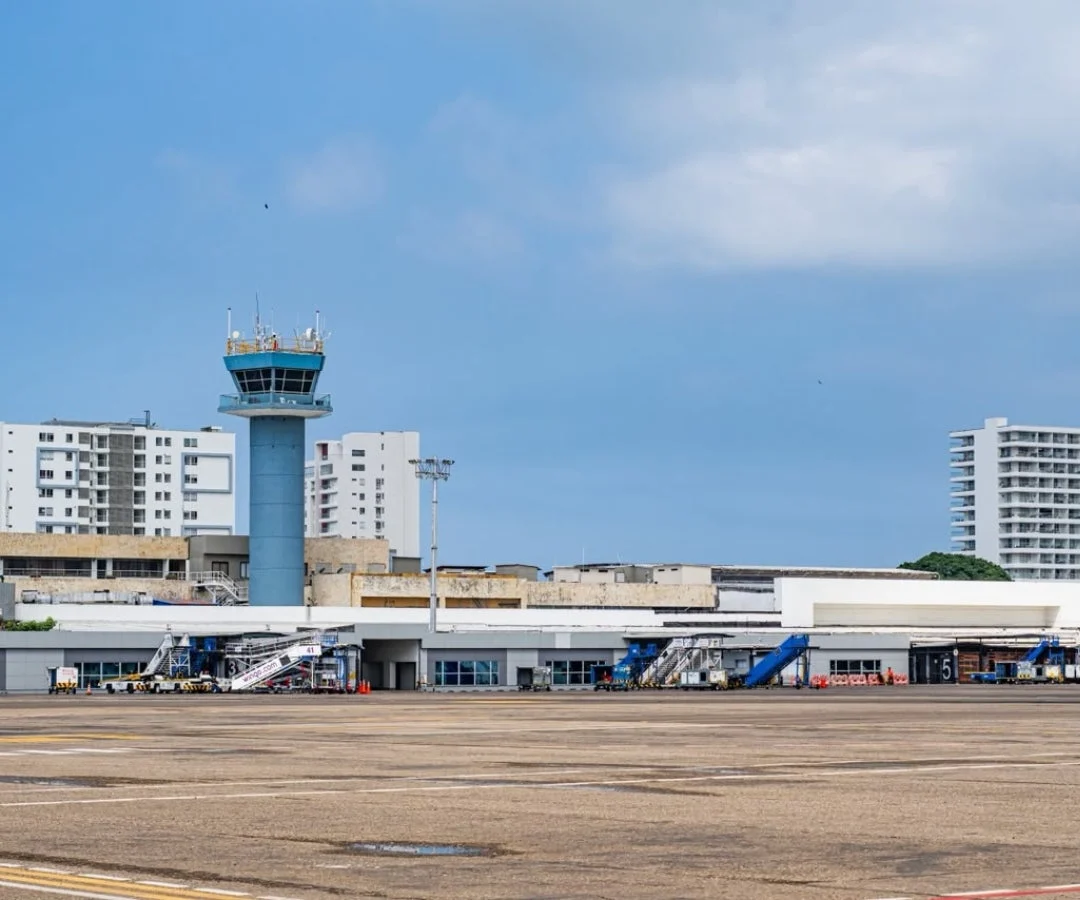
CARTAGENA, COLOMBIA – The "Heroic City" continues to solidify its status as the crown jewel of Colombian tourism and a pivotal hub for Caribbean aviation. According to the latest operational reports, Rafael Núñez International Airport (CTG) experienced a significant surge in activity throughout June, moving more than 615,000 passengers. This performance marks a 2.65% increase in passenger arrivals compared to May, signaling a robust start to the mid-year high season and underscoring the urgent need for the ongoing multi-million-dollar modernization projects currently underway at the terminal.
As the gateway to one of UNESCO’s World Heritage sites, Rafael Núñez International Airport is not merely a transit point but a barometer for the economic health of the Bolívar department. The recent data reflects a city in the midst of a tourism boom, driven by a sophisticated blend of colonial history, world-class gastronomy, and a burgeoning international business circuit.
Main Facts: A Record-Breaking Month for the Caribbean Gateway
The month of June served as a definitive turning point for air travel in northern Colombia. The airport recorded a total of 4,667 air operations, encompassing both domestic and international flights. This high frequency of take-offs and landings translates to an average of roughly 155 flights per day, a cadence that places Rafael Núñez among the most active airports in the Andean region.
Of the 615,000 total travelers, the domestic market remains the primary engine of growth. Domestic traffic accounted for 498,453 passengers, representing approximately 81% of the total flow. This highlights the enduring popularity of Cartagena among Colombian travelers from Bogotá, Medellín, and Cali. However, the international segment showed remarkable resilience and growth, contributing 117,134 travelers to the monthly total.
The 2.65% month-over-month growth in arrivals is particularly noteworthy given the global economic fluctuations. It suggests that Cartagena’s brand as a "must-visit" destination remains insulated from broader discretionary spending cuts. Furthermore, the airport managed a daily average of over 20,000 travelers, a logistical feat that tested the facility’s current capacity and highlighted the necessity of its ongoing expansion.
Chronology: From Recovery to Rapid Expansion
To understand the significance of June’s figures, one must look at the trajectory of Rafael Núñez International Airport over the last several years. Following the global aviation downturn of 2020-2021, Cartagena was one of the first destinations in South America to see a full recovery in passenger numbers, often exceeding pre-pandemic levels by 2023.
The Transition of Management
In early 2024, the airport transitioned into a new phase of management under a Public-Private Partnership (PPP) scheme. This move was designed to address the "bottleneck" issues that arose as the city’s popularity outpaced its infrastructure. The concessionaire, tasked with a multi-year overhaul, began prioritizing immediate "quick-win" improvements alongside long-term structural changes.
The Lead-up to June
Throughout the first quarter of 2024, the airport authorities worked on optimizing gate assignments and streamlining security protocols. By May, the airport was already seeing a steady climb in numbers, but the arrival of June—the traditional start of the "vacaciones de mitad de año" (mid-year holidays)—saw a sharper-than-expected spike.
Current Project Milestones
As of June, the airport is concurrently managing record passenger volumes while executing high-impact construction works. These include the expansion of the primary access hall and the construction of a state-of-the-art parking structure. The synchronization of these construction milestones with peak travel periods has required a high degree of operational precision to avoid disrupting the traveler experience.
Supporting Data: Analyzing the Inflow
The data provided by the airport concessionaire offers a granular look at the shifting dynamics of Caribbean travel.
Domestic vs. International Breakdown
- Domestic Passengers: 498,453 (81.04% of total)
- International Passengers: 117,134 (19.04% of total)
- Total Operations: 4,667 flights
The 81% domestic share emphasizes Cartagena’s role as the premier coastal escape for the Colombian interior. However, the international figure of over 117,000 is significant. It represents a diverse mix of tourists from the United States, Panama, Chile, and Europe. This international influx is vital for the local economy, as foreign travelers typically have a higher average daily spend on luxury accommodation and fine dining.
Operational Efficiency
Managing 20,000 daily passengers in a terminal designed for lower historical volumes is a challenge of scale. The 4,667 operations recorded in June include not only commercial airlines like Avianca, LATAM, and Copa but also a growing number of low-cost carriers and charter services that have expanded their routes into Cartagena.
Growth Comparison
The 2.65% growth over May might seem modest at first glance, but in the aviation industry, such a month-on-month increase during a transition to high season is a strong indicator of sustained demand. When extrapolated annually, this growth rate suggests that Rafael Núñez is on track to potentially break its annual passenger record by the end of December.
Official Responses: Leadership on the Future of Cartagena Aviation
Patricia Mejía, the Concession Manager of Rafael Núñez International Airport, has been vocal about the facility’s strategic importance. In her recent statements, she emphasized that the June figures are a testament to the city’s irresistible appeal.
"Cartagena is one of the most important cities within Colombia’s airport system," Mejía stated. "June marked the start of the high season with very positive behavior, reaching an average flow of more than 20,000 travelers transiting daily through the terminal. With more than 306,000 arrivals to the city, this figure demonstrates the city’s dynamism and how it consolidates itself as the tourist, gastronomic, and cultural epicenter of the Colombian Caribbean."
Mejía also addressed the logistical challenges of the current expansion works. She noted that the airport’s commitment to the Public-Private Partnership (PPP) model is the key to maintaining Cartagena’s competitiveness. The goal, according to the management team, is to ensure that the infrastructure does not just "keep up" with demand but stays ahead of it, providing a seamless experience for both business and leisure travelers.
Government officials from the National Infrastructure Agency (ANI) have also echoed these sentiments, noting that the modernization of Rafael Núñez is a "project of national interest." They highlight that the airport is a critical node in Colombia’s "Path to Progress" initiative, which seeks to boost GDP through enhanced connectivity and tourism exports.
Implications: Infrastructure, Economy, and the Global Stage
The surge in passenger numbers and the subsequent expansion efforts have far-reaching implications for Cartagena and the wider aviation industry in South America.
1. The Infrastructure Imperative
The airport is currently undergoing several critical upgrades:
- Expansion of the Access Hall: Designed to reduce congestion during peak check-in hours.
- New Parking Building: A multi-level structure intended to solve the chronic shortage of parking space for travelers and car rental services.
- Climate Control Systems: Comprehensive improvements to air conditioning systems, a vital necessity given Cartagena’s tropical climate.
- Facade and Enclosure Upgrades: Modernizing the aesthetic and security of the terminal to meet international standards.
These works are not merely cosmetic. They are designed to increase the "installed capacity" of the airport, allowing it to handle more flights per hour and more passengers per square meter without compromising safety or comfort.
2. Economic Catalyst for the Region
Every passenger that lands at Rafael Núñez contributes to a vast economic ecosystem. From the taxi drivers and hotel staff to the street vendors in the Walled City and the chefs in Getsemaní, the 306,000+ arrivals in June represent a massive injection of liquidity into the local economy. The continued growth of the airport ensures the viability of thousands of jobs in the Bolívar department.
3. Positioning Against Caribbean Rivals
Cartagena is in direct competition with destinations like Cancun, Punta Cana, and San Juan. By modernizing its airport and increasing its international connectivity, Cartagena is positioning itself as a more culturally rich and sophisticated alternative to the traditional "all-inclusive" beach resort model. The growth in international passengers suggests that this positioning is working.
4. Challenges of Rapid Growth
While the numbers are positive, they also bring challenges. Increased air traffic requires more rigorous environmental management and noise control for surrounding neighborhoods like Crespo. Furthermore, the city’s internal infrastructure—its roads and public transport—must evolve to handle the 20,000 daily passengers moving from the airport to the tourist zones.
5. Future Outlook: Beyond the High Season
As the expansion project continues under the PPP scheme, the long-term vision for Rafael Núñez is to become a primary hub for the Caribbean. Plans for new direct routes to North America and potentially more European connections are already on the horizon. If the growth trends observed in June continue, the airport will remain the most critical engine of Cartagena’s 21st-century "Golden Age."
In conclusion, the June data from Rafael Núñez International Airport is more than just a set of statistics; it is a clear indicator of Cartagena’s rising global profile. As the city continues to welcome record numbers of visitors, the focus remains on transforming its infrastructure into a world-class facility that reflects the beauty, history, and ambition of the Colombian Caribbean.