By Editorial Staff
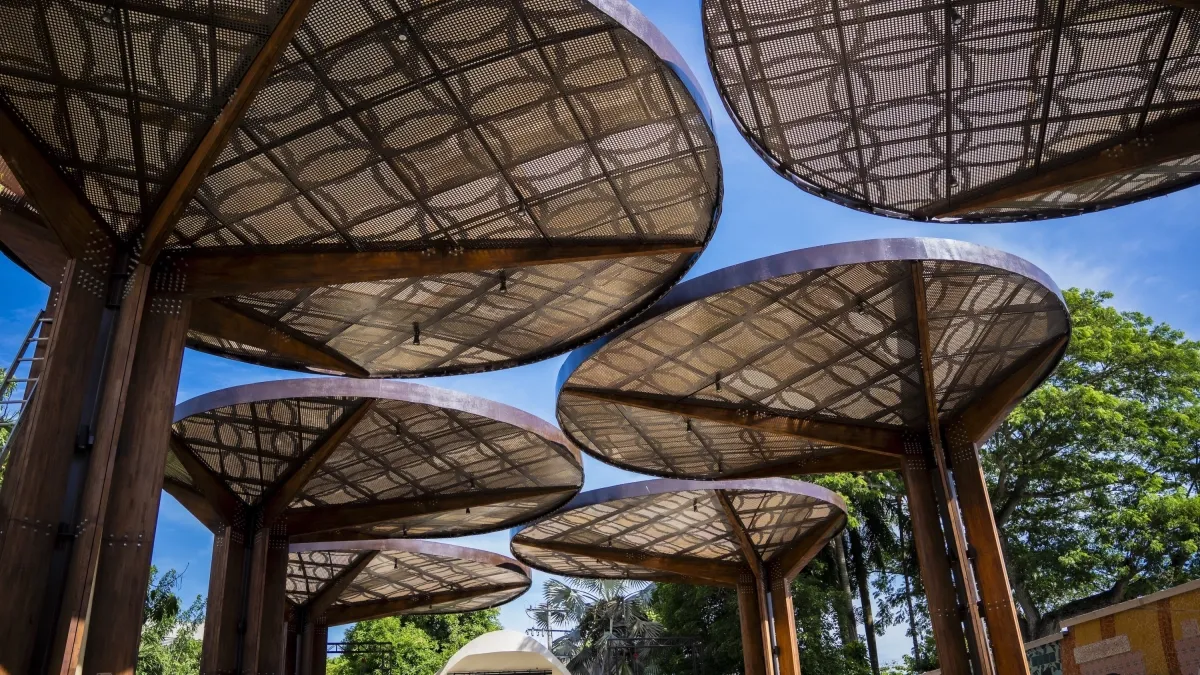
In a world increasingly dominated by digital distraction and academic pressure, the Universidad del Sinú in Montería, Colombia, has taken a bold step toward a more holistic educational paradigm. The recent inauguration of the Ikigai Park, a sprawling 3,500-square-meter sanctuary, marks a significant milestone in the institution’s decade-long commitment to the "Science for Peace" initiative. This space is not merely a physical structure; it is a profound philosophical statement that suggests nature, art, and artificial intelligence, when harmonized, can guide individuals toward a life of purpose.
At the heart of this project is Andrea Ortega Bechara, a visionary lawyer and High-Direction advisor whose academic journey spans London, France, and the University of Pennsylvania. For thirteen years, Ortega has championed the idea that human well-being is not a vague concept, but a measurable outcome that can be taught with scientific rigor.
The Foundations of Flourishing: A Mentorship Built on Science
Andrea Ortega’s path to establishing the Ikigai Park was not paved by intuition alone. It was forged through rigorous study under the titans of modern psychology. Ortega had the privilege of training under Martin Seligman, the co-founder of the science of happiness, at the University of Pennsylvania, where she mastered the foundations of human flourishing.

However, her most transformative influence was Mihaly Csikszentmihalyi, the legendary psychologist renowned for his work on "Flow." Their collaboration was not instantaneous; it was the result of a persistent, eight-month-long campaign. After hearing Csikszentmihalyi chastise a room full of positive psychology experts for failing to apply their knowledge to the world’s most pressing crises—such as climate change, war, and systemic poverty—Ortega was inspired to act. She sent over sixty emails before finally securing a meeting.
"Mike," as she affectionately refers to him, eventually traveled to Bogotá to evaluate her proposal. He set a strict condition: the project must be grounded in empirical research, not as a marketing gimmick. After seeing the sincerity of her mission, he agreed to become the project’s scientific director, a role he held for seven years until his passing. This partnership provided the backbone for what would become "Ciencia para la Paz" (Science for Peace), an initiative that has since become a beacon for institutional transformation in Colombia.

Chronology of a Transformation: From Lab to Campus
The evolution of this project serves as a roadmap for how academic institutions can integrate well-being into their core curriculum.
- 2016: The official launch of the "Ciencia para la Paz" program, aiming to address the psychological scars of a nation marked by conflict.
- 2016–2019: The "Aiflor" research group, which supports the program, achieves a B-category ranking from Colciencias, eventually ascending to an A-rating within seven years.
- 2019–2022: Initial findings reveal that nearly 40% of victims of conflict involved in their programs required clinical psychological support. This data prompted a pivot toward evidence-based curricular interventions.
- 2023: A strategic partnership with Harvard University is solidified to refine the methodology of the curricula, while the Templeton Foundation provides critical funding.
- 2026: The inauguration of the Ikigai Park, cementing the university’s status as a global leader in the application of positive psychology within higher education.
The Architecture of Purpose: The Ikigai Park
The Ikigai Park is designed to be the world’s first thematic park dedicated to the concept of "purpose." It is an extension of "Flow," the university’s award-winning happiness center, which gained international recognition at the New York Architectural Biennial.

The park features several innovative zones:
- "My Future Self": An immersive capsule that utilizes artificial intelligence to help students visualize their potential trajectories, encouraging reflection without overriding personal agency.
- "Beyond": A tranquil area equipped with hammocks, designed to stimulate deep thinking on how individual talents can be directed toward service for others.
- "Purpose in Action": A series of bi-weekly events held in the park’s acoustic shell, where students and alumni share personal stories of resilience and growth.
- The Ikigai Mosaic: A massive 280-square-meter art piece created collaboratively by 200 students, symbolizing the collective nature of human flourishing.
Scientific Rigor and Data-Driven Well-being
One of the most common critiques of "positive psychology" is its perceived tendency toward individualism or "toxic positivity." Ortega dismisses this, emphasizing that the curriculum is designed as an "umbrella" that covers a spectrum of essential human needs.

"Flourishing goes far beyond subjective well-being," Ortega explains. "It includes mental health, physical health, and, most crucially, relational well-being. How do we interact with others? How do we resolve conflicts?"
The data supports her approach. Through the "Happy and Flourishing Students" module—a nine-part, two-hour course—over 1,100 students have reported significant reductions in anxiety and depression. Importantly, these results have shown long-term stability in follow-up evaluations. The curriculum, which includes a specific module on forgiveness, has led to tangible reconciliations among students who previously held deep-seated animosities.
However, Ortega is careful to clarify the boundaries of the program: "These modules are preventative. They do not replace clinical care. Our system provides guidelines for identifying when a student needs to be referred to the university’s professional clinical services."
Implications for the Future of Education
The success of the Ikigai project has transcended the borders of the Universidad del Sinú. Ortega is a lead author of a chapter in the Oxford Handbook of Higher Education Well-being, which cites the Colombian model as a global benchmark.

The implications for national policy are clear. With the Colombian government already having passed legislation regarding socio-emotional skills and mental health in schools, Ortega argues that the "methodology gap" is the final barrier to systemic change. For ten years, she has presented these findings to various regional governments, and now, for the first time, a fully developed, scalable product is ready for implementation.
"The mandate exists, but the methodology is often lacking," she notes. Her goal is to bring this curriculum to the secondary education level, where she believes it is needed most. "We need to act hand-in-hand with science, not with temporary courses that lack empirical validation."

A Personal Mission
For Andrea Ortega, this is not just a professional endeavor; it is deeply personal. "I suffered from depression myself, and that is why I entered this field," she confesses. "If I had had access to these programs as a student, I would have had the tools to anchor myself before reaching a crisis point."
As the Universidad del Sinú continues to integrate these practices, the Ikigai Park stands as a testament to the idea that a university’s role is not merely to transmit knowledge or prepare students for the workforce. It is to help them navigate the complexities of being human. In a world that often measures success by GDP or job placement rates, the Ikigai Park suggests a different metric: the ability to find one’s purpose and, in doing so, contribute to the peace and flourishing of the broader community.

The inauguration ceremony, which saw the presence of renowned thinkers like Gunter Pauli—the father of the "Blue Economy"—and leaders from AFS Intercultural Programs, signals that the world is watching. As Colombia continues to heal from its historical challenges, the work being done in Montería offers a hopeful blueprint for how education can serve as a catalyst for societal transformation, one student at a time.