By: Mateo Chacón Orduz, Sub-Director of Life
Updated September 14, 2026
The delicate equilibrium between the sanctity of academic freedom and the state’s obligation to maintain public order has reached a boiling point in Colombia. During a televised address this Sunday, President Abelardo de la Espriella issued a directive that has sent shockwaves through the nation’s higher education system: the administration is moving to authorize police intervention within public university campuses to combat violent acts, effectively challenging the traditional "sanctuary" status of these institutions.
"The autonomy of a university is not, and cannot be, a shield that stands above the rule of law or public order," the President declared. He announced that his cabinet is currently finalizing a formal protocol to delineate the specific scenarios under which the Public Force will be permitted to enter university grounds. This move, while framed by the government as a necessary measure to protect students and infrastructure, has reignited one of the most polarizing debates in Colombian history.
Main Facts: The Government’s Stance vs. The Constitutional Reality
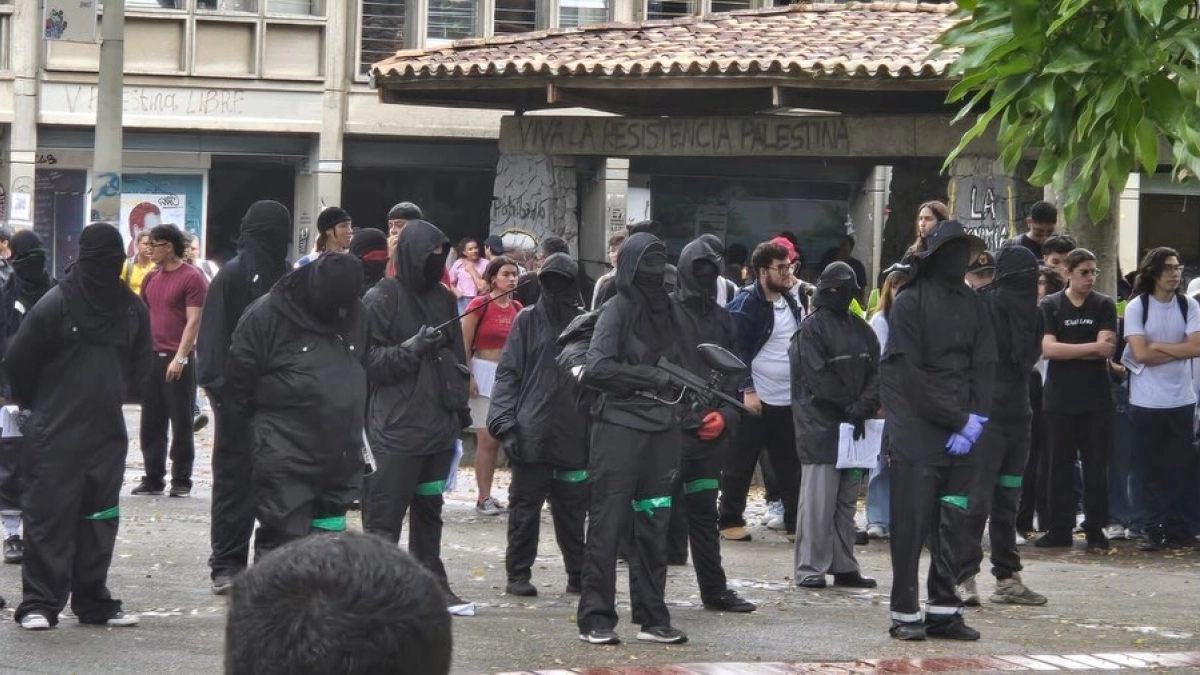
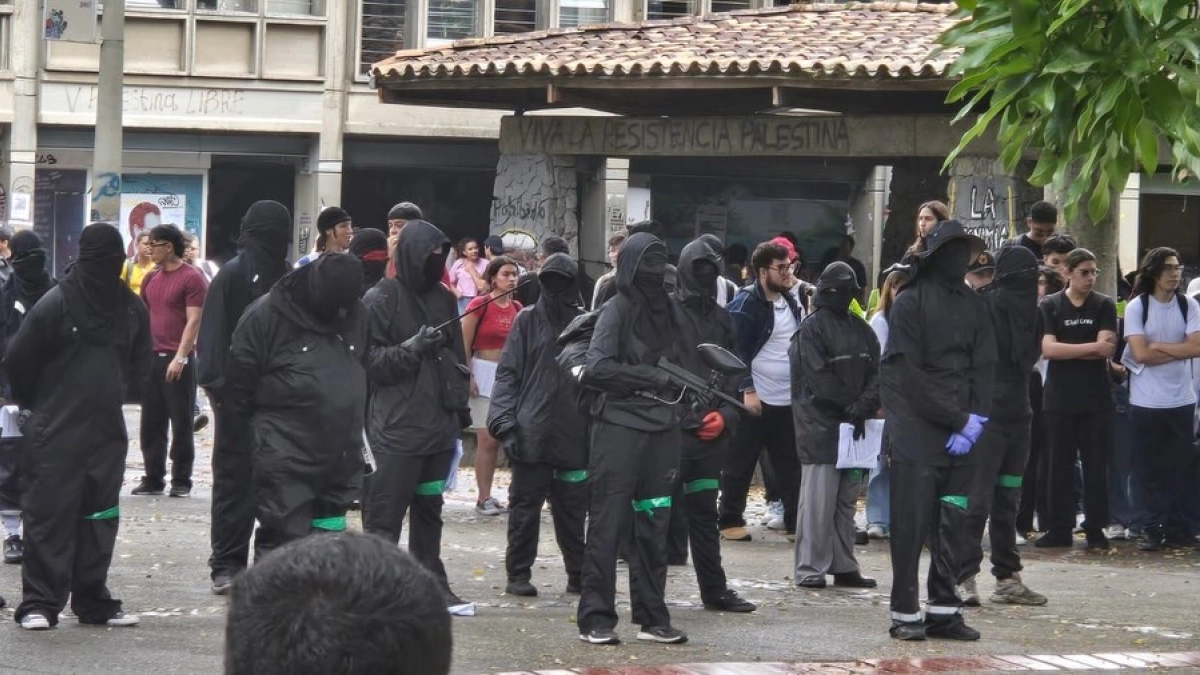
President De la Espriella’s rhetoric is pointed. He described the current state of affairs in several public institutions as "inacceptable," specifically targeting what he categorized as urban terrorism, vandalism, and the destruction of public property. "We will not allow public universities to continue serving as sanctuaries for violence," he asserted.
However, the legal landscape in Colombia is far more nuanced than a simple presidential decree. The central question remains: Does the Chief of State have the legal backing to override the historical independence of universities? According to current jurisprudence, the answer is a complex "it depends," governed by a precise interplay between the Constitution and the National Police Code.
A Chronology of the Debate
The tension between the university campus and state security forces is not a new phenomenon. It is a debate deeply rooted in both the history of student movements and the evolution of Colombian constitutional law.

- 1918: The "Córdoba Reform" in Argentina sparks a continent-wide movement, establishing the principle of university autonomy as a defense against direct military and police intervention. This becomes the bedrock of the Latin American university model.
- 1992: The enactment of Law 30, which defines the legal framework for higher education in Colombia, establishing the autonomy of universities in administrative, financial, and academic matters.
- 1996 & 2002: The Constitutional Court issues seminal rulings (C-337/96 and C-829/02), which explicitly clarify that while autonomy is a right, it is limited by the "general interest," "public order," and the "common good."
- 2016: The adoption of the new National Police and Coexistence Code (Law 1801), which modernizes the rules for police entry into private and public spaces.
- 2017: The Constitutional Court confirms the legality of police entry into properties without judicial orders under specific conditions, such as "imperious necessity" or flagrant criminality.
- September 2026: President De la Espriella announces the upcoming protocol, reigniting the controversy.
Constitutional and Legal Framework
The Constitution of 1991, in its Article 69, enshrines university autonomy as an institutional guarantee. It allows universities to draft their own statutes, elect their authorities, and manage their own academic and financial affairs.
Critically, however, neither the Constitution nor Law 30 of 1992 provides a total exemption from the reach of law enforcement. Legal experts note that the autonomy granted by Law 30 is restricted to academic and administrative governance. It does not confer extraterritorial status on university grounds.
The legal mechanism for police intervention rests on Articles 162 and 163 of the National Police Code. These articles allow authorities to enter a property without a prior warrant in cases of "imperious necessity"—such as flagrancy or an imminent threat to life. The Constitutional Court, through rulings like C-223/17, has upheld this power, provided there is a "subsequent judicial control" mechanism to ensure that the police did not abuse their authority.

In essence, if a crime is being committed, the university campus is treated legally as any other property.
Perspectives: Voices of Dissent and Support
The announcement has triggered a wave of responses from across the ideological spectrum.
The Argument for State Intervention
Proponents of the President’s policy, including legal figures like Hernando Herrera, Director of the Corporation for Excellence in Justice, argue that the university is not a lawless zone. "The riot police (UNDMO) have no legal prohibition against entering universities," Herrera notes, emphasizing that the focus should be on the manner of intervention—ideally in coordination with university leadership—rather than the possibility of it. Former Magistrate José Gregorio Hernández echoed this, stating that when public order is disrupted, the State has a duty to intervene to protect the citizenry.

The Argument for Academic Sanctuary
Conversely, university rectors and student leaders argue that the mere presence of armed state actors is a catalyst for violence. The National University of Colombia, among others, has historically argued that police presence often turns a controlled conflict into a full-scale battle. They cite past incidents, such as the tragic case of a student left in a coma following an ESMAD intervention at the University of Antioquia, as proof that police tactics are often ill-suited for the academic environment.
"Autonomy is not just about rules; it is about the preservation of a space where ideas can be debated without the looming threat of the state," a student representative noted. Even the current Rector of the National University, José Ismael Peña, has attempted a middle ground, suggesting that while autonomy and security can coexist, any intervention must be handled with extreme caution to avoid undermining the institution’s purpose.
Implications: The "Anti-Hood" Legislation
Adding another layer to the conflict is the "Anti-Hood" bill (Ley Anticapuchos), recently introduced in Congress by Representatives Jaime Arizabaleta and Julio César Triana. The bill aims to criminalize the act of covering one’s face during protests or acts of vandalism, proposing non-excarcerable prison sentences of up to 96 months.

The intersection of this bill and the President’s new protocol suggests a broader governmental strategy to "restore order" in public spaces. However, critics argue that such measures, if implemented without deep social dialogue, risk institutionalizing a permanent state of confrontation between the youth and the state.
Conclusions: A Precedent-Setting Week
As the government prepares to unveil the specifics of the new police protocol this week, the nation watches with bated breath. The fundamental tension is clear: The government views the university as a space where crime must be addressed like anywhere else, while the university community views the campus as a delicate ecosystem of freedom that requires protection from the blunt force of the state.
The Constitutional Court has already paved the way for limited intervention, but the political implementation of this policy will be the true test. If the government moves forward without the consensus of university leadership, it risks alienating the very institutions it seeks to "protect." If, however, it can establish a protocol that balances the rule of law with the respect for academic freedom, it may finally bring clarity to a debate that has simmered for over a century.

Ultimately, the resolution of this conflict will depend on whether the state can prove that it is entering the campus to defend the law, rather than to suppress the voices that the university is meant to harbor. In a democratic society, the university must remain a place for both critical thought and the protection of the civil order—a balance that is as difficult to achieve as it is necessary to maintain.