BOGOTÁ — In a political and educational landscape defined by high stakes and shifting paradigms, higher education in Colombia has once again taken center stage. At the heart of the current national discussion is a sweeping reform proposal introduced by President Abelardo De La Espriella, a policy direction that has sharply divided the country’s academic ecosystem.
As university rectors, academic leaders, student unions, and policymakers grapple with the implications of the administration’s vision, campuses across the nation have transformed into forums of intense debate. The administration maintains that the initiative is designed to modernize and secure the future of tertiary education, but critics warn of potential threats to institutional stability and the foundational principles of academic governance.
Main Facts
The controversy centers on a legislative and structural overhaul proposed by President Abelardo De La Espriella’s administration, aimed at reshaping how public universities are funded, managed, and aligned with national economic goals.
The Core Proposal: The initiative introduces performance-based funding mechanisms, encourages closer ties between state universities and the private sector, and proposes structural adjustments to internal governing bodies to ostensibly streamline administrative efficiency.
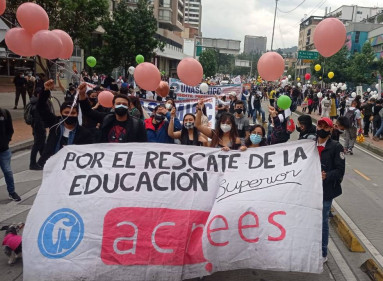
The Academic Divide: University administrators find themselves walking a tightrope. While some institutional heads acknowledge the pressing need for financial modernization, student federations and faculty associations have vocally rejected the measures, labeling them an encroachment on institutional autonomy.
Broader Institutional Context: The debate unfolds against a backdrop of wider systemic challenges within Colombian higher education, including chronic underfunding, rising dropout rates, and ongoing recovery efforts at major public institutions like the National University of Colombia (Universidad Nacional).
Geopolitical and Domestic Backdrop: The higher education debate is part of a broader wave of policy shifts under De La Espriella’s administration, which has prioritized aggressive restructuring across multiple public sectors, drawing both praise for decisive governance and sharp criticism from traditional institutional stakeholders.
Chronology of Events
The friction surrounding higher education reform did not materialize overnight. It is the culmination of months of administrative friction, judicial interventions, and escalating public discourse.
Late 2025: Discussions surrounding structural reforms begin to circulate within policy circles. The administration signals its intent to overhaul public spending, explicitly targeting higher education subsidies and operational frameworks to curb institutional deficits.
Early February 2026: Amid ongoing administrative transitions—highlighted by the high-profile return of Rector Ismael Peña to the helm of the Universidad Nacional following complex judicial decisions—debates regarding the future and financial resilience of public universities gain renewed urgency.
August 2026: President De La Espriella formally outlines his administration’s foreign and domestic policy priorities, including the integration of national security frameworks and a push for structural modernization in public services, setting the stage for direct confrontations over education policy.
Early September 2026: The administration’s specific higher education proposals are officially transmitted to legislative and academic stakeholders. Student groups across major urban centers begin organizing assemblies and preliminary protests.
Mid-September 2026: Rectors and student representatives hold emergency plenaries to formulate institutional responses. Town halls and media debates amplify the divide, with student leaders threatening nationwide mobilizations if the government refuses to open participatory mesas of dialogue.
Supporting Data and Context
Understanding the gravity of the current standoff requires examining the fragile financial and demographic realities facing Colombian students and institutions. Recent data compiled from educational and labor forums underline the vulnerability of the sector:
Enrollment and Attrition Pressures: Studies on university desertion rates indicate that economic hardship remains the primary driver behind students abandoning higher education. Urban centers like Bogotá and Medellín continue to record high dropout rates driven by the rising cost of living and insufficient living stipends.
The Public Funding Gap: Major public institutions have long operated under acute budgetary constraints. While the administration argues that private-public partnerships will inject necessary capital, critics argue that shifting financial reliance away from direct state guarantees threatens equitable access for lower-income students.
Broader Social Interventions: The educational debate coincides with parallel government initiatives—such as the expansion of short-term virtual training programs (Todos a la U) and municipal efforts to formalize marital and civil registries—illustrating an administration simultaneously pushing for technical workforce readiness while attempting broad institutional reorganizations.
Official Responses
The polarization of the debate is starkly reflected in the contrasting statements issued by the executive branch, university administrations, and student collectives.
The Administration’s Stance
Defending the proposal, government spokespersons have emphasized that the status quo is financially unsustainable. Proponents argue that modernizing higher education is vital for national competitiveness.
"We cannot continue funding administrative bloat while modern industries demand agility, innovation, and practical alignment," administration officials noted in recent policy briefs. The executive maintains that increased accountability and performance metrics will ultimately benefit students by ensuring that degrees translate directly into employment opportunities.
University Rectors and Leadership
Institutional heads have adopted a more measured, cautionary tone. While acknowledging that reform is necessary to address structural deficits, rectors have urged the executive branch to respect the historical autonomy granted to academic institutions.
"Modernization is welcome, but it cannot come at the expense of critical thought, academic freedom, and democratic governance within our campuses," remarked a coalition of public university rectors in a joint statement. They have called for a bicameral commission to review the text of the proposal clause by clause.
Student Unions and Faculty Associations
Student federations have taken an uncompromising stance against the initiative, characterizing the performance-based funding model as a backdoor privatization scheme.
"This proposal treats education as a corporate commodity rather than a fundamental right," declared a spokesperson for the National Student Association. Faculty unions have echoed these concerns, warning that tying budgets to external performance metrics will disproportionately penalize humanities and social science departments.
Implications for the Future of Colombian Academia
As the legislative debate looms, the implications of President De La Espriella’s higher education proposal extend far beyond administrative adjustments; they touch upon the very social contract of the Colombian state.
Governance and Autonomy: If pushed through without substantial modification, the reform could trigger a constitutional and legal battle over the boundaries of university autonomy, a principle hard-won in Colombia’s modern political history.
Social Unrest: The potential for prolonged academic strikes mirrors historical precedents where education policy became the catalyst for nationwide protests. Student organizations are already mobilizing networks across Bogotá, Medellín, and Cali.
Economic and Workforce Shifts: Conversely, successful implementation could accelerate the alignment of higher education with market demands, potentially easing the transition from academia to the formal labor market for thousands of young Colombians.
For now, the country waits to see whether the administration will soften its approach through negotiated concessions or press forward, setting the stage for what promises to be one of the defining domestic policy battles of the decade.
BOGOTÁ, COLOMBIA — In celebration of the upcoming World Animal Day on October 4, media outlets around the globe are preparing special programming, features, and tributes to highlight the vital role that animals play in…
BOGOTÁ, Colombia — In a major push to expand higher education access and bolster regional development, the National Government—through the Ministry of National Education and the State’s educational financing body, ICETEX—has officially unveiled its major…
BOGOTÁ — The climate challenges facing the northern region of South America are set to stretch deep into the future. According to the latest scientific updates from the United States National Oceanic and Atmospheric Administration…