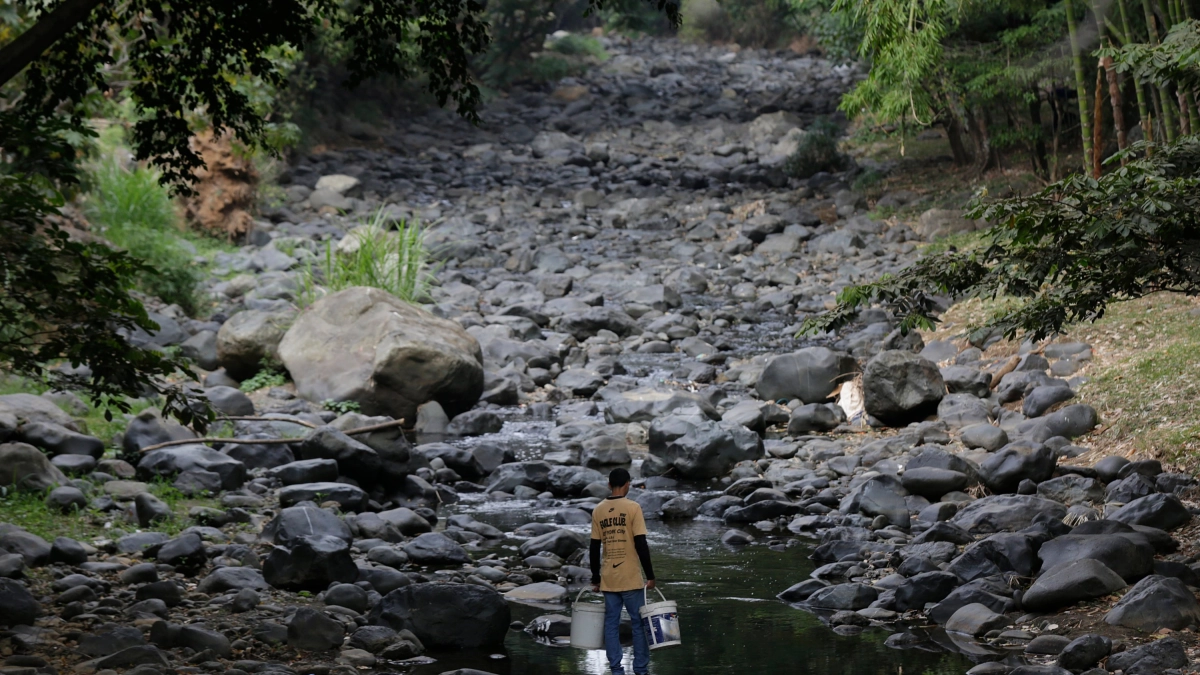
BOGOTÁ — The climate challenges facing the northern region of South America are set to stretch deep into the future. According to the latest scientific updates from the United States National Oceanic and Atmospheric Administration (NOAA), there is a significant 61 percent probability that the El Niño phenomenon will maintain its grip through May 2027.
The projection has triggered urgent alerts across Colombia. The Institute of Hydrology, Meteorology and Environmental Studies (Ideam) has officially warned that the country must brace for prolonged periods of diminished rainfall and elevated temperatures. With the most critical months projected to hit between December 2026 and January 2027, the National Government is keeping emergency protocols active, doubling down on nationwide appeals for the sustainable management of vital resources, including water, energy, and gas.
While climate scientists emphasize that the presence of El Niño does not mean precipitation stops entirely, its disruption of traditional seasonal cycles remains a profound threat. November, historically a core month for Colombia’s second rainy season, is failing to deliver expected precipitation levels due to the overarching footprint of the climate anomaly.
Main Facts: A Prolonged Climate Anomaly and National Vulnerability
The persistence of El Niño into mid-2027 marks a concerning continuation of climatic stress for Colombia. The latest metrics from NOAA and Ideam underline an abnormal weather pattern defined by intense thermal anomalies and uneven precipitation distribution across the national territory.
- Extended Timeline: NOAA estimates a 61% probability that El Niño conditions will endure until May 2027, with a high probability (79%) of gradual weakening beginning only in the first quarter of 2027.
- Peak Vulnerability Window: Ideam highlights December 2026 and January 2027 as the most critical period for high temperatures and water stress.
- Regional Disparities: While central and northern departments face severe deficits in rainfall, southern regions like Cauca, Nariño, and southern Chocó continue to record above-average precipitation under the complex influence of the phenomenon.
- Reservoir Status: As of November 11, the aggregate volume of the National Interconnected System (SIN) stands at 78.74% of its useful capacity—falling short of the government’s 80% target set for November 30. Water inflows sit at a worrisome 55.49% of the historical average.
Chronology of the Crisis: From Onset to Extended Projections
Understanding the trajectory of the current El Niño cycle requires looking at how forecasts have evolved over recent hydrological monitoring periods.
- Early 2024–2025: Initial cycles of El Niño wrought havoc across Colombia, triggering unprecedented dry spells, agricultural losses, and severe threats to water reservoirs that pushed the energy grid close to critical thresholds.
- Mid to Late 2026: Although brief periods of atmospheric stabilization offered temporary relief, climate models began detecting a stubborn persistence of warm sea-surface temperatures in the equatorial Pacific.
- November 2026: NOAA releases its updated probability metrics (61% extension through May 2027). Simultaneously, Ideam confirms that the expected second rainy season of 2026 is failing to materialize normally, prompting the reinforcement of the "Energía YA" (Energy NOW) national action plan.
- December 2026 – January 2027 (Projected): Forecasted to be the most critical window of the extended phenomenon, marked by peak thermal records and heightened demands on both the electrical grid and water supply systems.
- First Quarter of 2027 (Projected): Climate models indicate that El Niño will begin a slow weakening phase (estimated at a 79% probability during this quarter), setting the stage for a gradual return to normal rainfall patterns by May 2027.
Supporting Data: Regional Impacts and Energy Sector Indicators
The impact of El Niño is far from uniform. Meteorological data reveals a fractured landscape where extreme dryness contrasts sharply with localized downpours.

Precipitation Deficits and Excesses
For the remainder of November, a pronounced deficit in rainfall is heavily impacting several Andean and Caribbean departments, notably:
- Huila
- Tolima
- Cundinamarca
- Norte de Santander
- Santander
- Sectors of Antioquia
Conversely, counter-intuitive weather dynamics driven by local phenomena are bringing above-normal rainfall to:
- Cauca
- Nariño
- Southern Chocó
Temperature Anomalies
Thermal indicators continue to break historical records across multiple regions. Recent bulletins from Ideam note that municipalities like Natagaima (Tolima) have soared to extreme temperatures reaching 41.2°C. Consistent thermal spikes significantly exceeding historical averages are heavily affecting:

- The Caribbean region
- Parts of the Coffee Triangle (Eje Cafetero)
- Huila and Tolima
- Eastern departments including Meta, Vichada, Casanare, and Arauca
The National Interconnected System (SIN) and Energy Metrics
Grid operators and energy market administrators are closely monitoring consumption and generation capabilities. According to data analyzed by market operator XM:
- Reservoir Levels: The aggregate volume sits at 78.74%, trailing behind the 80% benchmark targeted for the end of November.
- Water Inflows: Current river contributions to reservoirs are stuck at 55.49% of the historical mean, signaling sluggish replenishment rates.
- Energy Demand Management: Reflecting public awareness campaigns and government warnings, consumer habits show a positive shift. In early November, energy consumption dropped by an average of 53 GWh-day compared to reference demand baselines, demonstrating active conservation by citizens and industries.
Official Responses: Government Measures and Technological Integration
In light of NOAA’s extended timeline, Colombian authorities have refused to lower their guard. The national response framework combines regulatory mandates, public campaigns, and advanced technological integration.
The "Energía YA" Plan and Conservation Campaigns
The Ministry of Mines and Energy, alongside Ideam and environmental authorities, has sustained the measures established under the "Energía YA" framework. This initiative focuses on optimizing thermal and hydroelectric power generation while driving aggressive public awareness campaigns.
Government officials stress that citizens must permanently integrate efficient consumption habits into their daily routines. "We are facing a prolonged cycle where every drop of water and every kilowatt saved directly protects our collective security," institutional spokespersons have noted. Authorities continue to urge households, commercial sectors, and industrial complexes to curb unnecessary water usage, avoid waste, and minimize peak-hour electricity consumption.
Embracing Advanced Wildfire Prevention Technology
The prolonged dry spells driven by El Niño significantly elevate the risk of devastating forest fires across vulnerable Andean and Caribbean ecosystems. To combat this, Colombia is exploring and integrating cutting-edge technological solutions.
Recent operational agreements grant Colombian environmental agencies access to advanced artificial intelligence tools—such as Google’s pioneering wildfire-detection technology. This system utilizes satellite imagery and machine learning algorithms to monitor thermal anomalies in real-time, allowing emergency responders to detect, track, and neutralize forest fires before they spiral out of control.

Implications: A Slow Recovery and Long-Term Environmental Outlook
While the scientific models point toward a gradual weakening of El Niño during the first quarter of 2027 and a full return to normal precipitation patterns by May 2027, experts warn that the end of the phenomenon does not equate to an immediate end of its consequences.
The "Lag Effect" on Water Bodies
A critical warning issued by Ideam focuses on the hydrological lag effect. Even when meteorological indicators show that El Niño is dissipating, rivers, aquifers, and massive hydroelectric reservoirs do not recover overnight.
"This implies that reservoirs would take longer to fill because the rivers and water reserves feeding them will also recover slowly," Ideam explained in its technical briefing. Because soil moisture levels are heavily depleted during prolonged dry phases, initial rains are often absorbed by parched earth rather than running off into river basins. Consequently, water authorities must maintain strict rationing protocols and conservation oversight well into the mid-2027 transition period.

Agricultural and Economic Pressures
The agricultural sector remains one of the most vulnerable fronts. Prolonged heatwaves and water scarcity directly threaten crop yields, livestock health, and rural food security. Policymakers are being forced to rethink long-term agrarian strategies, investing in drought-resistant crops, modern drip-irrigation infrastructure, and localized water-harvesting systems to insulate the national economy from future climate shocks.
Climate Resilience as a Permanent Policy
Ultimately, the extended forecast for El Niño serves as a stark reminder of the accelerating realities of global climate change. Weather anomalies that once occurred across distinct, predictable multi-year cycles are now blending, intensifying, and prolonging. For Colombia, navigating the current crisis through May 2027 is not merely an exercise in short-term emergency management, but a foundational test for building permanent national resilience in water security, energy independence, and environmental stewardship.