By Digital Reach Redaction
Published: September 2026
Main Facts
For decades, humanity’s search for extraterrestrial intelligence (SETI) has focused primarily on the skies, tuning massive radio telescopes to capture electromagnetic whispers from deep space. However, a groundbreaking scientific investigation led by Lewis Pinault, a research associate at the SETI Institute, suggests that we may have been overlooking a terrestrial-adjacent archive sitting right on our doorstep: the Moon.
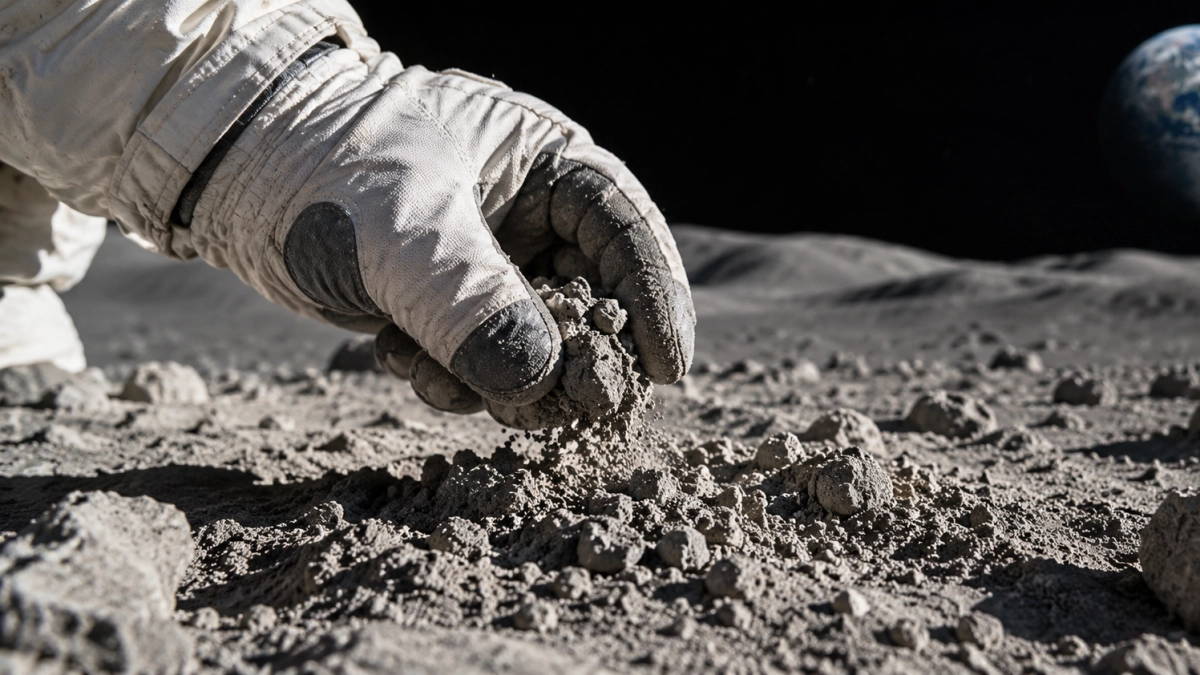
According to a pioneering pre-print study submitted to the International Journal of Astrobiology and made available on arXiv, the lunar soil—known as regolith—could have accumulated and successfully preserved microscopic fragments of advanced technology produced by extraterrestrial civilizations over billions of years.
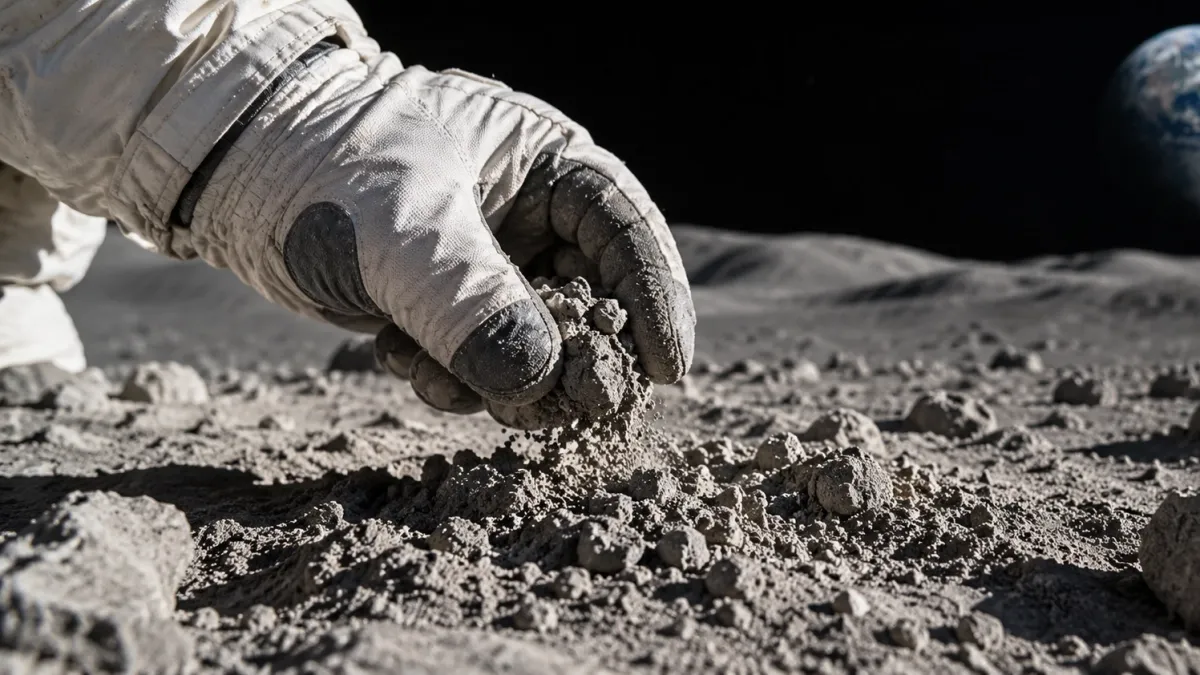
Unlike fleeting radio signals, which require a receiver to be listening at the exact microsecond they wash over Earth, physical technosignatures could endure long after the civilizations that manufactured them have vanished into cosmic history. DW reports that this marks the first time researchers have attempted to numerically quantify the probability that such technological debris has survived on the lunar surface.
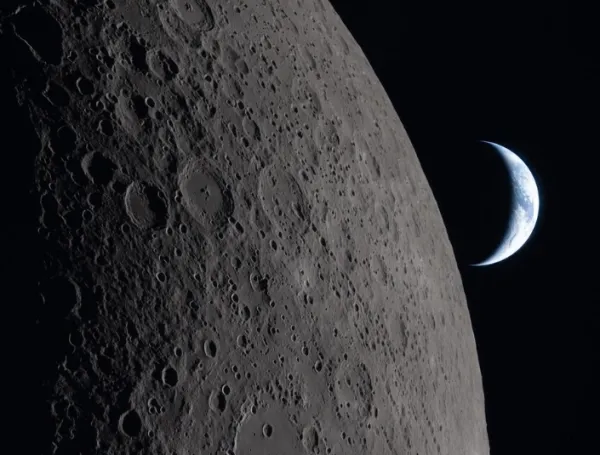
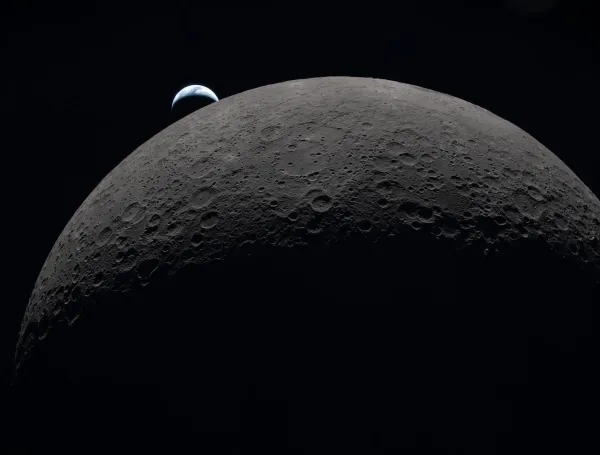
While the Earth offers a much larger surface area to capture interstellar debris, its active geology—featuring plate tectonics, an eroding atmosphere, and dynamic aquatic systems—tends to erase, bury, or chemically transform ancient materials over geological timescales. The Moon, conversely, has operated as a remarkably stable cosmic collector for approximately 4 billion years, preserving an untouched ledger of both local solar system evolution and interstellar visitors.
Chronology: The Evolution of Interstellar Artifact Theory
The hypothesis that physical debris from distant technological societies might drift across interstellar space and land on stable celestial bodies is not entirely new. The timeline of this intriguing scientific inquiry reveals a steady evolution from speculative theory to rigorous mathematical modeling:

- The Early 1990s (The Arkhipov Hypothesis): Ukrainian astronomer Oleksiy Arkhipov first proposed that durable industrial or technological waste produced by other civilizations could travel through interstellar space and become trapped on stable, geologically inactive surfaces, such as the Moon. His ideas, while revolutionary, lacked quantitative models to test their feasibility.
- Decades of Radio Dominance: Throughout the late 20th and early 21st centuries, the scientific mainstream prioritized the "listening" paradigm of SETI—relying heavily on projects like the Allen Telescope Array to search for technological radio emissions, laser pulses, and optical technosignatures.
- Mid-2020s (The Rise of Quantitative Astrobiology): A shift toward multi-messenger and multi-disciplinary astrobiology began to revive interest in physical technosignatures. Scientists started evaluating whether modern analytical tools could detect extraterrestrial matter embedded within planetary soils.
- September 2026 (The SETI Institute Model): Led by Lewis Pinault, a team of researchers formally submitted a study to the International Journal of Astrobiology and published it on arXiv. For the first time, scientists built a comprehensive mathematical framework calculating the survival rates, transport mechanics, and detection methods for microscopic alien technosignatures on the lunar regolith.
Supporting Data and Technical Mechanics
The study dives deep into the physics of interstellar travel, particle preservation, and probabilistic analysis to determine if alien technology could truly survive a multi-light-year journey.
Two Classes of Technosignatures
Pinault and his team divide potential physical artifacts into two distinct hypothetical categories based on their origin and purpose:
- Arkhipov Particles: These represent unintentional industrial waste or accidental debris. Scenarios include micro-fragments stripped from massive, planet-spanning megastructures or stellar-engine exhaust that accidentally escapes a star system’s gravitational well, eventually drifting across the galaxy. As the Sun completes a full orbit around the center of the Milky Way roughly every 230 million years, the Solar System frequently intersects with these interstellar streams.
- Bracewell Particles: Named after the visionary Australian physicist Ronald Bracewell, this category is far more targeted and speculative. These would be microscopic probes or autonomous nanobots sent deliberately by an extraterrestrial intelligence to explore foreign star systems, monitor biological evolution, or quietly archive galactic history.
Surviving the Interstellar Voyage
Can manufactured materials actually withstand hundreds of light-years of travel? The study’s calculations suggest yes—provided they are made of ultra-resilient materials. The models focus on grains with radii of approximately 0.3 microns composed of advanced refractory materials, such as advanced ceramics, graphene, or superalloys combining heavy metals like titanium and tungstened. These particles could endure journeys spanning 100 million to 1 billion years.
However, surviving the trip is only half the battle. Upon reaching the Solar System, incoming particles face severe destructive forces. Collisions occurring at velocities exceeding 5 kilometers per second would instantly vaporize most microscopic objects. Fortunately, the models indicate that solar radiation pressure and the protective filtering effect of the Sun’s heliosphere could slow down a tiny fraction of these particles, allowing them to gently settle onto the lunar surface at survivable velocities.
The Lunar "Impact Gardening" Process
Once on the Moon, a particle must avoid being destroyed by subsequent impacts. Over billions of years, the continuous bombardment of micrometeorites has churned the lunar regolith in a geological process known as "impact gardening." While this sounds destructive, it actually offers protection: impact gardening can transport tiny particles down to depths of several meters, shielding them from harsh cosmic radiation and solar winds.
Official Responses and Perspectives from the Scientific Community
The publication of Pinault’s research has sparked vibrant discussions within the global astrobiology and planetary science communities. While mainstream astrophysicists remain appropriately cautious about the probability of finding non-human artifacts, many praise the study for broadening the scope of how humanity searches for extraterrestrial life.
A spokesperson for the SETI Institute emphasized that the research represents a paradigm shift: "We are moving away from the assumption that if an intelligence is out there, it must be actively broadcasting radio waves right now. By treating planetary surfaces as deep-time archives, we open up a temporal window that spans billions of years, rather than just the last century of human radio technology."
Other space scientists point out that the logistics of the search will be the ultimate test. Analyzing lunar soil is an exercise in extreme needle-in-a-haystack mechanics. A single cubic meter of lunar regolith weighs roughly 1.5 tons and contains more than one trillion microscopic grains. Sifting through this staggering volume of natural native material to find a single synthetic alien artifact requires unprecedented technological innovation.
To solve this data overload, the researchers propose integrating scanning electron microscopy (SEM) with advanced computer vision models, such as YOLO-ET. These artificial intelligence systems would be trained to automatically flag anomalous microscopic particles with non-natural geometries, isotopic ratios, or material compositions, isolating them for rigorous laboratory analysis.
Implications: What Finding—or Not Finding—Technosignatures Means
The implications of this research stretch far beyond the excitement of a potential science-fiction discovery. They offer profound philosophical and statistical insights into the nature of the cosmos.
The Significance of a Negative Result
Paradoxically, a search that yields no alien artifacts would still provide groundbreaking data. According to the study’s models, if scientists were to thoroughly analyze a cubic meter of lunar regolith and find zero evidence of artificial interstellar debris, it would allow astronomers to establish strict upper limits on how much industrial waste hypothetical civilizations actually disperse into the galaxy.
Under the researchers’ baseline assumptions, a null result would effectively rule out scenarios where sun-like stars routinely scatter more than roughly 0.10 Earth masses of durable, long-lasting artificial debris throughout their galactic neighborhoods.

Redefining the Fermi Paradox
Crucially, researchers stress that failing to find technosignatures on the Moon would not prove that extraterrestrial civilizations do not exist. Instead, it would refine our models of galactic sociology and engineering. It would suggest that advanced civilizations either:
- Recycle their materials with near-100% efficiency, leaving virtually no macroscopic or microscopic waste behind.
- Do not engage in the large-scale dispersion of physical probes or industrial byproducts across interstellar distances.
- Operate on physical scales and dimensions entirely undetectable by our current microscopic and computational methods.
As humanity looks toward the renewed era of crewed lunar exploration and permanent bases on the Moon, the lunar regolith may soon transition from a simple target for resource extraction into the most important archaeological dig site in human history—one that holds the potential to answer whether we are alone in the Milky Way.