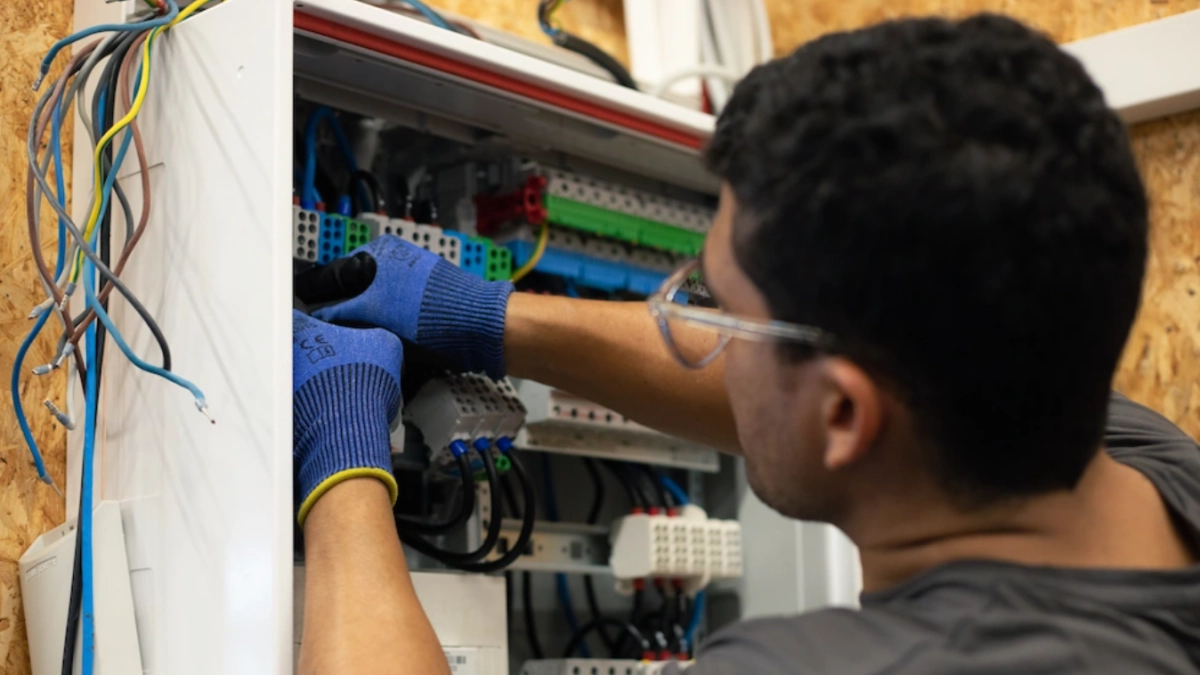
BERLIN — In a brightly lit industrial park on the outskirts of the German capital, the air is thick with a mixture of nervous anticipation and triumphant celebration. One by one, a group of roughly one hundred Colombian electricians step onto a modest wooden stage. As their names are called, the room erupts into a chorus of cheers, whistles, and applause from their peers. They are collecting the official diplomas that accredit their completion of the rigorous, highly specialized first phase of training offered by the Enpal Academy.
For these professionals, this ceremony represents far more than just a certificate; it marks a monumental milestone in a life-altering journey. They have left behind their families, their routines, and their homeland in Colombia to become foundational pillars of Europe’s most ambitious environmental transformation.
Driven by an acute, systemic shortage of skilled domestic labor that threatens to derail its environmental policies, Germany has turned its gaze across the Atlantic. Through strategic cooperation frameworks—including a dedicated migration agreement and vital institutional collaboration with Colombia’s National Training Service (SENA)—major German clean-tech enterprises are actively sourcing, vetting, and retraining hundreds of South American professionals. This initiative is rewriting the playbook on international labor mobility, proving that targeted migration can simultaneously solve a crisis in the Global North while offering unprecedented socioeconomic mobility to workers in the Global South.
Main Facts: The Intersection of Migration and Renewable Energy
At the heart of this bilateral success story is Enpal, a prominent German renewable energy "unicorn" valued at over $1$ billion. Specializing in private residential clean-tech installations—ranging from photovoltaic solar panels to cutting-edge heat pumps—the company has taken matters into its own hands to bypass Germany’s crippling workforce bottlenecks.
To date, Enpal has successfully trained at least 500 Colombian electricians to integrate directly into its permanent workforce. The recruitment and integration model is structured to provide security and clarity from day one:
- Immediate Employment: Unlike traditional migration pathways where workers must secure employment upon arrival, candidates selected through the SENA-Enpal partnership receive an indefinite work contract and a German salary before they even board a plane to Europe.
- Comprehensive Financial Investment: According to corporate disclosures, Enpal invests up to €20,000 per person to cover international flights, intensive language courses, administrative fees, and local accommodation. This is supplemented by an additional €12,000 value per participant dedicated strictly to technical and safety training programs.
- The Training Roadmap: Upon arrival in Berlin, candidates complete an initial intensive six-week integration phase. However, their learning journey does not stop there. They undergo a continuous, supervised period of practical training and on-site mentoring lasting anywhere from five to eleven months. This period ensures the formal recognition of their professional credentials under stringent German standards.
Annika Formanek, Enpal’s Latin America program director, notes that the company’s retention rate speaks volumes about the initiative’s success. Approximately 90% of all participants who begin the training pipeline ultimately remain with the company long-term. While Enpal does employ a modest number of international workers from other nations—including roughly 50 Brazilian technicians—Formanek emphasizes that focusing heavily on a single primary partner nation streamlines the complex web of bureaucratic, legal, and cultural integration.

Chronology: The Journey from Colombian Classrooms to German Rooftops
The path from a career in Colombia to installing clean-tech infrastructure in freezing European winters is meticulously mapped out over many months. Understanding this trajectory highlights the dedication required by both the workers and the sponsoring institutions.
Phase 1: Recruitment and Pre-Departure in Colombia (Months 1–6)
Before any travel takes place, candidates undergo a rigorous multi-stage selection process coordinated through the SENA network. Once chosen, selected electricians enter an intensive preparatory phase entirely funded by Enpal while still residing in Colombia.
During this foundational window, candidates:
- Participate in daily, immersive German language classes to conquer the formidable linguistic barrier.
- Receive administrative and financial assistance to convert their domestic driver’s licenses into valid European equivalents.
- Navigate the complex apparatus of visa applications and the formal recognition (Anerkennung) of their Colombian electrician degrees with German regulatory bodies.
Phase 2: Arrival and Initial Certification (Month 7)
Upon touching down in Berlin, the technicians enter the Enpal Academy. The first six weeks are an intense crucible of cultural orientation, safety compliance training, and familiarization with European electrical grids. The milestone is celebrated with the graduation ceremonies that fill the industrial park with such vibrant camaraderie.

Phase 3: Practical Integration and Field Mentorship (Months 8–18)
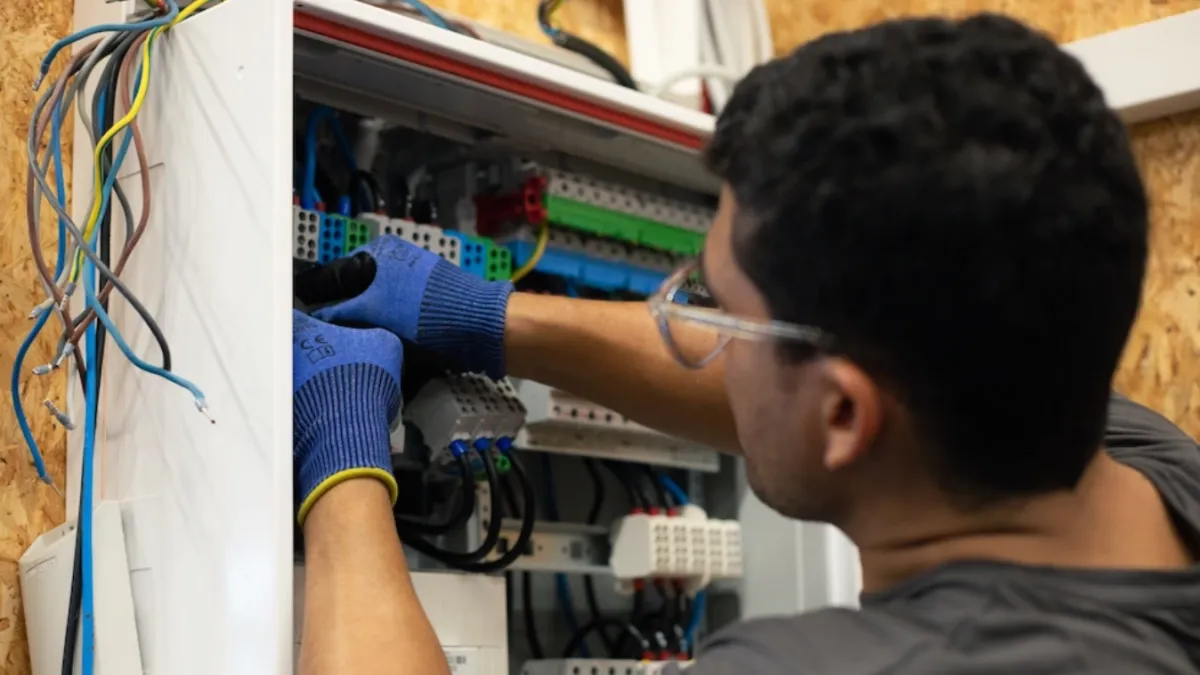
Graduates transition into field operations, working side-by-side with seasoned German mentors. Because residential heating systems in Colombia are virtually nonexistent due to the tropical climate, these professionals must master entirely new technical competencies—specifically, configuring complex electrical frameworks designed to power high-efficiency heat pumps. This supervised phase spans between five and eleven months until full professional homologation is officially achieved.
Supporting Data: The Looming Workforce Crisis in Germany
The urgency behind Enpal’s massive financial and organizational investment in Colombian talent is rooted in stark demographic and economic data. Germany is facing a demographic cliff, and its ambitious climate targets are colliding with a severe deficit of skilled hands.
- The 2030 Deficit: According to comprehensive projections by the Institute for Employment Research (IAB), Germany will require an estimated 160,000 additional qualified workers by the year 2030 solely within the green transition sector.
- The Installation Bottleneck: The Institute of German Economics (IW) has repeatedly warned that a lack of certified technicians—particularly those capable of installing photovoltaic arrays, wind turbine infrastructure, and residential heat pumps—acts as a critical "bottleneck" paralyzing the nation’s broader electrification efforts.
- Financial Scale: With Enpal spending up to €32,000 per candidate in direct and indirect costs, corporate leadership views this expenditure not as a philanthropic expense, but as an indispensable business necessity. Paul Hauer, director of the Enpal Academy founded in 2017, defends the strategy bluntly: "The investment is completely worth it, because today, in these times of labor shortages, there is nothing more important than having motivated and well-trained personnel."
Official Responses and Human Perspectives
While data and corporate balance sheets tell one part of the story, the human element captures the true essence of this bilateral bridge. The transition is marked by profound professional growth, tempered by the stark realities of culture shock and adaptation.

Óscar Llanos is living proof of the program’s transformative power. Having arrived in Germany in 2024 as part of the initial cohort of Colombian electricians, Llanos excelled so rapidly that he has since transitioned into a leadership role as an instructor. Today, he teaches newly arrived compatriots the strict regulatory codes and safety standards required by the German state.
"Universal electricity is the same anywhere in the world," Llanos explained in an interview with international news agencies. However, he is quick to point out the operational divergences born of geography and climate. "Here in Germany, when we arrive as electricians, we must train and learn this new area—preparing all electrical systems so that a heating system can subsequently be installed," he noted, referencing the sustainable heat pumps heavily subsidized by the German government.
Llanos is equally candid about the psychological and social hurdles that accompany such a massive relocation. Beyond the technical retraining, the cultural friction can be jarring.

"The language is, in effect, a very big barrier, as is the culture shock in a country where people, unlike in Colombia, are very direct and value personal space and silence very much," he reflected.
Nevertheless, Llanos champions proactive preparation as the ultimate antidote to homesickness and disorientation. "If we prepare very well from the moment we are in Colombia and we know what country we are going to, then it is going to be a little easier."
Annika Formanek echoes this sentiment, emphasizing that mutual transparency regarding expectations ensures that workers arrive with their eyes wide open, drastically reducing attrition rates and fostering long-term professional fulfillment.

Implications: A Blueprint for Global Labor Mobility
The successful partnership between SENA, the Enpal Academy, and the German regulatory apparatus carries profound implications for international relations, economic policy, and global migration management.
- A Shift from Brain Drain to Brain Circulation: Historically, migration from Latin America to Europe has often been unregulated, leaving workers vulnerable to exploitation or forcing highly qualified professionals into low-wage, informal jobs. Programs like the Colombia-Germany migration agreement establish a structured, legal, and dignified pathway where home credentials are systematically respected, upgraded, and valued.
- Decarbonization Demands Global Collaboration: Germany’s green transition cannot be achieved exclusively within domestic borders. By tapping into the demographic dividend and robust vocational training ecosystems of countries like Colombia, European economies can bypass demographic stagnation while providing meaningful, well-paying employment to international professionals.
- Model for Future Pacts: As other European nations face parallel aging crises and aggressive climate targets, the Enpal-SENA model is rapidly emerging as a gold standard. It demonstrates that when private enterprise, vocational institutions, and national governments align their strategic interests, migration can transform from a political flashpoint into an engine of mutual prosperity.
As the sun sets over Berlin, illuminating rooftops newly retrofitted with gleaming solar panels powered by Colombian expertise, the bridge between Bogotá and the German capital stands stronger than ever—illuminating a path toward a greener, more interconnected global future.