By Judicial Reporting Team
September 14, 2026
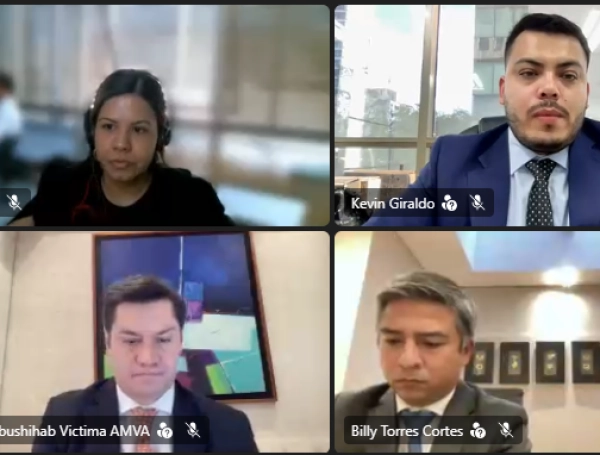
The legal proceedings surrounding the administration of former Medellín Mayor Daniel Quintero have taken a dramatic turn. On Monday, in the 27th Municipal Court of Guarantee Control in Medellín, prosecutors resumed the formal imputation of charges against Miguel Quintero, the former mayor’s brother. The case centers on an alleged elaborate scheme of irregular contracting that reportedly siphoned public funds through the Metropolitan Area of the Aburrá Valley (AMVA) and the Volunteer Fire Department of Itagüí.
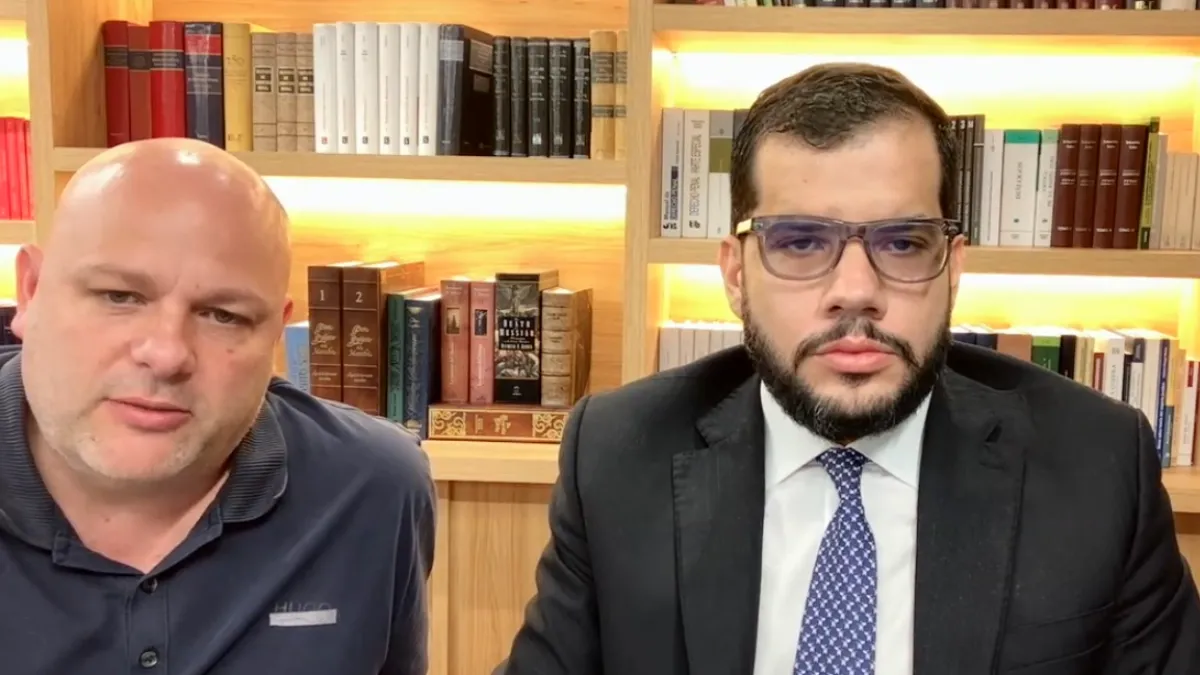
This high-profile case has captivated public opinion in Antioquia, as it directly links the inner circle of the former municipal administration to allegations of systemic corruption. The Fiscalía General de la Nación (Attorney General’s Office) contends that the corruption was not merely an isolated incident, but a structured operation designed to divert public resources into the pockets of private individuals.
The Core Allegations: A Scheme of "Kickbacks"
The prosecution’s case, led by prosecutor Magda Sofía Ramírez, paints a picture of institutional capture. According to the investigation, the illicit scheme operated between August 18, 2020, and November 7, 2021. During this period, six public contracts were signed between the AMVA and the Itagüí Fire Department, totaling approximately $17.656 billion Colombian pesos.

While these contracts were officially justified as necessary procurement for biosecurity kits—a common administrative requirement during the height of the post-pandemic recovery—the prosecution alleges that the stated purpose was a facade.
"There was an explicit agreement intended to obtain an illicit economic consideration of 15 percent of the total value of the contracts," Prosecutor Ramírez stated during the hearing. "This was a mandatory requirement for the contracts to be awarded to the Itagüí Fire Department. The defendants utilized the administrative structure of the Metropolitan Area of the Aburrá Valley to achieve this result."
The prosecution maintains that the 15 percent "cut" was systematically extracted, effectively functioning as a kickback system that defrauded the public treasury. The legal implications are severe, as the charges filed include peculation (misappropriation of public funds) and undue interest in the celebration of contracts—offenses that carry significant prison sentences under Colombian law.
Chronology of the Judicial Process
The investigation into these events has been long and meticulous, involving the cross-referencing of financial records, internal emails, and testimonial evidence.
- August 2020 – November 2021: The window of time during which the six contracts in question were signed and executed.
- Early 2024: Investigative units within the Prosecutor’s Office began consolidating evidence, identifying patterns of irregular bidding and financial outflows that did not match the project’s deliverables.
- Late August 2026: The formal judicial process began, with the scheduling of the initial imputation hearings.
- September 2026: The hearings gained momentum. Prosecutor Magda Sofía Ramírez formally imputed charges against the four primary suspects: Miguel Quintero, Álvaro Villada (former deputy director of administrative and financial management at AMVA), Vanessa Álvarez Restrepo (a former contractor), and Sebastián de Dios Ortega.
- September 14, 2026: The resumption of the imputation hearing in the 27th Court of Guarantee Control, where defense attorneys began their tactical challenge against the prosecution’s narrative.
Defense Strategies: Challenging the "Factual Perimeter"
As the hearing progressed, the defense teams for the four accused individuals launched a coordinated effort to dismantle the prosecution’s technical arguments. The primary goal of the defense is to force the Prosecutor’s Office to define the exact participation of each defendant, arguing that the current charges are overly broad and lack specific evidentiary links.
The Challenge of Katherine Meneses
Katherine Meneses, representing Vanessa Álvarez, requested that the court demand the prosecution provide a precise "factual perimeter." Meneses argued that without specific details regarding her client’s individual actions, it is impossible to mount a proper defense. "The defense needs to know exactly which facts are attributed to my client to ensure her constitutional right to due process is upheld," she noted.

The Argument of David Gómez
David Gómez, representing Álvaro Villada, echoed these sentiments. He requested that the Prosecutor’s Office clarify how his client was expected to intervene in both the pre-contractual and execution phases of the six controversial agreements. The defense aims to prove that administrative decisions made by Villada were within the scope of his official duties and did not constitute criminal activity.
The Defense of Miguel Quintero
Perhaps the most scrutinized defense is that of Santiago Trespalacios, counsel for Miguel Quintero. Trespalacios presented a list of ten specific legal "inquiries" regarding the prosecution’s case. One of his primary arguments centers on the legal definition of "peculation by appropriation."

Trespalacios questioned whether the funds in question, once assigned to the contract, had already effectively become private property, or if they remained under the strict purview of the state. Furthermore, he challenged the prosecution’s claim that Miguel Quintero gave "direct orders" to subordinates, demanding that the Prosecutor’s Office present concrete evidence of how and when these alleged directives were issued.
Broader Implications and Political Context
The scandal surrounding the Quintero administration is not merely a legal matter; it has profound political implications for the legacy of the former mayor. Daniel Quintero, who positioned his administration as a break from traditional politics in Medellín, now faces the reality that his family members are caught in a major corruption investigation.

Institutional Trust and Transparency
The case has sparked a wider conversation about the vulnerability of the Metropolitan Area of the Aburrá Valley (AMVA). As an entity responsible for the environmental and territorial management of the region, the AMVA manages massive budgets. The allegation that this structure was used to facilitate a 15 percent kickback scheme raises questions about the oversight mechanisms within the agency and whether they were intentionally dismantled or circumvented to allow for illicit activity.
The Role of Public Contracting
Experts in public administration point out that the "biosecurity" excuse has been a recurring theme in corruption cases across Latin America during the post-pandemic era. By utilizing the urgency of the health crisis, many local administrations were able to bypass standard competitive bidding processes, creating a fertile ground for "directed" contracts. This case serves as a critical case study for auditors and anti-corruption watchdogs looking to close loopholes that allow for the manipulation of public resources.

Next Steps in the Judicial Process
The court is now tasked with weighing the prosecution’s evidence against the defense’s objections. If the judge finds the evidence sufficient to meet the evidentiary threshold, the case will proceed to the formal trial phase.
The complexity of the defense’s challenges suggests that this case will likely be a prolonged judicial battle. The Prosecutor’s Office is expected to present further documentation, including bank transfers and communications between the defendants, to prove the existence of a criminal conspiracy. For the accused, the stakes are not only their professional reputations but also their personal liberty, as the charges of peculation and interest in the celebration of contracts carry substantial jail time.

As the legal proceedings continue, the public remains attentive. This case is viewed as a litmus test for the independence of the Colombian judiciary in prosecuting high-profile figures. With the eyes of the nation on the 27th Court of Guarantee Control, the outcome of this trial will likely resonate in the political sphere for years to come, potentially reshaping the public perception of the administration that governed Medellín during one of its most turbulent periods.
The judiciary must now balance the need for swift justice with the rigorous requirements of due process, ensuring that the evidence presented is not only substantial but also legally sound in the face of expert legal scrutiny. The coming weeks will be decisive in determining whether the allegations of a multi-billion peso scheme will result in convictions or if the defense’s arguments regarding administrative procedure will prevail.