
International Desk
Published: September 19, 2026 | Updated: September 19, 2026
Main Facts
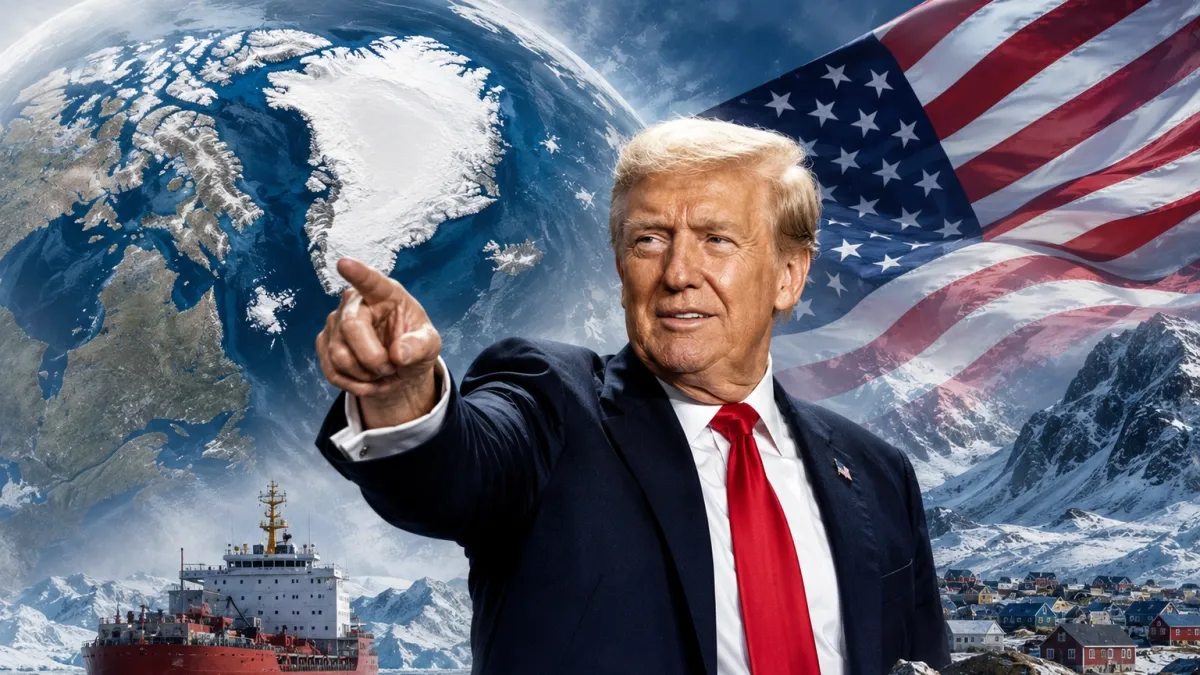
In a geopolitical development that promises to reshape the security architecture of the Arctic and the North Atlantic, United States President Donald Trump announced on Friday the impending formalization of a historic pact with Denmark and Greenland. According to the U.S. administration, the arrangement grants Washington permanent control over the defense and security apparatus of the autonomous Danish territory.
The agreement, described by President Trump as having "infinite life" and no expiration date, establishes that the United States will assume perpetual responsibility for safeguarding both Greenlandic and American soil. Central to the pact are stringent provisions restricting foreign influence: no geopolitical adversary of the United States will be permitted to establish military bases, operational infrastructure, or sensitive investments on the island without express authorization from Washington.
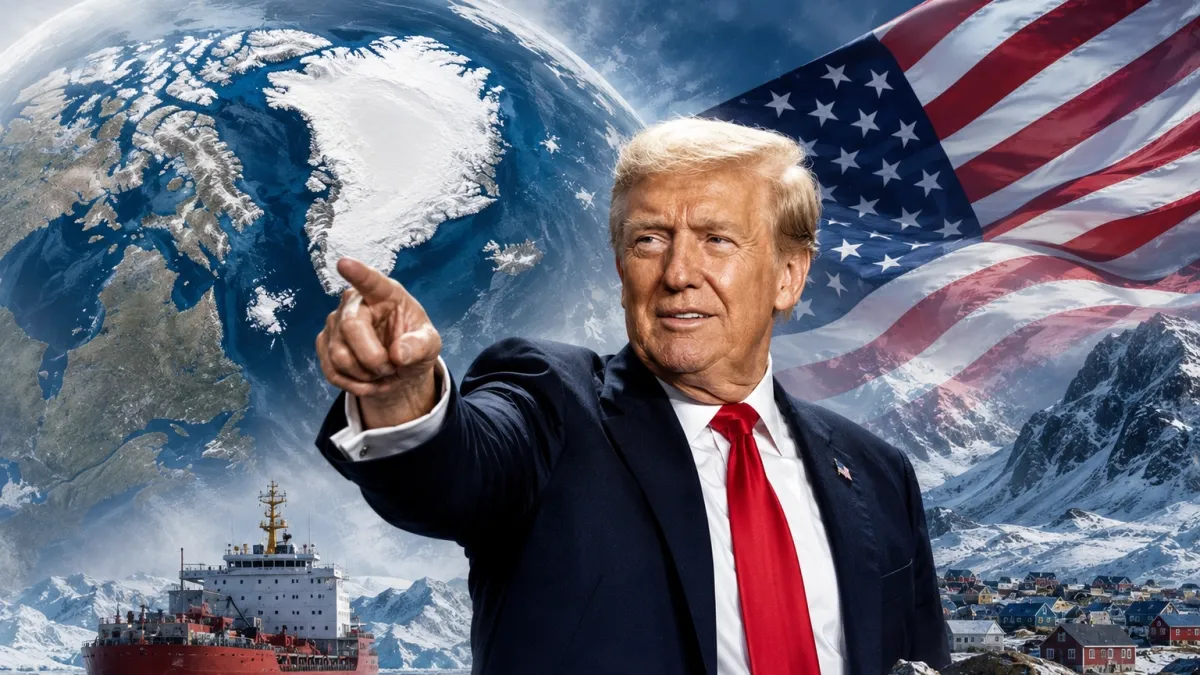
Furthermore, the White House confirmed that the United States will immediately initiate logistical and infrastructural processes to deploy a significant military presence across the island, working hand-in-hand with local Greenlandic populations to construct and maintain strategic defense installations.
While Trump framed the development as an unconditional security takeover, concurrent statements from European and Greenlandic officials emphasized a cooperative framework designed to respect regional sovereignty while addressing escalating strategic pressures in the circumpolar north.
Chronology of the Greenlandic Crisis and Negotiations
The path toward this monumental agreement has been fraught with diplomatic friction, escalations, and persistent ambitions dating back to the earliest days of Donald Trump’s second presidential term.

- January 20, 2026 (Inauguration Day): Returning to the Oval Office, President Trump immediately revived and amplified his longstanding ambitions regarding the world’s largest island. In his inaugural address and subsequent executive briefings, Trump asserted that the United States required direct control over Greenland to guarantee overarching international security in an increasingly contested Arctic corridor.
- March 2026: Tensions between Washington and European capitals reached a fever pitch when the U.S. president publicly refused to rule out the potential use of military force to secure American strategic interests in Greenland, rattling diplomatic channels in Copenhagen and Brussels.
- September 9, 2026: The psychological and political pressure campaign escalated further when Trump published an uncaptioned illustration on his Truth Social platform. The map depicted Greenland, Iceland, Canada, Mexico, and several Caribbean nations blanketed entirely by the United States flag, signaling a sweeping vision of hemispheric and polar dominance.
- September 18–19, 2026: Intensive back-channel negotiations culminated in a breakthrough. President Trump announced the definitive security pact via social media, which was swiftly followed by a joint communiquédiffused by the governments of Denmark and Greenland, setting the stage for a formal signing ceremony.
- Next Week (Upcoming): The tripartite agreement is slated for formal execution during the high-level gatherings of the United Nations General Assembly in New York, after which it will enter national parliamentary review processes.
Supporting Data and Geopolitical Context
To understand the weight of this agreement, analysts must examine the unique geographic, economic, and strategic value of Greenland within the global balance of power.
The Arctic Crossroads
Groenlandia (Greenland) occupies a critical geographic position situated between North America, the North Atlantic, and the Arctic Ocean. As climate change accelerates polar ice melt, new maritime trade routes—such as the Northwest Passage and the Northern Sea Route—are opening up, drastically cutting transit times between Asia, Europe, and the Americas. Controlling Greenland offers unmatched capabilities for early-warning missile defense, space tracking, and naval power projection.
Mineral Wealth and Supply Chains
Beyond military geography, Greenland is sitting on vast, largely untapped deposits of rare earth elements, critical minerals, and strategic resources (including uranium, lithium, cobalt, and graphite). These materials are foundational for modern technology, green energy transitions, and advanced defense manufacturing. For years, Washington has sought to curtail the expansion of foreign competitors—particularly China—in securing mining concessions and infrastructure contracts on the island.
Historical Precedent
The United States is not entirely new to Greenlandic soil. Under a 1951 defense agreement between the U.S. and Denmark, Washington has operated the Pituffik Space Base (formerly Thule Air Base) in northwestern Greenland. However, the new 2026 agreement drastically expands the scope of U.S. operational freedom, moving from a localized Cold War-era radar installation framework to an overarching, permanent security umbrella covering the entire autonomous territory.
Official Responses
The announcement has triggered a wave of reactions across Washington, Copenhagen, and Nuuk, balancing strategic relief with careful assertions of sovereignty.
The United States Perspective
President Trump lauded the agreement as an unprecedented strategic triumph. In his Truth Social announcement, he emphasized:

"This is a deal of indefinite life, it has no end… The United States will begin immediately the process to develop a significant military presence in Greenland, and we will work hand-in-hand with the inhabitants of the island in the development and construction of those facilities."
Trump reiterated that the arrangement permanently locks out hostile powers, ensuring that American security interests from the Arctic to the continental United States remain unimpeded.
The Danish Response
In Copenhagen, Prime Minister Mette Frederiksen sought to reassure domestic and international audiences by framing the arrangement within a framework of mutual cooperation and international law. A joint statement released by the Prime Minister’s Office emphasized that the upcoming signing ceremony next week aims to "strengthen security in the Arctic and the North Atlantic region."

Frederiksen publicly celebrated the "good perspective" of the pact, noting that it successfully balances two critical objectives:
- Strengthening collective deterrence and regional security.
- Unambiguously recognizing the sovereignty and territorial integrity of the Kingdom of Denmark, alongside the fundamental right of the people of Greenland to self-determination.
The Greenlandic Perspective
Jens-Frederik Nielsen, the Prime Minister of Greenland, echoed these sentiments, highlighting that the agreement respects the distinct identity and aspirations of Greenlanders. Nielsen underscored that the pact officially "recognizes the interests" of the island and secures its rightful "place in international cooperation," ensuring that Nuuk retains a voice in how foreign partnerships and local developments are managed moving forward.
Implications and Future Outlook
While the political leadership of the three participating nations prepares to ink the document during the United Nations General Assembly, significant hurdles and profound geopolitical consequences lie ahead.

Parliamentary Hurdles
The joint communique explicitly notes that once the agreement is signed next week, it must undergo necessary legislative and parliamentary procedures within the respective governing bodies before it can legally enter into force. This includes potential debates in the Danish Folketing and the Greenlandic Inatsisartut, where domestic political factions may push back against perceived infringements on complete autonomy.
Reactions from Global Powers
The militarization of the Arctic and the permanent anchoring of U.S. control over Greenland are certain to draw sharp reactions from other global actors, most notably Russia and China. Moscow views the militarization of the circumpolar north with extreme suspicion, while Beijing—which previously attempted to finance civilian airport infrastructure in Greenland—faces a definitive blockade against securing strategic footholds in the American backyard.
The Question of Sovereignty vs. Security
For Greenland’s population of roughly 57,000 residents, the transition toward full independence from Denmark has long been a national aspiration. While the new pact guarantees security and economic engagement with the world’s leading superpower, it also binds the island’s geopolitical future tightly to Washington’s strategic calculus. Navigating the balance between local self-determination and permanent superpower oversight will undoubtedly define Greenland’s political landscape for generations to come.