
By Science Desk
Published: September 12, 2026
Main Facts
Mercurio, the smallest and innermost rocky planet in our solar system, is shrinking at a much faster rate than previously understood. According to a groundbreaking study published this week in Geophysical Research Letters, Mercury has lost as much as 23 kilometers (approximately 14.3 miles) in diameter since its formation roughly 4.5 billion years ago.
For decades, planetary scientists relied on geological models and imaging data from NASA’s MESSENGER mission to estimate that the planet’s diameter had decreased by a modest 4 to 16 kilometers. However, this new research led by Gaku Nishiyama—a planetary scientist at the German Aerospace Center’s (DLR) Institute of Planetary Research—suggests that previous models drastically underestimated the planet’s contraction.
The discrepancy stems from a celestial camouflage effect. Mercury’s surface is heavily battered and rugged, covered in thick layers of impact debris and deep craters that effectively hide the tectonic ridges, scarps, and fractures formed as the planet cooled and contracted. By combining global maps of surface roughness with statistical models of tectonic activity, Nishiyama’s team determined that between 10% and 30% more contraction remains hidden beneath the debris.

This correction aligns empirical observations much more closely with theoretical physics and thermal evolution models, offering astrophysicists unprecedented insight into the composition and internal dynamics of the solar system’s smallest rocky world.
Chronology: From Violent Genesis to Tectonic Contraction
To understand why Mercury is shrinking, scientists must look back to the violent birth of the solar system.

- ~4.5 Billion Years Ago: Like Earth, Venus, and Mars, Mercury formed through the chaotic accretion and collision of rocky planetesimals and asteroids. The colossal kinetic energy unleashed during these impacts generated immense amounts of internal heat, melting much of the nascent planet and forming a massive metallic core.
- The Cooling Phase: Over billions of years, Mercury began to radiate its primordial heat into the cold vacuum of space. As its interior cooled, the planet began to lose volume—behaving much like a deflating balloon losing air in cold weather.
- Tectonic Deformation: To accommodate this steady loss of volume without collapsing inward uniformly, Mercury’s rigid outer rocky shell (lithosphere) was forced to buckle, crack, and fold. This geological stress created towering tectonic cliffs (escarpes) and winding mountain ridges across the planetary landscape.
- The MESSENGER Era (2011–2015): NASA’s MESSENGER spacecraft entered orbit around Mercury, mapping its surface in unprecedented detail and providing the first global dataset of the planet’s tectonic contraction features. However, due to instrument limitations and surface roughness, it could only resolve large structures exceeding five kilometers in diameter.
- September 2026: Gaku Nishiyama and his colleagues publish a revolutionary study in Geophysical Research Letters, revealing that hidden tectonic structures boost total historical contraction estimates up to a staggering 23 kilometers in diameter.
- November 2026 (Upcoming): The joint European Space Agency (ESA) and Japan Aerospace Exploration Agency (JAXA) mission, BepiColombo, is scheduled to begin high-resolution orbital scanning of Mercury, promising to uncover finer tectonic fractures and rewrite our geological understanding of the planet.
Supporting Data and Geological Mechanics
The physical mechanics driving Mercury’s shrinkage are rooted in thermodynamics and planetary interior composition. When a rocky body cools, its constituent minerals and metals contract. However, because Mercury possesses an exceptionally massive metallic core relative to its overall size—accounting for roughly 85% of the planet’s radius—its thermal behavior differs significantly from that of Earth or the Moon.
Key Data Points and Estimates:
- Previous Diameter Reduction Estimates: 4 to 16 kilometers.
- New Revised Global Contraction Estimates: Up to 23 kilometers in total diameter loss.
- Hidden Tectonic Yield: 10% to 30% more contraction concealed beneath impact craters and regolith debris.
- Resolution Limit of MESSENGER: Capable of identifying tectonic features larger than 5 kilometers in diameter, leaving smaller fractures undetected.
- Core-to-Mantle Ratio: A higher degree of planetary shrinkage implies a larger metallic core, potentially containing fewer light elements (such as silicon) mixed into the iron-nickel matrix, or a vastly higher initial formation temperature.
“A 30% increase is a bit surprising, but the corrected amount of contraction actually makes sense to me,” notes study lead author Gaku Nishiyama. By accounting for the "gravel road" effect—where impact-generated rubble buries tectonic footprints—the research team successfully bridged the persistent gap between theoretical physics predictions and physical observations.

Official Responses and Expert Perspectives
The scientific community has received the findings with a mix of validation and eager anticipation for upcoming exploratory data. Planetary geologists have long debated the exact thermal history of Mercury, as its massive core poses unique challenges to traditional planetary formation models.
“More encogimiento [shrinkage] means that Mercury could have a larger metallic core, fewer light elements like silicon mixed into the metal core, or a higher initial temperature,” explains Gaku Nishiyama, detailing the far-reaching implications of the team’s statistical models.

Astrophysicists emphasize that accurately quantifying Mercury’s contraction acts as a master key for understanding planetary evolution across the universe. By refining our models of how inner planets cool and lose volume, scientists can better interpret the evolutionary trajectories of rocky exoplanets discovered orbiting distant stars.
Despite the robustness of the new statistical mapping, researchers readily acknowledge that their current figures may still represent a conservative estimate. Because legacy data from NASA’s MESSENGER mission could only resolve features larger than five kilometers, an untold network of micro-fractures and minor escarps remains completely hidden from view.

Implications for Future Exploration: The BepiColombo Mission
The limitations of past observations are precisely why the planetary science community is holding its collective breath for the arrival of the BepiColombo spacecraft.
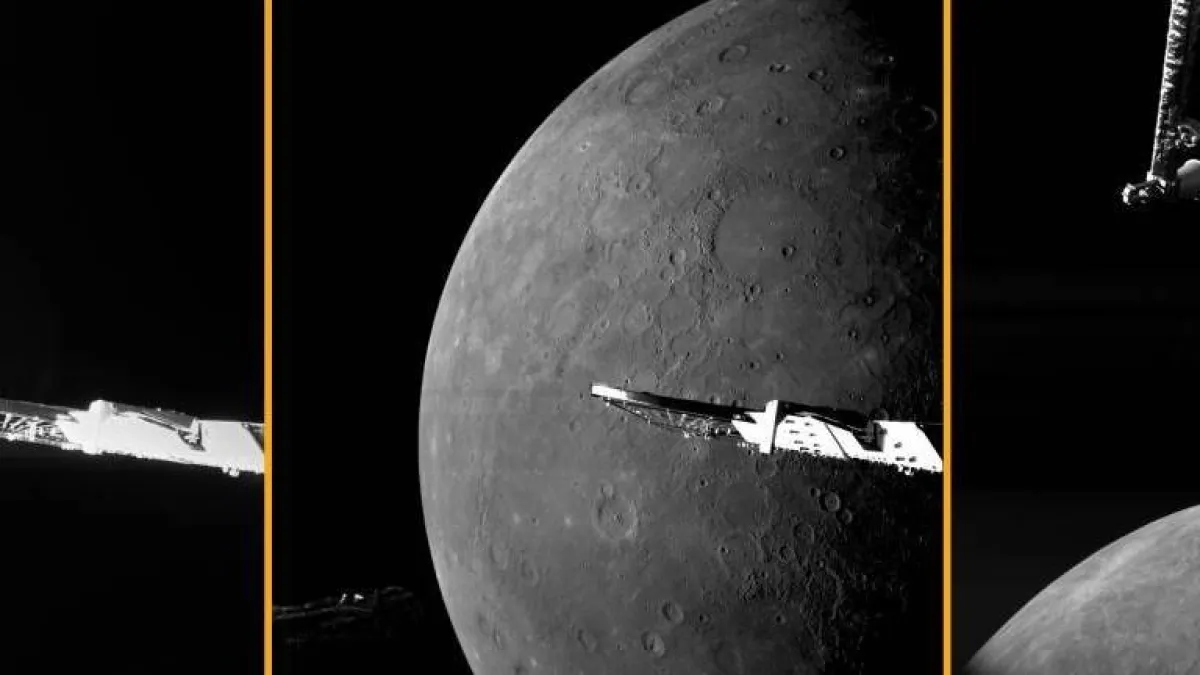
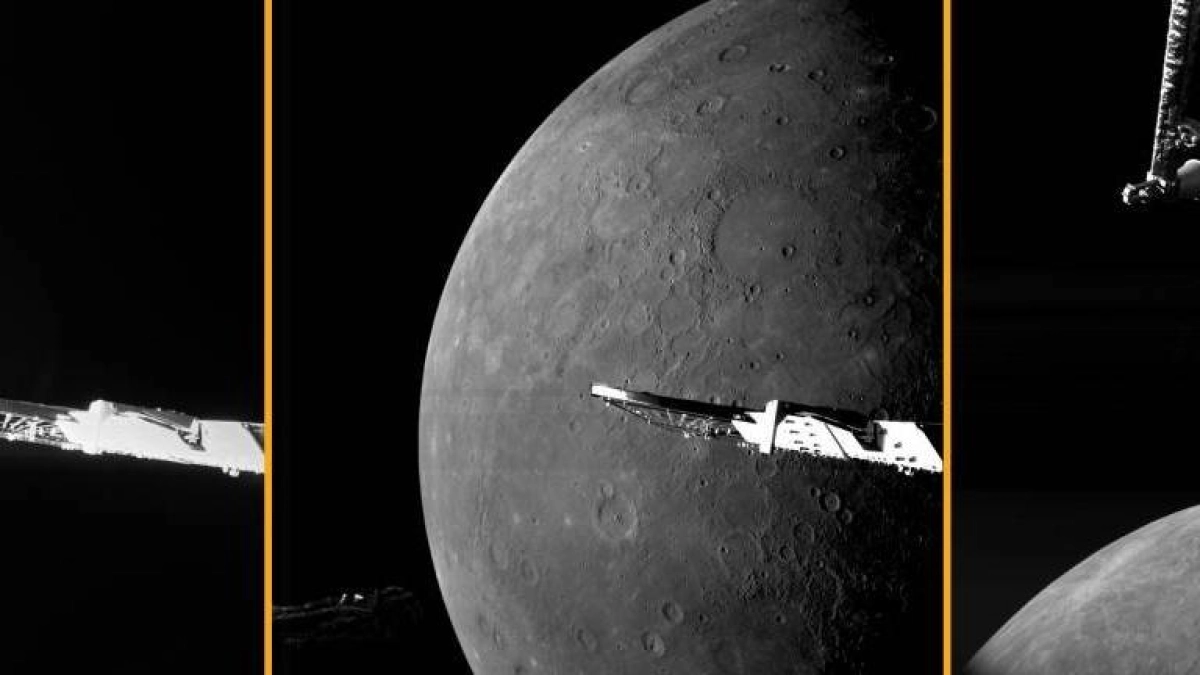
Jointly developed by the European Space Agency (ESA) and the Japan Aerospace Exploration Agency (JAXA), BepiColombo represents humanity’s third-ever mission to Mercury—and the most technologically advanced attempt to study the planet’s harsh environment up close. Having captured initial flyby imagery in early 2025, the spacecraft is slated to enter full, high-resolution orbital mapping operations in November 2026.

Equipped with advanced multi-wavelength spectrometers, high-resolution stereo cameras, and sensitive laser altimeters, BepiColombo will peer beneath the veil of cosmic debris. Researchers anticipate that the mission will reveal an abundance of micro-scarps, minor ridges, and hidden tectonic fault lines with a level of clarity never before achieved.
What BepiColombo Aims to Resolve:
- The Micro-Tectonic Inventory: Detecting tectonic faults smaller than the 5-kilometer threshold set by MESSENGER, potentially pushing total contraction estimates even higher.
- Core Composition Mapping: Providing precise gravitational and magnetic field measurements to confirm the exact size, state, and chemical makeup of Mercury’s oversized iron core.
- Surface-Interior Coupling: Linking surface tectonic features directly to deep-mantle and core thermal dynamics, finalizing our understanding of how small rocky worlds cool over billions of years.
As the scientific community awaits BepiColombo’s official data stream later this year, the revelation that Mercury has shrunk by up to 23 kilometers serves as a powerful reminder of our solar system’s dynamic, violent, and continuously evolving nature.