By Laura Daniela Alarcón Vargas
Updated: September 19, 2026
Executive Summary: The Main Facts
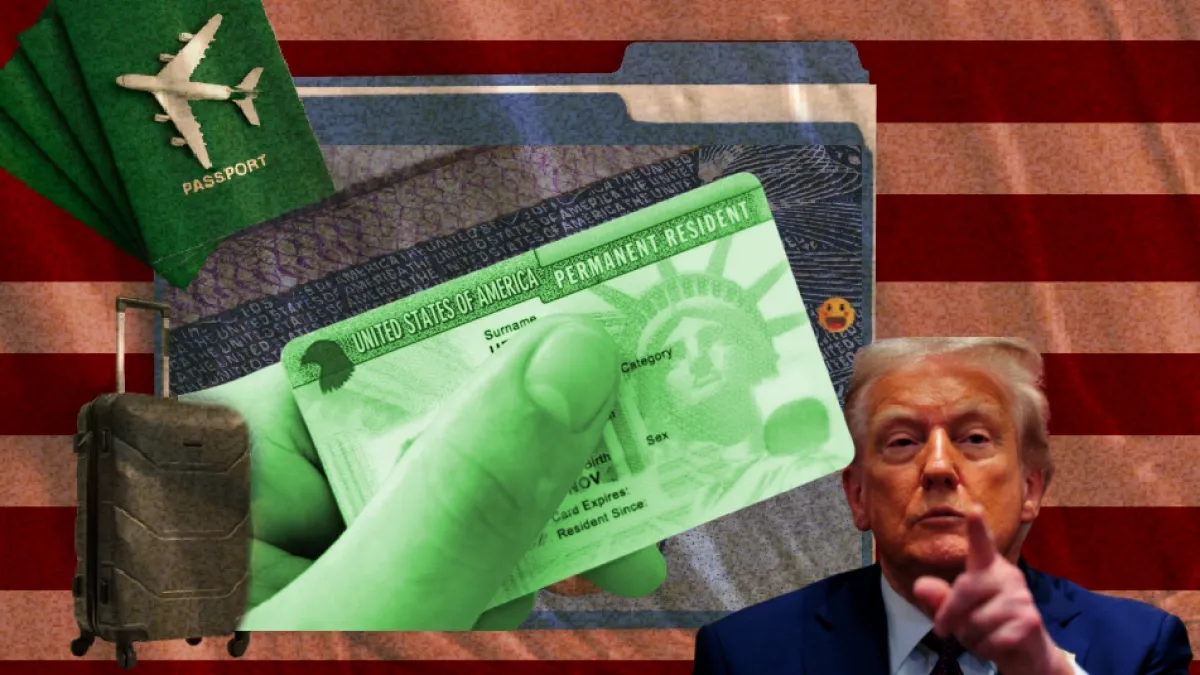
A sweeping and controversial new federal regulation officially entered into force, fundamentally altering the landscape for legal immigrants seeking permanent residency in the United States. Implemented by the administration of President Donald Trump, the updated rule establishes significantly stricter financial evaluation criteria for applicants striving to obtain a "Green Card."
At its core, the regulatory overhaul redefines the historical legal concept of a "public charge." Under the newly enacted framework, immigration officials are empowered to scrutinize a much broader spectrum of state and federal assistance programs utilized by applicants—or even requested on behalf of members of their immediate households, such as U.S.-citizen children.
Despite swift legal pushback and active lawsuits filed in federal courts by coalitions of states and municipalities, the Department of Homeland Security (DHS) maintains that the regulation is a necessary step to restore the core principle of immigrant self-sufficiency, protect taxpayer resources, and reverse policies from previous administrations that fostered systemic reliance on public assistance.
Chronology: The Evolution of the "Public Charge" Rule
To fully understand the gravity of the 2026 regulatory shift, it is essential to trace how the definition of "public charge" has transformed across different presidential administrations since the late 19th century:
- 1882 (The Immigration Act): The foundational U.S. immigration statute established the initial legal framework granting the federal government the authority to deny entry or permanent residency to any individual deemed unable to financially sustain themselves independently.
- 1999 (The Clinton Administration): Guidance issued under President Bill Clinton strictly narrowed the application of the public charge category. It focused almost exclusively on individuals who depended primarily on direct cash assistance for income maintenance—such as Supplemental Security Income (SSI) and Temporary Assistance for Needy Families (TANF)—alongside long-term institutional care funded by Medicaid.
- 2019–2020 (The First Trump Administration): During his initial term, President Trump sought to aggressively expand the definition to penalize immigrants utilizing non-cash public benefits, including housing assistance, food stamps (SNAP), and non-emergency Medicaid. Although implemented in 2020, this iteration was subsequently struck down by federal courts and formally repealed by the incoming administration.
- 2022 (The Biden Administration): The administration of Joe Biden enacted a standardized rule that strictly limited public charge evaluations to the receipt of cash assistance for income maintenance or government-funded long-term institutionalization. Crucially, the 2022 regulation explicitly clarified that benefits received by family members would not be held against an individual applicant.
- July–September 2026 (The Current Reversal): Following a new regulatory proposal published earlier in the year, the Trump administration officially repealed the 2022 framework. The newly expanded rule took effect, immediately widening the scope of disqualifying social programs and granting broad discretionary authority to immigration adjudicators.
Supporting Data and Quantitative Impact
The financial and demographic implications of the updated public charge rule are vast, impacting hundreds of thousands of applicants directly and millions more through a profound psychological "chilling effect."

Direct Applicants Affected
According to official statistics provided by the Department of Homeland Security, an estimated 588,000 applicants for lawful permanent residency are subjected to public charge evaluations annually. Under the prior framework, the vast majority of these individuals cleared the financial hurdle unless they were entirely dependent on direct cash welfare. The new guidelines, however, introduce rigorous scrutiny regarding past, present, or potential future use of means-tested non-cash programs.
The Chilling Effect: Voluntary Disenrollment
Independent policy research and data from advocacy organizations, such as the Center for Law and Social Policy (CLASP), indicate that the true scope of the regulation extends far beyond direct Green Card applicants. The DHS itself projects that roughly 950,000 individuals across the country could voluntarily withdraw from—or completely forgo enrolling in—six major state and federal support programs due to fear, misinformation, or confusion surrounding the rule’s reach.
It is critical to note a key structural distinction: undocumented immigrants are not impacted by this specific mechanism, as their legal status already bars them from accessing federal public assistance benefits. The regulation directly targets legal residents, green card applicants, and mixed-status families.

Broader Economic Fallout
An extensive economic study conducted by researchers at George Washington University paints a stark picture of the macroeconomic fallout tied to the policy. The research estimates that up to 3.7 million individuals living in immigrant households could systematically drop out of vital housing, healthcare, and nutritional assistance networks.
The cascading effects of this massive withdrawal are projected to cause:
- $27.4 billion in direct economic losses for state and local economies, driven by a sharp contraction in commercial activity and reduced revenues for community healthcare providers and grocery suppliers.
- The endangerment of up to 212,000 jobs tied directly to the health, retail, and social services sectors that rely on federal and state benefit expenditures.
Official Responses and Justifications
The divergence in perspective between the federal government and advocacy groups highlights deep ideological and economic divisions over the role of immigration in American society.

The Department of Homeland Security (DHS) Perspective
Defending the regulation through official communications, including statements published on the social media platform X (formerly Twitter), the DHS emphasized a return to traditional American values of fiscal responsibility and personal accountability:
"Under the presidency of Donald Trump, the DHS is restoring the fundamental principle that immigrants must be capable of supporting themselves. We reaffirm the necessity of self-sufficiency, protect public resources, and put an end to policies that encouraged the dependency of hardworking American taxpayers."
Although the sweeping administrative text does not exhaustively list every single program subject to discretionary review, it explicitly establishes that immigration officials will evaluate the receipt of any public assistance program subject to means-testing.

According to analyses provided by policy experts like Maddie Geschu, director of policy and advocacy at the Protecting Immigrant Families Coalition, this sweeping language opens the door for officials to weigh programs funded by taxpayer dollars that assist with low-income healthcare, nutritional support, and housing assistance.
Social, Humanitarian, and Economic Implications
Child welfare advocates, public health experts, and legal scholars have sounded the alarm over the immediate real-world consequences of the regulation, warning that administrative rigidity could harm vulnerable populations.
Risks to Child Nutrition and Healthcare
Public health professionals argue that the rule forces parents into an impossible ethical dilemma: choosing between securing legal status and providing basic sustenance for their children.

Clarissa Hayes, deputy director of child nutrition programs and policies at the Food Research & Action Center, offered a sharp critique of the administration’s approach in an interview with CNN:
"No parent should ever have to choose between feeding their children and keeping their family united. We cannot allow fear and confusion to determine whether a child will have enough to eat or not."
Broad Discretionary Power and Potential Abuse
Legal analysts have expressed severe reservations regarding the broad interpretive latitude granted to individual immigration adjudicators. Maddie Geschu warned that the vagueness of the rule "opens the door to abuses in the green card issuance process driven by partisan politics or personal prejudice." Because adjudicating officers possess wide discretion in weighing the "totality of circumstances"—including an applicant’s health, family status, assets, and financial resources—critics argue the process lacks objective, predictable standards.
Legal Challenges and the Judicial Horizon
Recognizing the potentially devastating toll the regulation could inflict on local healthcare systems, municipal budgets, and regional commerce, a powerful coalition of institutional actors has mobilized in the federal court system.

State and Municipal Lawsuits
A coalition comprising 22 U.S. states and the District of Columbia—spearheaded by the State of New York—officially filed a comprehensive lawsuit in the U.S. District Court for the Southern District of New York, seeking an immediate injunction to halt the implementation of the rule.
In a coordinated legal maneuver, a separate consortium of major American cities, led by municipal leadership, filed a parallel action in the same jurisdiction.
Core Legal Arguments
The plaintiffs argue that the federal regulation is arbitrary, capricious, and exceeds statutory authority under the Administrative Procedure Act (APA). Specifically, the legal challenges contend that:

- Shifting Financial Burdens: The mass disenrollment of families from social programs will not save government funds; rather, it will shift emergency medical and social service costs directly onto municipal and state budgets as untreated conditions escalate into health crises.
- Compromising Public Health: Discouraging legal residents from utilizing preventative healthcare and nutritional programs directly threatens community-wide health and safety.
- Unconstitutional Discretion: The broad criteria grant unchecked administrative power to immigration officials, violating due process guarantees.
Upcoming Court Dates
Following the rule’s enactment date, federal District Judge Ronnie Abrams of the Southern District of New York scheduled the initial critical court hearing. During this session, the judiciary will weigh arguments regarding whether to issue a preliminary injunction suspending the enforcement of the regulation while the broader litigation moves forward.
As the legal battles unfold in federal court, millions of immigrant families across the United States are left navigating an increasingly complex, uncertain, and restrictive pathway toward permanent legal residency.
This article was developed with the assistance of artificial intelligence tools and thoroughly reviewed, edited, and fact-checked by professional journalistic staff.