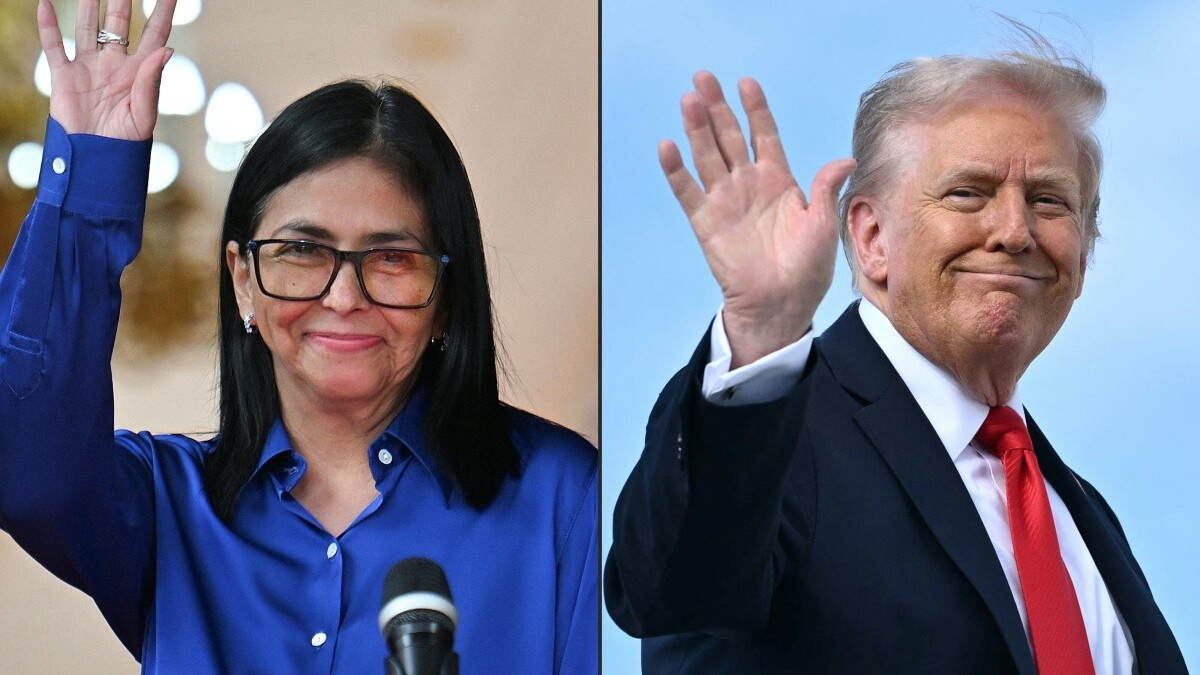
NEW YORK — In a diplomatic development that has immediately captured global attention, the White House announced on Friday, September 18, 2026, that United States President Donald Trump is scheduled to hold a high-level meeting with Delcy Rodríguez, representing Venezuela. The encounter is set to take place in New York City, running in parallel with the American leader’s intensive agenda at the United Nations General Assembly.
This unexpected diplomatic touchpoint represents a critical juncture in hemispheric relations, occurring against the backdrop of shifting geopolitical alliances, years of intense economic sanctions, and evolving diplomatic postures between Washington and Caracas. As international observers scramble to parse the implications of this summit, the meeting stands out as one of the most significant bilateral engagements involving the Venezuelan leadership in recent memory.
1. Main Facts
The official announcement, made by the White House press office on Friday afternoon, confirmed that the encounter between President Donald Trump and Delcy Rodríguez has been formally integrated into the schedule surrounding the high-level UN events in Manhattan.
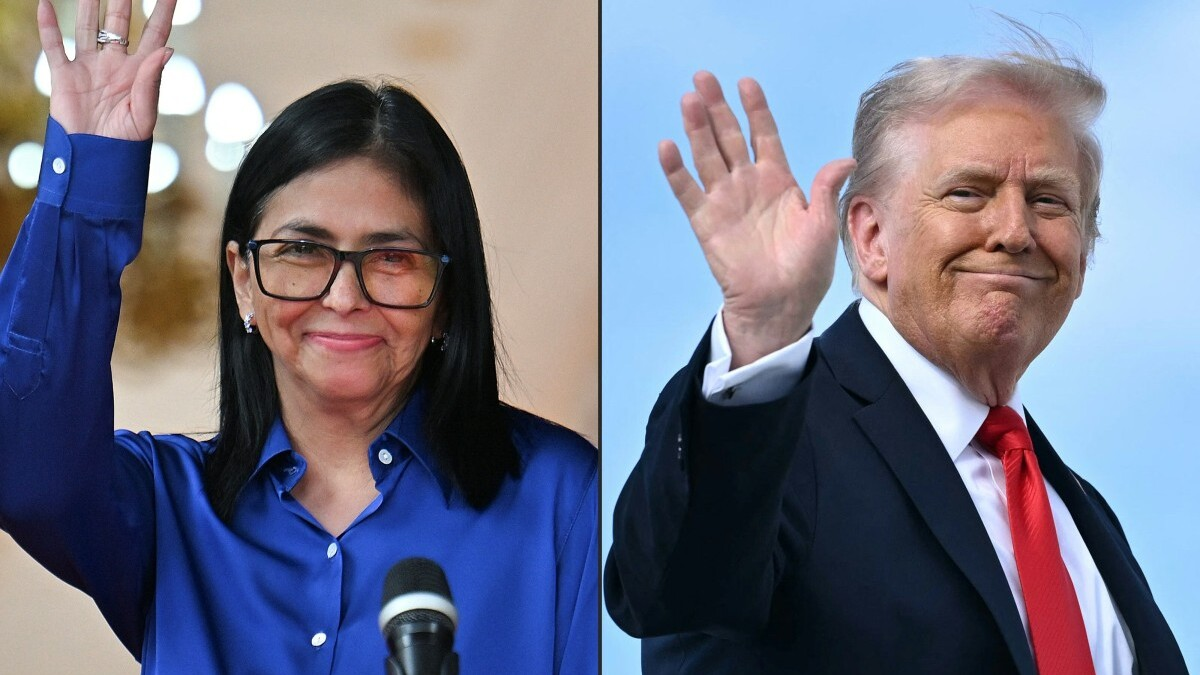
- The Participants: The meeting brings together U.S. President Donald Trump and Delcy Rodríguez, who holds a central role in the governance and representation of Venezuela.
- The Location: New York City, strategically timed to coincide with the high-profile diplomatic traffic of the United Nations General Assembly.
- The Timing: Announced on Friday, September 18, 2026, with the specifics of the agenda closely guarded by diplomatic handlers.
- The Nature of the Meeting: While details remain fluid as the story develops, the encounter marks a notable face-to-face interaction between the current U.S. administration and the highest tiers of Venezuelan political representation.
The summit bypasses traditional intermediate channels of communication, placing the leadership directly across the negotiating table from one another. Given the historical friction and complex web of sanctions, policy restrictions, and diplomatic friction that have defined U.S.-Venezuela relations over the past decade, the mere confirmation of this meeting has sent ripples through international policy circles.
2. Chronology of Events Leading to the Summit
To understand the weight of the upcoming New York meeting, it is essential to trace the trajectory of bilateral interactions and political shifts that have set the stage for this encounter.
Years of Maximum Pressure and Stalemate
For the better part of the decade, relations between Washington and Caracas were locked in a paradigm of "maximum pressure." The United States, under various administrations including previous terms of President Trump, imposed sweeping economic sanctions targeting Venezuela’s vital state-owned oil enterprise, Petróleos de Venezuela, S.A. (PDVSA), alongside numerous individual sanctions against top Venezuelan officials. Diplomatic missions were scaled back, and formal embassy presences were largely suspended amid contested elections, allegations of democratic backsliding, and severe humanitarian crises within the South American nation.
The Shift Toward Pragmatic Re-engagement
As global energy markets faced unprecedented shocks and geopolitical priorities shifted in the mid-2020s, backchannel communications gradually opened. Energy security concerns, migration pressures across the Americas, and the global imperative to stabilize supply chains prompted subtle shifts in foreign policy approaches. Over recent months, lower-level diplomatic delegations, energy sector intermediaries, and international facilitators laid the groundwork for more direct dialogues.
The Road to New York: September 2026
The convergence of international leaders in New York for the United Nations General Assembly traditionally provides a neutral, high-security staging ground for bilateral talks that might otherwise be politically explosive to arrange in domestic capitals. Rumors of a thaw intensified earlier in the week before the White House officially broke the news on September 18, confirming that high-level scheduling had cleared the way for Trump and Rodríguez to meet face-to-face.
3. Supporting Data and Context
Analyzing the economic and geopolitical matrices surrounding this meeting provides vital context for why this encounter matters to global markets and regional stability.

Energy Markets and Economic Stakes
- Oil Reserves: Venezuela possesses the largest proven oil reserves in the world. For years, the exclusion of Venezuelan crude from Western markets due to sanctions disrupted global energy equilibria.
- Production Capacity: While Venezuelan oil infrastructure has suffered from underinvestment, technological decay, and mismanagement, the potential for rehabilitation remains a focal point for international energy conglomerates.
- Global Supply Chains: The search for stable, diversified energy sources in the post-pandemic and conflict-impacted global economy has placed renewed emphasis on hemispheric energy cooperation.
Migration and Regional Stability
- Humanitarian Outflows: The socioeconomic collapse in Venezuela generated one of the largest displacement crises in modern history, with millions of citizens relocating across Latin America, the Caribbean, and into the United States.
- Border Security: Both Washington and regional governments view migration management as a top-tier security and humanitarian priority. Any sustainable, long-term solution requires institutional coordination and economic stabilization within Venezuela itself.
Diplomatic Architecture
- Multilateral Frameworks: While the meeting occurs on the sidelines of the UN General Assembly—a body designed to foster multilateral dialogue—the format of the Trump-Rodríguez encounter leans heavily on traditional, bilateral power-politic mechanics.
4. Official Responses and International Reactions
As news of the scheduled summit broke, political capitals across the Americas and Europe mobilized to issue statements, assess the diplomatic fallout, and posture for potential shifts in policy.
Washington’s Perspective
Within the U.S. capital, reactions to the announcement have been sharply nuanced. Supporters of pragmatic diplomacy argue that direct engagement is the only realistic method to address pressing security, humanitarian, and economic concerns in the Western Hemisphere. Conversely, critics and hardline lawmakers have expressed skepticism, cautioning against any premature concessions that might undermine democratic benchmarks or human rights accountability. The White House has maintained a disciplined communications stance, emphasizing that the meeting is part of a broader, results-oriented foreign policy strategy focused on American interests and regional stability.
Caracas’s Position
From the perspective of Venezuelan leadership, the meeting is viewed as an acknowledgment of political reality and a step toward normalizing international standing. Venezuelan state media and official spokespersons have frequently signaled a willingness to engage in dialogue based on mutual respect, sovereignty, and the lifting of what they term "illegal and coercive unilateral measures." The inclusion of Delcy Rodríguez in this high-level capacity underscores her pivotal role in navigating the administration’s domestic and international balancing acts.

Regional and Global Reactions
- Latin American Governments: Governments across the region—ranging from progressive administrations to conservative coalitions—have monitored the development closely. Many have long advocated for a de-escalation of sanctions and a negotiated political settlement to curb migration and foster economic recovery.
- European Union: European diplomatic corps have historically favored negotiated transitions and dialogue, welcoming any initiative that reduces confrontation and opens channels for humanitarian assistance.
5. Geopolitical Implications
The decision by President Donald Trump and Delcy Rodríguez to meet in New York carries profound implications that extend far beyond the immediate photograph-op on the sidelines of the United Nations.
Redefining Hemispheric Engagement
For years, the U.S. approach to Caracas was characterized by non-recognition and diplomatic isolation. A face-to-face summit signals a potential transition from isolationism to transactional, pragmatic diplomacy. If the meeting yields tangible outcomes—such as frameworks for political dialogue, electoral transparency roadmaps, or structured energy agreements—it could redefine how Washington interacts with governments it has historically opposed.
The Domestic Political Calculus
Domestically within the United States, foreign policy moves involving Venezuela are fraught with electoral sensitivities, particularly in key swing states with significant diaspora populations. The administration must carefully balance the strategic imperatives of global energy markets and border security against the domestic political costs of appearing to soften its stance on authoritarian governance.

Long-term Stability and Reconstruction
Ultimately, the success or failure of this diplomatic opening will be measured by its impact on the ground in Venezuela. For the millions of citizens affected by economic hardship and political polarization, any shift in U.S. policy holds the potential to alter their daily realities. Whether this meeting marks the beginning of a durable reconciliation or merely a temporary tactical dialogue remains one of the most critical questions facing contemporary international relations.
As this is a developing story, updates will continue to be provided as official statements and further schedule details emerge from New York.