Analysis — Based on factual events, incorporating journalistic context, interpretation, and strategic evaluation.
Main Facts
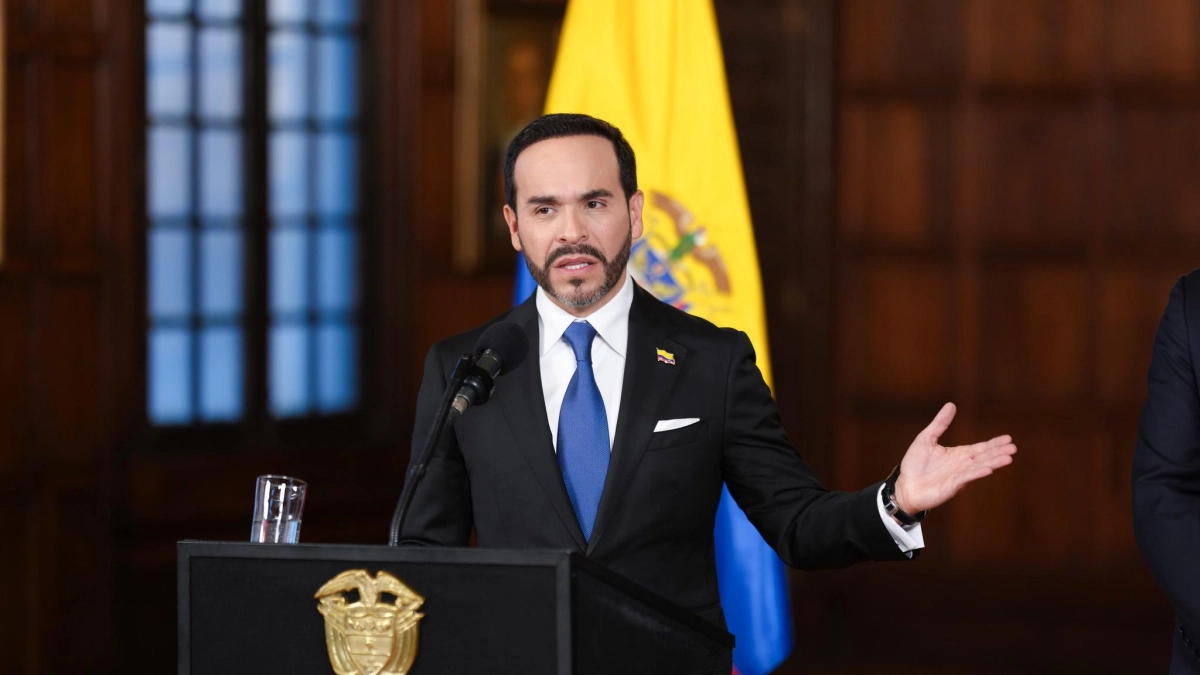
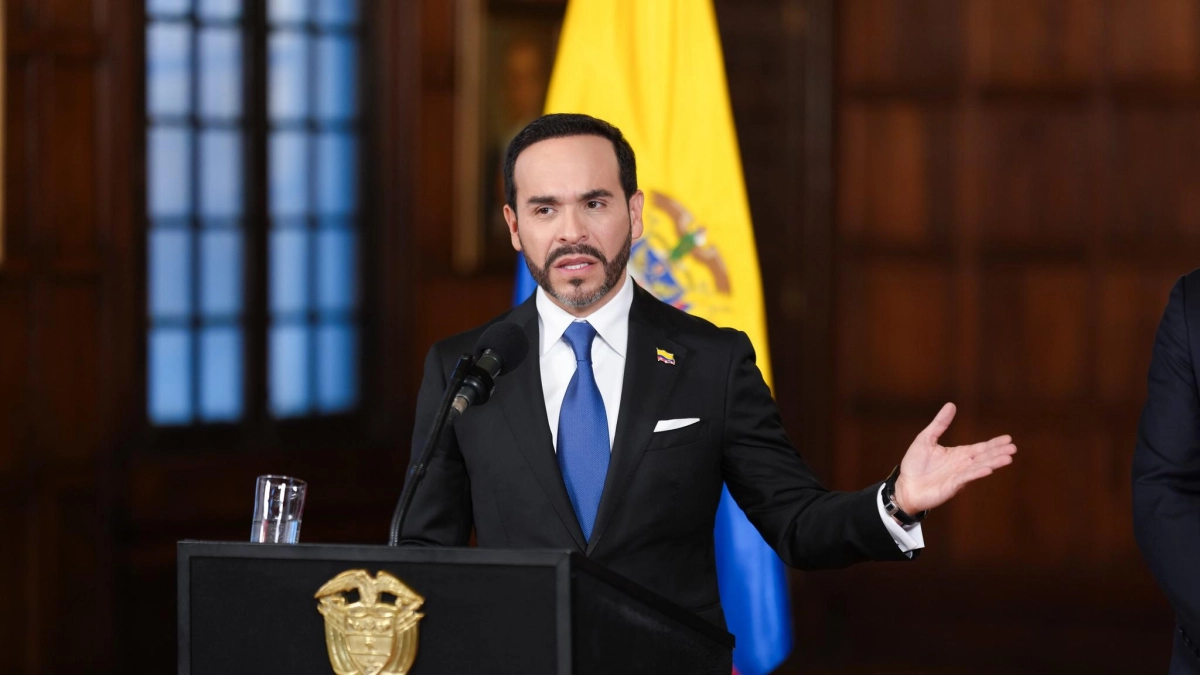
As the clock ticks down on the state of economic, social, and ecological emergency declared in the wake of the catastrophic August 10 earthquake, the government of President Abelardo De La Espriella has made a sweeping and aggressive legislative push. With just 24 hours remaining before the expiration of the initial emergency powers—unless a presidential extension of 30 days is formally invoked—the executive branch promulgated 15 new decrees. These measures stack on top of the 11 original emergency decrees issued in the immediate aftermath of the disaster, forming a massive legal and financial framework designed to reshape recovery efforts across the affected regions.
Drafted and issued through key government bodies—chiefly the Ministry of Finance and Public Credit, the Department of Social Prosperity (DPS), and the National Planning Department (DNP)—the new directives bypass normal legislative channels. They provide the administration with extraordinary tools to bypass bureaucratic bottlenecks.
The core objectives of this 15-decree package are multifaceted:
- Streamlined Procurement: Authorizing fast-track direct contracting to accelerate public works, rubble clearing, and infrastructure rebuilding.
- Territorial Management: Designating specific new zones for debris disposal and environmental management.
- Social Relief Protocols: Establishing clear, binding guidelines for the transparent and rapid delivery of subsidies to affected families.
- Educational Infrastructure Rerouting: Altering the destination of existing educational funds to prioritize immediate post-disaster school reconstruction.
- Fiscal Relief: Introducing targeted tax incentives and breaks for individuals and corporations tied to the disaster zones.
By consolidating these powers on the eve of the emergency’s expiration, the De La Espriella administration has signaled that normal legislative mechanisms are far too sluggish to handle the macro-economic and social fallout of the August 10 seismic event.
Chronology of the Crisis and Legislative Response
To understand the weight of these final-hour decrees, it is vital to trace the timeline of events that forced the executive branch into this extraordinary legislative sprint.
- August 10, 2026: A major earthquake strikes, causing widespread structural devastation, loss of life, and crippling infrastructure damage across multiple departments. In response, President Abelardo De La Espriella invokes constitutional powers to declare a State of Economic, Social, and Ecological Emergency.
- August 11 – September 17, 2026: The initial phase of disaster response unfolds. The government issues its first 11 emergency decrees, focusing on immediate search-and-rescue operations, emergency humanitarian aid, temporary housing, and the mobilization of civil defense and military assets. However, bureaucratic hurdles, funding deficits, and logistical snarls slow down long-term planning.
- September 18, 2026 (The 48-Hour Window): With the initial emergency period nearing its statutory expiration, and recognizing that standard congressional pathways cannot move fast enough to authorize the massive capital injection required for reconstruction, the executive branch shifts into overdrive.
- September 18, 2026 (Late Afternoon): The Ministry of Finance, DNP, and DPS officially release 15 new structural decrees. These include Decree 1412 (budgetary addition), Decree 1413 (private sector tax incentives), and Decree 1414 (reallocation of subnational royalties and guarantees).
- September 19, 2026 (Projected Expiration): The formal deadline for the initial emergency period. Speculation remains high as to whether President De La Espriella will exercise his constitutional prerogative to extend the state of emergency for an additional 30 days to oversee the implementation of these sweeping new rules.
Supporting Data: Deep Dive into Key Decrees
The newly published legal framework relies on heavy financial re-engineering and aggressive tax incentives. Three foundational decrees illustrate the scope of the government’s strategy:
Decree 1412 of 2026: The Multibillion-Peso Budgetary Bypass
Issued by the Ministry of Finance and Public Credit, Decree 1412 executes a staggering budgetary addition of 624,656,000,000 pesos (approx. $150 million+ USD depending on exchange fluctuations) dedicated entirely to emergency response and structural rehabilitation.

The rationale embedded within the legal text is unapologetic about bypassing the legislature. The decree explicitly notes:
“Attending to the gravity, magnitude, and over-occurring character of the needs derived from the disaster situation that led to the declaration of the State of Economic, Social, and Ecological Emergency, and to the need to immediately dispose of the resources required to conjure the crisis and prevent the extension of its effects, the ordinary mechanisms of modification and addition of the General Budget of the Nation are neither sufficient nor timely to address the budgetary needs identified within the term required by the emergency.”
In simple terms, the administration has weaponized its emergency status to bypass Congress, arguing that legislative debate would cost precious weeks that victims simply do not have.
Decree 1413 of 2026: Incentivizing Private Capital
Recognizing that public funds alone cannot shoulder the immense financial burden of a national reconstruction effort, the Ministry of Finance enacted Decree 1413. This measure creates a robust matrix of tax and economic incentives tailored specifically to draw private sector capital into the affected regions.

To qualify for these benefits, corporations and investors must inject a mandated volume of capital directly into productive economic activities within disaster zones. Furthermore, the decree opens the door for private enterprises that repurpose their own production plants, machinery, or industrial equipment for the rebuilding effort, granting them equal access to the incentives.
Key benefits outlined in Decree 1413 include:
- Preferential Income Tax Rates: Corporate income tax rates slashed to as low as 15% for qualifying investments in the reconstruction zones.
- Accelerated Depreciation: Permitting businesses to rapidly depreciate property, plant, and productive equipment acquired, constructed, or rehabilitated as part of certified post-disaster investment projects.
- VAT Exemptions: Specialized Value Added Tax (IVA) exemptions and waivers for capital goods and raw material imports destined for approved productive projects within the emergency zones.
Decree 1414 of 2026: Reallocating Royalties and Suspending Red Tape
Drafted by the National Planning Department (DNP), Decree 1414 targets subnational financial structures. It authorizes regional authorities to redirect up to 60 percent of direct resource allocations, direct investment allocations, and local investment allocations from the General System of Royalties toward emergency mitigation and reconstruction.
Additionally, the decree permits regional entities to mobilize up to 30 percent of their existing cash balances, provided that the resulting projects are initiated before December 31, 2026. To complement this, the measure unlocks the use of 5 percent of advance payments derived from non-renewable natural resource revenues specifically for crisis response. Crucially, the decree suspends a multitude of traditional administrative, licensing, and procedural red-tape bottlenecks to ensure that funds move rapidly from accounts to construction sites.

Official Responses and Institutional Reactions
The unilateral rollout of 15 decrees just hours before the expiration of emergency powers has generated a polarized response across the political and economic spectrum.
- The Executive Defense: Administration officials, led by spokespersons from the Ministry of Finance and the DNP, have defended the decrees as an absolute necessity of scale and speed. In official statements, representatives emphasized that a natural disaster of this magnitude requires wartime logistical efficiency. "We cannot afford the luxury of parliamentary procedure while roofless families face the elements and regional economies sit paralyzed," a high-ranking economic advisor noted off the record.
- Congressional Pushback: Opposition lawmakers and legislative leaders have expressed deep unease regarding the normalization of rule by decree. While few politicians dare to overtly oppose earthquake relief, legal scholars and congressional critics argue that a budgetary injection exceeding 624 billion pesos via executive fiat sets a dangerous precedent for democratic checks and balances. Critics point out that bypassing legislative debate eliminates crucial oversight mechanisms designed to prevent corruption and misallocation of public funds.
- Private Sector Reception: Business guilds and chambers of commerce have offered a cautiously optimistic reception, particularly regarding Decree 1413. Tax incentives and VAT waivers for imports are viewed as vital stimulants that could accelerate private-sector-led recovery. However, corporate leaders have called for absolute transparency from the DPS and local municipalities to ensure that fast-tracked direct contracting does not become a breeding ground for legal vulnerabilities down the road.
Implications: A High-Stakes Gamble for the De La Espriella Administration
As the dust settles on this intense legislative flurry, the long-term implications of the De La Espriella administration’s strategy are profound, cutting across legal, economic, and political dimensions.
1. The Legal and Democratic Precedent
By packing 15 complex structural, fiscal, and budgetary decrees into the final 24 hours of an emergency window, the government has pushed the constitutional boundaries of the State of Emergency. While Colombia’s legal framework permits extraordinary powers during sudden catastrophes, the Constitutional Court will inevitably review these decrees with a fine-tooth comb. If the Court finds that any of the 15 measures lack a direct, undeniable causal nexus to the August 10 earthquake, it could strike them down retroactively, creating administrative chaos for ongoing construction contracts and tax exemptions.
2. Economic Stimulus versus Fiscal Prudence
Injecting over 624 billion pesos outside of regular budgetary appropriations while simultaneously offering deep tax cuts (income tax caps at 15% and VAT exemptions) creates a heavy fiscal load for the national treasury. The administration is gambling that the private sector response triggered by Decree 1413 will generate enough economic velocity to offset these tax breaks. If private capital fails to materialize at scale, the national deficit could widen significantly, placing subsequent fiscal reforms under severe pressure.

3. Execution on the Ground
Ultimately, the success or failure of these 15 decrees will not be judged in courtrooms or congressional committees, but in the disaster zones themselves. The suspension of procedural red tape and the authorization of direct contracting are designed to speed up shovels hitting the dirt. However, accelerated contracting without rigorous oversight historically opens doors to inefficiency and corruption. The Department of Social Prosperity (DPS) and local auditing bodies face a monumental challenge: ensuring that speed does not come at the cost of transparency.
As the nation waits to see whether President De La Espriella will extend the emergency status for another 30 days, the administration has firmly chained its political legacy to the execution of these emergency mandates. The reconstruction of the earthquake-ravaged regions is no longer just an engineering challenge; it is the ultimate stress test for the executive branch’s capacity to govern by decree.