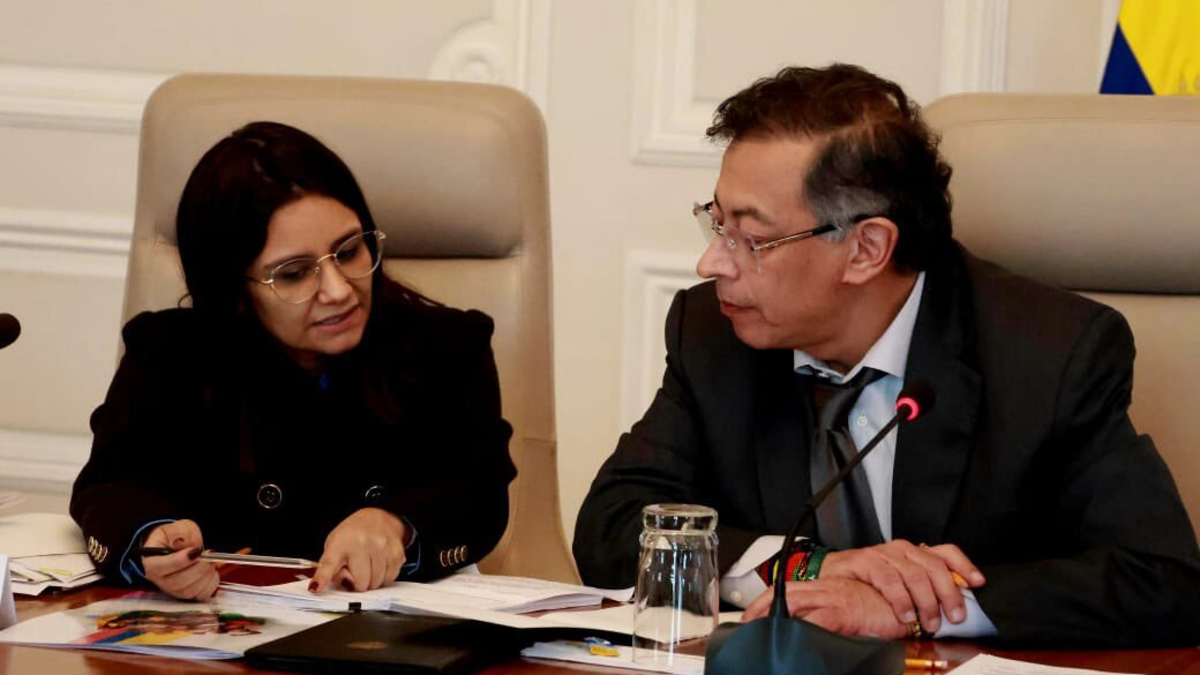
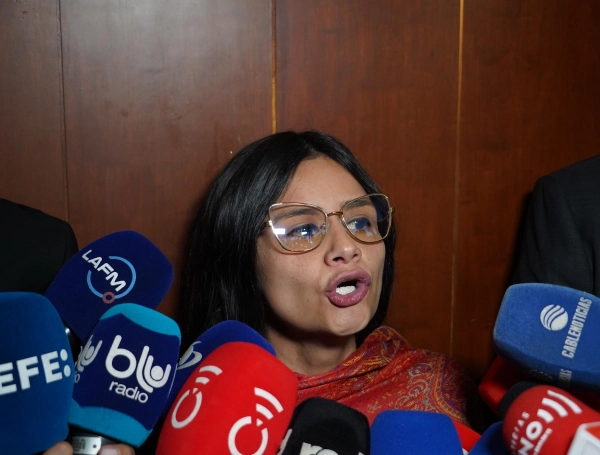
The political landscape in Colombia has been plunged into turmoil following explosive allegations made by Angie Rodríguez, the former director of the Administrative Department of the Presidency (Dapre). In an exclusive and wide-ranging interview with EL TIEMPO, Rodríguez asserted that former President Gustavo Petro had "full knowledge" that the academic credentials presented by Juliana Guerrero were entirely fraudulent. Despite this purported awareness, Rodríguez claims the former head of state explicitly ordered the official appointment of Guerrero as the Vice Minister of Youth.
The scandal centers around Guerrero, who recently secured a pre-agreement with the Office of the Attorney General (Fiscalía General de la Nación). Through this legal mechanism, she received a lenient three-year prison sentence for presenting forged professional titles purportedly from the Universidad San José. However, beyond the fraudulent credentials, the fallout has exposed deep institutional fractures. Investigators and political opponents allege that Guerrero, alongside her sister Verónica Guerrero, orchestrated a sophisticated corruption network within the executive branch. This alleged apparatus exerted systemic control over state contracting, manipulated major budgetary allocations, and allegedly demanded exorbitant bribes to award lucrative government projects.
Rodríguez’s public declarations have shattered the narrative of administrative integrity that the previous government sought to project. According to the former Dapre director, individuals outside official ministerial lines wielded disproportionate power, subverting meritocracy and turning the executive branch into a theater of clientelism and undue influence.
Chronology of Events
To understand the current crisis, it is vital to trace the timeline of events that led from administrative appointments to judicial actions and, ultimately, political implosion:
The Appointment Phase (During the Petro Administration): Angie Rodríguez serves as the director of the Dapre for the majority of Gustavo Petro’s presidential term. During this period, per Rodríguez’s testimony, she receives direct instructions from President Petro to initiate the formal administrative steps required to appoint Juliana Guerrero as Vice Minister of Youth, despite underlying questions or direct awareness of her fraudulent credentials from the Universidad San José.
The Consolidation of Influence: Over subsequent months, allegations mount that Juliana and Verónica Guerrero amass immense control over state contracting. Rather than operating under standard bureaucratic oversight, critical executive departments and resource allocations are allegedly vetted or dictated by the sisters.
The Investigative Breakthrough: Whistleblowers, notably figures such as Representative Jennifer Pedraza and other investigative sources, begin unearthing anomalies regarding Guerrero’s academic background and contracting activities, bringing the irregularities to light and compelling judicial authorities to act.
Judicial Action and Pre-Agreement: The Attorney General’s Office formally investigates Guerrero. She enters into a pre-agreement, confessing to specific charges related to her falsified academic titles. This legal maneuver results in a relatively mild three-year sentence. However, other heavier charges and investigations regarding corruption and extortion remain active.
The EL TIEMPO Interview (September 2026): Angie Rodríguez breaks her silence in an interview published by EL TIEMPO. She details the internal dynamics of the Dapre, claims Petro ordered Guerrero’s appointment knowingly, and alleges widespread complicity within the Pacto Histórico coalition.
Immediate Political Repercussions (September 13, 2026): High-profile opposition figures, including former Senator María Fernanda Cabal and former presidential candidate Jorge Enrique Robledo, issue scathing public critiques via social media, demanding immediate accountability from Gustavo Petro.
Supporting Data and Judicial Landscape
The core of the legal controversy involves a striking disparity between the charges Guerrero has already resolved and those still pending.
The Falsified Credentials and the Pre-Agreement: Juliana Guerrero’s legal strategy culminated in a pre-agreement with the Attorney General’s Office. By accepting responsibility for presenting fake professional titles from the Universidad San José, she was handed a three-year prison sentence. Due to procedural guidelines and the mechanics of pre-agreements in the Colombian penal system for sentences of this length, Guerrero will not spend a single day behind bars.
Pending Criminal Liabilities: While the academic fraud charge netted a lenient three-year sentence with no actual prison time, legal experts note that the broader allegations—encompassing illicit enrichment, concerted corruption, and extortion—carry far heavier penalties. Combined, these unresolved charges could potentially expose Guerrero to more than 20 years in prison if prosecutors successfully substantiate the claims that she and her sister operated a coacting extortion ring inside government contracting.
The Dapre Testimony: Angie Rodríguez’s position lends heavy weight to the unfolding narrative. As the former head of the Administrative Department of the Presidency—the entity responsible for coordinating the president’s agenda, administrative staff, and high-level cabinet nominations—Rodríguez occupied a vantage point at the epicenter of executive power. Her assertion that Petro bypassed standard vetting procedures knowingly shifts the liability from a localized administrative oversight to a systemic failure originating at the highest level of the presidency.
Official Responses and Political Reactions
The fallout from Rodríguez’s confessions has galvanized the political opposition, drawing sharp rebukes from across the ideological spectrum and exposing deep fractures among former allies of the administration.
María Fernanda Cabal
Former Senator and prominent opposition figure María Fernanda Cabal took to the social media platform X (formerly Twitter) to excoriate the administration’s internal culture. Cabal wrote:
"They turned the Casa de Nariño into a kitchen of intrigues, pressures, and favors. Angie Rodríguez denounces that women without official portfolios commanded even above ministers and pressured appointments. Now she says she fears for her life. It is unbelievable how low we fell with Petro. Colombia deserves to know the whole truth!"
Cabal’s remarks highlight the growing narrative among the opposition that the executive branch functioned less as a policy-driven government and more as an informal network for personal and political patronage.
Jorge Enrique Robledo
Former Senator and prominent leftist-turned-critic Jorge Enrique Robledo focused his critique on the silence of the former president and the complicity of the wider political ecosystem. Robledo stated:
"And Gustavo Petro still has nothing to say, after Juliana Guerrero confessed to her crime and justice condemned her, after months of evidence provided by Jennifer Pedraza and other sources? And knowing that other charges are being processed against her? What an exemplary conduct that of Petro for Colombians."
Robledo’s condemnation underscores the frustration felt by independent and center-left sectors who argue that systemic corruption was enabled by institutional silence and willful blindness from coalition leaders.
Implications for Colombian Politics
The revelations brought to light by Angie Rodríguez and the judicial proceedings against Juliana Guerrero carry profound implications for the future of Colombian politics, particularly for the remnants of the Pacto Histórico movement and the broader left-wing coalition.
1. Erosion of Moral Authority
A cornerstone of Gustavo Petro’s political identity and presidential campaign was the promise of a moral break from traditional Colombian political corruption—the so-called politiquería. The revelation that a high-ranking official knowingly appointed an individual with fraudulent credentials, coupled with accusations of a parallel contracting-control network run by external actors, deals a severe blow to this foundational narrative. It provides substantial ammunition to critics who argue that internal corruption persisted or adapted under new management.
2. Legal Vulnerability for High-Level Officials
While Rodríguez has stepped forward to expose these mechanisms, her admissions—and the mounting evidence compiled by investigative journalists and opposition lawmakers like Jennifer Pedraza—open the door to broader criminal inquiries. Investigators will likely examine whether other members of the executive branch aided, abetted, or benefited from the alleged contracting schemes. Furthermore, as additional charges against Guerrero move through the judicial system, testimonies could further implicate high-ranking figures.
3. Transformation of the 2026–2030 Electoral Calculus
With Colombia navigating a complex political transition, these scandals reshape the calculus for upcoming elections. The opposition is weaponizing the "Casa de Nariño kitchen" narrative to paint the entire progressive project as compromised. For the left and center-left coalitions, distancing themselves from the Guerrero scandal while retaining their core electorate will require aggressive internal accountability—something critics argue has been conspicuously absent thus far.
As judicial authorities continue to parse through the pending charges against Guerrero, and as political actors demand formal investigations into the Dapre’s administrative history under Rodríguez and Petro, this scandal promises to remain at the forefront of the national conversation, testing the resilience of Colombia’s judicial and institutional checks and balances.
By Juan Sebastián Lombo Political Desk, El Tiempo (Adapted for International Distribution) Main Facts As Colombia approaches the milestone of 100 days under the administration of President Abelardo De La Espriella, the political landscape of…
BOGOTÁ — In a surprising political development that has sent shockwaves through Colombia’s political landscape, former President Gustavo Petro and former Bogotá Mayor and presidential candidate Claudia López have reemerged together. The unexpected meeting, documented…
By Juan Pablo Penagos Ramírez Political Desk | Updated November 6, 2026 Main Facts The United Nations Verification Mission in Colombia has officially commenced a new phase of its operations following the formal renewal of…