Main Facts
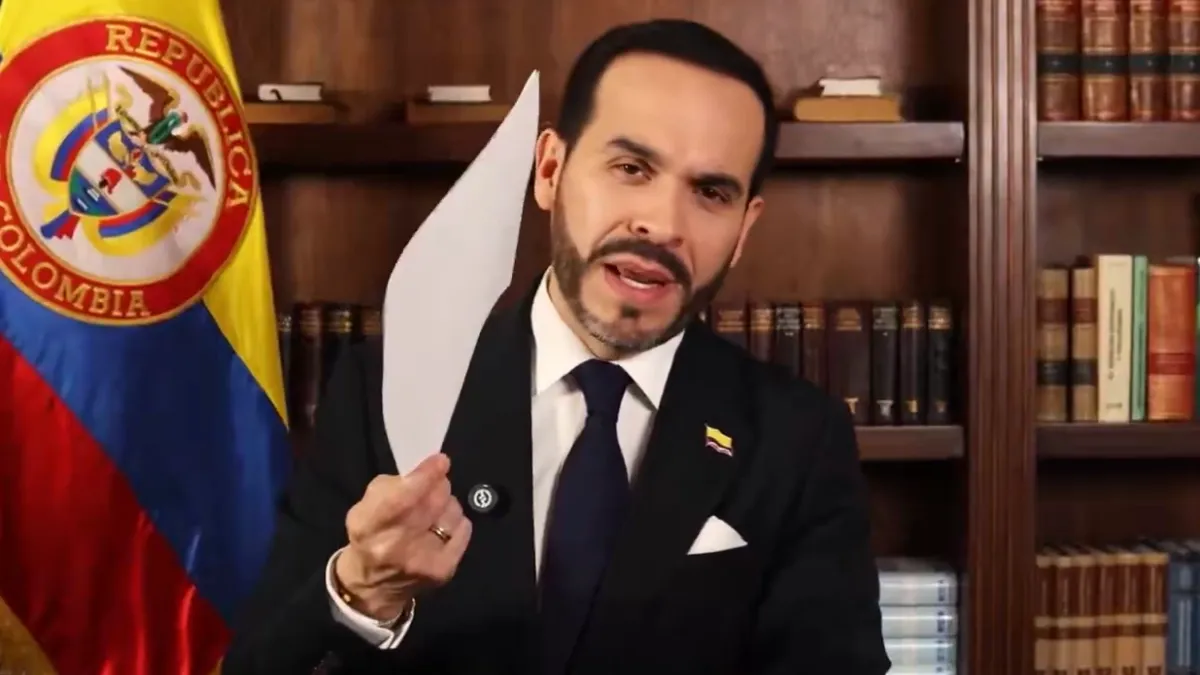
The political and economic landscape of Colombia is currently gripped by a high-stakes legislative battle following the decision by President Abelardo de la Espriella’s administration to withdraw some of the most controversial measures from its proposed tax reform and fiscal adjustment bill. Specifically, the government bowed to intense pressure by dropping plans to increase the Value Added Tax (VAT) on basic family grocery baskets (the canasta familiar), imposing new tax burdens on the agricultural sector, and taxing prepaid healthcare plans.
While the retreat was widely celebrated by households and consumer advocacy groups fearing a spike in the cost of living, it immediately triggered a severe fiscal dilemma. According to independent estimates by Luminen Economic Intelligence, the exclusion of these VAT measures leaves a massive financing hole of approximately $12 trillion COP in unmet revenue. When factoring in the cancellation of related agricultural levies and the complexities of intended VAT refund schemes, the actual shortfall threatening the government’s fiscal targets could climb even higher.

The administration’s ultimate goal is to achieve a comprehensive structural adjustment equivalent to 4.7% of the Gross Domestic Product (GDP) by 2030, a target that has received cautious backing from international entities like the International Monetary Fund (IMF), which warned that a failure to implement timely adjustments would severely damage market confidence.

With the clock ticking toward a constitutionally mandated deadline of December 2, 2026—when the economic committees of Congress must vote on the bill before it advances to the plenary sessions—lawmakers from across the political spectrum, alongside the Ministry of Hacienda (Treasury), are locked in intense negotiations. They are scrambling to engineer alternative funding sources, reallocate corporate tax burdens, tackle long-standing inefficiencies, and institute aggressive public expenditure cuts to bridge the multi-trillion-peso deficit without crushing the purchasing power of average Colombians.

Chronology of Events
- Mid-November 2026: President Abelardo de la Espriella presents a balance of his administration’s first 100 days in office, defending the necessity of a fiscal adjustment law to stabilize the macroeconomic outlook.
- November 15–17, 2026: Following high-level political resistance—including strategic meetings between the Centro Democrático party, government ministers, and economic stakeholders—the administration signals a major policy pivot.
- November 17, 2026: Minister of Hacienda Miguel Gómez formally announces before the economic committees of Congress that the government will drop the proposed VAT increases on the basic family basket, agricultural inputs, and prepaid medicine. Concurrently, independent analysts like Luminen Economic Intelligence release projections quantifying the revenue gap at roughly $12 trillion COP.
- November 18, 2026: Political parties, including the Centro Democrático, Pacto Histórico, and the Conservative Party, scramble to publish counter-proposals and alternative financing formulas. Meanwhile, the IMF issues a statement endorsing the broader objectives of the fiscal adjustment while stressing the necessity of structural credibility.
- Imminent Deadline (December 2, 2026): House of Representatives President Nicolás Barguil confirms that economic committees must pass the revised Fiscal Adjustment Law prior to this date to guarantee sufficient time for full congressional debate. Public hearings are scheduled across Bogotá, Cali, and Barranquilla.
Supporting Data and Economic Projections
The sheer magnitude of Colombia’s fiscal requirements has forced economic analysts and political coalitions to dive deep into state accounts, tax expenditures, and corporate ledgers to unearth alternative capital. The core data driving the debate includes:

- $12 Trillion COP: The immediate revenue deficit created exclusively by removing the VAT expansion on the family basket and agricultural sector, per Luminen Economic Intelligence.
- $99.1 Trillion COP: The total estimated cost of tax expenditures (gaps created by exemptions, exclusions, and preferential treatments associated with the VAT), which the left-leaning Pacto Histórico argues should be systematically audited rather than replaced by blanket consumer taxes.
- $2.5 Trillion COP: Projected revenue generated by aggressive collection of overdue tax portfolios ( cartera vencida) from the National Directorate of Taxes and Customs (DIAN) and the Pension and Parafiscal Management Unit (UGPP) via penalty and interest discounts, as proposed by the Centro Democrático.
- $4 to $8 Trillion COP: Estimated yields from establishing a 19% VAT and additional tariffs on low-value international e-commerce shipments (minimis imports entering via platforms like Amazon or Temu), a measure supported by various factions.
- $6 Trillion COP: Projected funds recovered by rolling back or reducing planned corporate income tax cuts (adjusting the downward trajectory of the corporate rate), a key proposal from the Conservative Party.
- $9 Trillion COP: The estimated valuation of state-held shares in the energy transmission giant ISA, which the Conservatives suggest could be leveraged via an internal state-financing agency acquisition to inject immediate liquidity.
- $69 Trillion COP: The ambitious multi-year yield (2027–2030) calculated by left-wing representatives through a combination of reinstating the 35% minimum corporate income tax floor, establishing new wealth and dividend taxes, and levying surtaxes on the banking sector.
Official Responses and Political Postures
The legislative negotiations are characterized by deep ideological divisions over where the state should look for money. While all political forces agree on the need for fiscal responsibility, their proposed remedies diverge wildly.

The Administration’s Revised Strategy
Minister of Hacienda Miguel Gómez has sought to reassure the public that the government remains flexible. Addressing Congress, Gómez confirmed the exclusion of VAT on basic groceries, farm inputs, and prepaid medicine. To compensate, the Ministry has introduced a tripartite counter-proposal:

- Developing a pilot scheme for a personalized VAT system aimed at charging luxury consumers while protecting lower-income demographics.
- Halting corporate income tax reductions, keeping the baseline corporate rate locked at 35% rather than offering sweeping rollbacks.
- Maintaining the taxation of low-value international e-commerce packages to level the playing field for domestic retailers.
Centro Democrático: Portfolio Recovery and State Rationalization
Senator Enrique Cabrales emphasized that protecting the family budget does not mean abandoning fiscal targets. The party advocates for deep structural austerity. "You cannot ask more of citizens while the state maintains bloated expenses and duplicate entities," Cabrales stated. The Centro Democrático’s blueprint calls for eliminating or merging up to 200 redundant state agencies, alongside aggressive collection of past-due taxes and placing heavy levies on cross-border e-commerce.
Pacto Histórico: Targeting Tax Loopholes and the Wealthy
Representing the progressive block, Representative María del Mar Pizarro argued that the state must focus on auditing unjustified corporate tax exemptions and the benefits tied to the proposed Business Stability Regime (RUGE). Fellow Pacto Histórico lawmaker Andrea Vargas added that re-establishing a strict 35% corporate tax floor, alongside targeted wealth taxes, dividend levies, and bank surtaxes, could generate nearly $70 trillion COP over three years without touching the working class.

The Conservative Party: Corporate Adjustments and ISA Assets
Conservative Party leader Efraín Cepeda championed a dual-track solution: trimming scheduled corporate income tax breaks to yield $6 trillion COP, and executing a sophisticated financial operation involving the state’s shares in ISA, valued at approximately $9 trillion COP, to bridge the gap without imposing regressive consumer taxes.

Alianza Verde, Liberal Party, and ‘La U’: Demanding Universal Sacrifice
Alianza Verde Representative Catherine Juvinao delivered a scathing critique of asymmetric tax burdens, arguing that the adjustment cannot spare high-income corporations while squeezing regular taxpayers. Juvinao proposed slashing public operational expenses—specifically targeting the maintenance of over 70 underperforming state-managed funds, excessive public publicity budgets, and lucrative, multi-board meeting honorarios (fees) collected by elite public bureaucrats. The Liberal Party and the Partido de la U have similarly aligned around rejecting regressive food taxes while pushing back against corporate tax giveaways.
Implications for the Future of the Colombian Economy
The outcome of the debate over the Fiscal Adjustment Law will define Colombia’s economic trajectory well into the next decade.

If lawmakers fail to reach a coherent, sustainable consensus before the fast-approaching December 2 deadline, the nation risks missing its medium-term deficit reduction targets. This failure could trigger sovereign credit rating downgrades, spike borrowing costs for both the public and private sectors, and destabilize foreign investment inflows at a time when the broader macroeconomic climate remains fragile.

Conversely, successfully passing a balanced reform—one that relies on progressive revenue collection, digital-economy taxation, institutional modernization of DIAN, and profound government austerity rather than regressive consumption taxes—could signal to international markets that Colombia remains firmly committed to fiscal discipline. For ordinary citizens, the legislative showdown represents a critical test of whether the state can successfully reconfigure its finances while shielding vulnerable populations from the immediate shock of economic restructuring.