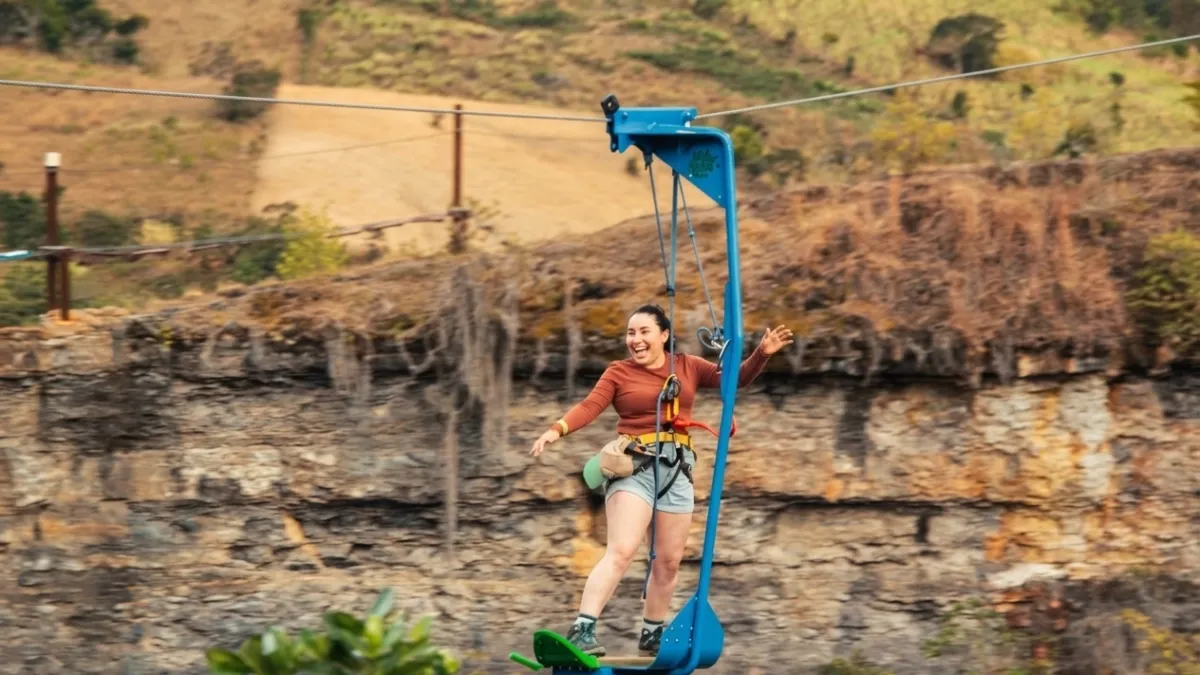
Santa Sofía, Boyacá — Perched dramatically on the precipice of the majestic Moniquirí River canyon, a new chapter in extreme adventure tourism is unfolding in the heart of the Colombian Andes. Known for its rich historical heritage, colonial architecture, and breathtaking natural landscapes, the municipality of Santa Sofía has officially added a gravity-defying spectacle to its repertoire: Surf en el Aire (Air Surfing).
This groundbreaking attraction, situated within the Paso del Ángel adventure park, invites thrill-seekers to experience the sensation of surfing not on ocean waves, but across more than 200 meters of open air, suspended high above a rugged canyon. Combining cutting-edge engineering, environmental stewardship, and heart-pounding recreation, the new experience anchors a broader regional movement toward sustainable, high-impact adventure travel in the department of Boyacá.
Main Facts
The centerpiece of this tourism expansion is Surf en el Aire, an aerial attraction that places participants on an aerodynamic, iron-and-wood-finished surfboard suspended from a sophisticated high-tension cable system.
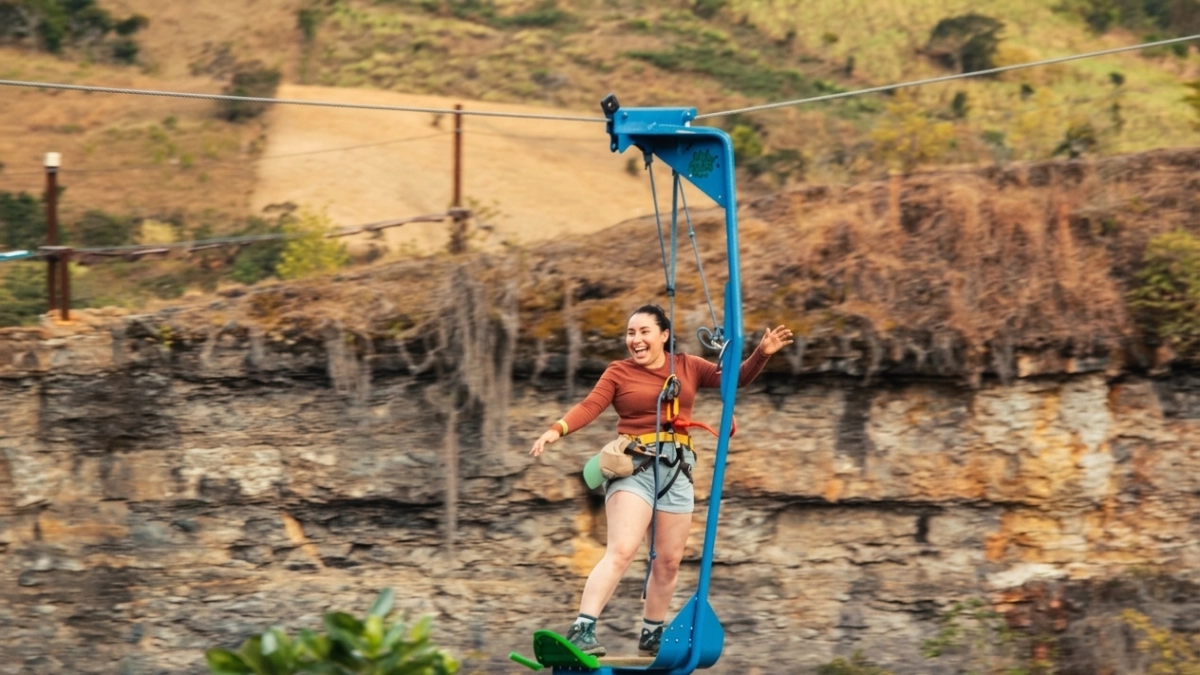
- Location: Paso del Ángel Adventure Park, Santa Sofía, Boyacá, overlooking the Moniquirí River canyon.
- The Experience: The complete journey spans over 200 meters total, divided into a 98-meter aerial obstacle course and a thrilling 116-meter surf descent.
- Height and Speed: Participants glide at an elevation exceeding 70 meters above the canyon floor, traveling at an average speed of 15 kilometers per hour.
- Safety and Regulation: Movement is carefully managed by a specialized engineering system designed to adapt to local wind currents and atmospheric conditions, ensuring a secure yet exhilarating flight.
- Capacity: The facility can accommodate up to five simultaneous users across its preliminary challenge bridges and two individuals on the parallel surf lines, with a projected capacity of 30 visitors per hour.
- Ecosystem Integration: The attraction operates under strict parameters designed to protect the surrounding mountain ecosystem, reinforcing a 13-year commitment to ecological restoration and community-led conservation.
Chronology: The Evolution of Paso del Ángel and El Hayal
The arrival of Surf en el Aire did not happen overnight. It represents the latest milestone in a meticulous, long-term vision for sustainable regional development.
- 13 Years Ago: The foundational efforts begin. Local stakeholders and community members initiate a grassroots environmental project aimed at ecological restoration, recovery, and protection of the degraded canyon landscape in Santa Sofía.
- Phase I — Establishing the Footprint: Organizers lay the groundwork for adventure tourism that coexists with conservation. Paso del Ángel is established, focusing on low-impact infrastructure that highlights the dramatic topography of the Moniquirí River basin.
- Phase II — Expansion of Extreme Offerings: Over subsequent years, the parks introduce a series of pioneering structural challenges. These include the high-altitude Glass Bridge (spanning a rock edge only 35 centimeters wide), "Bikes in the Clouds" (Bicis por las Nubes), which allows cyclists to pedal 60 meters above the canyon, and structures marketed as Colombia’s highest artificial wings.
- Phase III — Partnering with Ecoparque El Hayal: The tourism initiative expands into a dual-park project, incorporating Ecoparque El Hayal. This secondary park introduces six distinct nature-immersive experiences, including the aerial trail, the Tibetan Bridge, and the world-renowned "Stairway to Heaven" (Escalera al Cielo).
- Present Day (2026): The launch of Surf en el Aire. Following extensive safety testing, structural integration, and staff training, the attraction officially opens to the public, blending a 35-minute physical and mental challenge with the ultimate aerial surf descent.
Supporting Data and Technical Specifications
To fully appreciate the scope of Surf en el Aire, one must examine the meticulous engineering and structural blueprint that underpins the visitor experience. According to general management figures, the attraction is designed as a progressive journey rather than a standalone drop.
The 35-Minute Journey
The adventure begins long before the participant steps onto the surfboard. Visitors must first navigate an 11-step, 98-meter aerial obstacle course designed to test balance, agility, and nerve. The course features:

- Floating hoops
- Suspended trapezes
- Suspended balance beams
- Aerial sledges
- The "Cima del Ángel" (Angel’s Peak)
- Flat bridges
- The "Camino del Indio" (Indian Trail)
- The Canyon "X"
- A vertical spiderweb
- An aerial tunnel
- A looping circuit leading directly to the departure platform
The Surf Descent
Upon clearing the obstacle course, participants transition to the core attraction:
- The Board: An engineered aerodynamic board crafted from iron with specialized wood finishes, built to withstand wind resistance while offering stability.
- The Flight: A 116-meter traverse across the canyon at a steady 15 km/h.
- Flow Control: The velocity is regulated via a dynamic braking and tension system that reacts in real-time to the microclimates, canyon updrafts, and wind shifts typical of the Boyacense geography.
Park Complex Offerings at a Glance
| Park Name | Key Attractions & Challenges | Distinctive Features |
|---|---|---|
| Paso del Ángel | Surf en el Aire, Glass Bridge, Bicis por las Nubes, Colombia’s Highest Wings. | 23 total extreme challenges; focuses on vertical canyon edges and high-altitude cycling. |
| Ecoparque El Hayal | Aerial Trail, Tibetan Bridge, "Stairway to Heaven". | 6 key eco-experiences; features what is billed as the world’s longest aerial stairway. |
Official Responses and Perspectives
Behind the steel cables, safety harnesses, and soaring tourism metrics lies a deeply rooted philosophy of environmental stewardship and community empowerment. Carolina Bustos, General Manager of the Paso del Ángel and Ecoparque El Hayal parks, emphasizes that the core mission has never strayed from its conservationist origins.
"We have managed to build a model of transformative and sustainable tourism," Bustos explains. "Because of that, our primary invitation to the public is to truly live and respect nature."

Reflecting on the psychological and sensory journey of the parks, Bustos notes how the infrastructure allows visitors to interact with the landscape in ways previously thought impossible.
"People can walk right along the edge of the mountain between towering, steep rock faces, cross aerial trails suspended directly over native forest canopy, and pedal freely on Bicis por las Nubes," she states. "Furthermore, over at Ecoparque El Hayal, visitors can experience the wonderful Escalera al Cielo, which elevates the traveler quite literally to contemplate nature from an entirely different dimension."
Local tourism authorities and departmental representatives have similarly praised the initiative, viewing it as a benchmark for how rural municipalities can leverage adventure sports to drive economic development without sacrificing ecological integrity.

Implications for Regional Tourism and Economy
The debut of Surf en el Aire carries significant economic, cultural, and environmental implications for Santa Sofía and the broader Boyacá department.
1. Diversification of Colombian Adventure Tourism
While Colombia is globally renowned for coffee culture, historical towns, and biodiversity, regions like Santander (San Gil) have traditionally dominated the extreme sports market. With high-concept engineering projects like Surf en el Aire, the Stairway to Heaven, and sky-cycling, Boyacá is rapidly positioning itself as the premier national destination for high-altitude aerial adventure.
2. Economic Catalyst for Santa Sofía
With a projected processing capacity of 30 visitors per hour, the attraction is expected to drive steady weekend and seasonal foot traffic to Santa Sofía. This influx directly benefits local micro-enterprises, including boutique hotels, traditional restaurants, handicraft vendors, and local guides, translating adrenaline-based tourism into tangible community wealth.

3. A Model for Sustainable Infrastructure
Perhaps the most critical implication of the Paso del Ángel and El Hayal project is its proof of concept: that extreme adventure parks can emerge from ecological restoration projects. By employing strict load-management systems, localized deployment, and continuous environmental monitoring, the park demonstrates that heavy tourism footprints can be mitigated when local communities take the lead in conservation.
As travelers increasingly seek out authentic, high-impact experiences that respect natural surroundings, Surf en el Aire stands as a testament to human ingenuity—inviting travelers to step off the edge of the cliff, catch an invisible wave, and surf the skies of Boyacá.