By Edwin Caicedo | Environmental and Health Journalist
Published: September 26, 2026
1. Main Facts: A Nationwide Water Crisis Unfolds
The severe hydrological deficit gripping Colombia has officially transitioned from an environmental warning into a widespread socioeconomic emergency. Driven by the relentless pressures of the El Niño phenomenon and compounding climatic anomalies, major urban centers and rural municipalities alike are struggling to secure basic water supplies for human consumption, agriculture, and industrial operations.
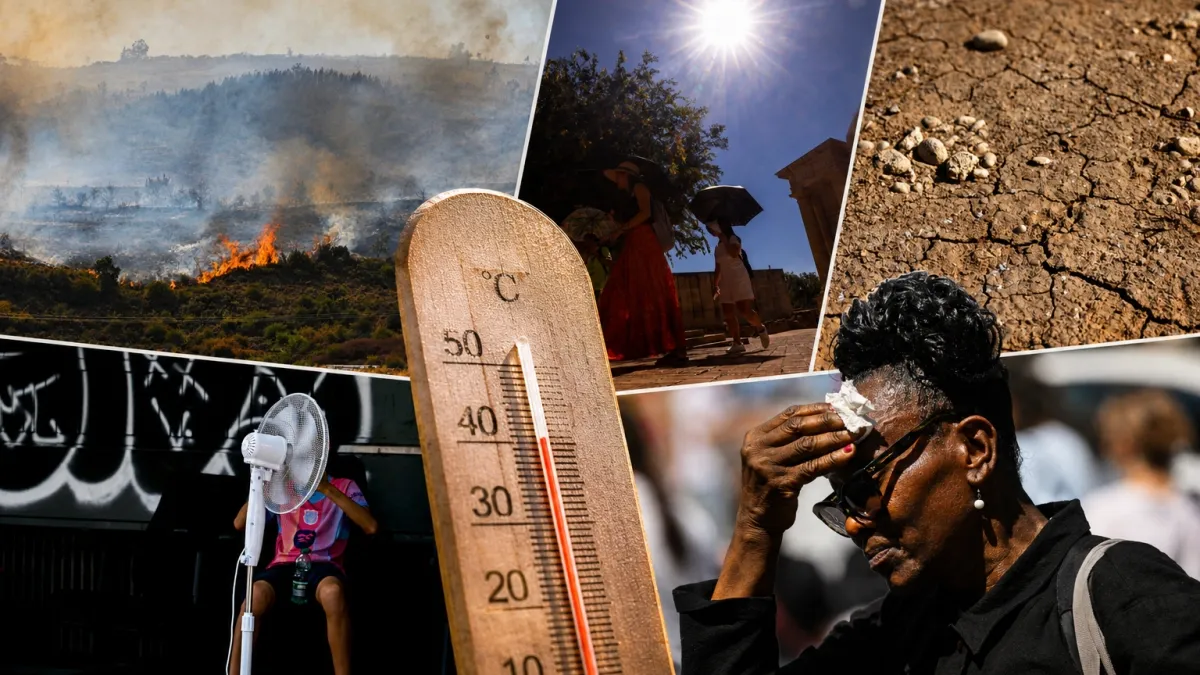
Major metropolitan hubs—including Cali, Medellín, and Santa Marta—have enacted stringent rationing protocols, alternating service schedules, and temporary pipeline shutdowns. Meanwhile, dozens of smaller localities across departments such as Santander, Bolívar, and Atlántico have been entirely relegated to emergency water distribution via tanker trucks (carrotanques).
The crisis is not isolated to municipal water pipes. Rivers that serve as vital lifelines for hydroelectric generation and public consumption are plummeting dangerously close to, or below, their minimum operational thresholds. With the peak of the current El Niño cycle projected to hit hardest over the next six months, federal agencies, local utilities, and experts are racing against the clock to prevent a cascading infrastructural failure.

2. Chronology of the Emergency: Step-by-Step Escalation
The deterioration of Colombia’s water security accelerated sharply through the second half of September 2026, forcing regional utility operators to implement emergency countermeasures sequentially:
- September 21, 2026: In Medellín, Empresas Públicas de Medellín (EPM) officially reactivated nocturnal water service cuts targeting neighborhoods in the city’s northeastern and central-eastern zones. This decision came after local residents failed to meet aggressive voluntary conservation quotas.
- September 22, 2026: In Cali, Empresas Municipales de Cali (Emcali) launched a strict water-rationing system based on service alternation. The measures specifically targeted high-altitude hillside communities in Comunas 18 and 20, where dropping river levels crippled gravity-fed distribution networks.
- September 23, 2026: EPM reported a mixed response to conservation goals. While the Piedras Blancas water system achieved an average savings rate of 94 liters per household—surpassing its 92-liter target—households dependent on the Riogrande system achieved a paltry 16 liters out of a mandated 70-liter reduction goal.
- September 24, 2026: Hydrological monitoring revealed critical lows. The Cali River registered a flow of just 1.52 cubic meters per second (hovering precariously near its 1.25 minimum operational limit), while the Meléndez River slumped to 0.18 cubic meters per second against a required minimum of 0.90. Concurrently, the Essmar utility in Santa Marta enacted sweeping closures of the Manzanares River intake line, shutting down operations from Tuesday afternoons through Friday mornings.
- September 26, 2026: Facing systemic spread across the Caribbean and Andean regions, the National Unit for Disaster Risk Management (UNGRD) convened an urgent Climate Variability Table to draft an immediate national response framework.
3. Supporting Data: The Numbers Behind the Shortage
The severity of the unfolding crisis is quantified by alarming metrics across key river basins, municipal reservoirs, and administrative districts:

- Cali’s Water Strain: The city’s hillside communes rely on the Cali and Meléndez rivers. The Meléndez River’s flow of 0.18 $m^3/s$ represents a mere 20% of the water volume necessary for sustainable intake and purification, forcing Emcali to rely heavily on emergency pumping systems from the distant Cauca River.
- Medellín’s Conservation Quotas: EPM established tiered savings targets based on sourcing. Homes supplied by the Piedras Blancas system must conserve 92 liters per household daily, while those connected to Riogrande and La Fe face a 70-liter daily restriction.
- Santa Marta’s Deficit: Essmar reported a systematic 10% to 15% reduction in overall raw water availability across the rivers feeding the tourist capital, triggering scheduled distribution halts and heavy reliance on emergency trucking.
- Santander’s Municipalities: At least 13 municipalities are suffering acute water scarcity, forcing local governments to rely on tanker fleets. Affected towns include Vélez, Málaga, Capitanejo, Hato, Ocamonte, Cabrera, Barichara, Guadalupe, Oiba, Sabana de Torres, Villanueva, and Socorro.
- Bolívar’s Critical State: Out of Bolívar’s 46 municipalities, a staggering 40 report active water shortages. Fifteen of these are classified under red alerts, and five have formally declared public calamities, prompting the departmental government to flood the region with emergency water trucks.
- Atlántico and the Magdalena River: Dropping levels on the Magdalena River prompted emergency dredging operations in Campo de la Cruz to keep intake pipes functional. Meanwhile, persistent dryness in the Candelaria district (specifically the village of Leña) sparked public protests over potable water access, forcing authorities to establish daily tanker schedules.
4. Official Responses and Institutional Strategies
Faced with mounting localized revolts, agricultural losses, and public utility strain, the Colombian government has elevated its operational response level.
The National Unit for Disaster Risk Management (UNGRD) convened an extraordinary session of its Climate Variability Table to forge a unified national response plan for the 2026–2027 El Niño cycle. UNGRD Director General David Santiago Tamayo Roldán noted that national, departmental, and technical entities have pooled their monitoring resources, logistical capacities, and response strategies.
"These elements will be integrated into a unified national roadmap designed to guide our actions over the next six months, which is when El Niño is historically projected to reach its most punishing intensity," Tamayo Roldán stated.
Furthermore, the UNGRD has issued strict directives to mayors and local governors across the country, urging them to maintain active, well-funded operational agreements with local fire departments. This is a crucial preemptive step, as prolonged dry spells exponentially increase the frequency and velocity of devastating forest fires—similar to recent blazes that scorched thousands of hectares in national parks and protected areas like Villa de Leyva.

Municipal operators, for their part, are doubling down on public awareness campaigns. In cities like Medellín and Cali, public utilities warn that if voluntary and semi-mandatory conservation targets are missed, night-time service interruptions will inevitably expand into full daytime rationing.
5. Wider Implications: Economy, Energy, and Future Risks
The current water crisis reaches far beyond residential taps, threatening the macro-stability of Colombia’s economy, agricultural sector, and energy matrix.
Agricultural and Livestock Impacts
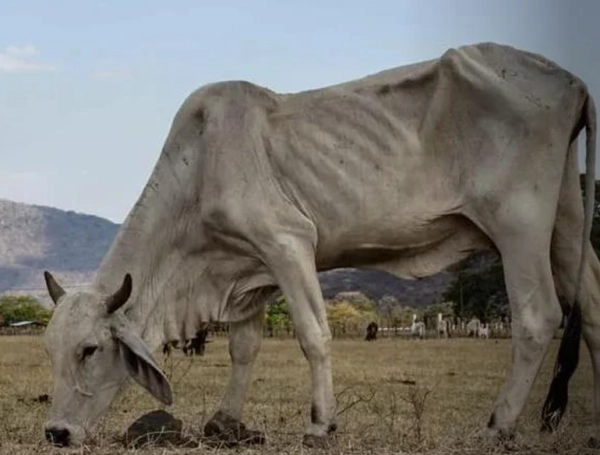
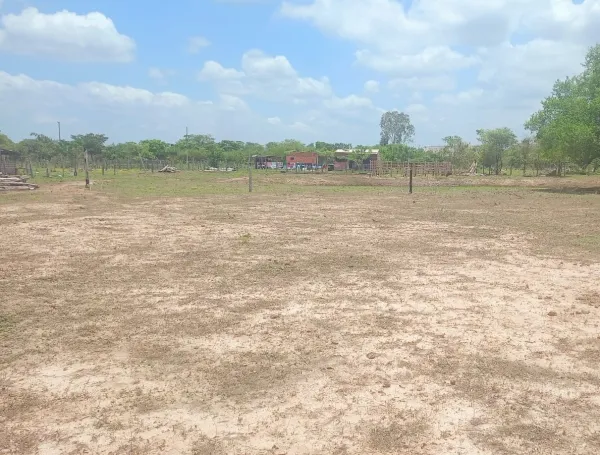
The agricultural sector is enduring severe logistical and economic pressure. In departments heavily reliant on cattle ranching, such as parts of northern Colombia, the combination of dried-up pastures and vanishing water sources has forced farmers into costly emergency relocations of livestock. Without immediate government intervention, food security and rural livelihoods face severe disruption.
The Energy Matrix Vulnerability
Experts warn that the crisis could soon spread to the national power grid. More than 70% of Colombia’s electricity is generated by hydroelectric power plants reliant on stable reservoir levels. While thermal power plants can partially offset deficits caused by lower hydroelectric generation, doing so significantly increases operational costs, which inevitably translates to higher electricity tariffs for consumers and industrial users alike.

Academic Warnings on Prolonged Scarcity
Carlos Jiménez, a professor in the Faculty of Engineering at the University of La Sabana, emphasizes that the trajectory of the crisis remains highly unpredictable, as it hinges entirely on shifting climatic cycles.
"While metropolitan areas like Bogotá possess deep infrastructural storage buffers—such as the Chingaza system (Chuza and San Rafael reservoirs)—that allow them to withstand extended dry periods, continued high consumption combined with a prolonged El Niño will eventually force new rationing measures," Jiménez cautioned.
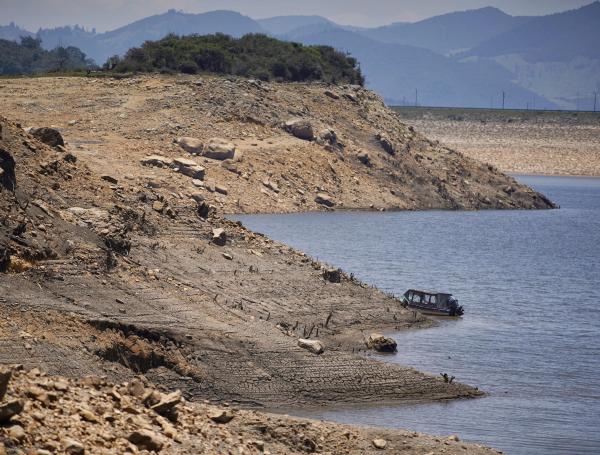
He noted that urban centers cannot rely indefinitely on historical rainfall patterns. As climate change exacerbates the volatility of weather phenomena, municipal planners must transition away from reactive crisis management toward structural water re-use, aggressive loss-reduction in distribution networks (non-revenue water), and enhanced watershed protection.
For now, Colombia’s landscape remains fractured by a patchwork of emergency measures: nighttime valves clicking shut in Medellín, rotating hillside taps in Cali, scheduled pipeline closures in Santa Marta, and endless lines of tanker trucks rolling through the dust of Santander and Bolívar. Whether these tactical interventions can prevent a systemic humanitarian and economic breakdown will depend entirely on skyward glances—and the discipline of millions of citizens called upon to save every single drop.