By María Paula Lozano Digital Reach Redaction / Climate and Environment Desk September 10, 2026
Main Facts: A New Milestone in Global Heating
The planet’s climatic history was rewritten once again in August 2026, marking a grim milestone in the unfolding global climate crisis. According to definitive data released by the Copernicus Climate Change Service (C3S), August 2026 officially etched itself into the books as the hottest month globally since instrumental records began. The global average temperature reached an alarming 16.96 °C, edging out the previous historical peak set in July 2023 by a razor-thin margin of 0.01 °C.
Because the statistical variance is so minuscule, Copernicus scientists view July 2023 and August 2026 as effectively sharing the global record for the highest monthly temperature ever measured, with August registering a microscopic fraction higher.
The temperature anomalies driving these figures are profound. August 2026 was:
1.65 °C warmer than the pre-industrial baseline estimated for the 1850–1900 period.
0.85 °C above the 1991–2020 climatological average.
Samantha Burgess, Strategic Climate Lead at the European Centre for Medium-Range Weather Forecasts (ECMWF), underscored the historical gravity of the data. In statements to international news agencies, Burgess warned that humanity is currently experiencing climatic conditions unlike anything seen in at least the past 100,000 years.
This sustained surge of thermal energy is no longer viewed by the scientific community as a transient anomaly, but rather as the compounding result of unmitigated greenhouse gas emissions coupled with cyclical natural phenomena, most notably the rapid strengthening of the El Niño weather pattern in the tropical Pacific.
Chronology: The Escalation of Extreme Weather Through 2026
To understand how August 2026 became the apex of modern climate extremes, it is necessary to examine the cascading sequence of climatic events that unfolded throughout the year, culminating in a historic summer across the Northern Hemisphere.
Early 2024 to Mid-2026: The Warming Trajectory
March 2024: Global surface temperatures spiked, tying previous monthly anomalies and signaling that the climate system was storing unprecedented amounts of thermal energy.
June 2026: The onset of the boreal summer brought immediate, intense heatwaves to Southern and Western Europe, fracturing records that had stood for over two decades. Countries like France, the United Kingdom, and Serbia initiated emergency protocols as early-season temperatures soared past historical boundaries.
July 2026: Persistent atmospheric blocking patterns established heat domes across parts of North America, Europe, and Asia. Rivers began to show critical drops in volume, setting the stage for late-summer agricultural and navigational crises.
August 2026: The convergence of record-breaking atmospheric temperatures and unprecedented ocean heat content culminated in the 16.96 °C global average. Western Europe officially logged its hottest summer in recorded history—surpassing the catastrophic benchmark set during the deadly European heatwave of 2003.
Supporting Data: Oceans, Rivers, and Global Demographics
The atmospheric crisis is mirrored, and in many ways driven, by extreme shifts within the world’s hydrological systems and oceans.
The Thermal State of the Oceans
Marine ecosystems faced catastrophic stress throughout the northern summer. The average sea surface temperature (SST)—excluding polar regions—reached an unprecedented 21.07 °C in August, the highest ever recorded for that specific month. Furthermore, a daily global sea surface temperature high of 21.11 °C was registered during the month, matching March 2024 as the highest monthly average ever observed for any month of the year.
Climatologists emphasize a sobering physical reality: more than 90% of the excess heat generated by human-induced greenhouse gas emissions since the industrial revolution has been absorbed by the world’s oceans. This relentless heat uptake is destabilizing marine food webs, accelerating coral bleaching events worldwide, and threatening the socioeconomic stability of vulnerable coastal communities.
Shrunken Waterways and Severe Droughts
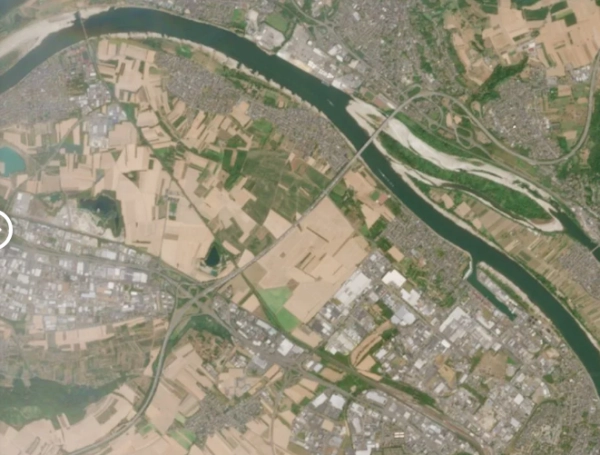
The lack of precipitation, combined with blistering temperatures, severely impacted major European river systems. Critical arteries of commerce and ecology—including the Rhine, the Danube, the Dnieper, and the Southern Bug—experienced historically low water levels.
In Germany, water levels on the Rhine plummeted, severely disrupting cargo shipping and industrial logistics. Concurrently, severe agricultural droughts crippled crop yields across France, Romania, Hungary, and the United Kingdom, forcing governments to implement emergency water-rationing measures.
Human Exposure and Demographic Impact
The human toll of the 2026 boreal summer was expansive. According to an extensive demographic and epidemiological analysis conducted by international media based on public health reports from eight European nations, at least 35,000 excess deaths were directly or indirectly linked to prolonged heat exposure between mid-June and late August.
On a global scale, approximately 1.3 billion people endured the hottest summer conditions ever recorded in their respective regions. Data indicates that 52 countries across every inhabited continent broke their individual national temperature records during these three months alone.
Official Responses and Expert Warnings
International scientific bodies and meteorological agencies have intensified their calls for immediate, aggressive decarbonization. The consensus among researchers is that while natural variability—such as the strengthening of El Niño—plays a significant role in modulating short-term spikes, the baseline upward trend is driven entirely by anthropogenic greenhouse gas emissions.
The El Niño Factor
The IDEAM (Institute of Hydrology, Meteorology and Environmental Studies) and other global meteorological centers have tracked the rapid intensification of El Niño in the tropical Pacific. Current predictive models place the probability of this event becoming one of the strongest in recorded history at roughly 75%. El Niño typically interacts with background global warming to amplify extreme weather events, increasing the likelihood of prolonged droughts in some regions and catastrophic flooding in others.
Warnings from Copernicus
Samantha Burgess and other leading climatologists have repeatedly stressed that current emission reduction pledges remain insufficient to stabilize the climate system.
"The record-breaking temperatures we are witnessing are clear symptoms of a fevered planet," climate analysts noted during the release of the Copernicus bulletin. "Without a rapid transition away from fossil fuels, extreme summers like 2026 will transform from historic anomalies into the standard baseline of future human experience."
Implications: A Glimpse into the Future
The implications of the August 2026 temperature records extend far beyond academic statistics. They represent a systemic stress test for global infrastructure, public health systems, agricultural security, and economic stability.
Public Health Vulnerabilities: Urban centers, particularly in Europe and Latin America, are discovering that their infrastructure is ill-equipped for persistent, multi-week heatwaves. The death toll among vulnerable populations—particularly the elderly and outdoor laborers—demonstrates an urgent need for climate-resilient urban planning, including expanded green spaces, cooling centers, and overhauled healthcare response systems.
Food and Water Security: The combination of shrinking river volumes, recurrent droughts, and unseasonal heat places global food supply chains in jeopardy. Agricultural regions that once enjoyed predictable precipitation cycles are now forced to adapt to volatile, extreme weather regimes.
The Feedback Loop of Emissions: As temperatures rise, natural carbon sinks—such as forests suffering from drought and oceans losing their gas-absorption capacity—become less efficient at capturing carbon dioxide, potentially accelerating the rate of global heating.
As the planet transitions into the final quarters of 2026, the scientific community remains vigilant. With greenhouse gas concentrations continuing to hover at historic highs, the path forward requires unprecedented international cooperation to mitigate the severity of future climate impacts and protect the habitability of the globe.
Stay informed on the latest developments in environmental science and climate change by subscribing to EL TIEMPO’s weekly environmental newsletter and following our digital coverage.
In the tapestry of human history, language is perhaps our most complex and defining creation. Today, the world vibrates with approximately 7,500 distinct languages, spanning a dizzying array of vocabularies, grammatical structures, and phonetic landscapes.…
By Editorial Desk, EL TIEMPO As the specter of the El Niño weather phenomenon looms over Colombia, threatening the stability of the national interconnected power system, the government and energy experts are locked in a…
The global conversation surrounding higher education is undergoing a profound paradigm shift. No longer is academic excellence measured solely by traditional metrics such as publication counts, citation indices, or the prestige of Nobel laureate alumni.…