By Global Science Desk
Published: September 17, 2026
Main Facts
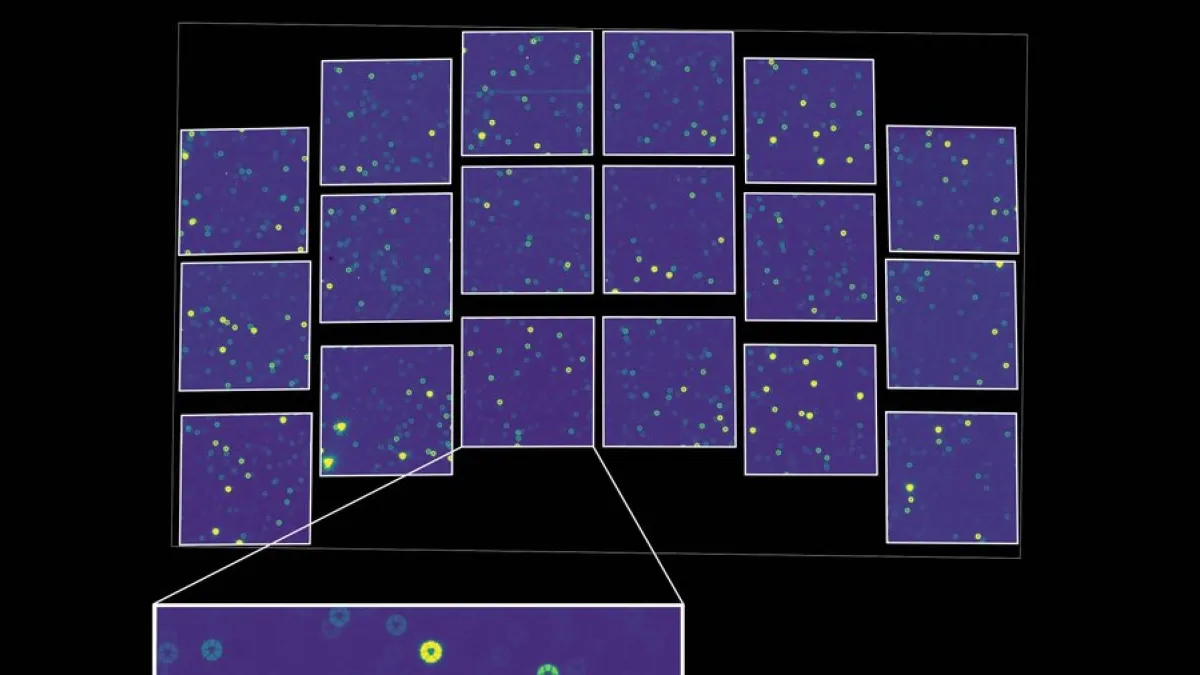
The cosmos has offered its first blurred, ring-shaped wink to humanity’s newest and most ambitious panoramic observatory. The National Aeronautics and Space Administration (NASA) has officially released the inaugural test image captured by the primary camera of the Nancy Grace Roman Space Telescope—the largest panoramic space observatory ever engineered.
Activated for the very first time in space, the state-of-the-art infrared instrument peered into the void and returned a field of view scattered with out-of-focus, ring-like stars, each sprawling across thousands of pixels. Far from being a technical glitch or a cause for concern, this visual phenomenon was precisely what mission engineers and scientists anticipated during this early commissioning phase. Because the telescope’s detectors remain locked in their launch positions—a necessary safety measure to withstand the intense vibrations and G-forces of liftoff—they currently sit far away from their optimal focal points.
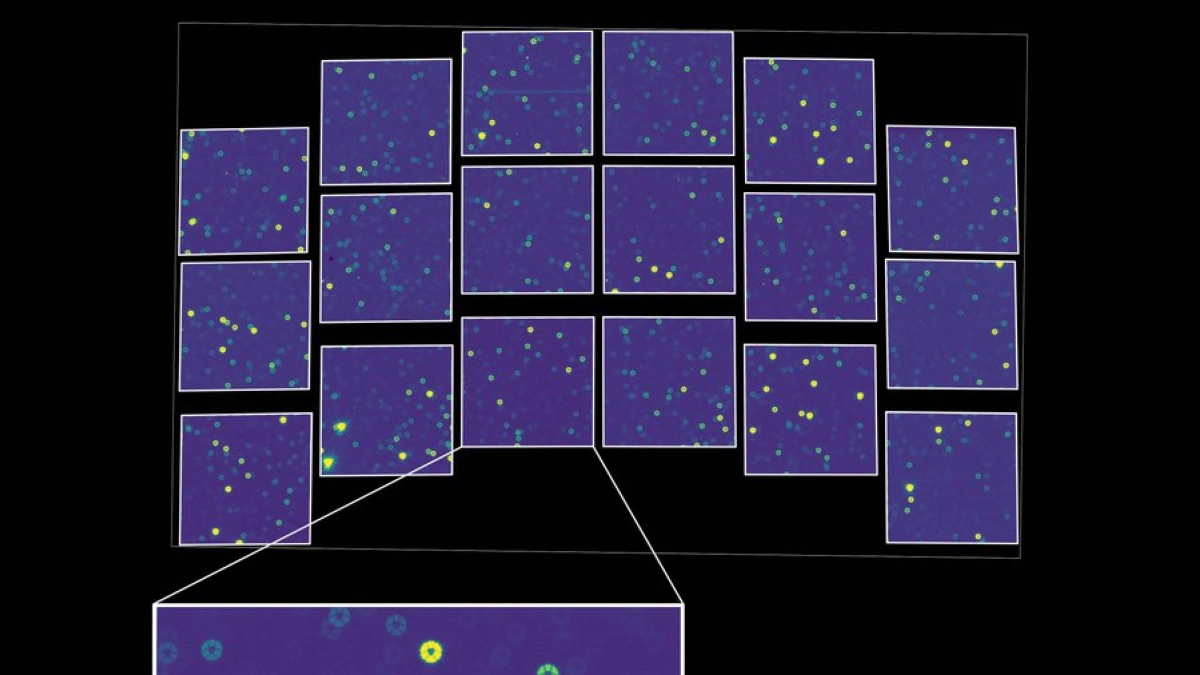
This initial snapshot serves as a critical baseline. Over the coming weeks and months, mission operators will utilize this preliminary data to systematically align the telescope’s complex optics and fine-tune its focus. The ultimate goal is to sharpen every distorted ring until individual stars resolve into razor-sharp, pinprick points of light.
"Después de años de trabajo para construir y probar el instrumento en tierra, ya tenemos la confirmación de que funciona en el espacio," remarked Josh Schlieder, instrument scientist for the Wide-Field Instrument at NASA’s Goddard Space Flight Center, highlighting the palpable relief and excitement rippling through the engineering teams.
Equipped with a monumental 300-megapixel infrared camera, the Roman Space Telescope is not merely designed to capture pretty pictures; it is destined to rewrite textbooks. Its core scientific mandates include hunting for answers regarding the mysterious properties of dark energy, detecting elusive exoplanets, and advancing infrared astrophysics to test and potentially revolutionize current models of theoretical physics.

Chronology of the Mission
The journey of the Nancy Grace Roman Space Telescope has been marked by meticulous engineering, rigorous testing, and a carefully timed sequence of orbital insertion maneuvers.
- Pre-Launch (Late 2020s): Years of painstaking design, component manufacturing, and subsystem testing take place across various NASA facilities and contractor laboratories, culminating in the complete assembly of the 300-megapixel wide-field infrared camera.
- August 30, 2026: The Roman Space Telescope successfully blasts off from its launchpad in Florida, roaring into the Florida skies atop a powerful launch vehicle. The launch execution proves exceptionally precise, placing the observatory on a highly efficient trajectory.
- Late August – September 2026: Following launch, the spacecraft undergoes initial systems checks and health assessments. As it cruises through space, its critical components are powered on one by one.
- September 17, 2026: NASA officially unveils the first test image captured by the telescope’s primary camera. Although the stars appear unfocused and ring-shaped due to the detectors remaining in their launch configurations, the successful data transmission confirms that the instrument’s core electronics and optics are alive and functioning in the harsh environment of space.
- September – November 2026: The spacecraft continues its interplanetary cruise phase, steadily journeying toward its permanent orbital home.
- Early December 2026 (Projected): The Roman Space Telescope is scheduled to arrive at its designated destination: the second Lagrange point (L2), located approximately 1.5 million kilometers (about 930,000 miles) away from Earth. Once there, it will enter a stable halo orbit.
- Early 2027 (Projected): NASA anticipates the official publication of the telescope’s first official scientific images, marking the true beginning of its operational survey era.
Supporting Data and Technical Specifications
To truly understand the revolutionary nature of the Nancy Grace Roman Space Telescope, one must examine the staggering scale of its engineering and operational capabilities:
- Camera Resolution: A staggering 300-megapixel infrared imaging system designed to capture hyper-detailed expanses of the universe.
- Field of View: Boasts a panoramic scope at least one hundred times greater than that of the legendary Hubble Space Telescope, enabling it to survey vast swaths of the night sky in a single exposure.
- Galactic Reach: Expected to observe and catalog billions of galaxies over the course of its operational lifetime, providing an unprecedented statistical database for cosmological studies.
- Orbital Destination: The second Lagrange point (L2) of the Sun-Earth system, situated 1.5 million kilometers away from Earth. This location offers a thermally stable environment and an unobstructed view of the deep universe.
- Mass and Launch Efficiency: Thanks to optimized construction techniques and a remarkably clean launch trajectory, the spacecraft’s total mass came in lower than initial mission projections.
- Extended Lifespan: In a massive bonus for taxpayers and scientists alike, NASA calculated that the combination of a precise launch and a lighter-than-expected spacecraft reserves enough propellant for at least 22 years of continuous operations—more than double the mission’s original baseline design life.
Official Responses and Perspectives
The release of the first test image has drawn enthusiastic responses from the international scientific community, validating decades of intellectual and financial investment.

Mission architects at NASA Goddard, the Jet Propulsion Laboratory (JPL), and academic partner institutions have emphasized that the milestone represents a psychological as well as technical victory. Building hardware destined for the vacuum of space always carries an inherent risk; once an asset leaves Earth, repair missions are frequently impossible or prohibitively expensive. Consequently, the moment the 300-megapixel camera successfully initialized and transmitted data back to Earth was met with immense celebration.
"After years of work to build and test the instrument on the ground, we now have confirmation that it works in space," reiterated Josh Schlieder, echoing the sentiments of hundreds of engineers, technicians, and astrophysicists who spent their careers bringing the observatory to life.
Furthermore, agency officials noted that the unexpected windfall in fuel longevity—extending the mission horizon to over two decades—fundamentally transforms the scope of questions the telescope can answer. Rather than a rushed, decade-long sprint to map designated targets, researchers will have a generational asset capable of conducting multi-decade longitudinal studies on stellar evolution, planetary systems, and cosmic expansion rates.

Implications for Modern Astrophysics and Cosmology
The deployment and eventual full-scale operation of the Nancy Grace Roman Space Telescope arrive at a critical juncture in modern physics. For decades, scientists have grappled with profound mysteries regarding the fundamental nature of the universe—chief among them, dark energy, the enigmatic force accelerating the expansion of the cosmos.
Because the Roman Space Telescope can image sections of the sky with a breadth and depth previously unattainable, it will serve as a premier engine for discovery in several key domains:
1. Unmasking Dark Energy
By surveying thousands of square degrees of the sky and measuring the light of distant supernovae and galaxies across vast cosmic epochs, Roman will help chart the history of cosmic expansion with unprecedented precision. This data is vital for testing whether dark energy is a cosmological constant (akin to Einstein’s cosmological constant) or a dynamic field that changes over time.

2. A Revolution in Exoplanet Discovery
Utilizing techniques such as gravitational microlensing, the telescope will be uniquely positioned to discover thousands of planets beyond our solar system. Unlike transit methods that favor planets close to their parent stars, Roman’s microlensing surveys will be sensitive to planets located far out in their star systems, including rogue planets drifting untethered through interstellar space.
3. Complementing Other Observatories
The Roman Space Telescope is designed to work in synergy with other premier facilities, such as the James Webb Space Telescope (JWST) and ground-based observatories like the Vera C. Rubin Observatory. While JWST specializes in deep, high-resolution spectroscopy of individual, highly targeted cosmic objects, Roman will act as a wide-angle mapper, identifying interesting phenomena across vast cosmic landscapes that can later be probed in greater detail by its sister telescopes.
As engineers meticulously adjust the mirrors and bring the 300-megapixel camera into pristine focus over the coming months, humanity stands on the precipice of a new golden age in space exploration—one where the blurred rings of today will soon transform into the razor-sharp keys that unlock the deepest secrets of the universe.