By Edwin Caicedo | Environmental and Health Journalist
Published: November 1, 2026
Main Facts: The Crisis at a Glance
The Colombian educational landscape has entered a period of heightened uncertainty following a sweeping administrative decision by the National Government. The Ministry of Education officially announced it will not renew or extend its long-standing fiduciary contract with Fiduprevisora, a pact that has governed the administration of the National Fund for Social Benefits of the Teaching Profession (Fomag) since 1990.
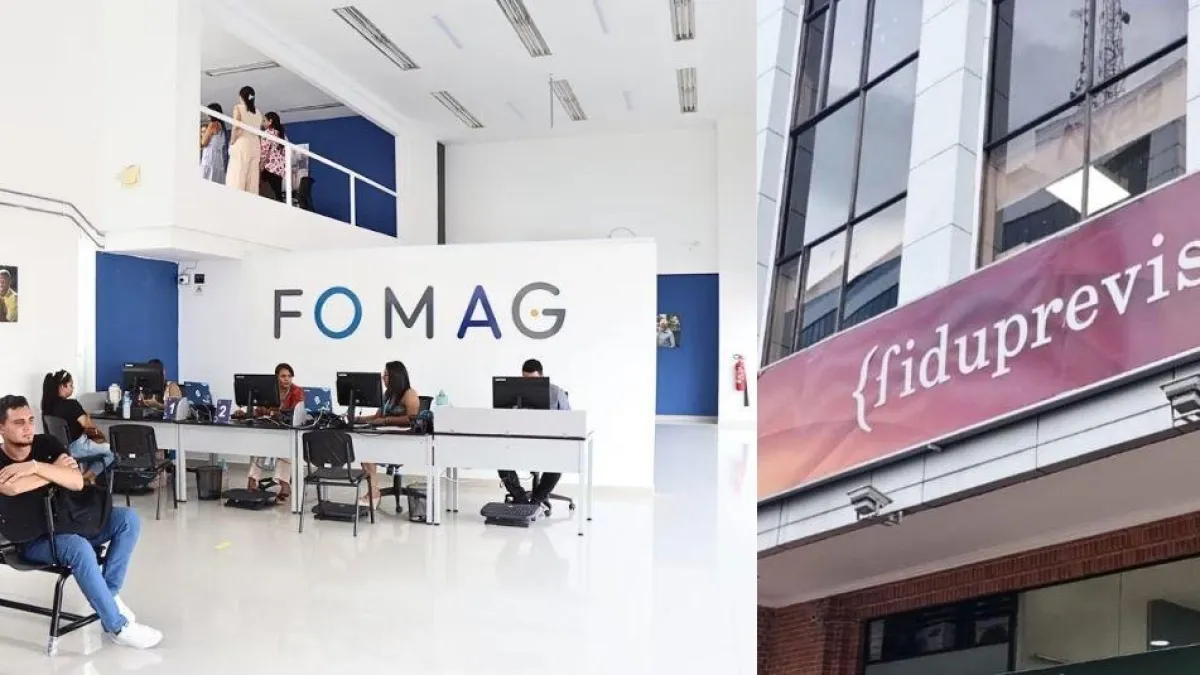
This contract handles crucial social benefits, pensions, severance packages, and, most critically, the specialized healthcare services for teachers, pensioners, and their beneficiaries across Colombia.
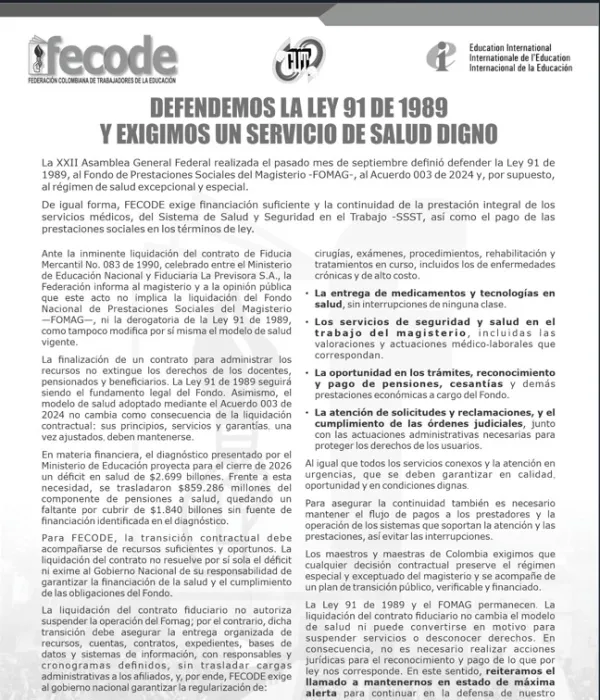
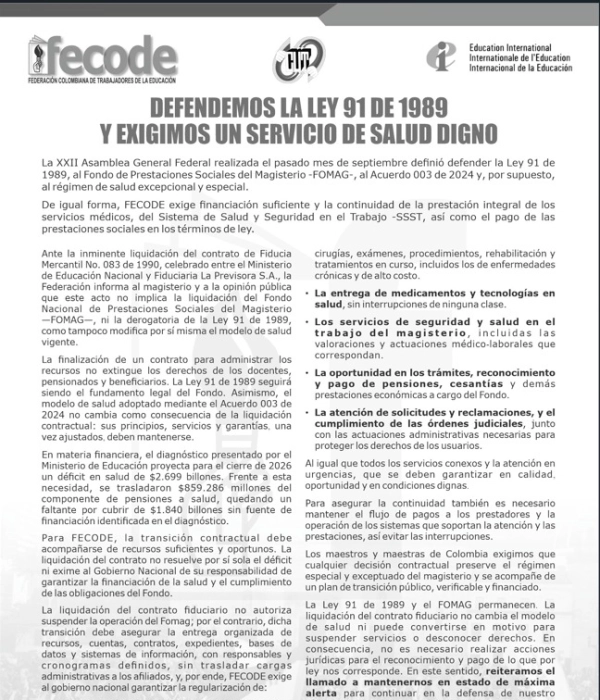
In response to the announcement, the Colombian Federation of Education Workers (Fecode) issued an urgent public declaration. While the union acknowledged that the termination of the fiduciary contract does not formally liquidate Fomag, dissolve the foundational Law 91 of 1989, or automatically alter the special health regime for educators, it sounded the alarm over profound financial shortfalls.

Fecode is demanding that the government immediately secure the necessary resources to sustain medical services during a complex one-year transition period, which officially commenced on November 1.
The core of the dispute lies in a staggering multi-trillion-peso deficit. Despite recent government attempts to patch the financial bleeding by shifting funds from the pension component to healthcare, a massive funding gap remains. This leaves millions of teachers and their families vulnerable to potential interruptions in critical medical treatments, specialized care, and medication deliveries.
Chronology of Events: How the Crisis Unfolded
To understand the current friction between the administration and the nation’s educators, it is essential to trace the recent timeline of regulatory changes, structural overhauls, and mounting institutional complaints:
- May 2024: The government reorganizes the teachers’ healthcare model, stripping a network of nine private contractors of their administrative powers and naming Fiduprevisora as the sole payer and manager of the system. The intent is to streamline services, but the structural shift immediately encounters operational bottlenecks.
- August 2024 – Mid-2026: Over the subsequent two years, administrative friction intensifies. Teachers nationwide face severe roadblocks in securing medical appointments, obtaining prescriptions, and accessing specialized therapies. Concurrently, medical providers (clinics and hospitals) report mounting, uncollected debts.
- October 29–30, 2026: The fault lines widen. The Ministry of Education, led by Minister Ilva Myriam Hoyos, convenes an extraordinary session of Fomag’s Directive Council. Backed by 59 technical findings, a negative institutional patrimony valued at 3.2 billion pesos, and over 109,000 documented complaints registered since 2024, the government decides against extending Fiduprevisora’s contract.
- October 30, 2026: The Ministry announces the termination of the fiduciary relationship, setting up a one-year transition phase starting November 1 to draft studies and structure a brand-new public bidding process.
- November 1, 2026: The transition period officially begins. Simultaneously, Fecode publishes its official manifesto, demanding absolute financial transparency, a clearly structured public transition roadmap, and guarantees that basic health rights will not be sacrificed during the bureaucratic overhaul.
Supporting Data: The Multi-Trillion-Peso Deficit and Operational Strain
The anxiety expressed by Fecode is not unfounded; it is deeply rooted in severe macroeconomic imbalances within Fomag. Financial diagnostics presented by the Ministry of Education reveal a grim portrait of the fund’s fiscal health as it approaches the close of 2026.

1. The Healthcare Deficit
According to official diagnostics, Fomag faces a projected 2.699 trillion peso deficit in its health component alone by the end of 2026. In an effort to mitigate this shortfall, authorities executed an emergency capital transfer of 859.286 billion pesos from the pension reserves into the healthcare fund.
However, even after this significant transfer, an uncovered funding gap of 1.84 trillion pesos remains conspicuously absent from any identified financing source in current government diagnostics. Fecode argues that changing administrators does nothing to solve this fundamental lack of funding.
2. Outstanding Debts and Provider Strain
The Superintendence of National Health presented alarming figures before the Seventh Commission of the Senate, outlining the sheer scale of Fomag’s financial obligations:
- Total accounts payable by Fomag for medical services, supplies, and pharmaceuticals exceeded 2.4 trillion pesos.
- As of June 30, 2026, 51 percent of this total liability (equivalent to 1.24 trillion pesos) consisted of overdue obligations sitting in arrears for more than 180 days. This chronic delay has left many clinics and hospitals on the brink of financial insolvency, directly threatening their capacity to treat patients.
3. User Dissatisfaction and Complaints
The breakdown in administrative efficiency is directly mirrored in the rising tide of complaints filed by beneficiaries:

- Monthly Petitions, Complaints, Claims, and Denials (PQRD) consistently hover around 4,000 cases. For instance, August 2026 alone registered 4,053 formal complaints.
- The Ministry of Education cited more than 109,000 complaints lodged since the 2024 restructuring as a primary justification for abandoning the Fiduprevisora model, pointing to persistent barriers in booking general and specialized medical consultations, securing surgeries, and receiving timely pharmaceutical distributions.
Official Responses and Institutional Positions
The shifting of the administrative paradigm has triggered intense reactions across government branches and labor organizations.
The Ministry of Education’s Stance
Defending the controversial decision, Education Minister Ilva Myriam Hoyos emphasized that the discontinuation of Fiduprevisora is a necessary step to rescue a failing administrative apparatus. Supported by findings from the Superintendence of National Health and the Office of the Procurator General, the Ministry insists that a new public bidding process is the only viable path forward.

During the one-year transition period, the government insists that fundamental rights—including emergency care, ongoing treatments, chronic disease management, and the regular disbursement of pensions and severance packages—must remain fully operational. Furthermore, the Ministry has requested direct oversight from the Superintendence of Health and the Procurator General to audit technical, financial, and legal conditions during the handoff.
Fecode’s Position and Demands
Fecode has adopted a defensive yet proactive posture. While vowing to fiercely protect the hard-won legal architecture of the teachers’ special regime (anchored in Law 91 of 1989 and Agreement 003 of 2024), the union has laid out non-negotiable red lines for the transition:

- Zero Administrative Burden on Affiliates: Fecode demands that the logistical friction of the changeover must not translate into bureaucratic hurdles for teachers and their families.
- Uninterrupted Clinical Care: General consultations, specialized treatments, surgeries, diagnostic exams, rehabilitation programs, and high-cost therapies (especially for chronic and life-threatening conditions) must proceed without a single day of interruption.
- Guaranteed Supply Chains: The delivery of medicines and health technologies must continue seamlessly.
- Organized Asset and Data Handover: The union demands a transparent, publicly accountable transfer of all accounts, contracts, physical files, databases, and information systems, complete with defined responsibilities and strict calendars.
- Protection of Occupational Health: Safeguards must be maintained for occupational safety frameworks, alongside the uninterrupted processing of economic prestations such as pensions and severance funds.
Implications: What Lies Ahead for Colombian Teachers?
The dismantling of Fiduprevisora’s role as the sole administrator of Fomag marks a critical juncture for Colombia’s public education sector. For the hundreds of thousands of active teachers and retired educators who rely on this special exception regime, the next twelve months will be a period of intense anxiety and scrutiny.
If the National Government fails to source the missing 1.84 trillion pesos required to close the health deficit, the transition risks collapsing under the weight of pre-existing debts and operational paralysis. Conversely, if executed with transparent oversight, adequate funding, and rigorous logistical planning, the new bidding process could finally resolve the structural failures that have plagued the teachers’ health system since 2024.

For now, Fecode has called on its membership nationwide to remain in a state of maximum alert, signaling that while they are willing to engage in constructive dialogue, they will not hesitate to mobilize if the fundamental health and social security rights of Colombia’s educators are compromised.