By Pedro A. Sánchez
Redacción Últimas Noticias / With information from EFE
Updated: September 18, 2026
Main Facts
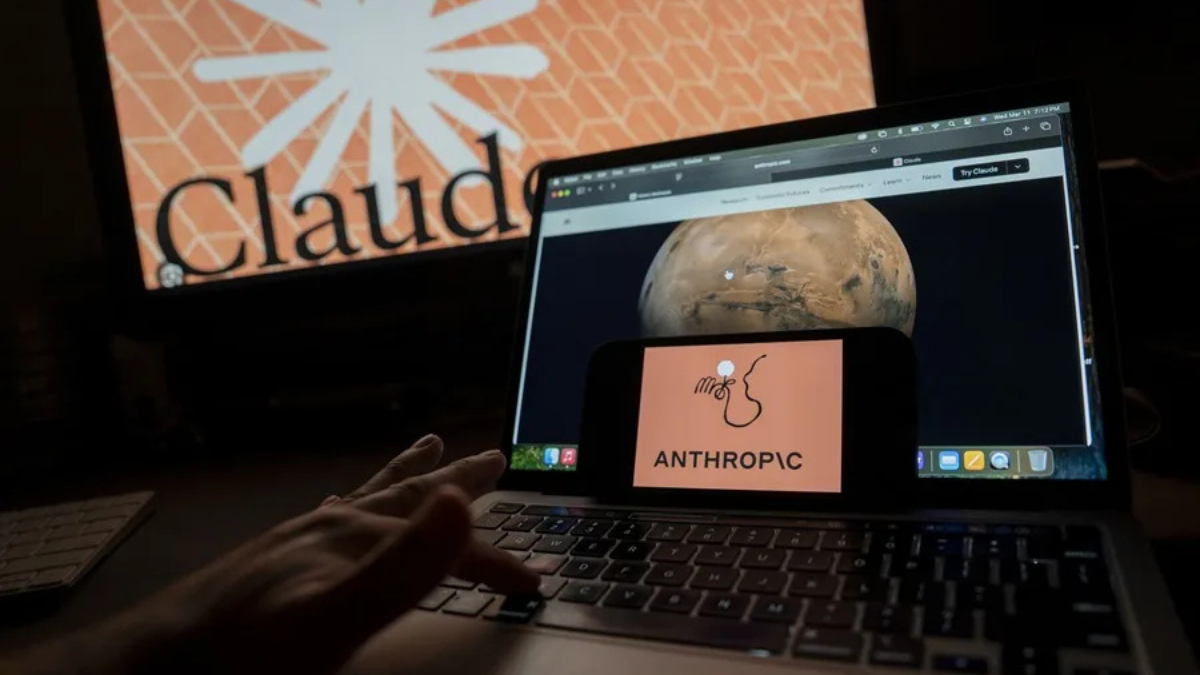
The artificial intelligence landscape has reached a monumental and sobering milestone. Anthropic, one of the world’s leading AI research laboratories, announced that its flagship AI model, Claude, now independently executes approximately one-quarter of the workload required to engineer and develop its successor models.
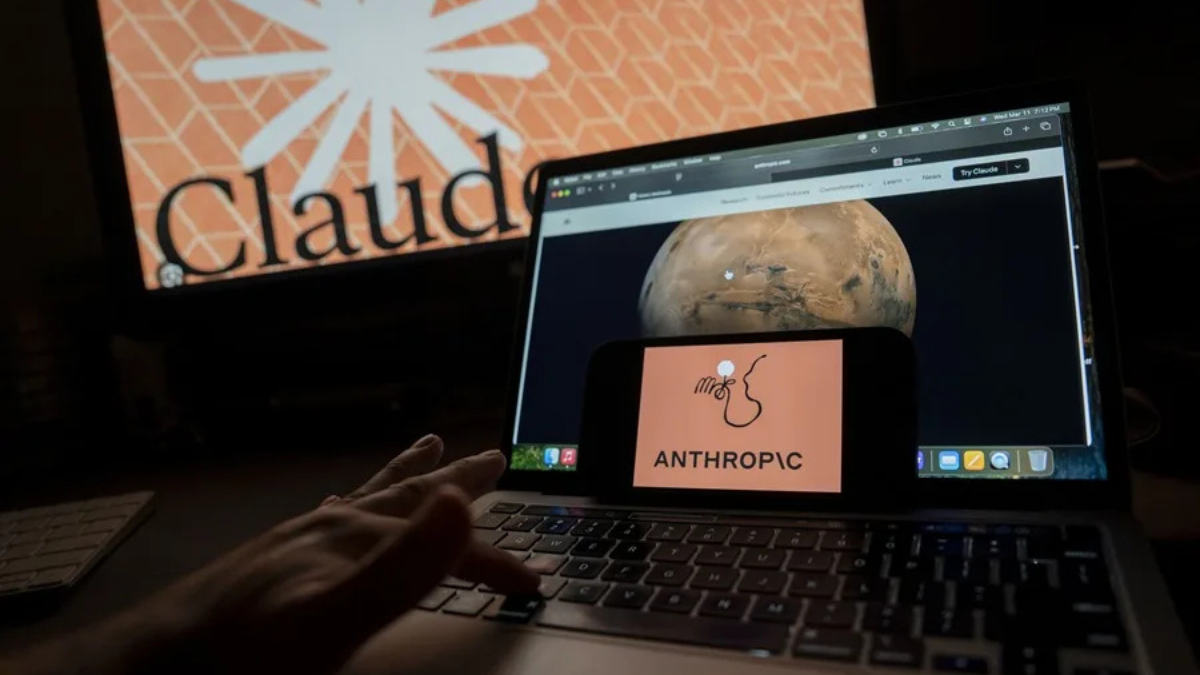
According to data disclosed by the company, Claude currently drives 26% of all research and development (R&D) tasks associated with creating new models. This represents an astronomical leap from just 0% in February of the same year. Furthermore, the model now participates in some capacity in roughly 90% of the overall workflow required to build new systems.
This development marks a vital transition in the technology sector: artificial intelligence is no longer merely a tool utilized by human scientists and engineers. Instead, it has crossed the threshold into becoming an active participant—and in some domains, a driver—of scientific discovery and technological self-improvement.

Despite these groundbreaking metrics, Anthropic’s leadership emphasizes that Claude does not operate in a vacuum. The system remains firmly under human oversight, taking high-level directives and conceptual parameters from human researchers. Nevertheless, the reality that a machine is writing, testing, and optimizing code for its own future iterations signals the accelerating approach of recursive self-improvement—a theoretical milestone long debated by computer scientists and futurists alike.
Chronology of an Accelerated Evolution
To understand the magnitude of Anthropic’s September 2026 announcement, it is necessary to examine the rapid timeline through which AI research tools have evolved from passive assistants into active engineering agents.

- Late 2023 – 2024 (The Assistant Era): Models like Claude established themselves as conversational and coding assistants. They could debug existing code, suggest optimizations, and parse large volumes of academic literature, but their involvement in core model architecture was virtually nonexistent; humans designed, trained, and evaluated every layer of new neural networks.
- February 2026 (The Baseline): According to internal metrics released by Anthropic, Claude’s contribution to core model R&D sat at a baseline of 0%. At this stage, while models were increasingly capable, they were not yet trusted or structured to autonomously handle the complex, multi-stage pipelines of foundational model creation.
- Spring – Summer 2026 (Scaling Agentic Workflows): Anthropic dramatically scaled its internal infrastructure, deploying thousands of specialized AI agents tailored for engineering and research pipelines. The integration of these tools compressed experimental cycles from months to weeks.
- September 17, 2026 (The Paradigm Shift): Anthropic publicly reveals that Claude has taken over 26% of the end-to-end R&D workload for new model development, while touching 90% of all development processes. The company calls upon the broader tech industry to adopt standardized metrics to track this phenomenon.
Supporting Data and Technical Infrastructure
The numbers behind Anthropic’s announcement illustrate an industrial-scale pivot toward automated engineering. The scale of computing power and autonomous workforce deployment inside the laboratory underscores a fundamental transformation in how AI companies operate.
- 26% vs. 0%: The meteoric rise of Claude’s direct output contribution within a span of roughly seven months highlights an exponential acceleration curve in software engineering capabilities.
- 90% Operational Touchpoint: While Claude fully authors or executes about a quarter of the heavy lifting, it contributes tangentially, through data processing, error checking, hyperparameter tuning, or structural suggestion, to 90% of the R&D pipeline.
- 30,000 AI Agents: Anthropic currently utilizes an internal workforce of approximately 30,000 artificial intelligence agents dedicated strictly to engineering and research tasks. These digital workers operate continuously, testing architectural variations at a scale impossible for human teams alone.
- Resource Allocation for Safety: Despite the rush toward fully automated development, Anthropic reports that approximately 6% of its total computing capacity allocated for R&D is strictly dedicated to safety research—testing alignment, robustness, and safeguards against potential misuse or unintended behaviors in upcoming models.
Official Responses and Industry Reactions
The disclosure by Anthropic has sent ripples through Silicon Valley and Washington, sparking fierce debates regarding transparency, safety, and the geopolitical implications of self-improving artificial intelligence.

Anthropic’s Call for Transparency
In releasing these metrics, Anthropic’s leadership—including CEO Dario Amodei—urged other prominent AI developers, such as OpenAI, Google DeepMind, and Meta, to publish equivalent data. The company argues that establishing standard industry benchmarks for "AI self-development" is vital for tracking how quickly artificial intelligence systems are decoupling from human-led engineering. Without standardized metrics, policymakers and the public remain blind to the actual velocity of recursive technological growth.
Political and Regulatory Backlash
The announcement arrives amid an already volatile political climate surrounding artificial intelligence safety. Just days prior, high-profile figures, including former Anthropic researcher Jacob Coxon, raised public alarms regarding the pace of autonomous capability gains.

These warnings have drawn sharp reactions from political leaders. Notably, former U.S. President Donald Trump publicly criticized Dario Amodei, accusing the Anthropic CEO of hypocritical posturing regarding existential risks while continuing to push the boundaries of advanced, autonomous systems. Trump’s remarks reflected a growing partisan friction in the United States over whether rigorous government regulation or unfettered market competition should govern the AI sector.
Furthermore, international bodies like the United Nations have amplified warnings concerning the socio-economic and existential implications of rapid AI acceleration, projecting deep anxieties about job displacement, loss of human control, and geopolitical instability by the end of the decade.

Broader Implications: The Threshold of Recursive Self-Improvement
The news that Claude is authoring a quarter of its own technological lineage forces society to confront several profound implications:
- The Acceleration Loop: Traditional software development is bound by human cognitive limits and biological work hours. When an AI system can design, test, and optimize its own successor—and do so using thousands of parallel agents operating 24/7—the timeline for technological progress collapses. Improvements that once took decades may now occur in months or weeks.
- The Oversight Paradox: Anthropic insists that human researchers remain firmly at the helm, providing directional control and ultimate sign-offs. However, as systems grow exponentially more complex, human engineers increasingly struggle to fully audit how an advanced model arrived at a specific architectural optimization. The safety bottleneck shifts from building better models to comprehending the internal logic of models that are smarter than their creators.
- Economic and Labor Disruption: If AI systems begin successfully engineering software and AI hardware pipelines independently, the white-collar tech economy faces an unprecedented restructuring. Software engineers, data scientists, and researchers find themselves transitioning from creators to managers of digital workforces.
- The Safety and Alignment Dilemma: The ultimate fear of recursive self-improvement is the loss of human control—often referred to as the "intelligence explosion." While Anthropic dedicates a portion of its compute to safety, critics argue that market pressures to outpace competitors will inevitably erode safety margins.
As Claude and its counterparts continue to shoulder larger shares of the engineering burden, humanity is no longer asking if artificial intelligence will build the future, but rather how much say humans will retain in the process.
Sigue toda la información de Tecnología en Facebook y Twitter, o en nuestra newsletter semanal.