UNITED NATIONS — In a high-stakes address before the United Nations General Assembly and a series of subsequent closed-door diplomatic maneuvers, U.S. President Donald Trump delivered an aggressive blueprint for hemispheric dominance. Touting an era of renewed American primacy, Trump equated transnational drug cartels with global terror organizations, demanded regional alignment against organized crime, and championed a modernized iteration of nineteenth-century foreign policy that has already drawn sharp rebukes from regional heavyweights.
The developments underscore a significant shift in U.S. foreign policy toward Latin America and the Caribbean. By marrying aggressive counter-narcotics enforcement with hardline geopolitical strategies, the Trump administration is attempting to consolidate its sphere of influence—a push that has galvanized right-leaning allies while alarming critics who fear a return to heavy-handed interventionism and neo-colonialism.
Main Facts
The core developments stemming from the high-level UN engagements and the rollout of Washington’s regional strategy include:
- The "ISIS of the West" Designation: During his address to the UN General Assembly, President Trump formally categorized Latin American drug cartels as "the ISIS of the Western Hemisphere," elevating criminal syndicates to the status of existential, asymmetric threats requiring total international mobilization.
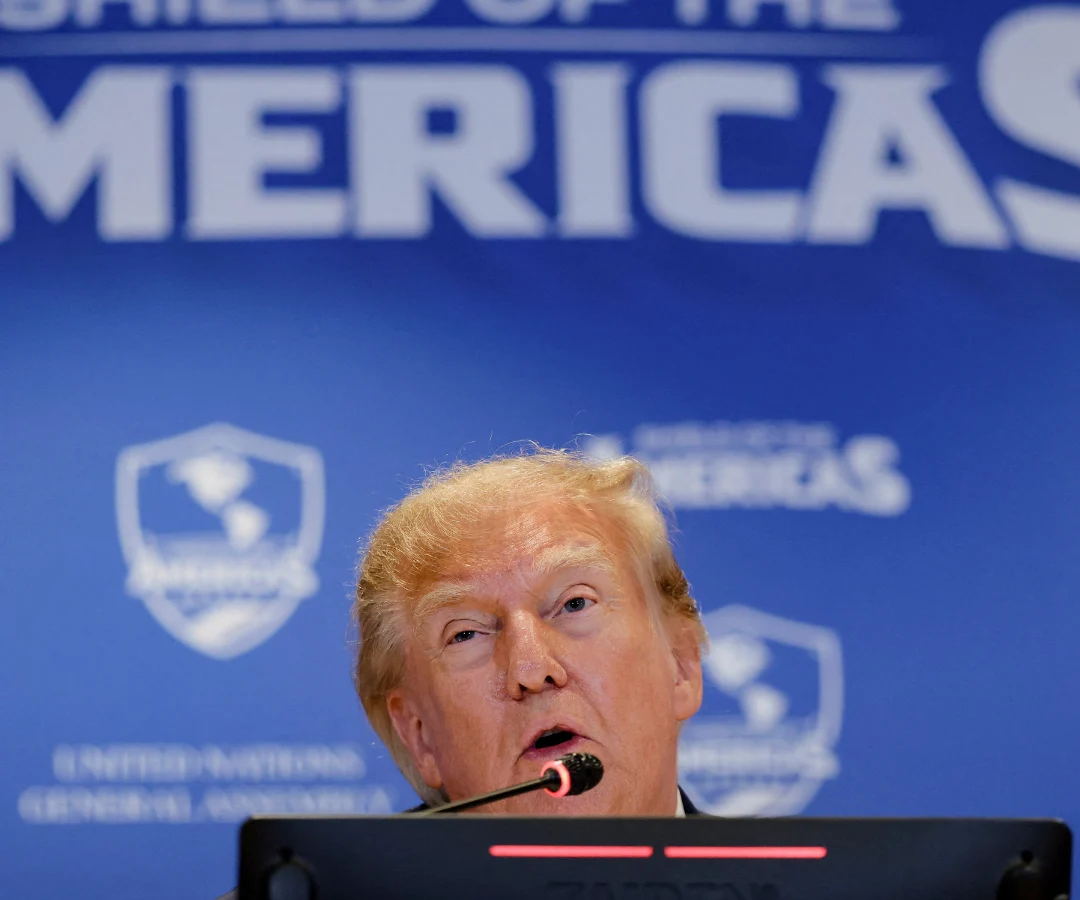
- The "Shield of the Americas" Coalition: Following his speech, Trump met with leaders and foreign ministers from 14 Latin American and Caribbean nations to formalize a unified front against drug trafficking. Participants agreed to back a U.S. initiative designating 24 major cartels as threats to stability, triggering coordinated international sanctions.
- The "Doctrina Donroe": Reviving and rebranding the 19th-century Monroe Doctrine—dubbed playfully by conservative media and the president himself as the "Doctrina Donroe"—the administration’s National Security Strategy explicitly seeks to reassert American hegemony across the Americas and block the geopolitical advances of competing global powers.
- The Venezuelan Precedent: Trump explicitly pointed to recent U.S. incursions resulting in the capture of Venezuelan leader Nicolás Maduro—followed by a strategic oil agreement with the interim government—as concrete proof that Washington is prepared to use unilateral military might to secure its vital interests.
- A Deepening Regional Divide: The initiative has created a stark ideological fault line in the hemisphere. While right-of-center governments such as Argentina, Ecuador, and El Salvador have enthusiastically embraced the coalition, regional powerhouses like Brazil and Mexico have firmly rejected it, warning against renewed imperialist ambitions.
Chronology of Events
The unfolding diplomatic confrontation at the United Nations was the culmination of months of calculated policy shifts and aggressive security maneuvers by the White House.
1. Late Last Year: The National Security Strategy and the Revival of the Monroe Doctrine
The ideological groundwork for Trump’s UN offensive was laid months prior when the administration published its updated National Security Strategy. The document formally proposed a contemporary adaptation of the Monroe Doctrine, asserting that the United States must maintain absolute primacy in its "near abroad." Critics immediately raised alarms, warning that the doctrine historically served as a ideological justification for decades of destabilizing U.S. interventions in Latin America.
2. Tuesday Morning: The UN General Assembly Address
Taking the podium at the United Nations General Assembly, President Trump wasted no time in setting an uncompromising tone. Framed around the necessity of border security and sovereignty, his speech targeted transnational criminal organizations. It was here that he coined the phrase labeling cartels as the "ISIS of the Western Hemisphere." Furthermore, Trump put the international community on notice by citing the operation against Nicolás Maduro in Venezuela as a watershed moment, declaring that America would no longer permit hostile actors to anchor themselves in the hemisphere and warning of potential military interventions.
3. Tuesday Afternoon: The "Shield of the Americas" Summit
Immediately following his plenary address, Trump convened a private summit at the UN headquarters. The meeting brought together representatives from 14 nations that form the core of the newly minted "Shield of the Americas" coalition. During the session, the U.S. delegation pushed partners to jointly designate 24 cartels as international terrorist or security threats, which would mandate the freezing of assets and the imposition of severe financial sanctions. By the conclusion of the summit, participating countries issued a joint communique committing to the implementation of these sweeping punitive measures.
4. Tuesday Evening: Immediate Pushback and Regional Dissension
The administration’s grand display of unity was quickly overshadowed by vociferous dissent from leaders refusing to bow to the new hemispheric framework. Brazilian President Luiz Inácio Lula da Silva took to the global stage to issue a scathing rebuke of what he termed "renewed hegemonic temptations," drawing a definitive line in the sand with the assertion that "Brazil is not anyone’s backyard."
Supporting Data and Geopolitical Alignment
The architecture of the "Shield of the Americas" reflects a carefully cultivated network of ideological allies who have risen to power across Latin America over the past several cycles.
Coalition Composition
The 14 nations comprising the "Shield of the Americas" are primarily governed by conservative or right-leaning administrations. Key members include:
- Argentina: Under President Javier Milei, Buenos Aires has pursued an aggressively pro-U.S. foreign policy.
- Ecuador and El Salvador: Both nations have prioritized domestic "war on crime" policies, finding natural synergy with Washington’s militarized anti-cartel framework.
- Colombia and Peru: These Andean nations joined the coalition following recent electoral shifts that brought conservative leaders to power, reversing years of diplomatic distance from Washington.
The Holdouts and Structural Resistance
Notably absent from the coalition are Latin America’s two largest economies and most influential diplomatic players: Brazil and Mexico.
- Brazil’s Stance: Under the leadership of Luiz Inácio Lula da Silva, Brasília champions a multipolar foreign policy that resists unipolar American dominance, favoring regional integration through bodies that exclude direct U.S. tutelage.
- Mexico’s Stance: Given its shared 2,000-mile border with the United States and the devastating toll of the drug trade, Mexico remains wary of U.S. military unilateralism, maintaining a constitutional doctrine of non-intervention despite facing intense pressure from Washington over cartel violence.
Official Responses and Diplomatic Fallout
The framing of drug cartels as existential threats and the overt revitalization of nineteenth-century interventionist doctrines have provoked strong reactions across the global diplomatic spectrum.
The U.S. Administration: Unapologetic Enforcement
Defending the administration’s posture, U.S. officials argue that traditional law enforcement methods have failed to stem the tide of fentanyl, cocaine, and human trafficking flowing across borders. By treating cartels as quasi-military adversaries rather than simple criminal enterprises, Washington believes it can unlock a broader array of national security tools—including intelligence sharing, economic blockades, and, when deemed necessary, kinetic military strikes.
"Our actions in Venezuela are proof that the United States will no longer tolerate existential threats on our doorstep," a senior administration official reiterated on condition of anonymity. "The era of strategic passivity is over."
Latin American Critics: The Ghost of Imperialism
Conversely, the reaction across progressive and non-aligned capitals in the region has been one of deep apprehension. Opponents argue that the "Doctrina Donroe" is little more than a thinly veiled rebranding of imperialist oversight that ignores the systemic socio-economic root causes of drug production and migration.
President Lula da Silva’s pointed declaration—"Brasil não é quintal de ninguém" ("Brazil is not anyone’s backyard")—encapsulated the frustration of nations that view sovereignty as non-negotiable. Critics point out that unilateral actions, such as the extrajudicial removal of foreign leaders or threats of military intervention within sovereign borders, violate international law and destabilize regional institutions.
Furthermore, human rights organizations have expressed alarm over the designation of criminal groups as terrorist entities. Civil society groups warn that such broad categorizations can be leveraged to militarize domestic policing, undermine civil liberties, and grant unchecked authority to security forces with checkered human rights records.
Implications for the Future of Hemispheric Relations
As the dust settles on the United Nations General Assembly debates, the long-term implications of Trump’s revived hemispheric strategy are profound and far-reaching.
- A Fragmented Hemisphere: The emergence of the "Shield of the Americas" alongside staunch resistance from Brazil, Mexico, and other left-leaning governments signals a return to a fragmented regional order reminiscent of Cold War-era blocs. True multilateral cooperation on issues like migration, climate change, and trade may become increasingly difficult as ideological friction hardens.
- Increased Risk of Unilateral Interventions: By establishing a precedent with the actions in Venezuela, the Trump administration has signaled that it views national sovereignty as conditional when it intersects with American security priorities. This raises the specter of future border incursions, targeted drone strikes, or aggressive economic embargoes against states deemed uncooperative in the fight against cartels.
- The Militarization of the War on Drugs: Elevating cartels to the status of "the ISIS of the Western Hemisphere" shifts the paradigm from criminal justice to national defense. This institutional change will likely lead to increased Pentagon involvement in Latin American internal security matters, bypassing traditional diplomatic channels and empowering military solutions over judicial cooperation.
- Domestic Political Capital: For President Trump, the hardline stance plays exceptionally well with his domestic base, projecting strength, decisive leadership, and an uncompromising commitment to national security and border protection.
Ultimately, while the White House views the "Doctrina Donroe" and the "Shield of the Americas" as vital shields for American security, the policy threatens to alienate key regional partners, revive painful historical grievances regarding American imperialism, and plunge Latin America into a new era of geopolitical turbulence.