
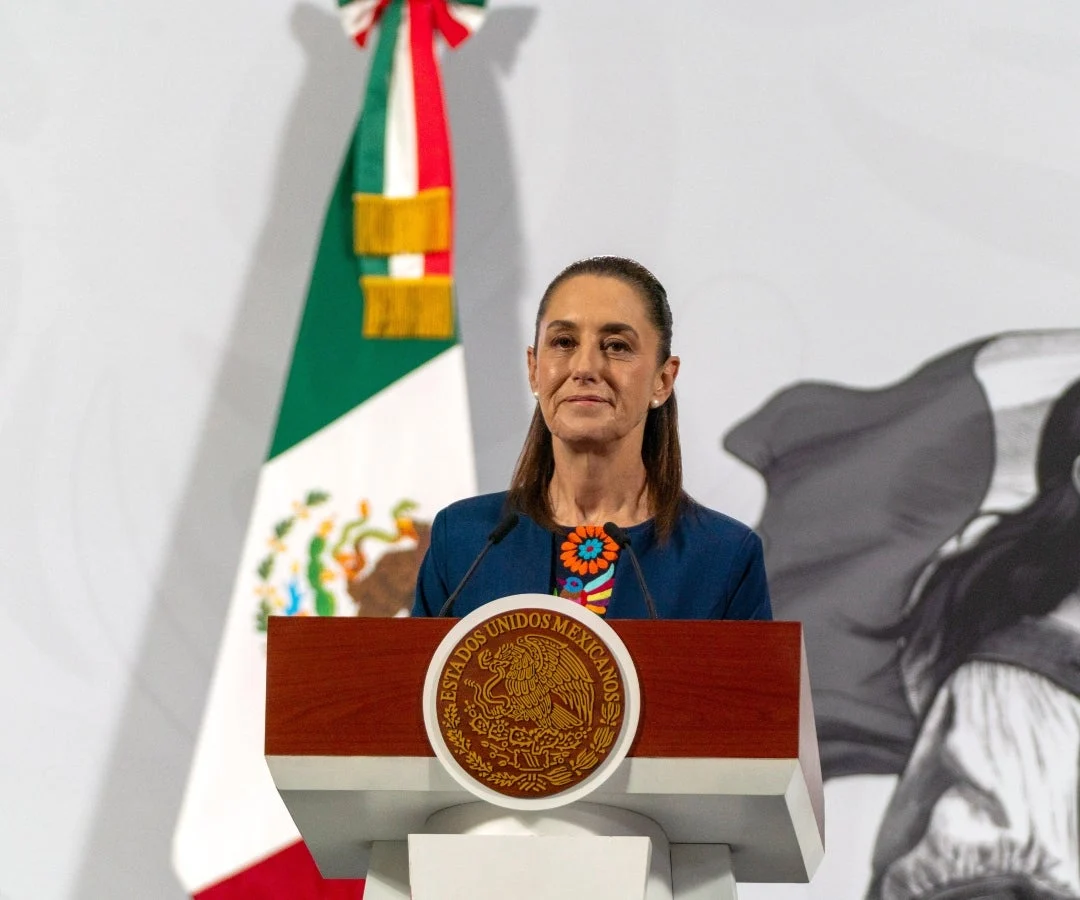
MEXICO CITY — In a development that could significantly reshape North American economic dynamics, Mexican President Claudia Sheinbaum announced Friday that her administration is steadily advancing toward a comprehensive trade agreement with Washington. The breakthrough follows what she described as a highly productive and amicable telephone conversation with U.S. President Donald Trump, signaling a potential thaw in bilateral economic tensions and setting the stage for intensive upcoming negotiations.
The dialogue between the two heads of state comes at a critical juncture for continental commerce, as both nations navigate a complex landscape of tariffs, supply chain realignments, and shifting geopolitical alliances. While formal details remain tightly sealed pending a final text, the public optimism expressed by both leaders has injected a renewed sense of stability into markets that have spent months jittery over potential protectionist measures.
Main Facts
The core of the recent diplomatic breakthrough centers on a direct telephone conversation held on Wednesday between President Claudia Sheinbaum and President Donald Trump. According to the Mexican leader, the dialogue was characterized by mutual cooperation and a shared desire to resolve longstanding trade frictions, chief among them the reduction or elimination of U.S. tariffs on Mexican exports.
Speaking during her daily morning press conference at the National Palace, Sheinbaum offered a guarded yet optimistic assessment of the talks.
"We are moving toward the possibility of an agreement between Mexico and the United States, and the call went very well," Sheinbaum told reporters on Friday. "We reached some understandings, but we cannot announce them until the final agreement is concretized."
President Trump echoed this sentiment during a public appearance on Wednesday, teasing the prospect of a "great deal" close at hand between the United States and Mexico, though he similarly refrained from providing granular details.
Key structural elements of the current diplomatic push include:
- Bilateral Focus: The Wednesday call concentrated strictly on trade and economic cooperation; security matters—which have frequently dominated previous high-level interactions between the two leaders—were intentionally set aside for separate forums.
- High-Level Delegation: President Sheinbaum was joined during the call by key members of her economic and diplomatic team, including Economy Minister Marcelo Ebrard and senior diplomat Roberto Velasco.
- The T-MEC Framework: Despite the pursuit of bilateral arrangements, Mexico maintains that the overarching United States-Mexico-Canada Agreement (T-MEC) remains the foundational pillar of North American trade and must be preserved.
- Upcoming Negotiations: Sources close to the administration indicate that the next crucial milestone will occur in Washington on September 28, when official delegations from both nations will reconvene for a fresh round of formal trade talks.
Chronology of Events
To understand how Mexico and the United States arrived at this potential trade breakthrough, it is necessary to examine the timeline of escalating diplomatic and economic engagements over recent weeks.
Early to Mid-September: Rising Tensions and Regional Realignments
The groundwork for Wednesday’s presidential call was laid amid mounting turbulence in North American trade relations. Earlier in the month, negotiations between the United States and Canada suffered a significant breakdown, prompting Ottawa to explore alternative international partnerships, including outreach to the European Union. While Canada pursued diversification, Mexico opted for a dual strategy: respecting Canada’s sovereign decisions while doubling down on direct, high-level diplomatic engagement with the White House to protect Mexican export interests.
Wednesday: The Presidential Phone Call
Mid-week, Presidents Sheinbaum and Trump connected via telephone. The conversation, which was first leaked to and reported by Politico on Thursday, bypassed traditional bureaucratic channels to tackle the core economic grievances held by Washington and the defensive priorities held by Mexico City. During this call, both leaders identified key areas of convergence regarding tariff relief and market access. Simultaneously, President Trump hinted at the impending framework during a campaign-style event, confirming to domestic audiences that positive developments were underway with Mexico.
Friday: Public Confirmation and Official Briefing
Addressing the nation during her Friday morning press conference, President Sheinbaum formally acknowledged the telephone exchange. She provided clarity on who was in the room, confirmed that security issues were excluded from the agenda to keep the focus entirely commercial, and set expectations that while progress is undeniable, the final agreement requires further technical refinement before public rollout.
Supporting Data and Economic Context
The urgency behind these negotiations is underscored by the sheer volume and interdependence of the U.S.-Mexico economic relationship. Mexico remains one of the United States’ largest trading partners, with hundreds of billions of dollars in goods crossing the border annually.
- Trade Volume: Bilateral trade in goods and services routinely surpasses $700 billion annually. Supply chains in the automotive, aerospace, agriculture, and electronics sectors are deeply integrated, meaning that tariffs on Mexican goods inflict immediate cost increases on American manufacturers and consumers alike.
- The Tariff Dilemma: A primary objective for Mexico City has been persuading the Trump administration to roll back blanket tariff threats and specific levies on Mexican steel, aluminum, and manufactured goods. The prospect of these tariffs has acted as a drag on foreign direct investment (FDI) in Mexico.
- The T-MEC Baseline: Signed in 2020 to replace NAFTA, the T-MEC (known as USMCA in the United States) governs regional commerce. While the current talks explore supplemental or refined understandings, both governments are acutely aware that any bilateral deal must remain compliant with, or supportive of, the broader trilateral treaty architecture.
- The September 28 Benchmark: With the technical teams scheduled to meet in Washington later this month, analysts are closely monitoring economic indicators. The success of the September 28 talks will largely determine whether the optimistic rhetoric of the presidents translates into a binding, text-based trade accord.
Official Responses and Political Reactions
The announcement of a potential trade breakthrough has elicited diverse reactions across political, diplomatic, and economic spheres in both nations.
The Mexican Executive Branch
President Sheinbaum’s administration has framed the ongoing negotiations as a triumph of pragmatic diplomacy. By maintaining open lines of communication with Washington while fiercely defending national sovereignty, Sheinbaum aims to project leadership and stability. Economy Minister Marcelo Ebrard, who participated directly in the call, has been tasked with hammering out the technical details required to transform presidential goodwill into enforceable trade rules. The administration has repeatedly emphasized that Mexico is negotiating from a position of strength, anchored by its indispensable role in the North American supply chain.
The U.S. Perspective
In Washington, the reaction reflects a dual-track approach characteristic of trade policy under President Trump: maintaining maximum leverage through tariff threats while remaining open to bilateral arrangements that secure tangible wins for American manufacturing and labor. Trump’s public teaser of a "great deal" points to a desire to showcase economic victories to domestic constituents. However, U.S. trade representatives and congressional leaders will scrutinize any final agreement to ensure it addresses long-standing concerns regarding intellectual property, labor standards, and market access.
Regional and International Reactions: The Canada Factor
The backdrop of the U.S.-Mexico talks remains heavily influenced by Canada’s recent trade friction with Washington. Following the breakdown of U.S.-Canada negotiations, Ottawa’s pivot toward European markets highlighted the fracturing of a unified North American front. President Sheinbaum addressed this diplomatically during her press briefing, expressing full respect for Canada’s sovereign right to seek alternative alliances, such as turning to the European Union, while simultaneously reaffirming Mexico’s commitment to preserving the trilateral spirit of the T-MEC. Canadian officials are watching the Mexico-U.S. bilateral track closely, as any concessions or rules established between Washington and Mexico City could inevitably impact Ottawa’s own trade calculus.
Implications for North American Commerce
Should the preliminary understandings reached by Presidents Sheinbaum and Trump materialize into a finalized trade agreement, the implications for the North American region will be profound, touching upon economic growth, supply chain resilience, and geopolitical positioning.
1. Market Stability and Investor Confidence
For months, the looming specter of trade wars and arbitrary tariff implementations has created uncertainty for multinational corporations operating in Mexico and the United States. A successful bilateral accord would remove a significant layer of risk, encouraging corporations to release capital expenditure funds, expand manufacturing facilities, and solidify nearshoring strategies that favor Mexico over distant Asian markets.
2. The Future of Trilateralism vs. Bilateralism
The current diplomatic dynamic raises structural questions about the future of the T-MEC. While Mexico continues to champion the trilateral framework, the reality of separate bilateral negotiations—first between the U.S. and Canada (and their subsequent breakdown), and now between the U.S. and Mexico—suggests that North American trade management may be shifting toward a transactional, bilateral model. Maintaining the integrity of the T-MEC while negotiating specific side-deals will require immense diplomatic dexterity from Mexico’s foreign ministry.
3. Supply Chain Resilience and Nearshoring
Mexico has emerged as the primary beneficiary of "nearshoring"—the relocation of manufacturing hubs closer to the U.S. consumer market to mitigate trans-Pacific supply chain vulnerabilities. A favorable trade agreement with Washington would cement Mexico’s status as an indispensable extension of the U.S. industrial base, protecting critical sectors like automotive manufacturing, technology components, and clean energy infrastructure from punitive trade barriers.
4. Upcoming Milestones
All eyes now turn to the critical negotiations scheduled to begin in Washington on September 28. It is during these technical working sessions that the broad brushstrokes of the Sheinbaum-Trump phone call will be tested against the complex realities of customs regulations, tariff schedules, and legal texts. Until those delegations finalize their work, the ultimate shape of North America’s economic future remains unwritten, but the trajectory—for now—is pointing firmly toward cooperation and compromise.