NEW YORK/WASHINGTON — A severe technological failure at a key air traffic control facility in Philadelphia on Monday triggered widespread chaos across the northeastern United States, paralyzing ground operations at major international airports and severely disrupting travel itineraries. The incident, which coincided with the high-profile arrival of world leaders for the United Nations General Assembly in New York, laid bare the ongoing vulnerabilities within America’s aging aviation infrastructure.
According to data from the Federal Aviation Administration’s (FAA) National Airspace System status website, sweeping ground stops were ordered at New York’s John F. Kennedy International Airport (JFK) and New Jersey’s Newark Liberty International Airport. Similar restrictive measures were implemented at Philadelphia International Airport and Teterboro Airport in New Jersey, a vital hub catering predominantly to private aviation.
The cascading delays and cancellations quickly rippled through the domestic and international aviation networks, turning travel days into logistical nightmares for thousands of passengers, including diplomats, dignitaries, and business travelers attempting to reach Manhattan.
1. Main Facts of the Incident
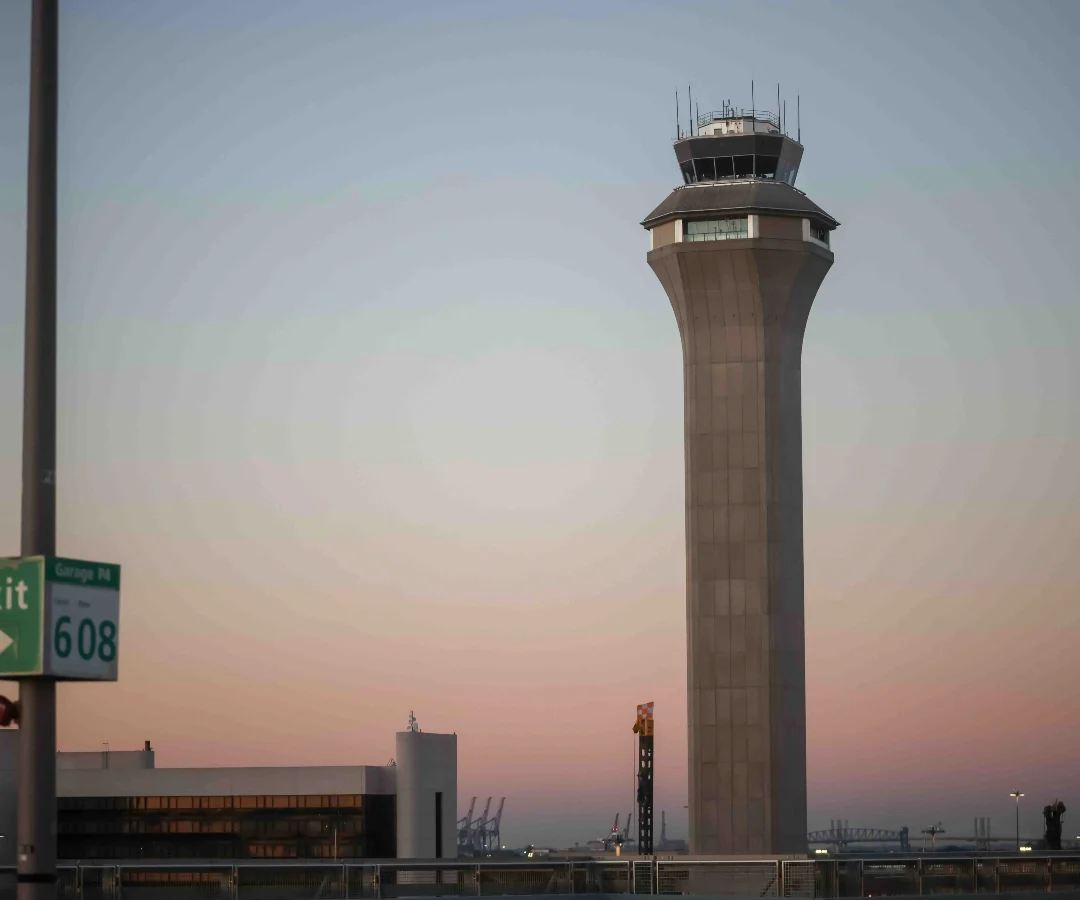
The disruption stemmed from a critical technical failure at the Terminal Radar Approach Control (TRACON) facility in Philadelphia. TRACON facilities are responsible for guiding aircraft safely through the congested airspace as they depart from or approach major regional hubs—in this case, heavily influencing operations at Newark and surrounding airfields.
According to FAA Administrator Bryan Bedford, speaking at an industry event in Washington, the root cause was a catastrophic failure in the facility’s primary circuit. To compound matters, a secondary backup fiber-optic cable also suffered a break, eliminating the redundancy systems designed to prevent total operational blackouts. Bedford noted that initial attempts by FAA technicians to hot-swap or bypass the broken circuit were unsuccessful, forcing the agency to take drastic measures.
- Affected Airports: John F. Kennedy International (JFK), Newark Liberty International (EWR), Philadelphia International (PHL), and Teterboro (TEB). LaGuardia (LGA) faced preliminary arrival restrictions before the FAA lifted its ground stop.
- Flight Disruptions: Flight-tracking data from FlightAware revealed that approximately 122 flights—representing 21% of all scheduled departures—were canceled at Newark alone.
- Timelines of Restraint: Ground stops varied by facility, with restrictions at Newark, JFK, and Philadelphia extending well into the afternoon hours.
- Collateral Impact: The timing could not have been worse. The technological breakdown occurred precisely as international delegations, heads of state, and global media were converging on New York City for the annual United Nations General Assembly.
2. Chronology of the Breakdown
The unfolding crisis followed a rapid and debilitating timeline on Monday, transforming a localized technical glitch into a regional transportation emergency within a matter of hours.
- Late Morning (Approx. 11:30 AM EST): Technicians at the Philadelphia TRACON facility register a critical drop in circuit performance, followed by the complete failure of the primary data transmission loop. Automatic failover systems attempt to switch traffic management to the backup fiber-optic line, but that line also experiences a physical break.
- 1:04 PM EST: Ground conditions deteriorate rapidly. Teterboro Airport reports average departure delays exceeding three hours, while Philadelphia International experiences consistent rolling delays averaging around 60 minutes.
- Immediate Post-1:00 PM Window: The FAA updates its National Airspace System advisory, officially declaring ground stops for inbound and outbound traffic at Newark Liberty and JFK. LaGuardia Airport is briefly subjected to inbound arrival halts before the agency manages to reroute specific data feeds, lifting LaGuardia’s restriction early.
- 2:00 PM – 3:00 PM EST: The FAA issues hard expiration targets for the remaining ground stops. Newark’s order remains locked in until 2:45 p.m., while JFK and Philadelphia orders are maintained until 3:00 p.m. local time to allow air traffic controllers to safely clear backlogs and establish tactical spacing.
- Afternoon Briefing: FAA Administrator Bryan Bedford addresses the media in Washington, disclosing that the repair process for the severed fiber-optic backup cable will take an estimated 13 hours. To safely perform the physical repairs without risking active aircraft guidance, the FAA is forced to temporarily throttle down residual traffic in adjacent sectors, promising a phased restoration of full airspace capacity by evening.
3. Supporting Data and Flight Metrics
The quantitative footprint of Monday’s failure illustrates the immense leverage a single regional control facility holds over the broader North American economic and travel engine.
Flight-tracking and analytics platforms painted a stark picture of the disruption:
- Newark Liberty International (EWR): As one of United Airlines’ primary fortress hubs, Newark bore the brunt of the operational slowdown. FlightAware metrics indicated that 21% of all scheduled outbound flights—totaling roughly 122 cancellations by mid-afternoon—were erased from the board. Dozens of incoming flights were either held at their origin airports across the country or diverted to alternative regional fields.
- Philadelphia International (PHL): Operating as the ground zero for the technical failure, Philadelphia saw average departure delays soar past the one-hour mark. Because the facility controls the local approach vectors, controllers were forced to rely on manual separation techniques and reduced data displays, drastically cutting the hourly rate of aircraft movements the airspace can safely handle.
- Teterboro Airport (TEB): Serving as the premier corporate and private aviation gateway for the New York metropolitan area, Teterboro experienced crippling delays exceeding three hours by early afternoon. High-net-worth individuals, corporate executives, and private diplomatic delegations found themselves indefinitely grounded on the tarmac.
- The UNGA Factor: While exact passenger headcounts delayed by the air traffic backlog remain difficult to quantify, airport authorities confirmed that dozens of foreign delegations traveling via commercial and charter flights experienced significant arrival delays, throwing tight diplomatic schedules into disarray ahead of the United Nations General Assembly debates.
4. Official Responses and Industry Action
As the scale of the failure became apparent, federal officials, aviation regulators, and major commercial carriers moved quickly to mitigate passenger frustration and explain the systemic failures behind the shutdown.
FAA Administrator Bryan Bedford faced intense questioning during his Washington appearance, where he provided a transparent breakdown of the hardware failure. Bedford emphasized that the agency’s primary concern was safety, noting that attempting to run a high-density airspace without reliable primary and secondary data circuits is an unacceptable risk.
"When you lose both your primary loop and your secondary redundant fiber link, you are effectively flying blind in terms of automated data feeds," Bedford explained. "Our technicians worked tirelessly to implement a workaround, but when those attempts failed, halting operations temporarily was the only responsible path forward to ensure absolute safety."
Transportation Secretary Sean Duffy weighed in on the broader implications of the crisis. Secretary Duffy pointed out that the Philadelphia TRACON facility is the same installation that suffered major technological anomalies and outages back in 2025. Those historical failures had previously served as a catalyst for Duffy’s ongoing national push to secure federal funding for a comprehensive, multi-billion-dollar modernization of America’s air traffic control infrastructure.
"Incidents like the one we witnessed today in Philadelphia are stark reminders of why our national air traffic control system is in desperate need of generational transformation," Secretary Duffy said in a statement. "We cannot rely on patched-together legacy hardware to guide the world’s busiest airspace. Modernization is not a luxury; it is a fundamental national security and economic imperative."
On the commercial side, carriers scrambled to absorb the shockwaves. United Airlines Holdings Inc., which commands a dominant market share at Newark Liberty, activated its flexible travel waiver policy. The airline informed all ticket holders booked on flights through the affected airports that they could change their itineraries free of charge, waiving standard fare differences for travel completed within a designated window. Other major carriers, including Delta Air Lines and American Airlines, offered similar goodwill accommodations, urging passengers to check real-time flight statuses before heading to the terminals.
5. Broader Implications for Global Aviation
Monday’s meltdown in the northeastern United States did not occur in a vacuum; rather, it highlights a deeply concerning global trend regarding the fragility of aging critical infrastructure within the aviation sector.
Just hours before the Philadelphia TRACON failure, travelers across the Atlantic experienced parallel disruptions. In the United Kingdom, a brief but intense technical glitch crippled operations at a key Scottish air traffic control center, generating widespread delays. This European incident arrived hot on the heels of a massive, nationwide UK airspace failure just two weeks prior, which had stranded hundreds of thousands of passengers across British airports.
Aviation analysts point out that air traffic management systems globally are buckling under the weight of exponential post-pandemic travel demand, combined with decades of underinvestment in digital infrastructure. Many core control facilities across Western nations still rely on legacy hardware, copper wiring, and legacy software systems that date back to the late 20th century.
Integrating modern, high-bandwidth fiber optics, cloud-based redundancy, and artificial intelligence-assisted traffic management tools remains an expensive, highly complex engineering challenge. When these legacy systems fail, the economic and societal costs are immense. Beyond the immediate frustration of delayed vacations and missed business meetings, widespread ground stops cost airlines tens of millions of dollars in fuel burn, crew repositioning, passenger compensation, and lost revenue.
Furthermore, when infrastructural failures coincide with geopolitical flashpoints or major international summits—such as the UN General Assembly—the diplomatic and reputational fallout reaches the highest levels of government. Foreign leaders and international media arriving in New York were given an unwanted front-row seat to the vulnerabilities plaguing the world’s most advanced economy.
As the FAA works to complete the arduous 13-hour repair process on the Philadelphia backup fiber-optic cable and restore full capacity to the northeastern corridor, pressure is mounting on lawmakers in Washington. Industry stakeholders are demanding accelerated legislative action and sustained budgetary commitments to overhaul the National Airspace System. Until a comprehensive modernization initiative is fully realized, travelers across the United States—and indeed around the globe—will likely remain vulnerable to the sudden and disruptive consequences of a single broken circuit.