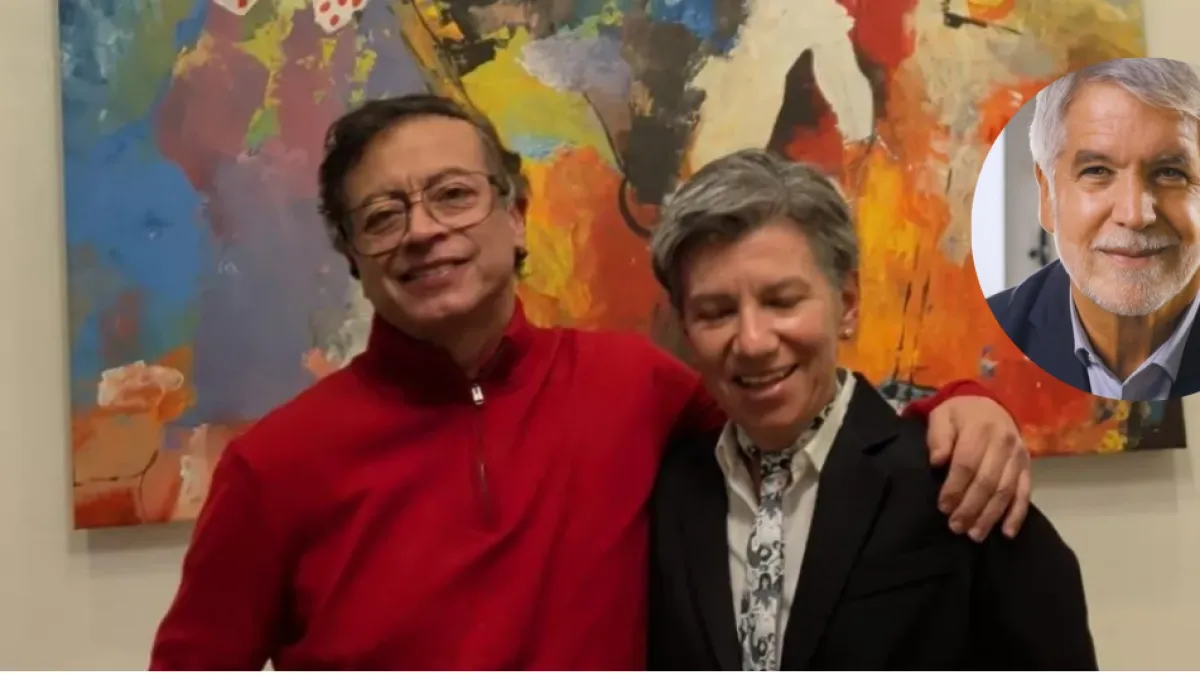
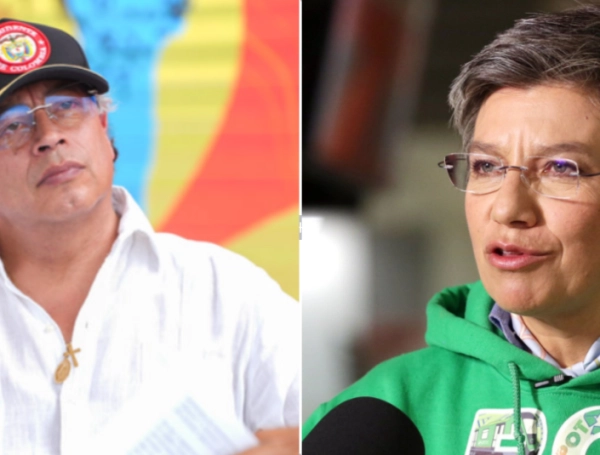
Bogotá, Colombia — A seemingly simple gesture of political reconciliation has once again laid bare the deep ideological fractures shaping Colombia’s national landscape. Over the weekend, a widely circulated photograph capturing a warm embrace between President Gustavo Petro and former Bogotá Mayor Claudia López sent shockwaves through the country’s political establishment. The image, emerging within the framework of an initiative known as the "Alianza por la Vida" (Alliance for Life), has transcended symbolic value, sparking intense national debate over urban planning models, past administrative decisions, and potential electoral alignments ahead of the upcoming political cycles.
While supporters of the initiative view the rapprochement as a necessary step toward progressive unity, opposition figures have reacted with sharp indignation. Among the most vocal critics is former Bogotá Mayor Enrique Peñalosa, who launched a scathing attack on the two leaders via social media, accusing them of leaving a trail of administrative destruction in the nation’s capital.
The renewed hostilities highlight how the ghosts of past local administrations continue to haunt contemporary Colombian politics, as citizens and analysts weigh the long-term consequences of decisions that fundamentally altered Bogotá’s mobility, housing, and infrastructure.
Main Facts: The Embrace and the Backlash
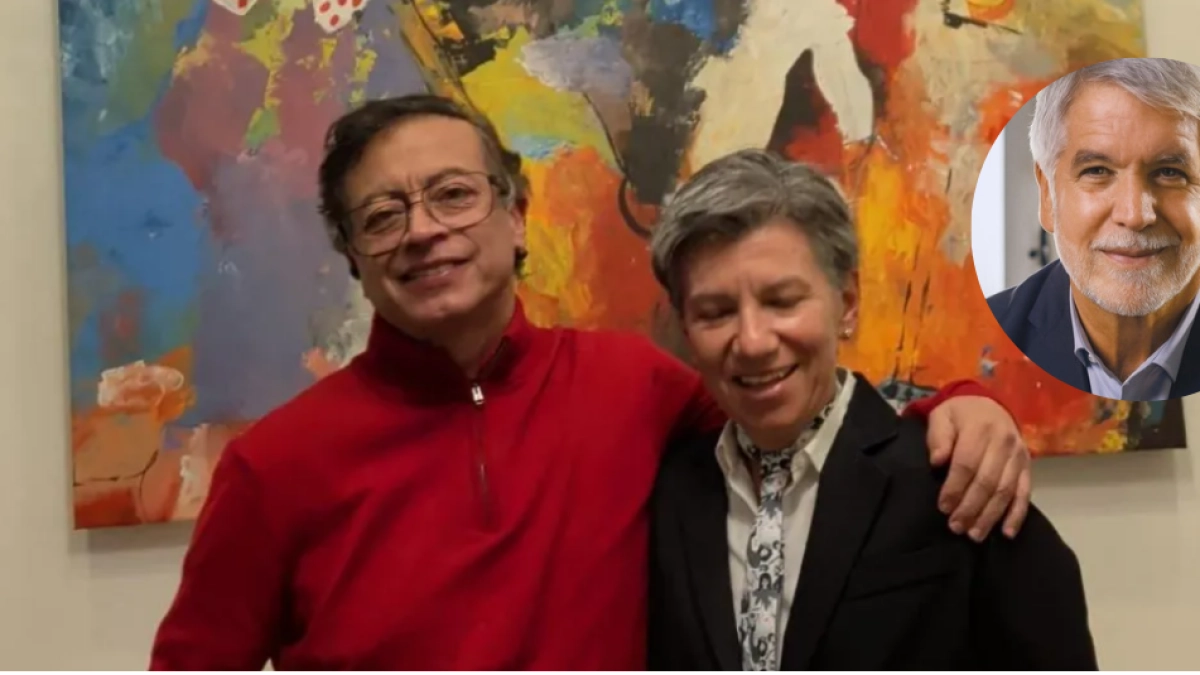
The epicenter of the current controversy is a single photograph capturing President Gustavo Petro and former Mayor Claudia López embracing. Released publicly as part of the "Alianza por la Vida" initiative, the image immediately signaled a potential thawing of relations between two of the most prominent—and historically friction-prone—figures on the Colombian center-left and left.
However, rather than inspiring a unified front, the image triggered an immediate counter-offensive from opposition leaders who view the alliance as a marriage of convenience driven by electoral calculations rather than genuine policy alignment.
Enrique Peñalosa, who governed the capital during distinct periods and holds a starkly contrasting vision of urban development, wasted no time taking to the digital public square. Utilizing his official account on X (formerly Twitter), Peñalosa minced no words, categorizing the two politicians with a blunt and damaging assessment: “What a harmful pair for Bogotá!”

According to Peñalosa, the combined legacies of Petro and López represent a systematic regression for the city, arguing that their respective policy decisions severely handcuffed Bogotá’s growth, choked its mobility arteries, and forced millions of residents into suboptimal living conditions. The fierce exchange has instantly transformed a nascent political platform into a fiery debate over who bears the responsibility for the structural challenges facing Colombia’s urban heartland.
Chronology of Conflict: A Decade of Clashing Visions
To understand the depth of the animosity displayed by figures like Peñalosa toward the Petro-López axis, it is essential to examine the historical timeline of administrative decisions that have shaped Bogotá over the last fifteen years. The friction is not merely theoretical; it is rooted in specific policy battles over roads, housing, and mass transit.
1. The Petro Administration (2012–2015)
During Gustavo Petro’s tenure as mayor of Bogotá, his administration prioritized social programs, densification within existing urban perimeters, and a strong skepticism toward large-scale road infrastructure projects traditionally favored by center-right technocrats. Petro famously attempted to transition the city’s public transportation model away from the heavy reliance on the TransMilenio bus rapid transit (BRT) system, advocating instead for underground metro lines and tram systems. Critics, however, argue that his administration suffered from severe administrative paralysis, legal hurdles, and a failure to execute vital infrastructure projects, setting back the capital’s transit development by years.
2. The López Administration (2020–2023)
Claudia López assumed office with a mandate centered on environmental sustainability, anti-corruption, and social equity. While she unblocked several contentious projects—most notably signing the contract for the long-awaited Bogotá Metro Line 1—her administration simultaneously enacted sweeping revisions to the city’s master planning framework, known as the POT (Plan de Ordenamiento Territorial). It is precisely these revisions, alongside her stance on regional connectivity, that have drawn the most virulent attacks from her predecessors.
3. The Present Rapprochement (2025–2026)
The recent unveiling of the "Alianza por la Vida" and the public embrace between Petro and López mark a strategic pivot. With future democratic contests on the horizon, political analysts are actively parsing whether this public display represents a durable electoral coalition designed to consolidate progressive forces, or merely a temporary tactical truce in a volatile political environment.
Supporting Data: Infrastructure, Housing, and Mobility Under Fire
Peñalosa’s critique of the Petro-López alliance was not limited to broad rhetorical attacks; the former mayor marshaled specific, highly technical grievances regarding urban planning, asserting that both leaders systematically dismantled critical projects designed to secure Bogotá’s future.

The Autopista Longitudinal de Occidente (ALO)
At the heart of Peñalosa’s grievances is the fate of the Autopista Longitudinal de Occidente (ALO), a massive highway project conceptualized decades ago to relieve congestion on Bogotá’s northern and western corridors.
Peñalosa specifically targeted Claudia López, accusing her administration of delivering a fatal blow to the project. “She killed the Longitudinal Highway of the West (ALO), the most crucial road to unclog Bogotá’s exit to the north and entrance from the north, with space reserved for decades,” Peñalosa wrote on X. He further claimed that López cemented the project’s demise through her POT regulations and added insult to injury by planting thousands of trees on land previously acquired for the roadway—a move he lamented current Mayor Carlos Fernando Galán has yet to reverse.
Urban Sprawl and Social Housing
Another pillar of Peñalosa’s critique centers on housing policy and demographic growth. He accused both Petro and López of actively obstructing the development of official social housing (VIS and VIP) in the northern sectors of the capital.
According to Peñalosa, these restrictive policies forced hundreds of thousands of low- and middle-income families to seek housing in distant, poorly serviced areas. He noted that families were pushed toward the historic southern highway leading to the Llanos orientales—an infrastructure corridor plagued by minimal specifications, a lack of pedestrian sidewalks, and zero integration with mass transit systems—as well as high-altitude municipalities surrounding the capital.
Peñalosa argued that this forced migration subjected citizens to grueling daily commutes, deprived them of the robust park networks, sports facilities, and cultural infrastructure available in Bogotá, and ultimately exacerbated regional carbon footprints and global warming through excessive energy consumption for transport.
Mass Transit and Legal Battles
The friction also extends to mass transit development. Peñalosa concluded his social media indictment by revisiting past legal and political battles over the Bogotá Metro. He asserted that López engaged in opportunistic litigation to undermine the metro project, while her current political ally, Gustavo Petro, similarly deployed every available mechanism to obstruct its realization during his mayoralty. For Peñalosa, the current embrace is a natural convergence of figures united by what he terms "destructive political maneuvering."

Official Responses and Political Repercussions
As the public war of words intensifies, defenders of the Petro-López alliance and neutral observers have begun to weigh in on the implications of the controversy.
Proponents of the "Alianza por la Vida" argue that criticisms from figures like Peñalosa reflect the bitterness of a discarded, car-centric and asphalt-heavy urban model that failed to prioritize human-centric spaces, environmental protection, and social equity. Supporters maintain that López’s master plan (POT) and Petro’s emphasis on socio-environmental justice represent a modern, forward-looking paradigm necessary to combat climate change and socio-economic segregation in a metropolis of over eight million people.
Furthermore, Claudia López has faced direct questioning regarding the timing and motivation behind her alignment with the sitting president. In recent statements responding to critics of the controversial alliance, López defended her pragmatic approach to national governance, emphasizing that Colombia faces unprecedented institutional and security challenges that demand cross-cutting dialogue rather than entrenched polarization.

Political analysts point out that the embrace serves a dual purpose: for Petro, securing a prominent moderate-left ally helps consolidate a broad progressive coalition heading toward future legislative and executive contests; for López, positioning herself within a national dialogue keeps her relevant on the national stage after leaving the Liévano Palace.
Implications: What the Alliance Means for Colombia’s Political Future
The fallout from the Petro-López photograph underscores a deeper reality of contemporary Colombian politics: the battle for the narrative of urban management is inextricably linked to the broader struggle for national power.
- Polarization of the Urban Legacy: Bogotá remains the primary political laboratory in Colombia. Whichever political faction convinces voters that its model of the city is superior holds a distinct advantage in national elections. By framing Petro and López as twin architects of urban stagnation, the opposition aims to discredit not only their past local work but also their collective vision for the country.
- Electoral Realignments: The transition from local to national politics is fluid in Colombia. Should Petro and López successfully forge a durable political partnership, it could fundamentally alter the center-left and progressive electoral map, pooling distinct voter bases that were previously at war with one another.
- Policy Continuity and Uncertainty: For current local administrations, such as that of Mayor Carlos Fernando Galán, these high-level political dogfights complicate the execution of long-term infrastructure. Navigating the legal, environmental, and political landmines left behind by successive ideological shifts remains one of the greatest challenges for any executive running Colombia’s capital.
Ultimately, what began as a single photograph symbolizing reconciliation has opened a Pandora’s box of historical grievances, policy debates, and strategic maneuvers. As the political class positions itself for upcoming electoral battles, the debate over who built—and who broke—Bogotá promises to remain at the very center of the national conversation.