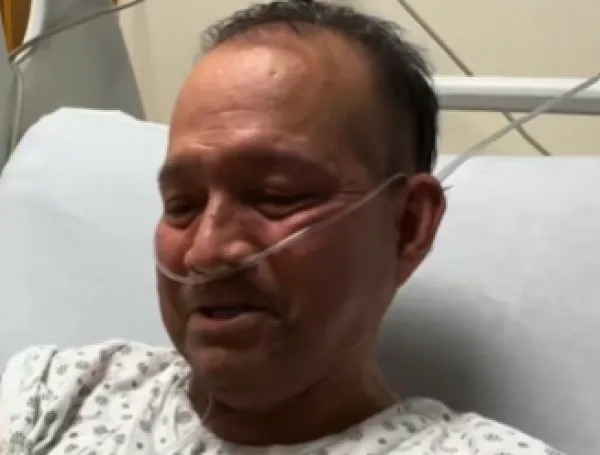
In a swift and extraordinary display of state intervention, the Colombian government has mobilized diplomatic channels, medical resources, and emergency state funds to secure the repatriation of Henry Camargo, a retired professional soldier and veteran of the nation’s Armed Forces. Camargo, who boasts over two decades of dedicated military service, found himself in a critical medical crisis far from home, hospitalized in New York City suffering from a severe pulmonary condition.
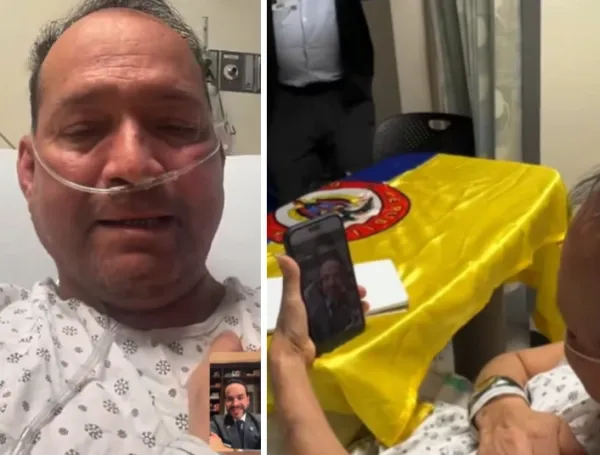
The operation to bring him back to Colombian soil was set into motion following a direct directive from President Abelardo De La Espriella. Upon viewing a distress video recorded by the ailing veteran—in which Camargo urgently appealed to the presidency for a humanitarian flight—President De La Espriella personally intervened. He established direct communication with the former soldier and immediately ordered the Consulate General of Colombia in New York to coordinate all logistical, medical, and administrative measures necessary for his safe return.
To make this complex medical evacuation feasible, the National Government authorized an exceptional allocation of resources from the Special Fund for Migrations (FEM). Typically utilized as a subsidiary mechanism of last resort for extreme humanitarian emergencies and profound vulnerability, the fund’s deployment underscores the severity of Camargo’s condition.
The repatriation will not be a standard commercial flight. Instead, the Ministry of Foreign Affairs—under the leadership of Chancellor Omar Bula—confirmed that Camargo will be transported via a specialized, medicalized air ambulance. Upon landing in Colombia, his care will transition seamlessly to the national healthcare network, coordinated jointly by the Ministry of National Defense and the prestigious Central Military Hospital (Hospital Militar Central), given his status as an affiliate of the Armed Forces’ special health regime.
Chronology of Events
The unfolding of events that led to President De La Espriella’s intervention highlights the intersection of digital advocacy, consular duties, and executive responsiveness:
Mid-September 2026: Retired professional soldier Henry Camargo, residing or visiting in New York, experiences a sudden and severe deterioration in his respiratory health. He is admitted to a local New York medical center, where doctors diagnose him with a serious pulmonary condition requiring continuous specialized care.
Late September 2026: Facing mounting medical complications and the realization that he cannot independently arrange or afford a medically supervised transit back to Colombia, Camargo records a video message. In the recording, he details his 22-year tenure in the Colombian Armed Forces and directly implores President Abelardo De La Espriella to grant him a humanitarian flight.
Shortly After Publication: The video circulates widely across social media platforms, rapidly capturing public attention and reaching the desk of the President. President De La Espriella reviews the footage and promptly places a personal phone call to Camargo to assess his state and offer reassurance.
Immediate Presidential Directive: Following the conversation, the President instructs the Colombian consul in New York to spearhead an immediate repatriation effort. Concurrently, the Ministry of Foreign Affairs initiates emergency inter-institutional talks with the Ministry of Defense.
September 30, 2026: The Ministry of Foreign Affairs formally announces the activation of the Special Fund for Migrations (FEM) on an exceptional basis. Plans for the medicalized air ambulance and the reception protocol at the Central Military Hospital are finalized and publicized.
Supporting Data and Institutional Framework
The execution of this high-profile medical repatriation relies heavily on pre-existing institutional frameworks, inter-agency cooperation, and emergency financing mechanisms:
1. The Special Fund for Migrations (FEM)
The FEM is legally structured as a supplementary, last-resort financial instrument designed by the Colombian state. Its core mandate is to address extreme humanitarian crises and situations of high vulnerability involving Colombian nationals abroad. Typically, consular services abroad are limited to legal guidance, translation assistance, local network coordination, and family communication. However, when standard resources are entirely exhausted and a citizen faces imminent danger or catastrophic health scenarios, the FEM allows the executive branch to authorize extraordinary budgetary expenditures—as was done in Camargo’s case.
2. Armed Forces Health Regime
As a veteran with more than 22 years of documented professional service in the Colombian military, Henry Camargo maintains lifelong affiliations with the special social security and healthcare system designated for members of the public forces. This distinction is vital: unlike civilian citizens who rely on the General System of Social Security in Health (SGSSS), Camargo’s post-flight care falls under the purview of the military health network. This ensures that upon his arrival via air ambulance, he will be received directly by the Central Military Hospital in Bogotá, an institution uniquely equipped to manage complex, long-term military veteran healthcare needs.
3. Diplomatic Footprint in New York
The Consulate of Colombia in New York played an instrumental operational role in bridging the gap between local American medical practitioners and Colombian state authorities. Consular officials conducted routine physical visits to Camargo’s hospital bedside, engaged with his local support network, and translated complex American medical reports into actionable logistics for the chartering of the air ambulance.
Official Responses and Statements
The handling of the veteran’s plight has drawn significant commentary from key figures within the administration, highlighting a unified governmental approach to citizen welfare abroad.
President Abelardo De La Espriella emphasized his administration’s zero-tolerance policy for abandoning those who served the country:
"A soldier who dedicates more than two decades of his life to defending the sovereignty and security of Colombia can never be left behind when he falls in the line of duty—whether on the battlefield or facing a health crisis abroad. The moment I saw Henry Camargo’s call for help, my instruction to our diplomatic corps was absolute: use every necessary resource to bring our hero home safely."
The Ministry of Foreign Affairs, headed by Chancellor Omar Bula, released an official technical briefing detailing the legal and logistical path chosen for the intervention:
"The approval of these exceptional resources from the Special Fund for Migrations responds to a rigorous, particular valuation of Mr. Camargo’s medical profile and vulnerability. While standard consular assistance is advisory and facilitative, the extraordinary circumstances of this case warranted an unprecedented state response. We have structured a seamless handover from the medical team in New York to the specialized doctors at the Central Military Hospital."
Furthermore, defense sector spokespersons reiterated that the coordination with the Ministry of National Defense ensures that Camargo’s integration back into the national healthcare infrastructure will be absolute, covering all rehabilitation and ongoing pulmonary treatments required following his discharge from the New York facility.
Implications and Precedents
The successful mobilization to repatriate Henry Camargo carries several broad implications for Colombia’s foreign policy, veteran affairs, and the execution of executive power:
Redefining Consular Limits
While the Ministry of Foreign Affairs frequently stresses that the state cannot routinely finance medical evacuations or international health insurance for private citizens traveling abroad, this case establishes a powerful precedent. By invoking the Special Fund for Migrations for a decorated veteran, the administration has signaled that individuals with historic ties to national security institutions may receive prioritized humanitarian consideration during extreme emergencies.
The Power of Digital Diplomacy
Camargo’s case highlights a modern sociopolitical reality: direct digital communication between citizens and heads of state via social media can bypass bureaucratic delays. By recording a direct-to-camera plea, the veteran successfully vaulted over standard institutional channels, compelling immediate executive oversight and transforming a localized consular issue into a top-tier national priority.
Strengthening Veteran Support Networks
For years, veterans’ organizations in Colombia have advocated for robust safety nets regarding health, psychological care, and emergency support for retired personnel living or traveling abroad. The swift synchronization between the Presidency, the Foreign Ministry, the Ministry of Defense, and the Central Military Hospital serves as a stress test for inter-agency collaboration, potentially paving the way for a more formalized protocol for distressed veterans outside national borders.
As the air ambulance prepares for departure, the nation watches closely, anticipating Camargo’s arrival and the continuation of his specialized treatment at home—a tangible testament to a policy that vows never to abandon those who wore the uniform of the republic.
Bogotá, Colombia – July 16, 2026 – In a move that could redefine the symbolic landscape of Colombian political power, the nation’s legislative body has formally acknowledged the constitutional possibility of relocating its ordinary seat,…
By Juan Pablo Penagos Ramírez / Political Desk Enriched English Adaptation Main Facts: The End of an Exception Through Resolution 429 of 2026, the administration of Abelardo De La Espriella officially stripped former paramilitary commander…
Bogotá, Colombia – July 16, 2026 – As the countdown to the new legislative period intensifies, Colombia’s political landscape is abuzz with fervent negotiations and strategic maneuvering. With the official installation of the Congress of…