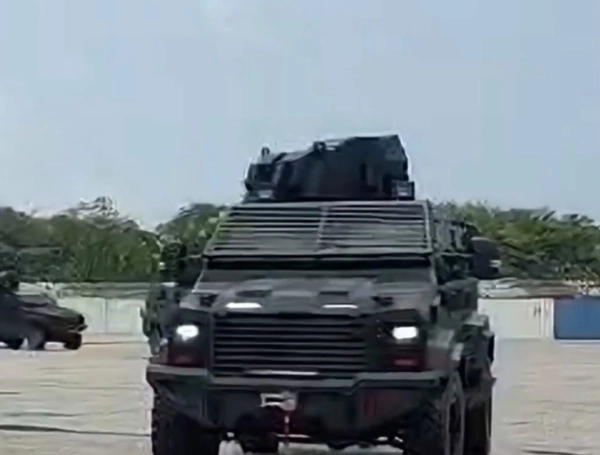
PORT-AU-PRINCE — A volatile and increasingly internationalized security crisis in Haiti reached a grim milestone this weekend as the National Police of Haiti (PNH) reported that at least 54 suspected members of armed gangs have been killed over a 48-hour period. The intense operations, characterized by heavy armor deployments and aerial surveillance via drones, mark a dramatic intensification of urban warfare in the capital’s southern approaches.
The offensive underscores a deeply complex, multi-layered military intervention involving national security apparatuses, private security contractors, and a foreign military contingent operating under unprecedented parameters. As the death toll rises and tactical lines shift, questions regarding human rights oversight, the rule of law, and the ultimate roadmap for stabilizing a fractured Caribbean nation continue to mount.
Main Facts
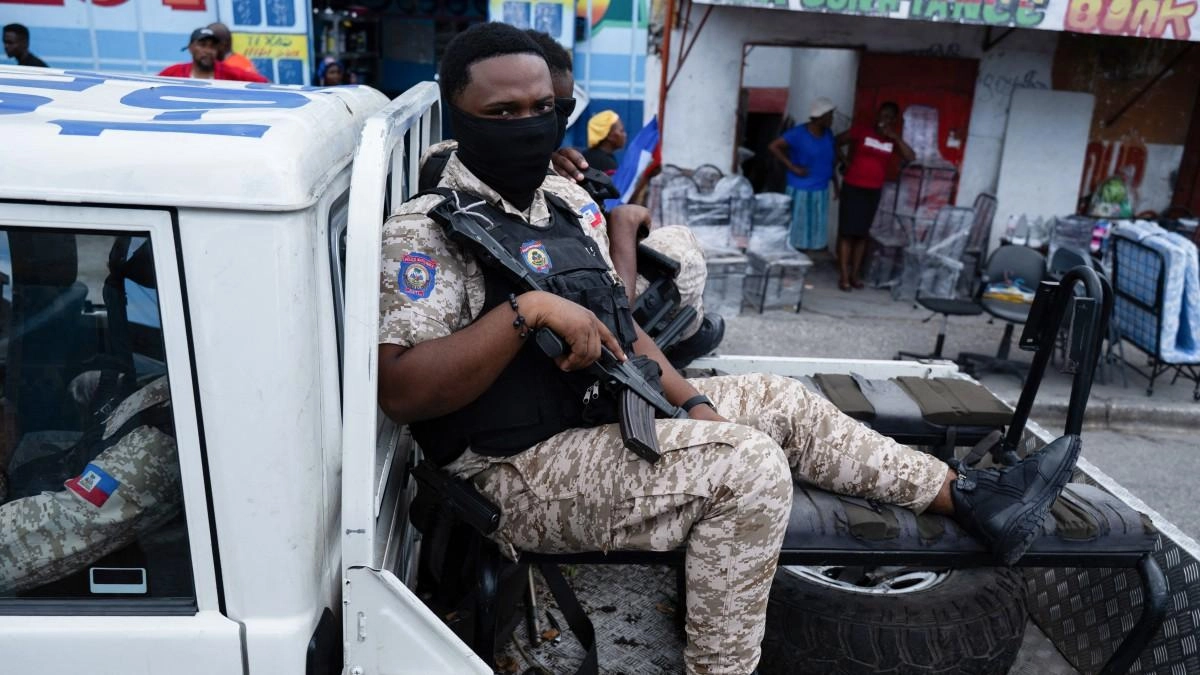
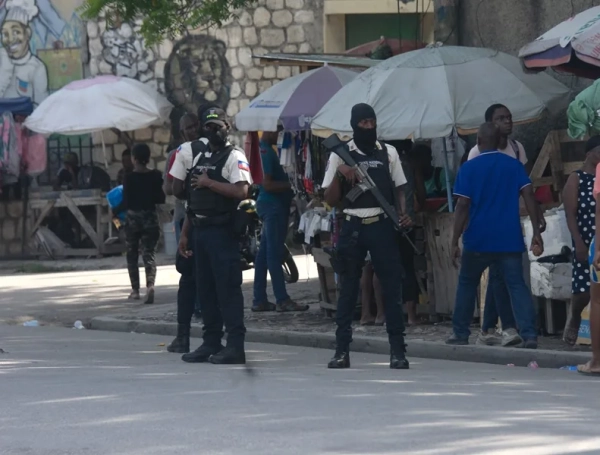
The latest phase of the offensive centered on Martissant, a strategic neighborhood situated at the southern entrance of Port-au-Prince that has long served as a stronghold and choke point for heavily armed criminal syndicates. According to official reports released by the PNH, a fresh wave of operations on Friday left at least 20 suspected gang members dead. This followed a blistering engagement on Thursday in the same sector, which claimed the lives of 34 alleged combatants, bringing the two-day total to 54 fatalities.
The operations are part of a broader, synchronized campaign aimed at reclaiming territory from criminal networks that currently control vast swathes of the capital, as well as critical regions in the departments of Artibonito, Center, and West.

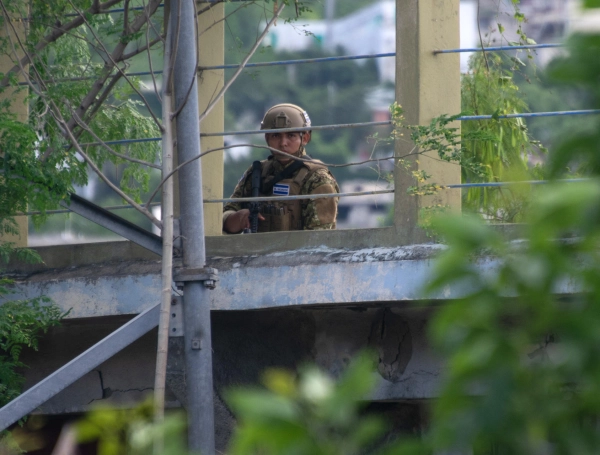
Crucially, the PNH is not operating alone. The ground offensive is being coordinated alongside the Task Force of Vectus Global, a private military contractor (PMC) founded by Eric Prince—best known as the founder of Blackwater and a veteran of the U.S. Navy SEALs—which has been contracted to provide tactical support to the beleaguered Haitian government. Furthermore, local and international reports confirm the active operational backing of elite military elements dispatched from El Salvador under the directives of President Nayib Bukele.
"Our units, with the unwavering support of our tactical task forces, continue to systematically expand our operational footprint into territories previously held by criminal syndicates," the PNH stated in an official communique.
Chronology of the Crisis
To understand the current explosion of violence in Port-au-Prince, it is necessary to trace the rapid sequence of events that transformed a domestic policing challenge into a multi-national theater of operations:
- October 18: The security dynamic fundamentally shifts when a patrol of Salvadoran soldiers—operating as part of the Gang Suppression Force (GSF)—is ambushed by heavily armed gangs in the Santo sector of Croix-des-Bouquets, within the Port-au-Prince metropolitan area. Four Salvadoran military personnel are captured or go missing, triggering an immediate and aggressive strategic pivot by San Salvador.
- Late October / Early November: President Nayib Bukele deploys a heavily armed contingent of more than 2,000 Salvadoran soldiers to Haiti. The intervention is framed not just as a mission of international cooperation, but as a direct rescue operation to locate the missing servicemen, whose whereabouts remain officially unconfirmed.
- Mid-November: The arrival of the Salvadoran troops, coupled with the integration of private military contractors like Vectus Global, supercharges local security efforts. Joint patrols and targeted raids begin to challenge traditional gang dominance in urban enclaves.
- November 20 (Thursday): A major security sweep in Martissant results in the deaths of 34 suspected gang members, showcasing the lethal firepower of the newly reinforced security coalition.
- November 21 (Friday): Operations continue unabated, yielding an additional 20 alleged gang fatalities, pushing the two-day death toll to 54.
- November 22 (Saturday): Tragedy strikes the intervention forces when the Salvadoran Armed Forces report that three of their soldiers are killed and another is seriously injured following an accidental explosive detonation while handling military ordnance at an operational camp in Haiti.
Supporting Data and Security Architecture
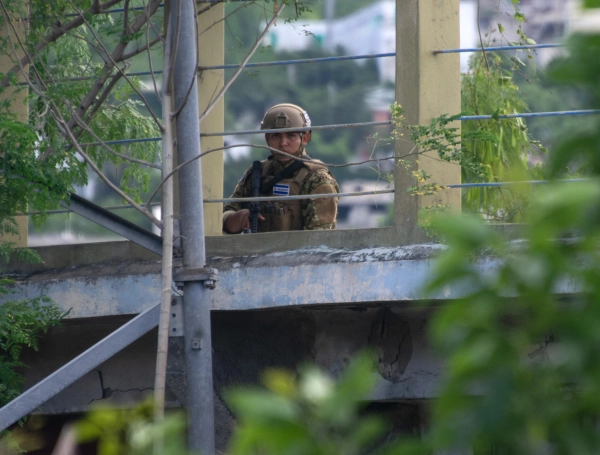
Haiti’s current security architecture is arguably one of the most convoluted and heavily militarized interventions in modern Latin American and Caribbean history. Currently, at least five distinct national and international forces are concurrently operating on Haitian soil to suppress pervasive gang violence.
The operational breakdown includes:
- The National Police of Haiti (PNH): The primary domestic law enforcement agency leading tactical urban entries.
- The Gang Suppression Force (GSF): A specialized multi-national construct heavily augmented by foreign deployments.
- The Salvadoran Contingent: Over 2,000 elite troops operating under President Bukele’s "iron-fist" model, utilizing advanced tactical gear, armored vehicles, and aggressive deterrence strategies.
- Vectus Global Task Force: Eric Prince’s private military contracting firm, bringing corporate logistical prowess, high-end surveillance technology, and specialized tactical advisors to the front lines.
- Existing Multinational Support Missions: Remnant international security frameworks attempting to coordinate humanitarian corridors and institutional stability.
The human and material toll of this war of attrition, however, is immense. The recent death of three Salvadoran soldiers—not in combat against gangs, but due to an explosive ordnance accident within a base camp—highlights the hazardous conditions and operational friction inherent in combining diverse military doctrines, languages, and rapid deployment timelines without fully established institutional safety protocols.
Official Responses and Strategic Motivations
The motives driving the current escalation are multifaceted. For the Haitian transitional government, desperate to restore basic commerce, freedom of movement, and state authority, the influx of foreign muscle offers a lifeline against cartels that had previously rendered the state practically non-functional.
For El Salvador’s administration, the deployment represents an aggressive projection of the "Bukele model"—the uncompromising security strategy that dismantled El Salvador’s domestic maras—onto an international stage. President Bukele’s intervention was initially catalyzed by a matter of national honor and military solidarity: the October 18 ambush in Croix-des-Bouquets that left four Salvadoran commandos missing in action.
Despite weeks of intense raids, cordon-and-search operations, and mounting gang casualties, official sources confirm that the missing Salvadoran soldiers have still not been recovered, ensuring that the foreign deployment will maintain its aggressive posture for the foreseeable future.
Domestically, the PNH continues to defend the high casualty counts as a necessary evil to break the stranglehold of criminal networks. Government officials argue that incremental policing has failed over decades, and that only overwhelming, synchronized force can reclaim neighborhoods like Martissant, Artibonito, and the broader capital area.

Implications: A Country at a Crossroads
While the elimination of 54 suspected gang members in 48 hours is being hailed by tactical commanders as a significant blow to criminal infrastructure, international observers, human rights advocates, and geopolitical analysts are sounding alarms regarding the long-term implications of Haiti’s current trajectory.
1. The Erosion of Accountability and Human Rights
The integration of state police, foreign military units operating under ambiguous mandates, and private military contractors—entities historically prone to a lack of transparent public oversight—raises severe human rights concerns. Critics question what level of judicial due process, prisoner handling, or rules of engagement govern these sweeping urban raids. The application of "mano dura" (iron fist) tactics in a nation lacking a functional judicial system, viable prisons, or a stable constitutional framework risks replacing gang tyranny with unchecked state and corporate violence.

2. The Absence of a Political Transition Plan
Military analysts and diplomats point out a glaring strategic deficit: while the GSF, Salvadoran troops, and private contractors are exceptional at kinetic operations and territory reclamation, the international coalition still lacks a coherent, sustainable plan for long-term governance. Pacifying a neighborhood through overwhelming firepower is vastly different from holding it, rebuilding civilian infrastructure, establishing a functioning economy, and instituting democratic governance. Without a parallel political track, territories cleared by drones and armored vehicles risk sliding back into lawlessness the moment security forces redeploy.
3. The Privatization of Security
The prominent role played by Vectus Global—and by extension, the legacy of private military contracting in sovereign state conflicts—sets a controversial precedent. Delegating national security and counter-gang operations to corporate entities backed by foreign capital blurs the lines between public duty and private profit, potentially complicating international law enforcement cooperation and accountability.

As the smoke clears over Martissant and the PNH prepares for subsequent phases of the offensive, Haiti remains suspended in a precarious equilibrium. The immediate objective of breaking the back of armed gangs is being pursued with unprecedented lethality; however, whether this violent reset will ultimately birth a stable, functioning state or simply deepen the cycle of institutional collapse remains one of the most pressing and uncertain questions in contemporary international relations.