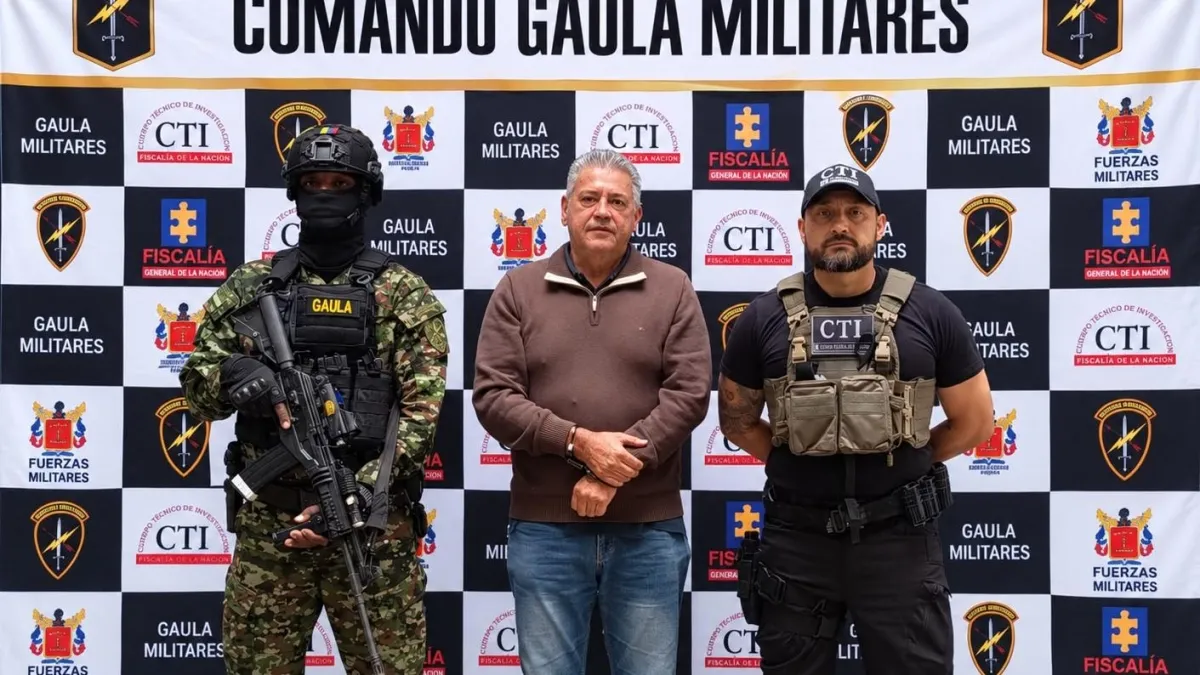
MEDELLÍN, COLOMBIA – In a precision operation that underscores the intensifying international cooperation against transnational organized crime, Colombian authorities have successfully apprehended Juan Carlos Posada Orozco, a high-value target known in criminal circles as "Alias JP." The arrest, which took place within the confines of a luxury condominium in the exclusive El Poblado district of Medellín, marks a significant blow to the logistics chains of dissident factions operating along the Colombia-Peru border.
Posada Orozco is not merely a common criminal; he is a requested fugitive by the Republic of Peru. His capture is the result of a long-term, multi-agency investigation involving the Seventh Division of the Colombian Army, the Gaula Military, the CTI (Technical Investigation Corps) of the Prosecutor’s Office, and the tactical intelligence support of the United States Marshals Service.
The Operation: A Surgical Strike in El Poblado
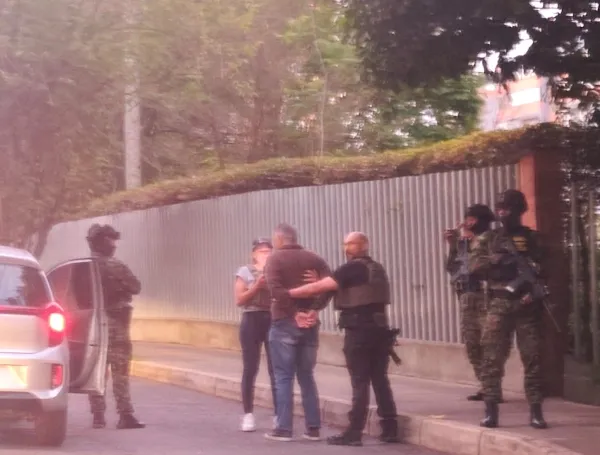
The arrest was executed in the early hours of the week, following weeks of meticulous surveillance. "Alias JP" had been residing in a high-security residential complex in El Poblado, a neighborhood known for its upscale lifestyle and popularity among both residents and foreign visitors. The choice of such a location was, according to investigators, a calculated attempt by Posada Orozco to blend into a low-profile environment while continuing to manage his clandestine operations.
The operation was characterized by its secrecy and speed. By coordinating with the U.S. Marshals, Colombian forces were able to confirm the suspect’s location without alerting his internal security detail. As authorities closed the perimeter, the suspect was taken into custody without incident, effectively neutralizing a key node in a regional drug-trafficking network.

Chronology of a Criminal Career
While the arrest in Medellín is the immediate news, the investigation into Juan Carlos Posada Orozco spans several years of illicit activity.
- Early Intelligence Gathering: Initial reports suggest that "Alias JP" came onto the radar of international law enforcement due to his rising influence in the logistics of cocaine transit. His activities were not confined to a single country, but rather spanned the porous border regions between Colombia and Peru.
- Deepening Ties to the "Carolina Ramírez" Structure: Investigators have linked Posada Orozco directly to the "Carolina Ramírez" structure, a notorious faction operating under the "Manuel Marulanda Vélez" Amazon Block. This group is one of the most powerful and violent elements within the broader "Iván Mordisco" dissident movement—a collection of former FARC combatants who rejected the 2016 peace accord and continue to operate as armed criminal syndicates.
- The Peruvian Connection: The judicial request originated from the Fourth Permanent Appeals Criminal Chamber of the Superior Court of Justice of Callao, Peru. The charges, "aggravated illicit drug trafficking," suggest that Posada Orozco was a primary facilitator for the movement of narcotics from the jungle production sites to coastal export hubs.
- The Final Surveillance: In the months leading up to his capture, the U.S. Marshals provided the necessary intelligence to track the suspect’s movements across the Colombian territory, eventually pinning him down in Medellín.
The Nexus of Crime: The Amazonian Pipeline
To understand the importance of this capture, one must analyze the infrastructure of the organization to which "Alias JP" belonged. The "Carolina Ramírez" structure is known for its absolute control over the production and trafficking corridors in the Putumayo and Amazonas departments.
The Role of "Alias JP"
According to confidential sources within the investigation, Posada Orozco’s primary function was the acquisition of cocaine hydrochloride. He operated as a bridge between the jungle laboratories and the international shipping syndicates. By sourcing the product from the liminal zones—where the border between Colombia and Peru becomes difficult to patrol—he was able to bypass traditional enforcement checkpoints.
The "Alianza del Perú" Link
Beyond the dissident factions, authorities are currently investigating the suspect’s deep-seated connections with an organization known as the "Alianza del Perú." This group is suspected of specializing in the final stages of the drug trade: the maritime export of cocaine from Peruvian ports—specifically Callao—to European markets. The arrest of "Alias JP" provides investigators with a treasure trove of digital and human intelligence that could potentially dismantle the "Alianza" network entirely.

Official Statements and Judicial Implications
The Office of the Attorney General of Colombia (Fiscalía General de la Nación) has confirmed that the legal proceedings for his extradition to Peru are already underway. Under the bilateral agreements between Colombia and Peru, the extradition process is expected to be streamlined given the gravity of the charges and the collaborative nature of the arrest.
"This subject is required by the judicial authorities of the Republic of Peru to answer for crimes that undermine public health and the security of the state," a spokesperson for the operation stated. "His capture is a direct result of the articulation between our armed forces and international partners who are committed to stopping the flow of illicit substances across our borders."

Legal experts suggest that because the charges involve "aggravated illicit drug trafficking," Posada Orozco faces a lengthy prison sentence in Peru. His cooperation—or lack thereof—with authorities will be the next major chapter in this case. Prosecutors are eager to see if "Alias JP" will provide information regarding the hierarchy of the "Carolina Ramírez" structure and the current movements of "Iván Mordisco."
Broader Implications for Regional Security
The capture of a high-level logistical operator like Posada Orozco sends a powerful message to dissident groups: the luxury of operating from urban centers is coming to an end.

1. The Erosion of Safe Havens
For years, criminal leaders have utilized major cities like Medellín, Bogotá, and Cali as "safe zones" to manage their operations from behind a veneer of wealth and anonymity. By conducting a high-stakes raid in an area like El Poblado, the government is signaling that there is no geographical immunity for those involved in transnational organized crime.
2. Strengthening International Cooperation
The role of the U.S. Marshals in this operation highlights the global nature of the fight against the "Iván Mordisco" dissidents. Because these groups are increasingly diversifying their reach—moving products through multiple countries and leveraging global shipping routes—the response must be equally international. The seamless exchange of intelligence between Washington, Bogotá, and Lima is a blueprint for future counter-narcotics operations.

3. Impact on the Dissident Economy
The "Carolina Ramírez" structure relies heavily on the steady flow of revenue from the coca trade to fund their insurgency and local violence. By disrupting their supply chain and removing a key procurement officer, the authorities have not only hurt the structure financially but also created a void in their leadership that will inevitably lead to internal friction.
Conclusion
The arrest of Juan Carlos Posada Orozco is a testament to the persistence of law enforcement in the face of evolving criminal threats. While the "Iván Mordisco" dissidents continue to pose a significant security challenge to the Colombian state, the removal of individuals like "Alias JP" weakens the economic foundation upon which these criminal structures stand.

As the legal process moves toward extradition, the focus will now shift to the information captured during the raid. In the shadowy world of international narcotics, one arrest often leads to the unraveling of a much larger, more complex web. For now, the streets of Medellín are safer, and a key operative of the Amazonian narco-network is finally facing the justice he has long attempted to evade.
Stay updated on this developing story through our dedicated Justice section and our weekly newsletter, where we provide in-depth analysis on the fight against transnational crime in the Andean region.