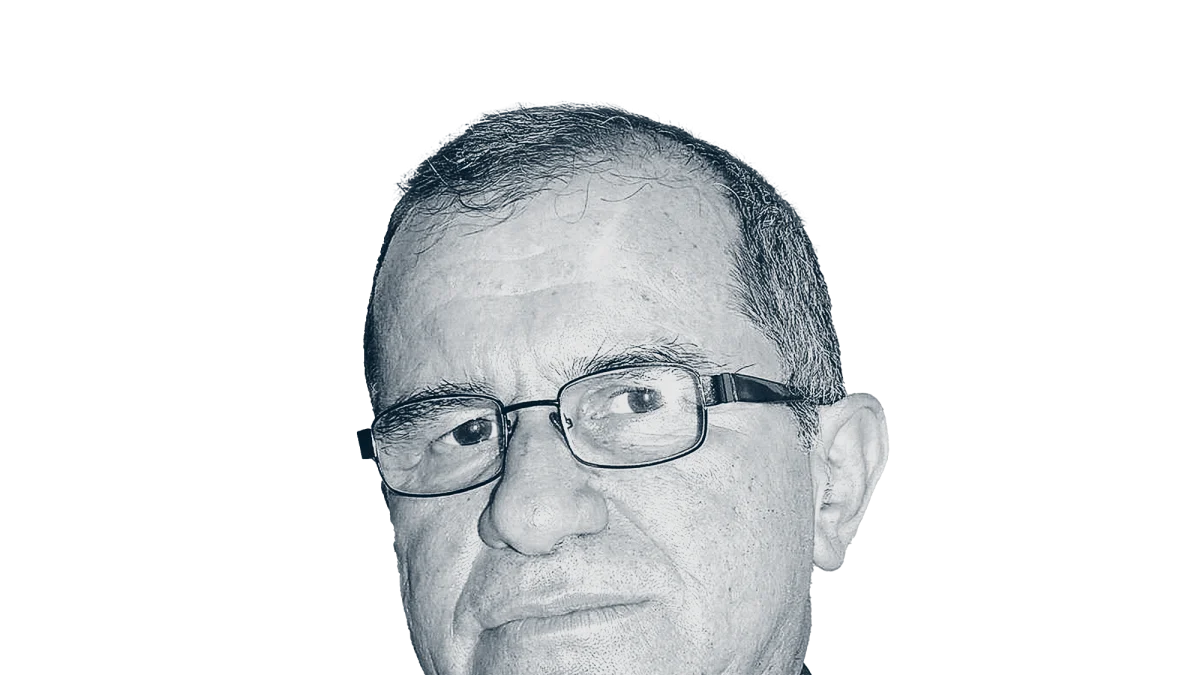
By José Manuel Acevedo
Director of Noticias RCN
For the past four years, Colombia has navigated a political landscape defined by intense polarization and rhetorical brinkmanship. While the national discourse in Bogotá often veered toward confrontation, stalling legislative agendas and fueling social anxiety, a different reality was taking shape across the country’s diverse geography. The true narrative of the last quadrennium is not found in the halls of the Casa de Nariño, but in the departmental offices and municipal halls where the rubber of policy meets the road of reality.

The lesson of the last four years is clear: Colombia’s resilience was not a product of central government orchestration; it was a grassroots success story written by governors and mayors who chose execution over ideology.
The Anatomy of Regional Resilience
The central thesis of the recent period is that local leadership acted as a shock absorber against national volatility. When the central government consumed its political capital in public disputes, local authorities shifted their focus to the fundamental duties of the state: infrastructure, public security, healthcare, and education.

This was not a formal political opposition in the traditional sense of parliamentary maneuvers or grand speeches. Instead, it was an "opposition of results." By prioritizing project completion, budget execution, and the resolution of long-standing social bottlenecks, regional leaders prevented the frustration of the citizenry from curdling into total resignation. They understood that in the eyes of a citizen, the state is not an abstract concept—it is the school, the hospital, the local road, and the police station.
Chronology of a Four-Year Effort
The period between 2022 and 2026 was marked by distinct phases of regional navigation:

- 2022–2023: The Adaptation Phase. As the national administration transitioned and set its ideological agenda, local governments were forced to quickly decouple their local development plans from national uncertainty. This required securing independent funding streams and maintaining continuity in infrastructure projects that had been planned under previous administrations.
- 2023–2024: The Execution Surge. Following the regional elections, a new wave of governors and mayors assumed power with a mandate centered on "getting things done." This phase saw a surge in the completion of stalled road works and the reactivation of social programs that had been neglected during the political noise of the previous year.
- 2025: The Infrastructure Pivot. With national resources often tied up in political gridlock, regions took the lead in financing critical infrastructure. Notable examples include the regional funding of major transport arteries and the aggressive expansion of secondary healthcare networks.
- 2026: The Consolidation of the "Regional Model." As the national term concluded, the visibility of regional success stories became the primary point of contrast. The transition to the new government is now framed by the necessity of building upon this local foundation rather than imposing a top-down agenda.
Supporting Data: Regional Success Stories
The success of these regional administrations is not merely anecdotal; it is reflected in the tangible progress of Colombia’s major hubs and departments:
The Cities: Driving Innovation and Order
- Bogotá: Under Carlos Fernando Galán, the capital maintained momentum on the Metro project—the most ambitious infrastructure undertaking in the country—while simultaneously achieving measurable reductions in multidimensional poverty through targeted social investment.
- Medellín: Federico Gutiérrez shifted the focus back to structural issues, prioritizing the recovery of the city’s educational infrastructure and implementing a zero-tolerance approach to urban security.
- Cali: Alejandro Eder focused on the "administrative cleaning" of the city, restoring trust in public institutions and stabilizing the municipal budget, which had been severely compromised.
- Barranquilla: Alejandro Char continued to refine a model of urban development that emphasizes public-private partnerships to maintain the city’s status as a magnet for foreign and domestic investment.
- Cartagena: Dumek Turbay successfully shifted the municipal gaze toward the long-neglected peripheral neighborhoods, delivering works in areas that had been historically marginalized by the city’s political elite.
The Departments: Engines of Economic Growth
- Valle del Cauca: Under the leadership of Dilian Francisca Toro, the department reinforced its position as a primary engine of national industry and logistics, acting as a bridge between the Pacific port system and the interior of the country.
- Antioquia: Andrés Julián Rendón demonstrated fiscal autonomy by prioritizing the completion of the Túnel del Toyo, effectively stepping in where the national government had signaled a withdrawal of resources.
- Cundinamarca: Jorge Emilio Rey prioritized the modernization of rural connectivity, significantly increasing investment in tertiary roads that serve as the lifeline for agricultural exports.
- Santander, Tolima, Meta, and Córdoba: Governors such as Juvenal Díaz, Adriana Magali Matiz, Rafaela Cortés, and Erasmo Zuleta collectively proved that governing is an exercise in problem-solving rather than scapegoating. By focusing on security and local economic development, they insulated their regions from the broader national instability.
Official Responses and Political Implications
The current political transition has been characterized by a notable shift in tone. The incoming national administration has acknowledged the imperative of regional alignment. There is a burgeoning consensus that the central government can change the national narrative, but it cannot deliver tangible outcomes without the cooperation of those who manage the day-to-day operations of the cities and departments.

Key Implications for Future Governance:
- The Shift in Power Dynamics: The last four years have fundamentally altered the balance of power in Colombia. Governors and mayors now possess a higher degree of legitimacy because they are viewed as the "doers" of the Colombian political system.
- Cofinancing as the New Standard: The future of Colombian public policy depends on the state’s ability to create efficient cofinancing mechanisms. If the national government acts as a partner to regional initiatives rather than an obstacle, the multiplier effect on GDP growth and poverty reduction will be exponential.
- The Lesson of Resistance: The most profound takeaway is that "resistance" does not require shouting or protest. It requires the quiet, disciplined administration of public affairs. By focusing on the tangible needs of their constituents, regional leaders have provided a blueprint for how a nation can function even when its executive branch is mired in ideological conflict.
Conclusion: A Path Forward
As we look toward the future, the message for the next national government is clear: start where the regions have left off. If the upcoming administration learns the lesson of the last four years—that the strength of the nation resides in the autonomy and efficacy of its regions—it will start its term far ahead of its predecessor.
The political noise of the last quadrennium has faded, but the roads, hospitals, and educational centers built by regional leaders remain. In times of transition and new beginnings, we must not forget that while some were busy arguing about the country they wanted to build, others were busy actually building it. The "regional resistance" has proven that the path to a more stable, prosperous Colombia is paved not with grandiloquent speeches, but with the consistent, local application of good governance.