By: Justice Desk Editorial Staff
Updated: July 21, 2026
In a high-stakes counter-terrorism operation that underscores the shifting landscape of internal conflict in Colombia, authorities have dismantled a core cell of the “Yeny Lara” urban militia. This group, operating under the umbrella of the Estado Mayor Central (EMC)—the dissident faction loyal to “Iván Mordisco”—has been a primary driver of instability in the Cauca department. The operation, executed through a coordinated series of raids across five strategic neighborhoods in Popayán, marks a significant victory in the state’s ongoing effort to neutralize the technological and logistical infrastructure of armed groups operating in urban centers.
The Operation: Dismantling the Urban Front
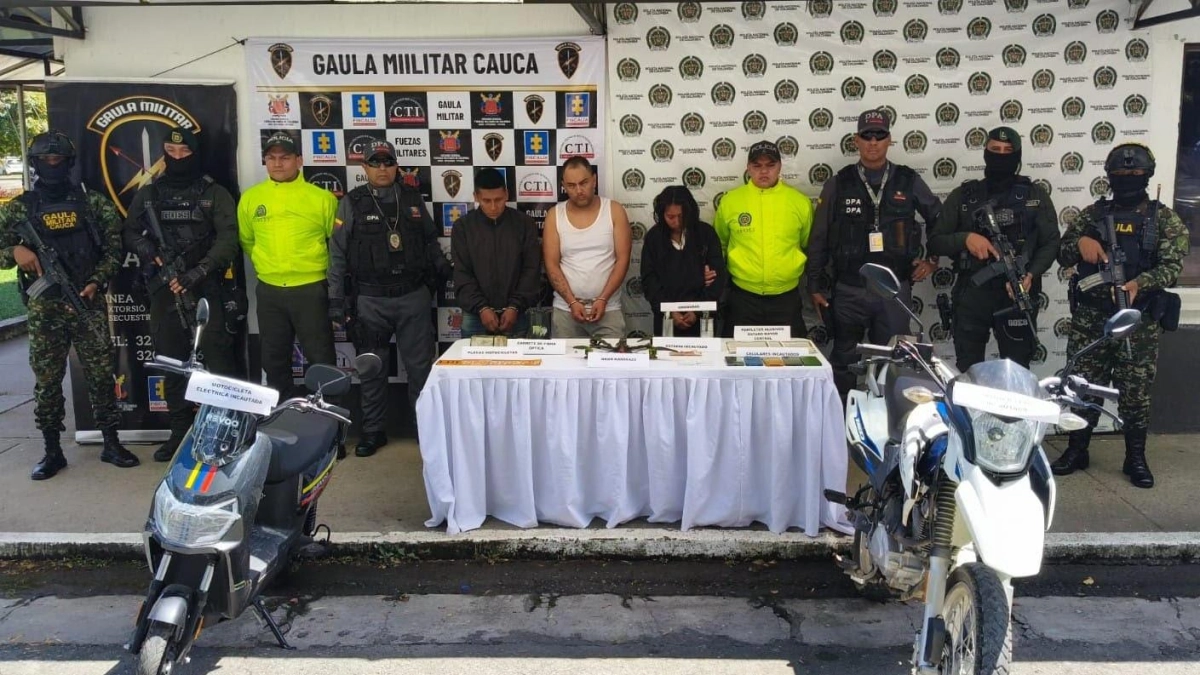
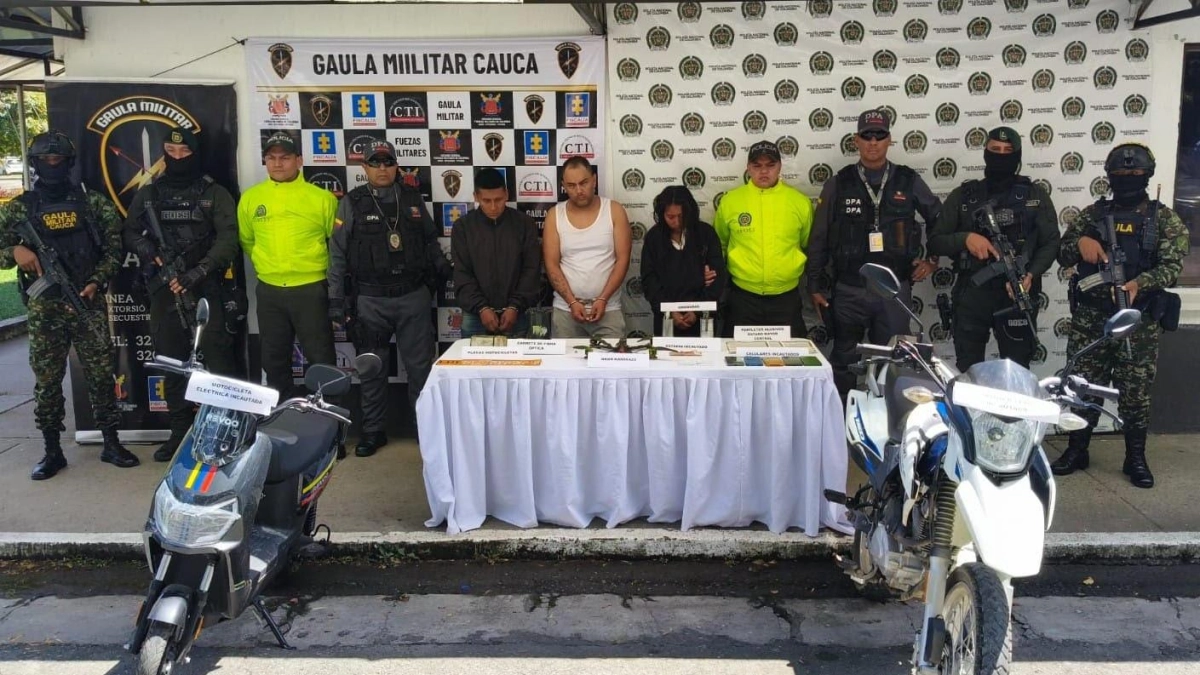
The early-morning raids were carried out in the neighborhoods of Lomas de Comfacauca, Villa María, California, Asociación Las Monjas, and Santa Inés. The operation was the result of months of intelligence gathering and inter-agency synergy, involving elite units from the Cauca Cavalry Group, the 3rd Battalion of Military Intelligence, the Sijín (Judicial Police), the GOES (Special Operations Group), and the CTI (Technical Investigation Corps), all under the strict oversight of the Attorney General’s Office.
The objective was clear: to decapitate the leadership of the "Yeny Lara" militia, a unit specifically tasked with conducting urban sabotage, intelligence gathering on state targets, and, most critically, the deployment of advanced weaponry including explosive-laden drones.

Profiles of the Detained: A Specialized Criminal Cell
The authorities have identified the three detainees as highly specialized operatives, each performing a distinct role in the militia’s hierarchy:
- Leonardo García Ramírez, alias "Leo": Regarded as the high-value target of the operation, García Ramírez served as the primary leader of the cell. Investigators describe him as the architect of the group’s criminal intelligence network, responsible for the logistical coordination required to plan and execute terror attacks within Popayán. His capture is viewed as a significant setback for the EMC’s command structure in the Cauca region.
- Fabián Andrés Tulbo Ulcué, alias "Maicol": Identified as the group’s technical expert, Tulbo Ulcué is accused of managing the militia’s arsenal of drones and explosive devices. His track record is particularly alarming to security services; he is directly linked to the December 2025 car bombing in Belén de los Andaquíes, Caquetá, and the drone-based attacks against the José Hilario López military canton in Popayán on April 25 and July 17, 2026.
- Yely Marcela Usnas (23): Despite her age, Usnas played a critical role in the militia’s surveillance operations. Her primary function involved the identification of strategic objectives and the systematic collection of information necessary for planning, tracking, and executing terrorist actions against state infrastructure.
Chronology of Escalation: From Reconnaissance to Terror
The threat posed by the "Yeny Lara" militia evolved rapidly over the past eighteen months. Security analysts note a distinct transition in the group’s tactics, moving from traditional small-arms intimidation to sophisticated, asymmetric warfare.

- December 2025: The group demonstrates its lethality with a coordinated car bomb attack in Belén de los Andaquíes, signaling a capability to conduct large-scale explosive operations outside of its immediate area of influence.
- April 25, 2026: The first major drone-based attack on the José Hilario López military base in Popayán. This incident signaled a paradigm shift, where the militia utilized modern aerial platforms to circumvent traditional base perimeters.
- May – June 2026: A period of intense surveillance by military intelligence, identifying the "Yeny Lara" militia as the primary suspects for a series of localized intimidation attempts against state security forces.
- July 17, 2026: A second, more refined drone attack on the same military facility, confirming that the cell had remained active and was actively improving its tactical accuracy.
- July 21, 2026: The successful execution of the search and seizure warrants in Popayán, resulting in the neutralization of the cell and the recovery of critical material evidence.
Supporting Data: The Arsenal of Sabotage
The seizure following the raids revealed the extent of the militia’s resources. The items recovered are not merely tools of petty crime, but equipment indicative of an organized, state-level insurgent threat:
- Aerial Capabilities: Two fully functional drones with integrated control systems.
- Explosives and Tactical Gear: Two gas grenades, a detonation estopín (blasting cap), and syringes often used in the preparation of improvised explosive devices (IEDs).
- Communications and Intelligence: Five cellular devices, two pairs of high-definition vision lenses, and, most notably, two large-capacity fiber-optic reels (five kilometers each), likely intended for secure, hardened communications or tactical monitoring.
- Logistical Evidence: Five pamphlets explicitly linking the group to the Estado Mayor Central FARC-EP, two stolen motorcycle license plates (used to evade security cameras), and various transit documents.
Official Responses and Legal Implications
The Office of the Attorney General has moved swiftly to formalize charges against the three individuals. They are set to face a judge on multiple counts, including:

- Concert for aggravated delinquency with the intent of committing terrorism.
- Manufacturing, trafficking, and possession of firearms, ammunition, and explosives restricted for the exclusive use of the Armed Forces.
- Direct acts of terrorism.
The gravity of these charges reflects the state’s intent to treat these individuals not merely as local agitators, but as key facilitators of a broader, organized terrorist campaign. The Ministry of Defense has lauded the operation as a critical component of the broader “Plan Patriota 2.0,” an initiative aimed at strengthening national security and inter-agency cooperation.
Strategic Implications: What This Means for Cauca
The capture of the "Yeny Lara" cell provides a momentary reprieve for the city of Popayán, but security experts caution that the conflict in Cauca remains fluid. The use of drones and fiber-optic communication indicates that dissident groups are investing heavily in "tech-insurgency," attempting to modernize their operations to counteract the Colombian military’s superior conventional strength.
Furthermore, the recovery of five kilometers of fiber-optic cable suggests that the militia was preparing to establish semi-permanent, secure communications infrastructure within the urban landscape. By dismantling this cell, the state has not only removed three dangerous individuals from the streets but has also disrupted the technical knowledge base required to operate such equipment.
However, the presence of the Estado Mayor Central in urban environments like Popayán remains a challenge. The group’s ability to recruit young individuals, such as the 23-year-old Usnas, suggests a sustained effort to build a "shadow" support network that is difficult for traditional intelligence services to penetrate.

Conclusion: The Road Ahead
The success of the July 21 operation is a testament to the effectiveness of centralized intelligence sharing. As the government seeks to balance ongoing peace initiatives with the necessity of maintaining order and protecting its citizens, the "Yeny Lara" operation serves as a blueprint for how military and judicial forces must adapt to modern, urban-based insurgent threats.
While the immediate danger posed by this specific cell has been neutralized, the broader challenge of the EMC’s influence in the Cauca department persists. For the residents of Popayán, the hope is that this operation is not a singular event, but the beginning of a sustained effort to reclaim the urban space from the influence of those who seek to use technology and terror to destabilize the state. The legal proceedings in the coming weeks will be closely monitored, as they may reveal further insights into the reach and connections of the EMC’s urban command structure.