By Pedro A. Sánchez, Editorial Staff
With reporting from EFE
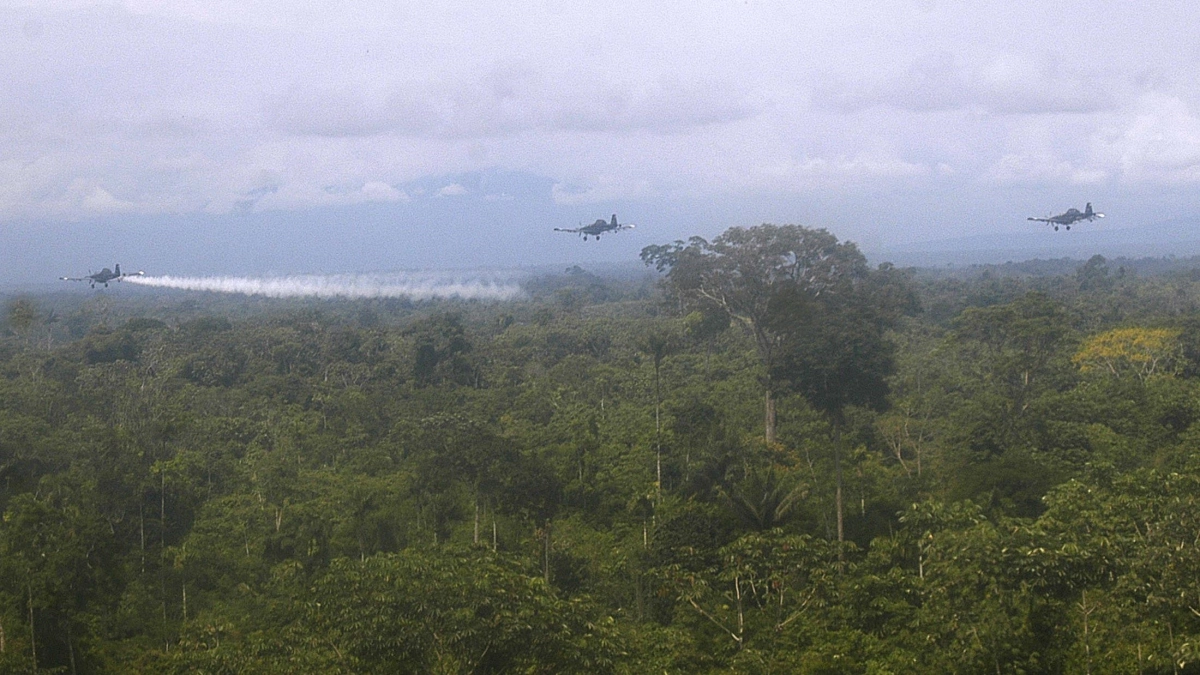
The Colombian government, under the administration of President Abelardo De La Espriella, has officially authorized a high-stakes pilot program aimed at curbing the proliferation of illicit crops. The initiative, sanctioned by the National Council on Narcotic Drugs (CNE), marks a significant shift in national drug policy by introducing the use of glufosinate-ammonium for aerial eradication, a method that has remained a lightning rod for political and environmental debate for nearly a decade.
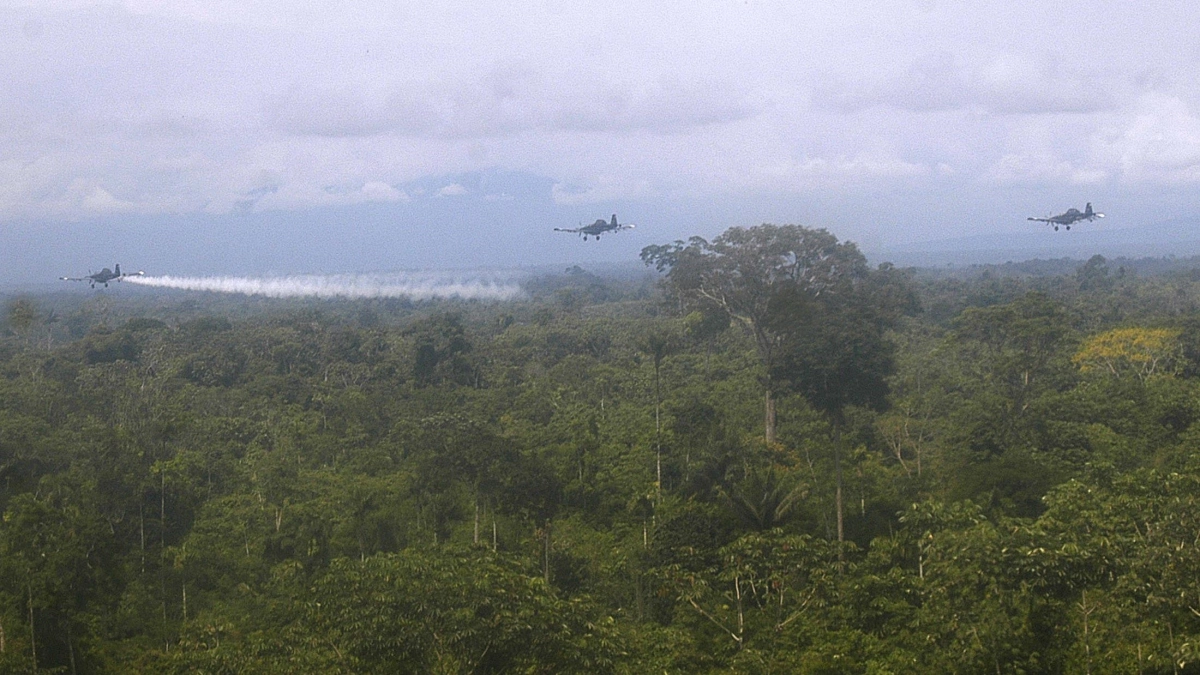
Following the 2017 suspension of glyphosate—a decision spurred by the Constitutional Court citing public health concerns—the Colombian state has faced mounting pressure to develop effective alternatives to suppress the expansion of coca cultivation. This new experimental phase represents the administration’s attempt to bypass the legal and scientific deadlocks that previously paralyzed aerial eradication efforts.
The Mechanism: Understanding Glufosinate-Ammonium
The authorization of glufosinate-ammonium has triggered an immediate public inquiry regarding how this substance compares to its predecessor, glyphosate. While both are systemic herbicides, their biochemical pathways and environmental interactions differ significantly.

Glufosinate-ammonium acts by inhibiting the enzyme glutamine synthetase. This inhibition causes an accumulation of ammonia within the plant’s tissues, leading to the rapid destruction of cellular structures and the subsequent death of the plant. According to the Minnesota Department of Agriculture, its effect is primarily contact-based, with limited systemic translocation within the plant compared to other herbicides.
In contrast, glyphosate targets the EPSPS enzyme, which is critical for the production of essential amino acids required for plant growth. As an "amplified spectrum" herbicide, glyphosate has historically been the industry standard, though its widespread use has faced intense scrutiny regarding potential carcinogenicity and ecological impact.
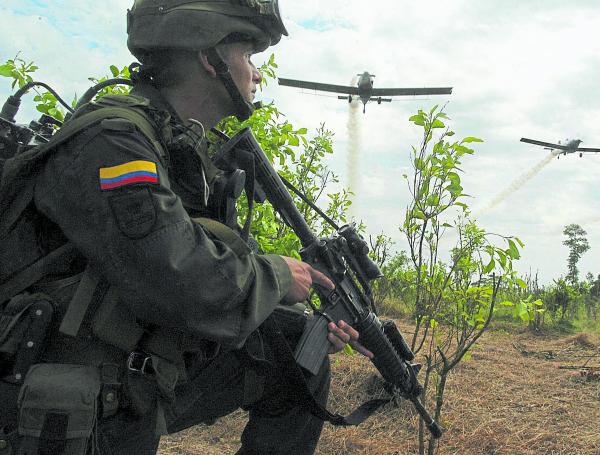
Glufosinate-ammonium is recognized internationally as a non-selective herbicide, meaning it affects a broad range of vegetation, including grasses and broadleaf plants. In agricultural settings, it is often utilized as a desiccant and as a primary tool for weed management in genetically modified crops, such as corn, canola, and soy. However, its use is strictly regulated or prohibited in several jurisdictions, including the European Union, which maintains rigorous standards regarding chemical persistence in the environment.
A Chronology of the Eradication Crisis
To understand the gravity of the government’s current decision, one must look at the timeline of Colombia’s drug policy struggles:

- Pre-2017: Aerial spraying of glyphosate was the primary pillar of Colombia’s anti-narcotics strategy, supported heavily by the United States.
- 2017: The Constitutional Court of Colombia ordered the suspension of aerial glyphosate spraying, citing the "precautionary principle" regarding the chemical’s potential carcinogenic effects on human health.
- 2020–2025: Successive administrations attempted to draft new regulations that would satisfy the Constitutional Court’s strict safety and environmental requirements. These attempts were largely blocked by litigation and social opposition.
- August 18, 2026: The National Council on Narcotic Drugs signed a resolution authorizing a "controlled, limited, and temporary" pilot program using glufosinate-ammonium.
- September 2026: Official announcements clarify that this pilot is not a return to mass spraying, but a scientific data-gathering exercise.
Supporting Data and Toxicological Profiles
The World Health Organization (WHO) classifies glufosinate-ammonium as "moderately hazardous" (Class II), which places it on a higher tier of potential toxicity than glyphosate, which is classified as "slightly hazardous" (Class III).
According to the U.S. National Library of Medicine, while glufosinate-ammonium is considered safe when handled according to manufacturer instructions, it carries significant risks if ingested in its concentrated form. Reported cases of severe intoxication in humans include respiratory failure, seizures, loss of consciousness, and permanent neurological damage.

For the environment, the data from the University of Hertfordshire suggests that while the substance poses a moderate-to-low threat to birds, bees, and aquatic organisms, its potential for persistence in specific ecosystems remains a primary concern for environmental groups. The government’s decision to proceed with the pilot program implies an acceptance of these risks, provided that strict operational protocols are maintained.
Operational Parameters: The "Controlled" Pilot
The resolution published in the Diario Oficial outlines a highly restrictive scope for the operation. The pilot will be limited to a maximum of 1,000 hectares of coca crops, with an operational window of only seven calendar days.
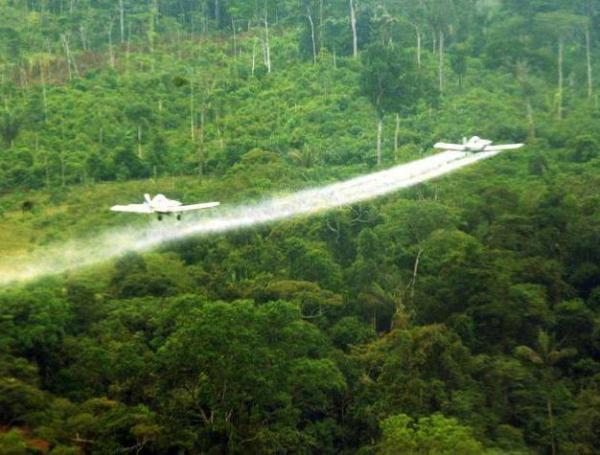
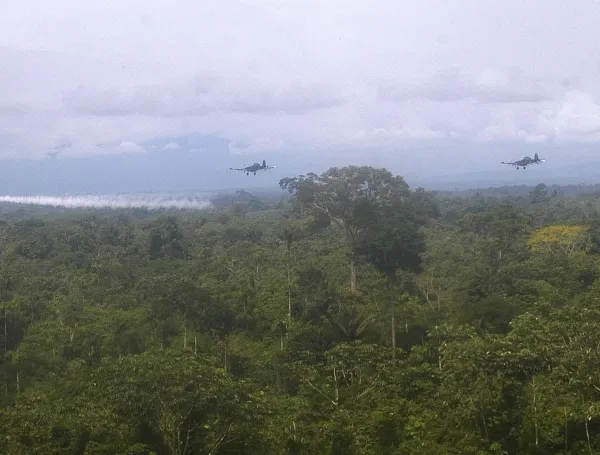
The Directorate of Anti-Narcotics (DIRAN) of the National Police is tasked with the execution. Crucially, the government has emphasized that this is not a nationwide rollout. The resolution explicitly states: "This pilot does not equate to the resumption, adoption, or final authorization of a general or national program."
The area of operation remains classified. The government has invoked national security clauses to keep the exact coordinates and flight paths under strict seal, arguing that disclosing such information would jeopardize both the personnel involved and the integrity of the mission. However, the mandate includes several mandatory exclusions:
- Ecological Sensitivity: The operation must avoid protected areas and critical biomes.
- Ethnic Sovereignty: The spraying cannot occur in areas inhabited by ethnic communities without prior consultation, as mandated by the Colombian Constitution.
- Proximity to Infrastructure: The zones must be selected near military or police installations to ensure rapid logistical support and site security.
Official Responses and Political Implications
The timing of this decision is telling. It was finalized just one day after a high-level visit to Colombia by U.S. Secretary of State Marco Rubio, signaling that the move may be part of a broader, renewed security compact between the two nations.
Supporters of the move argue that the failure to curb illicit crops has allowed armed groups to consolidate power, fueling violence and instability in rural regions. For them, the introduction of a new chemical agent is a pragmatic necessity to regain control of territory.
Opponents, however, including human rights advocates and environmentalists, have already begun to mobilize. They argue that changing the chemical agent does not resolve the underlying social issues that lead farmers to cultivate coca. They further contend that the "scientific evidence" the government hopes to gather will be biased toward justifying the continuation of aerial eradication, regardless of the environmental cost.
Looking Ahead: The Challenges of Implementation
The government faces a daunting series of legal and logistical hurdles before the first aircraft can take off. The National Police must demonstrate full compliance with:
- Environmental Impact Assessments: Providing evidence that the drift of the chemical is contained.
- Aeronautical Standards: Ensuring that the spray equipment meets international safety regulations.
- Social Protocols: Establishing mechanisms for reporting health issues in nearby communities.
If the pilot fails to meet these criteria, or if there is a significant public outcry following the first week of operations, the government may find its policy path blocked once again by the judiciary.
Ultimately, this move serves as a litmus test for the De La Espriella administration. By choosing to experiment with a substance that is already controversial in the international community, the Colombian government is betting that the potential for a swift reduction in illicit crop density outweighs the long-term political and health risks.

As the country waits for the issuance of the "start act," the debate over whether this represents a breakthrough in anti-narcotics strategy or a regression into failed methods continues to dominate the national conversation. The outcome of these seven days of operations will likely define the trajectory of Colombia’s rural security policy for years to come.