
By Angie Rodríguez / Travel and Trends Desk
Updated: September 22, 2026
Main Facts
The landscape of modern commercial aviation is undergoing a silent yet profound revolution. For decades, the primary metrics used to evaluate a top-tier airline revolved around traditional markers of luxury and comfort: legroom, gourmet dining options, the quality of cabin crew service, fine wines, and flat-bed seats. However, as passengers increasingly demand seamless transitions between their digital lives on the ground and their time in the air, a new metric has taken center stage: in-flight connectivity.
Recognizing this monumental shift in passenger priorities, the prestigious World Airline Awards—widely regarded as the "Oscars of the aviation industry" and organized annually by Skytrax—introduced a brand-new, highly anticipated category for its 2026 edition: The World’s Best Onboard Wi-Fi.
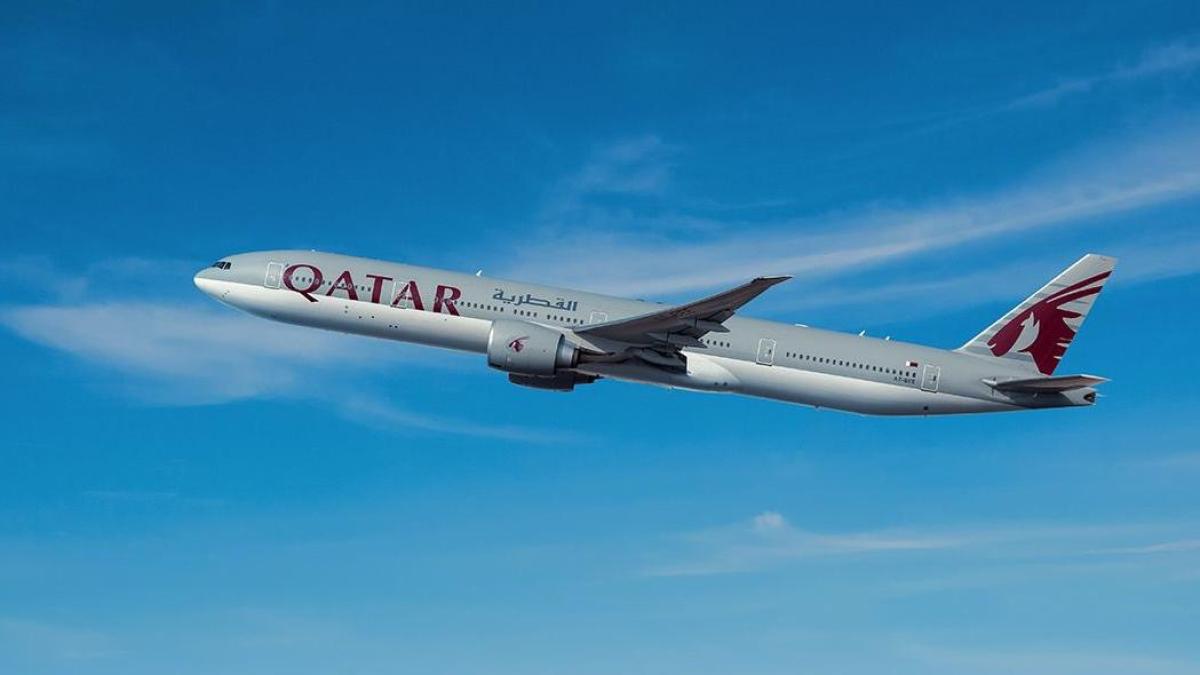
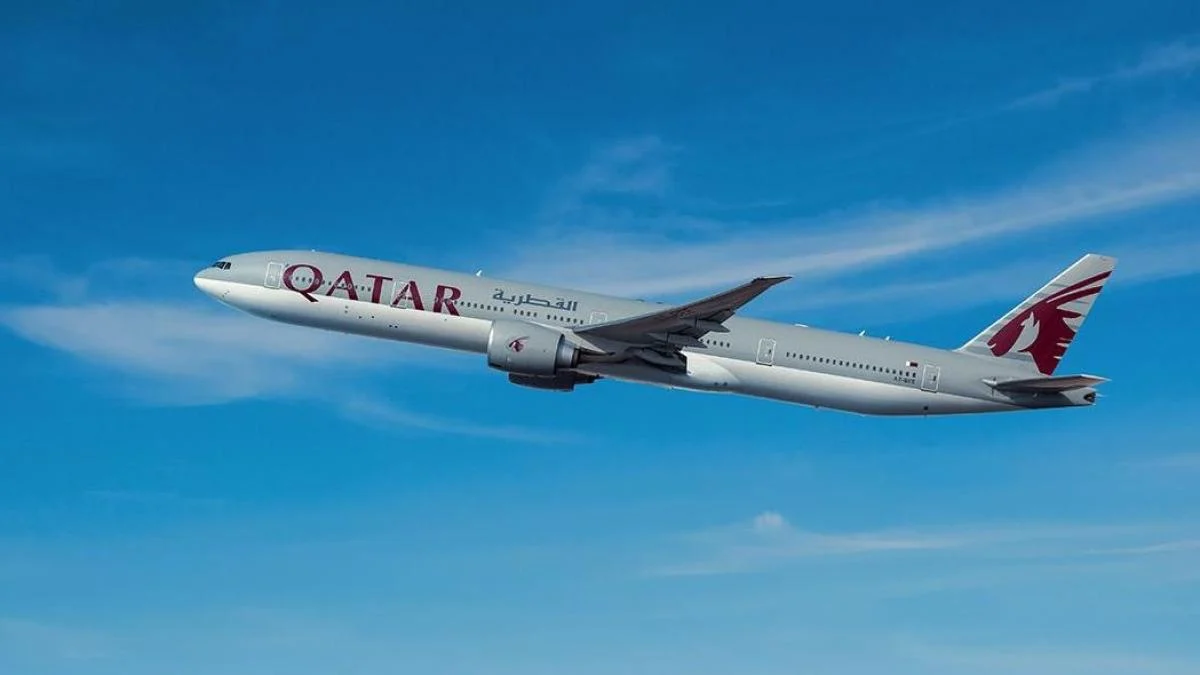
In its inaugural year, this category captured the attention of millions of travelers worldwide. Taking the crown for the best in-flight internet experience was Qatar Airways, a carrier already renowned for its elite luxury service. Following closely behind in second place was Delta Air Lines, while United Airlines rounded out the podium in third.
The inclusion of this category marks a watershed moment for the aviation industry. High-speed internet is no longer viewed merely as a novelty or an expensive perk reserved for first-class ticket holders; it has evolved into a fundamental utility. As major carriers roll out lightning-fast broadband connections—frequently at zero cost to the passenger—airlines that fail to provide reliable, high-speed Wi-Fi risk falling behind in customer satisfaction metrics.
Chronology: From Offline Isolation to Hyper-Connected Skies
To understand the significance of the 2026 Wi-Fi rankings, it is helpful to look back at how the relationship between commercial aviation and the internet has evolved over the past twenty years.

- The Early 2000s (The Offline Era): For the vast majority of commercial flyers, boarding a plane meant stepping into an enforced bubble of isolation. Aside from seatback entertainment systems loaded with pre-recorded movies and music channels, passengers were completely cut off from the outside world. Emails went unanswered, business deals were put on hold, and emergency communications were nearly impossible.
- The Mid-2000s to Early 2010s (The Dial-Up Sky): Early iterations of in-flight internet—pioneered by systems like Connexion by Boeing (which was ultimately discontinued due to high costs and low adoption) and later early satellite networks—were painfully slow, plagued by high latency, and prohibitively expensive. Connecting to the web often cost upwards of $20 to $30 for a limited data allowance, making it practical only for desperate business travelers.
- The Mid-2010s (The Broadband Boom): The introduction of advanced Ku-band and Ka-band satellite constellations began to transform the skies. Speeds increased incrementally, allowing for basic web browsing and messaging, though streaming video remained a distant dream. Airlines began experimenting with tiered pricing models.
- The Late 2010s to 2020s (The Free-Wi-Fi Movement): Forward-thinking carriers like JetBlue in the United States and Qatar Airways globally began challenging the status quo by offering free, high-speed Wi-Fi to all passengers. The expectation among travelers—particularly digital natives and remote workers—shifted dramatically.
- September 2026 (The Skytrax Recognition): Recognizing that connectivity is now a critical pillar of the passenger experience, Skytrax officially institutes the "World’s Best Onboard Wi-Fi" award at the 2026 World Airline Awards. Qatar Airways is crowned the inaugural winner, cementing its status as a leader in both luxury and digital innovation.
Supporting Data: The 2026 World Airline Awards Ecosystem
The unveiling of the best Wi-Fi category did not occur in a vacuum; it coincided with the broader, highly competitive results of the 2026 World Airline Awards. Based on millions of verified passenger surveys collected across more than 350 airlines globally between September 2025 and May 2026, the overall rankings paint a fascinating picture of how digital infrastructure correlates with overall airline prestige.
The Top Overall Airlines of 2026 (General Classification)
- Singapore Airlines (Regained the top spot globally)
- Qatar Airways (Dominating both luxury and digital connectivity)
- Cathay Pacific Airways
- (Followed closely by other global giants, including Emirates, which also placed in the upper echelons of both general satisfaction and technological infrastructure).
The Correlation Between Connectivity and Global Standing
A closer analysis of the Skytrax data reveals a striking trend: the airlines dominating the inaugural Wi-Fi rankings are frequently the same ones topping the overall global classification.
- Qatar Airways: By securing the #1 spot for Onboard Wi-Fi and the #2 spot globally, the airline proved that its massive investments in next-generation satellite technology pay dividends in overall passenger loyalty.
- Delta Air Lines and United Airlines: Their strong showing in the connectivity category (2nd and 3rd place, respectively) highlights how legacy North American carriers have aggressively modernized their fleetwide digital capabilities, rolling out high-speed streaming-capable Wi-Fi across domestic and international routes.
- Singapore Airlines: While traditionally famed for its peerless cabin service and culinary offerings, the world’s top-ranked airline in 2026 has similarly invested heavily in upgrading its digital backbone to ensure that passengers remain seamlessly connected from takeoff in Changi to landing.
Official Responses and Industry Insights
The introduction of the connectivity category drew widespread commentary from aviation executives, tech sector partners, and industry analysts alike.

Edward Plaisted, CEO of Skytrax, noted during the awards ceremony:
"The expectations of modern air travelers have evolved at an unprecedented pace. Ten years ago, passengers judged an airline primarily by its seat pitch and meal quality. Today, while those elements remain crucial, the ability to seamlessly conduct business, stream high-definition media, and communicate with loved ones 35,000 feet in the air has become a primary benchmark of service excellence. Our new award reflects this reality."
Representatives from Qatar Airways emphasized that their victory in the Wi-Fi category is the culmination of years of targeted capital expenditure. In an official statement following the gala, the airline’s management stated:

"We believe that a world-class journey should never require our guests to disconnect from the things that matter most to them. Whether traveling for critical business or leisure, our passengers expect reliability, speed, and ease of access. Being named the very first recipient of the World’s Best Onboard Wi-Fi is a testament to our ongoing commitment to redefining the boundaries of modern aviation."
Meanwhile, industry analysts point out that the race for superior connectivity is rapidly becoming a key competitive differentiator. In a market where fuel costs fluctuate and ticket prices face downward pressure from budget competitors, legacy and premium carriers must find non-price ways to justify their fares. Superior digital infrastructure offers precisely that justification.
Implications: What the Future Holds for the Skies
The creation of the Skytrax Best Onboard Wi-Fi award and the dominance of carriers like Qatar Airways, Delta, and United carry profound implications for the future of commercial travel.

1. The Death of the "Digital Detox"
For years, wellness advocates and romantic traditionalists touted the airplane cabin as a welcome refuge from the hyper-connectivity of modern life—a rare space where one was forced to read a book, watch a pre-selected film, or simply stare out the window. However, consumer data overwhelmingly refutes this romantic notion. The modern passenger does not view the airplane as a sanctuary from work or communication; rather, they view dead zones as an inconvenience. The 2026 awards prove that the industry has fully surrendered to the reality of the always-on consumer.
2. The Shift Toward Free, Uncapped Access
As more airlines upgrade their satellite systems (utilizing low-earth orbit [LEO] satellite constellations like Starlink and comparable advanced networks), the archaic model of charging by the megabyte or limiting users to basic text messaging is rapidly becoming obsolete. Airlines that continue to gate-keep high-speed internet behind paywalls will likely find themselves sliding down passenger satisfaction indices in the coming years. Free, high-speed Wi-Fi is poised to become the industry standard, much like complimentary checked baggage or meal service once was.
3. Transformation of In-Flight Productivity
The business travel ecosystem is experiencing a renaissance. With reliable, high-bandwidth connections capable of supporting video conferencing, real-time collaboration on cloud documents, and large file transfers, the corporate traveler no longer treats long-haul flights as "lost days." A ten-hour flight across the Atlantic or Pacific is now seamlessly integrated into the working week, fundamentally altering how corporations manage travel budgets and employee productivity.

4. Technological Arms Race
Finally, aircraft manufacturers (such as Airbus and Boeing) and satellite internet providers are locked in a high-stakes technological partnership. Ensuring that massive commercial jets can house powerful antennas capable of maintaining high-speed links without compromising aerodynamics or fuel efficiency requires constant engineering breakthroughs. The success of airlines in future Skytrax rankings will depend entirely on how swiftly and smoothly they can integrate these next-generation hardware upgrades into their existing fleets.
As the aviation industry looks toward the remainder of the decade, one thing is abundantly clear: the golden age of travel is no longer just about where you are flying, but how seamlessly you can stay connected while you get there.