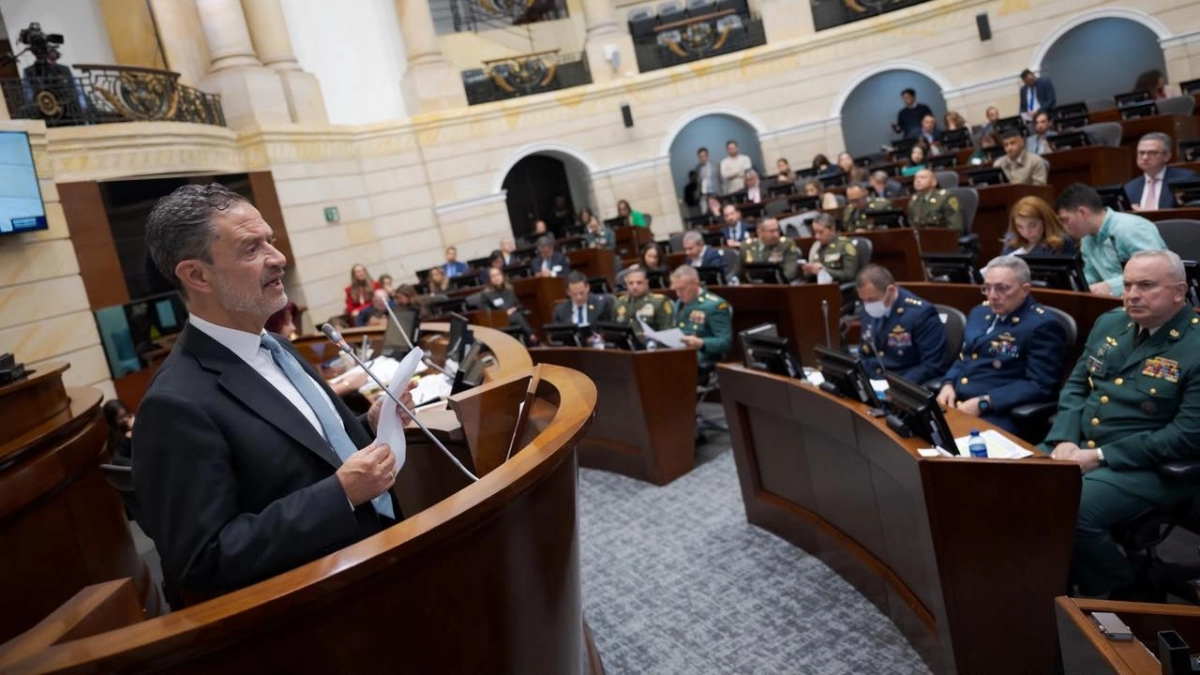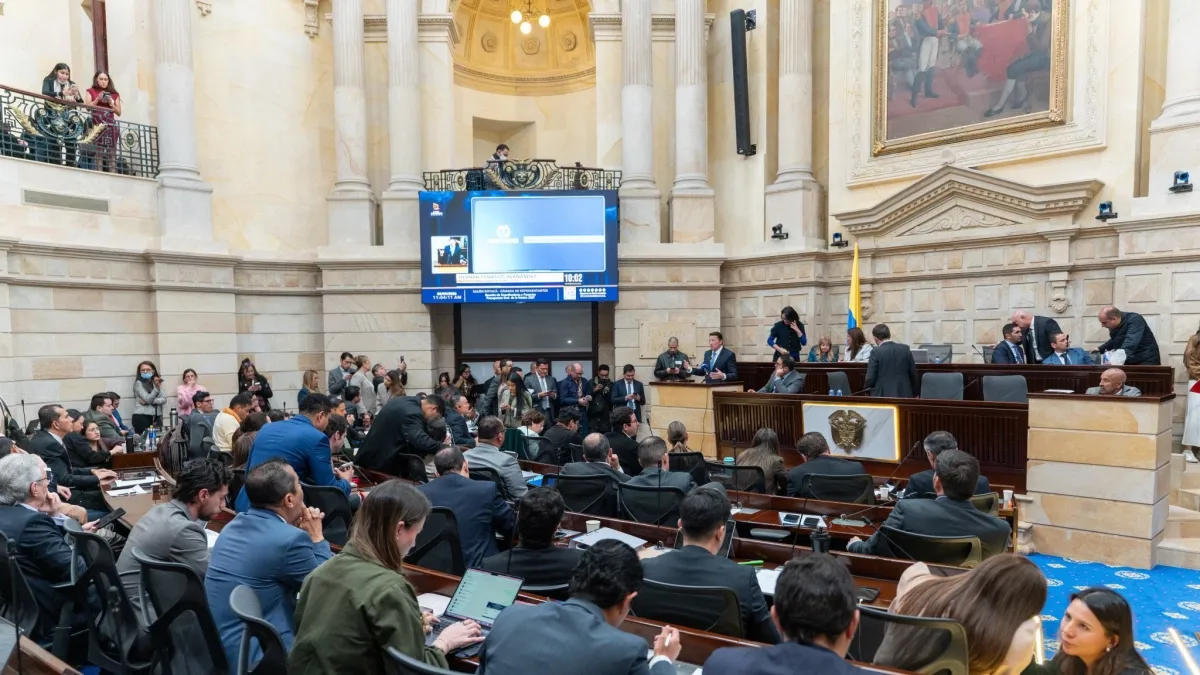
BOGOTÁ — In a decisive move to break a legislative bottleneck that has paralyzed other critical initiatives for months, the economic committees of the Colombian Congress have formally entered a state of permanent session. The announcement, made by the Representative to the Chamber and President of the Third Commission, Alfredo ‘Ape’ Cuello, marks a turning point for the administration’s flagship economic agenda.
Lawmakers are now under intense pressure to fast-track the discussion and preliminary vote on the sweeping tax reform and fiscal adjustment bill. With a hard deadline looming at the beginning of December, the legislative branch has found itself racing against the clock to reconcile executive demands, regional opposition concerns, and broader macroeconomic stability.
Main Facts: The Push for a Decisive Vote
The decision to transition into permanent sessions comes after weeks of legislative friction. Since August, the four economic committees of the Congress have been tethered to continuous joint sessions, creating a domino effect that has delayed numerous other pending national projects.
According to Representative Cuello, the prolonged deadlock necessitated a drastic shift in strategy.

"We are going to enter almost permanent sessions of the economic committees until we evacuate, as the Constitution commands, this project—either favorably or unfavorably. Therefore, we need to decide the fate of this project as soon as possible," Cuello stated during a press briefing.
The core of the legislative struggle centers on the government’s fiscal adjustment package, widely viewed as a cornerstone for stabilizing public finances. However, the proposal has encountered stiff resistance from various political sectors, most notably the Pacto Histórico bloc. Critics of the bill have argued that the initial roadmap did not provide enough room for regional input or public scrutiny, sparking demands for widespread public hearings.

To bridge the gap between legislative efficiency and democratic participation, congressional leadership negotiated a compromise. While opposition members initially pushed for seven regional public hearings, leadership successfully condensed the outreach effort into three targeted sessions. This compromise aims to protect the legislative calendar from further dilatory tactics while ensuring that critical socioeconomic sectors retain a platform to voice their dissent.
Cuello confirmed that he has already instructed the secretaries of the four economic committees, alongside the administrative directorate of the Congress, to coordinate the logistics necessary to include all designated opposition voices. "To all those pointed out by the sectors that are in opposition today, they will be invited and heard," he emphasized.
Chronology of Events: From August Deadlock to the December 2 Deadline
The current legislative crisis did not emerge overnight; it is the culmination of months of tense negotiations and procedural gridlock.
- August: The four economic committees of the Congress begin meeting in joint sessions to address the initial framework of the executive branch’s economic agenda. What was intended to be a streamlined process quickly bogs down due to deep ideological divides over tax collection and spending adjustments.
- Early November: Cumulative delays begin affecting the broader congressional agenda. Other legislative bills face indefinite postponements as economic debates consume the entirety of the committees’ bandwidth.
- Mid-November (The Pacto Histórico Demands): Tensions peak as lawmakers from the Pacto Histórico demand a comprehensive series of regional public hearings—initially requesting seven distinct sessions across different departments—to evaluate the impact of the tax reform on vulnerable populations.
- November 18, 2026: Representative Alfredo ‘Ape’ Cuello announces the transition to permanent sessions. Simultaneously, a compromise is reached to limit public hearings to three strategic dates, balancing the need for public inclusion with the necessity of a swift legislative timeline.
- November 18, 2026 (Later that day): President of the Chamber of Representatives Nicolás Barguil issues a stark warning, stating publicly that the fiscal rescue law must clear the economic committees before December 2 to guarantee sufficient time for debates in the full plenaries.
- Current Outlook: The committees operate under a rigorous, round-the-clock schedule, attempting to process amendments, hear regional stakeholders, and secure a first-debate vote before the hard December deadline.
Supporting Data and Context: The Fiscal Dilemma
The urgency surrounding the tax reform and fiscal adjustment bill is rooted in profound macroeconomic challenges. The government faces mounting pressure to close fiscal gaps while maintaining public investment. However, the path to achieving this balance has ignited fierce debates over taxation, public spending, and economic equity.

Discussions have largely revolved around how to compensate for billions in projected revenue shortfalls. Proposals from various political parties have flooded the committees, touching upon sensitive areas such as value-added tax (IVA) exemptions on the basic family basket (canasta familiar). Economists and political analysts point out that any miscalculation in these adjustments could disproportionately affect middle- and lower-income households, transforming the legislative debate into a high-stakes political battleground.
Furthermore, the administrative branch faces internal scrutiny regarding its own spending habits. Critics and allies alike have argued that raising taxes cannot be the sole mechanism for fiscal recovery; the state must also demonstrate fiscal discipline. This sentiment was echoed by congressional leadership as a fundamental prerequisite for moving the bill forward.

Official Responses and Leadership Positions
The leadership of both legislative chambers has adopted a synchronized, albeit demanding, posture regarding the timeline of the reform.
Nicolás Barguil, President of the Chamber of Representatives, underscored the absolute necessity of meeting the upcoming milestones. In an official communication released on Wednesday, Barguil made it clear that the legislative branch will not tolerate unnecessary delays, provided that the executive branch also commits to institutional reform.

"We are going to work to ensure that this deadline is met and that the bill moves forward," Barguil stated. Crucially, he added a caveat directed at the executive branch: "The State also has to do its part: spend better, eliminate unnecessary expenses, and take better care of resources."
This dual message—demanding legislative speed while simultaneously calling for rigorous state austerity—reflects the complex political bargains required to keep the ruling coalition and opposition parties at the negotiating table.

Meanwhile, representatives from opposition benches have signaled that while they will participate constructively in the three agreed-upon public hearings, they will maintain strict scrutiny over articles they deem detrimental to regional economies and working-class citizens. They argue that rushing a fiscal reform of this magnitude risks enshrining structural flaws that could destabilize the economy in the long term.
Implications: What Lies Ahead for the Economic Agenda
The decision to impose permanent sessions carries profound implications for the remainder of the legislative term.

- Exhaustion of the Legislative Calendar: By tying up the economic committees in round-the-clock debates, other vital financial and administrative projects risk being shelved until the next legislative period. Lawmakers will have to manage severe operational fatigue as they balance committee permanence with plenary responsibilities.
- The December 2 Benchmark: Missing the December 2 deadline established by Barguil would effectively torpedo the current version of the bill, as it would leave insufficient time for second-debate floor votes before the end of the legislative session. This would force the government to either restart the process next year or utilize extraordinary legislative mechanisms, heightening political instability.
- Public Trust and Social Friction: The compromise on public hearings will test the administration’s ability to maintain social license for its economic policies. If regional sectors feel sidelined by the condensed three-session format, street protests and institutional pushback could intensify, complicating the eventual implementation of the fiscal adjustments.
- A Test of Fiscal Governance: Ultimately, the outcome of these permanent sessions will serve as a definitive stress test for Colombia’s current economic governance. It will reveal whether a fractured Congress can forge consensus under intense time constraints or if systemic polarization will derail the nation’s fiscal stabilization strategy.
As the clock ticks toward the early December cutoff, all eyes remain fixed on the congressional corridors in Bogotá, where the foundational architecture of the country’s near-term economic future is being forged under unprecedented pressure.