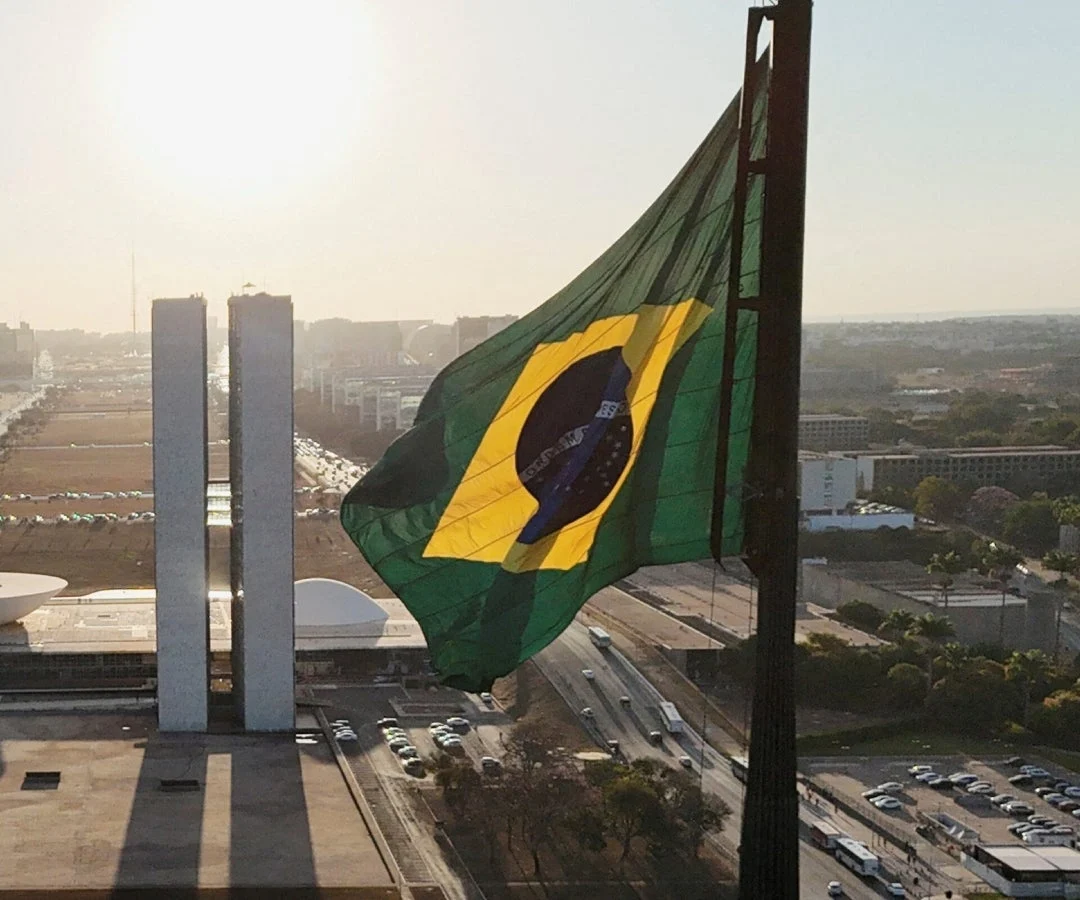
BRASILIA — In what legal analysts are already describing as one of the most severe institutional crises in modern Brazilian history, the nation’s highest court is currently grappling with an unprecedented internal tempest. At the center of the storm is a sprawling, multi-billion-dollar financial fraud investigation tied to the now-defunct Banco Master—a scandal valued at an astronomical US$10 billion.
The ramifications of this investigation have pierced the highest echelons of the Brazilian judiciary, directly implicating sitting Supreme Federal Tribunal (STF) justices, threatening to destabilize upcoming national elections, and prompting urgent judicial interventions to preserve the integrity of electronic evidence.
Main Facts of the Crisis
The unfolding scandal centers on the extraction and handling of digital forensics originating from the mobile device of Daniel Vorcaro, the former owner and mastermind behind Banco Master. On Saturday, a decisive legal intervention was launched by the President of the Brazilian Supreme Court, Edson Fachin.
In a sharply worded judicial resolution, Fachin granted the Federal Police a strict 24-hour window to provide comprehensive information regarding the exact chain of custody, current physical location, and technical status of the data extracted from Vorcaro’s mobile phone. This hardware and its digital contents represent the proverbial "black box" of the US$10 billion fraud scheme, which allegedly funneled illicit funds through various channels, deeply compromising public safety and security systems.
The stakes escalated dramatically when the investigation intersected with the actions of prominent Supreme Court magistrates Alexandre de Moraes and André Mendonça. Both jurists have found themselves pulled into the vortex of the inquiry, raising profound questions regarding judicial ethics, conflicts of interest, and the separation of powers.
Compounding the crisis, Fachin formally assumed the role of relator in a parallel proceeding concerning Justice Moraes, ordering the immediate transfer of all files pertaining to two distinct ongoing investigations. These dossiers specifically examine Banco Master’s alleged collusion with a massive fraudulent scheme targeting Brazil’s social security system.
Chronology of Events: How the Scandal Unfolded
To understand the current institutional paralysis, it is necessary to trace the rapid sequence of events that brought Brazil’s judiciary to this critical juncture over the past several days:
- Friday: Momentum picked up late in the week when Justice André Mendonça took the step of declassifying a significant volume of documents related to the Banco Master investigations, shedding initial light on the scope of the alleged financial crimes. Simultaneously, reports emerged concerning the peripheral investigation led by Justice Flávio Dino regarding the public financing of a biographical film about former President Jair Bolsonaro.
- Saturday: The crisis reached a boiling point. STF President Edson Fachin issued a sweeping set of rulings. He demanded that the Federal Police report on the forensic custody of Daniel Vorcaro’s phone data within 24 hours. Furthermore, Fachin formally stepped in as relator for the Moraes-linked proceedings, commanding that the court’s presidency take possession of all records concerning Banco Master and social security fraud. Crucially, Fachin rejected a request from Justice Moraes for a unified, joint hearing, opting instead to schedule separate plenary reviews for the conduct of both Moraes and Mendonça.
- Sunday: The Federal Police issued a formal public statement addressing the court’s demands. Law enforcement officials assured the public and the judiciary that they possess the "full technical capacity to produce and send an identical copy" of the forensic material extracted from Vorcaro’s phone to all offices that had legally requested it. On the same day, Justice Flávio Dino moved to independently declassify documents concerning the alleged misuse of public funds earmarked by lawmakers—including former Culture Secretary Mario Frias—for the Bolsonaro-themed film project.
Supporting Data and Forensic Evidence
At the heart of the legal battle is a digital footprint: the contents of Daniel Vorcaro’s seized mobile phone. Within forensic circles, the device is understood to contain an unedited ledger of communications, financial transactions, and potentially incriminating text messages exchanged between the disgraced banker and high-ranking political and judicial figures.
The logistical friction over who controls these data has exposed deep fissures within the STF:
- The Requests: Justices Cristiano Zanin, Alexandre de Moraes, and Gilmar Mendes formally petitioned the court for unrestricted, complete copies of the forensic material.
- The Backup Status: Justice André Mendonça publicly acknowledged holding a secure backup of the data. However, Mendonça maintained that the digital copy remains strictly sealed and functionally inaccessible to him, asserting that the primary, original datasets remain securely under the direct physical and technical custody of the Federal Police.
- The Police Assurance: Seeking to quell speculation regarding potential tampering or data loss, the Federal Police’s Sunday declaration served as a vital technical reassurance. By confirming their ability to replicate bit-for-bit digital copies of the original extraction, the police effectively removed technical excuses for delays in distributing the evidence to the inquiring magistrates.
Official Responses and Institutional Reactions
As the judiciary attempts to police its own members, the official responses from key stakeholders have varied from technical compliance to strategic silence.
The Federal Police have positioned themselves as neutral arbiters bound by technical duty. By publicly committing to deliver identical data copies within the 24-hour mandate issued by Fachin, law enforcement agencies are attempting to shield themselves from accusations of political bias or mishandling of evidence.
Meanwhile, the reactions from the accused and implicated magistrates reflect a high-stakes defensive posture:
- Justice Alexandre de Moraes had actively pushed for a joint, comprehensive hearing to address all accusations simultaneously—a motion that was ultimately overridden by Fachin’s decision to bifurcate the proceedings into distinct dates.
- Justice André Mendonça, by choosing to declassify investigative documents on Friday, signaled a degree of transparency, even as he navigates the impending review of his supervisory conduct.
- In the parallel cultural funding controversy, a designated spokesperson for former Culture Secretary Mario Frias maintained absolute silence, declining repeated media requests for comment regarding the alleged diversion of legislative funds toward the Bolsonaro biographical film.
Broader Implications for Brazilian Democracy
The Banco Master scandal is far more than a complex white-collar crime investigation; it is a profound stress test for Brazilian democratic institutions. Valued at US$10 billion, the fraud scheme has already inflicted severe damage on public trust in the financial sector. However, the revelation that Supreme Court justices—the ultimate guardians of the Brazilian Constitution—may be implicated in sheltering, communicating with, or improperly overseeing the architects of this fraud threatens to paralyze the nation’s legal architecture.
The Threat to the Electoral Landscape
With national elections looming, political analysts warn that the fallout from the Banco Master investigations could fundamentally warp the democratic process. The involvement of key judicial figures in partisan or quasi-partisan controversies creates an atmosphere of pervasive suspicion. When the judiciary itself becomes the subject of criminal and ethical probes, the institutional referee loses its credibility, leaving the electorate vulnerable to misinformation, institutional decay, and radicalized political polarization.
The Separation of Powers Under Duress
Fachin’s decisive actions—asserting administrative control as STF President, demanding strict adherence to forensic chains of custody, and scheduling separate plenary sessions to judge the conduct of his peers—demonstrate an urgent institutional reflex to cleanse the court. Yet, the very necessity of these measures underscores how deeply the crisis has penetrated.
As the Supreme Court prepares to evaluate the disputed text messages attributed to Vorcaro and sent to Moraes on Tuesday, and subsequently reviews Mendonça’s supervisory record on September 23, all eyes in Brasilia and across the globe remain fixed on the STF. The decisions handed down in the coming days will not merely determine the legal fates of individual magistrates and bankers; they will define whether Brazil’s highest judicial authority can successfully navigate its worst ethical crisis in decades, or whether the foundations of its democracy will buckle under the weight of the US$10 billion Banco Master scandal.