By Editorial Staff
Updated: November 17, 2026
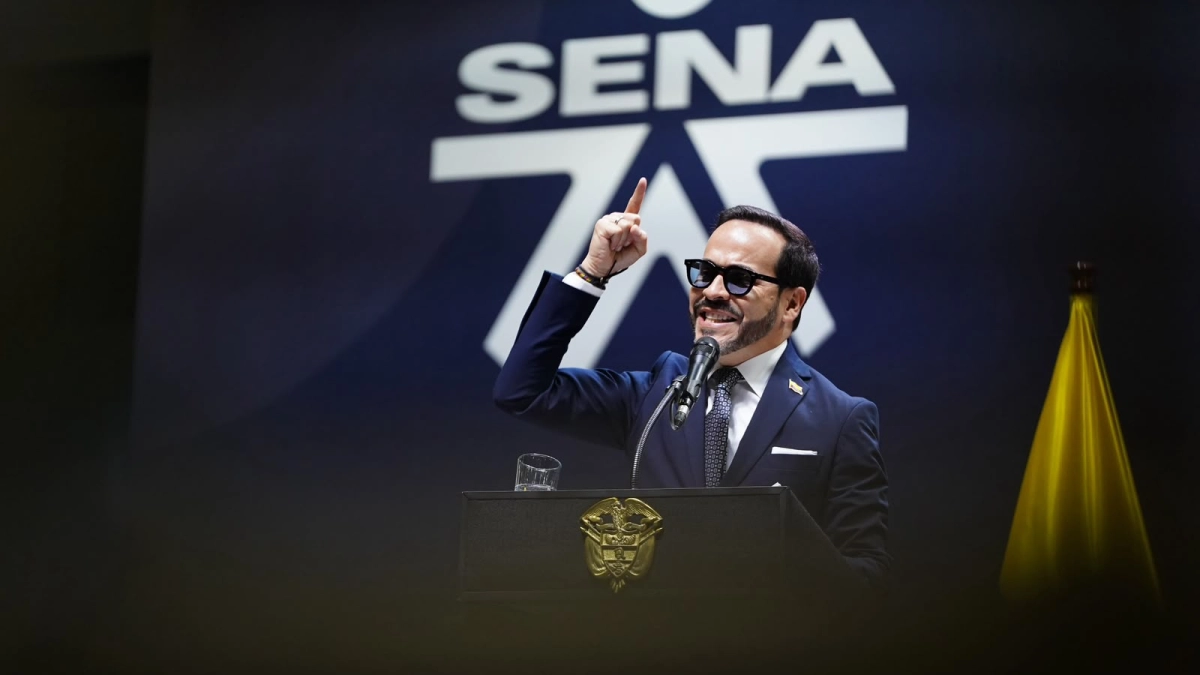
In a high-stakes address delivered during the "Patria Milagro SENA" Summit in Barranquilla this Tuesday, President Abelardo De La Espriella unveiled a sweeping transformation strategy for the National Training Service (SENA). The initiative, branded with the acronym "D.I.O.S." (Digitalization, Innovation, Offer, and Sustainability), aims to modernize the nation’s primary vocational training institution, aligning its output with the volatile demands of the global labor market and the specific economic realities of Colombia’s diverse regions.
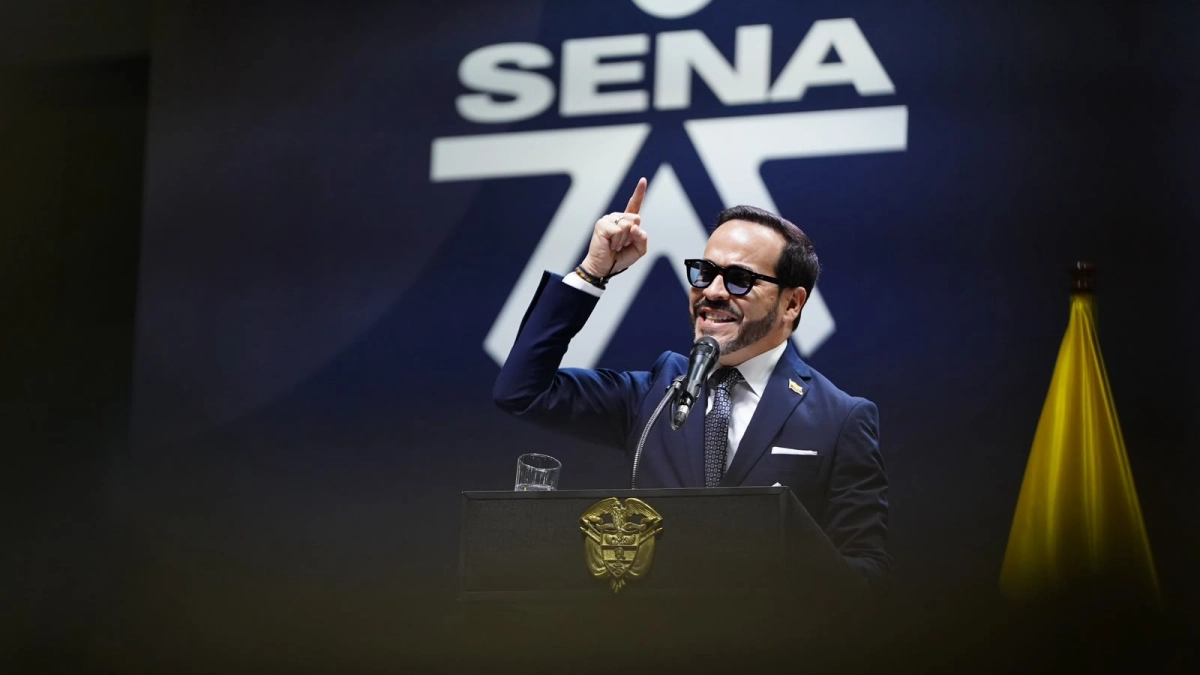
The announcement comes at a critical juncture for the administration, which is currently navigating economic pressures and allegations of political influence within the agency. President De La Espriella, known for his provocative rhetoric, framed the initiative as a necessary moral and structural evolution for the institution. "Dios le da sus batallas más difíciles a sus mejores soldados, y por eso estamos aquí," the President declared, acknowledging the internal and external challenges facing the entity.
The Four Pillars of the D.I.O.S. Strategy
The core of the President’s proposal rests on four structural pillars intended to dismantle bureaucratic inertia and replace it with a dynamic, market-driven educational model.

1. Digitalization: Bridging the Technological Gap
The President emphasized that the traditional curriculum is no longer sufficient for the modern workforce. The "Digitalization" pillar focuses on integrating advanced tools into the classroom. This includes a transition toward automation, data analytics, and artificial intelligence (AI). The goal is to ensure that every apprentice graduating from the program is "industry-ready," capable of operating in sectors that are rapidly digitizing.
2. Innovation: The Triple Helix Approach
Recognizing that the institution cannot function in a vacuum, the "Innovation" pillar mandates a closer collaboration between SENA, universities, research centers, and the private sector. By fostering these partnerships, the government hopes to ensure that academic knowledge transitions seamlessly into industrial application. "Our apprentices must be prepared to work with the technologies that define the current era," De La Espriella noted.

3. Relevant Offer: Regionalization of Skills
One of the most significant critiques of centralized vocational training has been the "one-size-fits-all" curriculum. Under the new strategy, the "Offer" pillar dictates that training programs must be tailored to the specific economic ecosystem of each region. "A worker in an agricultural zone does not need the same preparation as a technician in an industrial hub," the President explained. By decentralizing curriculum design, the administration aims to decrease structural unemployment in rural areas.
4. Sustainability: Financial and Institutional Longevity
The final pillar, "Sustainability," addresses the long-term financial viability of SENA’s programs. The government intends to secure a sustainable budget that moves beyond political cycles, ensuring that once a project is launched, it has the funding to reach completion. This pillar also serves as a rallying cry for the private sector to take a more active role in financing and mentoring.

Chronology of the Reform Process
The path to the "D.I.O.S." strategy has been marked by a series of administrative and political milestones:
- Early 2025: The government begins a comprehensive audit of SENA’s 2020-2024 educational outcomes, revealing a significant mismatch between graduates’ skills and private sector vacancies.
- Mid-2025: The President initiates an internal review to combat allegations of systemic corruption and "politiquería" (cronyism) within regional SENA offices.
- Late 2025: Over 1,000 entrepreneurial projects are approved and set for activation, marking the first move toward the new, more aggressive support model.
- November 2026: During the "Patria Milagro SENA" Summit, the official "D.I.O.S." strategy is launched, accompanied by specific investment announcements totaling over $34 billion pesos for regions affected by environmental disasters.
Supporting Data and Economic Impact
The scale of the initiative is significant, backed by tangible financial and operational commitments. Among the immediate actions announced by the administration:

- Specialized Continuing Education: A program aimed at upskilling 75,115 workers is currently in motion.
- Fondo Emprender Injection: An allocation of $34.14 billion pesos has been earmarked for six departments hit by recent seismic activity and forest fires. This investment is designed to restart local economies by empowering small-scale entrepreneurs.
- Private Sector Integration: The President has issued a direct challenge to the business community to integrate more apprentices into their active workforce, promising that the government will mirror this behavior by prioritizing SENA-trained professionals in state-led events and contracts.
Official Responses and Political Implications
The announcement was met with a mix of cautious optimism and intense political scrutiny. While business leaders have largely welcomed the focus on industry-relevant skills, the administration faces significant headwinds.
Recent reports suggest that the agency is embroiled in controversy, with allegations that apprentices have been pressured to participate in anti-government protests—a claim that threatens to overshadow the technical merits of the "D.I.O.S." strategy. Opposition figures have questioned whether the rebranding of the institution is merely a superficial attempt to consolidate power under the guise of "modernization."

In response to these criticisms, the President remained defiant. "A lo mejor nos entutelen por esto, pero, como digo siempre, Dios proveerá," he stated, dismissing the likelihood of legal or political pushback. His administration maintains that the "D.I.O.S." strategy is the only way to "restore the prestige" of an institution that had, in his view, drifted away from its original mission of serving the working class.
Future Outlook: The Role of the Private Sector
The success of the "D.I.O.S." initiative depends heavily on the "buy-in" from the private sector. The President’s call to action is clear: businesses must stop acting as passive observers and start acting as co-educators. By working alongside SENA to update program content, corporations can effectively create a "tailor-made" workforce, reducing training costs upon hiring.

Furthermore, the administration has pledged to aggressively tackle corruption within the institution. By opening up the curriculum and the selection process to external audits and private sector oversight, the President hopes to create a firewall against the patronage networks that have historically plagued the agency.
As the implementation phase begins, the eyes of the nation will be on whether "D.I.O.S." results in lower youth unemployment rates or if it remains an aspirational document. For the current administration, the strategy is more than a policy shift—it is a cornerstone of its 2026 agenda to redefine the relationship between the Colombian state, its labor force, and the private sector.

Conclusion
The launch of the "D.I.O.S." strategy marks a definitive attempt by President De La Espriella to leave a lasting mark on Colombia’s educational landscape. By prioritizing digitalization, innovation, regional relevance, and sustainability, the government has set a high bar for itself. However, the path forward will be fraught with the realities of political opposition and the daunting task of reforming an institution as complex as SENA. Whether the strategy achieves its ambitious goals will depend not only on the administration’s resolve but on the willingness of the private sector and the academic community to embrace a new, more rigorous, and technology-focused era of vocational training.