By Nathalia Díaz Guzmán | Last Updated: November 18, 2026
Main Facts
A dramatic aviation emergency unfolded on Wednesday, November 18, 2026, in the municipality of Apodaca within the Mexican state of Nuevo León. A light aircraft operated by the company Casago, S.A. de C.V. suffered a catastrophic mishap during its departure sequence at the Aeropuerto Internacional del Norte.
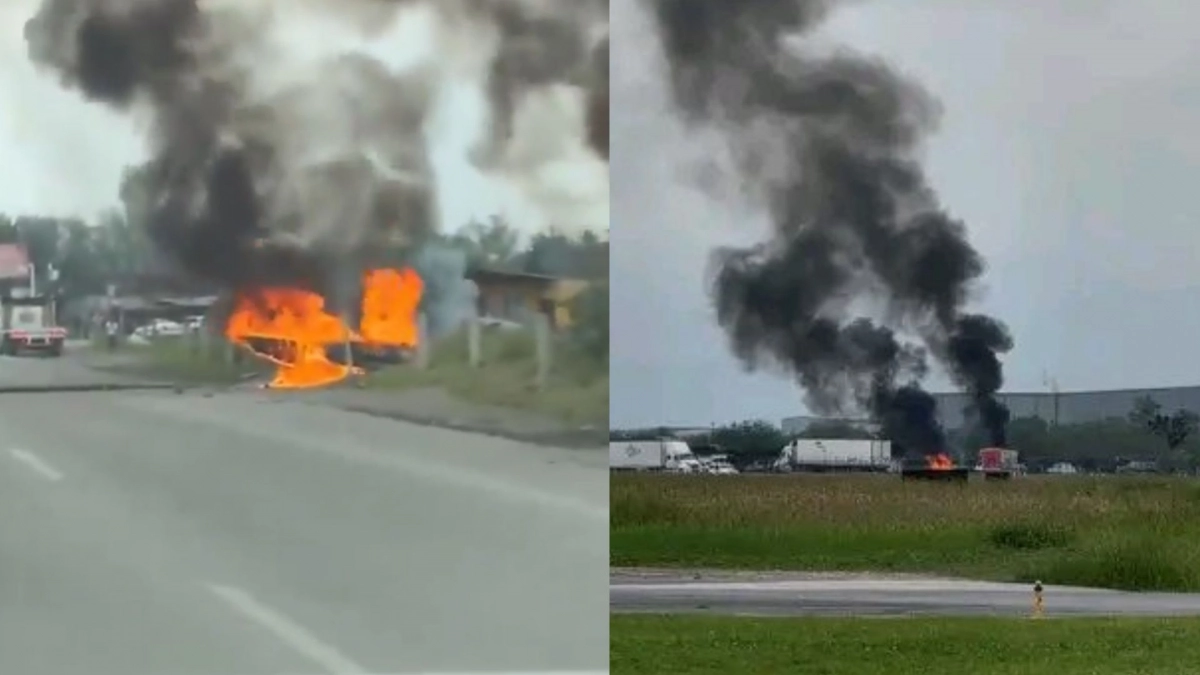
According to preliminary reports from the Federal Civil Aviation Agency (AFAC—Agencia Federal de Aviación Civil), the aircraft—identified as a Piper PA-46—was attempting to take off around 1:50 p.m. when it inexplicably veered off the designated runway. Breaking through the airport’s perimeter boundaries, the aircraft careened directly onto the highly congested Monterrey-Nuevo Laredo highway, a vital transportation artery connecting key economic zones in northern Mexico.
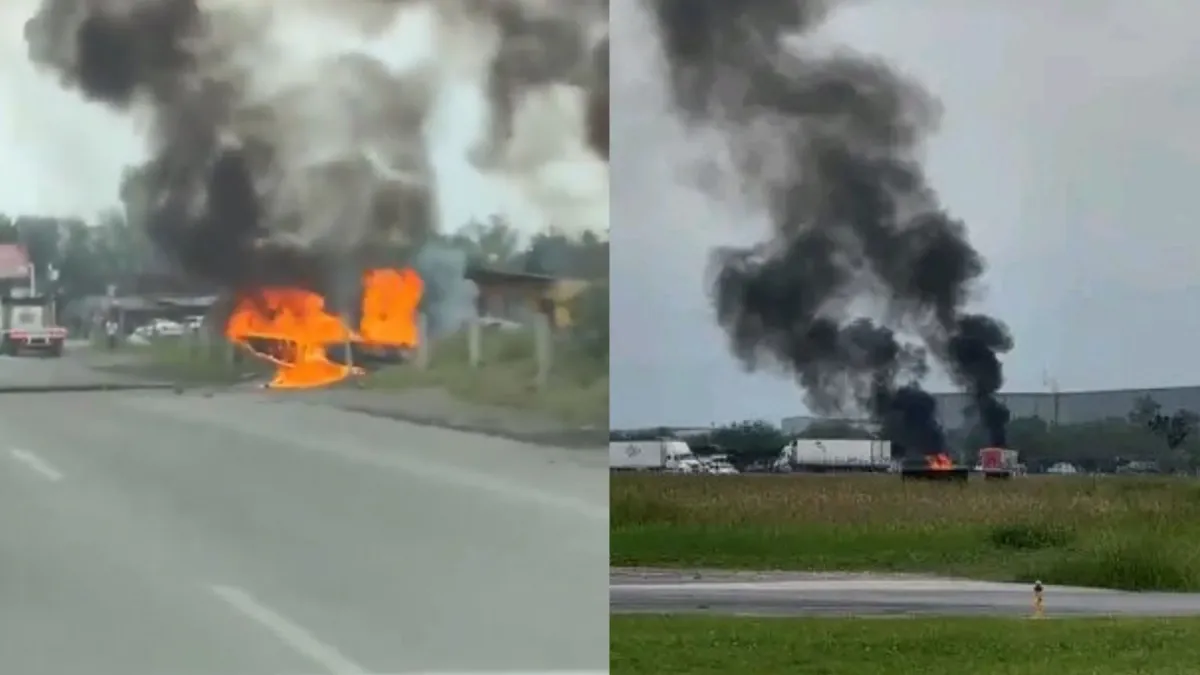
Upon impact with the roadside environment, the aircraft immediately caught fire, sending dense, billowing plumes of black smoke into the sky that could be seen for miles. The dramatic visuals, swiftly captured by passing motorists and bystanders, flooded social media platforms within minutes, prompting widespread concern and an immediate, large-scale deployment of emergency services.
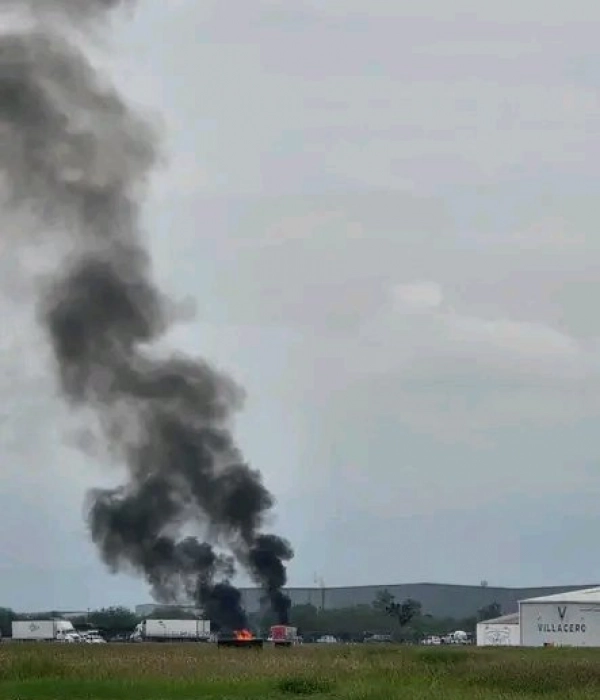
Miraculously, despite the fiery wreckage and the inherent dangers of a runway excursion onto an active highway, all six occupants onboard survived. The manifest confirmed that the flight carried two crew members and four passengers. According to the AFAC, all six individuals sustained only minor injuries—a stroke of extreme fortune given the violent nature of the crash and subsequent fire.
The incident caused profound disruptions to regional infrastructure. Traffic along the Monterrey-Nuevo Laredo highway was completely paralyzed in both directions for hours as police, firefighters, and civil protection units worked tirelessly to secure the perimeter, extinguish the flames, and clear the charred debris. Simultaneously, airport authorities were forced to temporarily suspend operations on the facility’s 11/29 runway, halting incoming and outgoing flights to ensure safety during the immediate aftermath.
Chronology of Events
To understand how a routine commercial transit flight escalated into a highway emergency, aviation authorities and emergency responders have reconstructed the timeline of the events of November 18, 2026:
- Pre-Flight and Departure Preparations (Early Afternoon): The Piper PA-46 aircraft, registered to and operated by Casago, S.A. de C.V., prepares for departure from the Aeropuerto Internacional del Norte in Apodaca, Nuevo León. Its intended flight path is mapped out toward its final destination: the municipality of Atizapán in the State of Mexico. The flight manifest registers a total of six people on board—two professional crew members managing the cockpit and four passengers.
- 1:50 p.m. – The Critical Phase of Flight: During the takeoff roll along runway 11/29, the aircraft experiences an unexpected deviation. For reasons yet to be officially determined, the pilot loses directional control or fails to halt the aircraft within the remaining runway bounds. The Piper PA-46 overruns the tarmac, plowing through the airport’s security fencing.
- Post-Runway Excursion and Impact: The aircraft exits airport grounds and breaches the adjacent Monterrey-Nuevo Laredo highway. The physical shock of the terrain transition and subsequent structural damage compromises the fuel lines, sparking a sudden and violent fire that envelops portions of the fuselage.
- Immediate Post-Crash Moments (1:55 p.m. – 2:30 p.m.): Motorists on the Monterrey-Nuevo Laredo highway slam on their brakes as the burning aircraft comes to a stop. Remarkably, despite the fire, all six occupants manage to evacuate or are extricated from the cabin with non-life-threatening, minor injuries. Passing drivers and early arrivals begin capturing footage of the thick black smoke, which quickly spreads across digital networks.
- Emergency Mobilization: Civil Protection (Protección Civil), local and state firefighters, highway patrol units, and Red Cross paramedics descend upon the scene. The Centro de Operaciones de Emergencia (Emergency Operations Center) is formally activated to coordinate triage, medical transport for the injured, and highway containment protocols.
- Late Afternoon – Containment and Investigation Launch: Fire crews successfully extinguish the blaze, cooling the wreckage to prevent secondary explosions. Traffic is diverted through alternate routes to alleviate massive gridlock. The AFAC officially announces the temporary closure of runway 11/29 and initiates a formal administrative investigation.
Supporting Data and Context
The accident in Apodaca is part of a deeply unsettling cluster of aviation incidents shaking Mexico within a very tight window, raising public anxiety regarding private aviation safety standards, maintenance protocols, and airport infrastructure limitations.
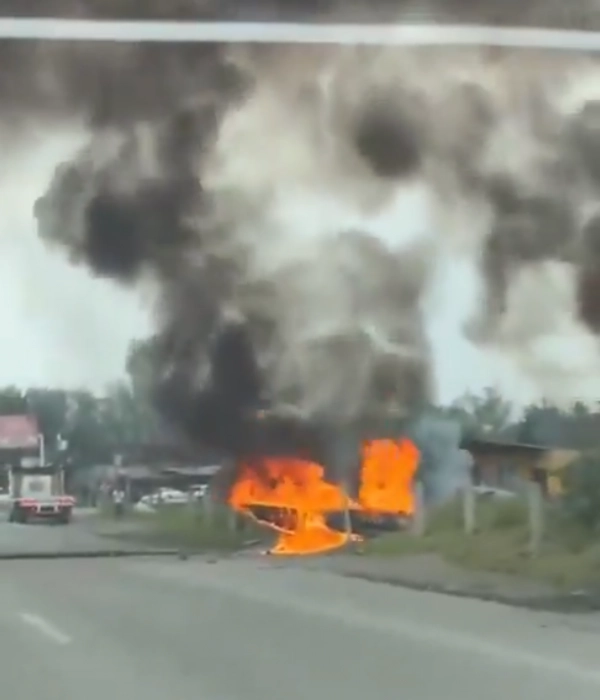
The Apodaca Incident Breakdown:
- Aircraft Model: Piper PA-46 (a popular single-engine or twin-engine turboprop/piston aircraft widely used for private and corporate transport).
- Operator: Casago, S.A. de C.V.
- Route: Aeropuerto Internacional del Norte (Apodaca, Nuevo León) to Atizapán (State of Mexico).
- Occupants: 6 total (2 crew members, 4 passengers).
- Casualties: 0 fatalities; 6 survivors with minor injuries.
- Location of Impact: Monterrey-Nuevo Laredo highway.
The Broader Safety Crisis: A Troubling Trend in Mexican Aviation
This harrowing event in Nuevo León did not occur in a vacuum. It follows closely on the heels of another fatal aviation disaster that struck less than 24 hours prior, emphasizing a grim week for the country’s skies.
Just a day earlier—on Tuesday, November 17, 2026—a separate private aviation disaster unfolded in the state of Durango. A Cessna model 500 private jet, which had just departed from the vicinity of the General Guadalupe Victoria International Airport, experienced catastrophic mechanical difficulties shortly after liftoff.

According to statements provided by Durango Governor Esteban Villegas Villarreal and corroborated by the AFAC, the aircraft was attempting an emergency return or forced landing approximately 500 meters from the 03 runway threshold after suffering an in-flight failure during takeoff. Unlike the Apodaca incident, the Durango crash proved fatal for the pilot in command, whose life could not be saved. The flight also carried five other individuals—four passengers and an auxiliary crew member whose identity was initially withheld by authorities.
Furthermore, these back-to-back November tragedies echo previous high-profile accidents from earlier in the month and recent weeks. On November 2, 2026, a light aircraft crashed directly into an urban zone in the state of Hidalgo just minutes after departure, resulting in two fatalities. Meanwhile, international parallels—such as a dramatic private plane crash onto a Florida highway in the United States that claimed nine lives—have kept public scrutiny laser-focused on the regulation and safety oversight of private charter and corporate aircraft operations.
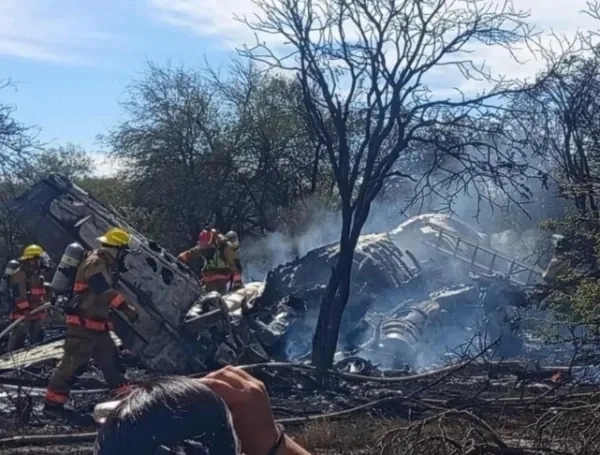
Official Responses and Institutional Actions
The response from Mexican federal and state authorities was swift, reflecting the high visibility of an accident that spilled directly onto a major national highway.
The Agencia Federal de Aviación Civil (AFAC) immediately assumed the primary role in communicating official updates to the public. Through its digital channels and formal press releases, the agency outlined the exact makeup of the flight, confirmed the survival of all six occupants, and detailed the operational measures taken at the Aeropuerto Internacional del Norte.

AFAC representatives confirmed that the Centro de Operaciones de Emergencia was instantly mobilized upon notification of the runway excursion. To facilitate a thorough forensic examination, aviation inspectors and accident investigators were dispatched to the site to map the trajectory of the Piper PA-46, analyze wreckage components, evaluate meteorological conditions at the time of takeoff, and interview surviving crew members and ground control personnel.
Concurrently, state-level entities—including Nuevo León’s Civil Protection directorate and municipal police forces from Apodaca—focused on life-safety operations, traffic management, and environmental containment. Highway maintenance crews were brought in to assess potential structural damage to the asphalt caused by the burning fuel and to remove debris safely without compromising passing vehicular flow once lanes were partially reopened.

The AFAC has pledged absolute transparency throughout the investigative process, noting that administrative and technical reviews will determine whether the accident stemmed from mechanical failure, pilot error, sudden environmental shifts, or a combination of compounding factors.
Implications and Future Outlook
The miraculous survival of the six individuals aboard the Piper PA-46 prevents what could have easily been a catastrophic loss of life, both in the air and among motorists driving along the Monterrey-Nuevo Laredo highway. However, the psychological and infrastructural impact of the accident demands a serious reckoning within Mexico’s aviation sector.

1. Infrastructure and Perimeter Security
The fact that an aircraft could easily breach the airport boundary and land in the middle of a major federal highway raises serious questions regarding safety buffers and perimeter security at regional airports like the Aeropuerto Internacional del Norte. While international aviation standards require clear safety areas (Runway Safety Areas – RSA) designed to absorb overrunning aircraft, older infrastructure or urban expansion near airports often compresses these critical margins.
2. Regulatory Scrutiny on Private Operations
With multiple incidents involving private aircraft (such as the Piper PA-46 in Nuevo León, the Cessna 500 in Durango, and the urban crash in Hidalgo) occurring within weeks of each other, the AFAC faces mounting pressure from lawmakers, aviation experts, and the public to ramp up safety audits. Critics argue that private and corporate charter fleets may require tighter oversight regarding pre-flight maintenance sign-offs, pilot fatigue monitoring, and rigorous recurrent training regimens.

3. Economic and Transit Resilience
Arterials like the Monterrey-Nuevo Laredo highway are economic lifelines, facilitating cross-border trade and heavy industrial transport between Mexico and the United States. Incidents that paralyze these corridors not only cause immediate logistical headaches but also highlight the vulnerability of multimodal transport networks when localized disasters occur.
As the AFAC continues its technical investigation into the Apodaca runway excursion, aviation safety advocates hope that the lessons learned from this fiery near-tragedy will translate into stricter preventive measures, ensuring that future flights take off—and stay—safely where they belong: in the sky.