By Edwin Caicedo Environment and Health Journalist Updated: September 7, 2026
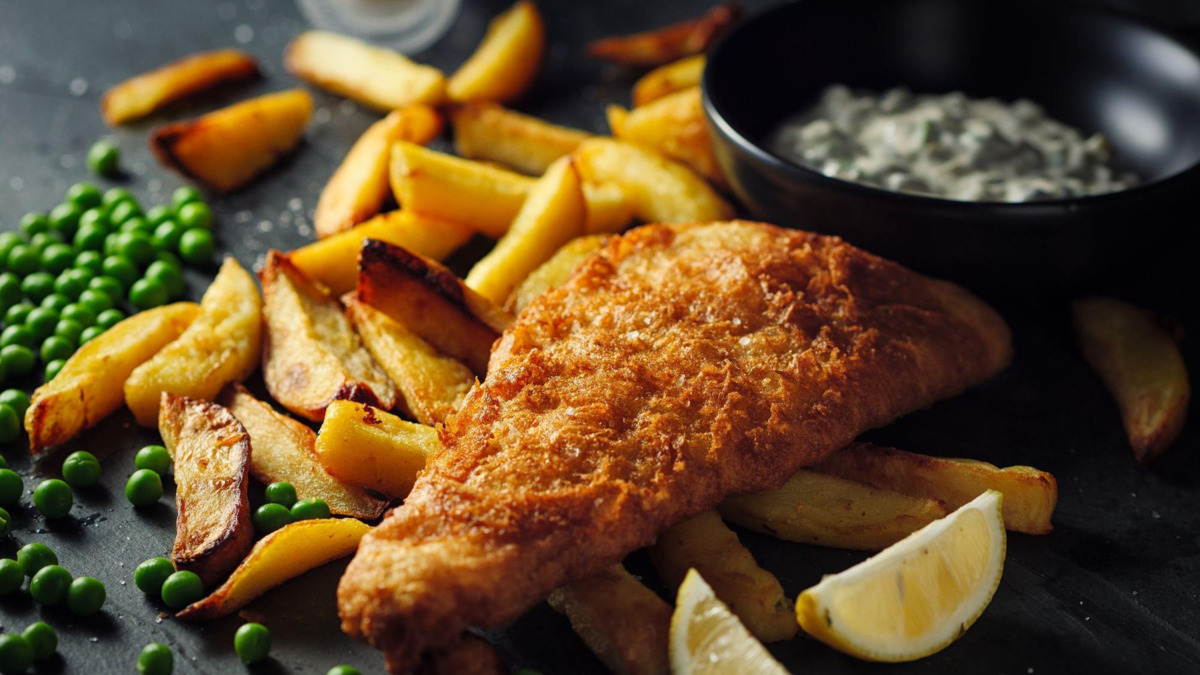
For generations, home cooks and master chefs alike have sworn by an unconventional kitchen hack when striving for the ultimate fried fish or classic fish and chips: replacing a portion of the water or milk in their batter with a cold beer. Long dismissed by some as an old wives’ tale or a mere culinary superstition, this technique has finally been unmasked by food science. Modern gastronomic research, laboratory testing, and physical chemistry now confirm that incorporating beer into a batter significantly improves both the texture and the structural integrity of the fried crust, transforming a heavy, oil-logged coating into a light, airy, and lace-like shell.
Main Facts: The Physics and Chemistry Behind the Batter
When aiming for a golden, crispy crust without the greasy, heavy burden common to amateur frying, beer acts as a multi-functional culinary catalyst. According to culinary science breakdowns published by outlets like Scientific American and validated by rigorous institutional testing, beer delivers a trifecta of properties that fundamentally alter how batter behaves in hot oil: carbon dioxide, foaming agents, and alcohol.
The primary driver of the transformation is carbonation. When a batter formulated with a carbonated beverage makes contact with boiling oil (typically ranging between 350°F and 375°F), the solubility of the dissolved carbon dioxide ($textCO_2$) drops drastically. This sudden shift forces the gas to rapidly expand and escape. As the microscopic bubbles fight their way out of the thickening, cooking batter, they inflate tiny pockets of air. The result is an expansive, lace-like matrix that bakes into a remarkably light and shatteringly crisp outer crust.
Beyond simple carbonation, the chemical composition of beer plays a pivotal role in managing gluten development. Organizations such as America’s Test Kitchen—a renowned culinary research entity—have highlighted that gluten forms most readily in a neutral-to-slightly-acidic environment, specifically peaking at a pH level between 5 and 6. Standard tap water often sits comfortably within this range, encouraging the formation of strong, elastic gluten strands that can turn a fried batter tough and chewy.
Beer, however, is naturally more acidic, frequently boasting a pH closer to 4. This mild acidity inhibits excessive gluten network formation. By keeping the gluten strands short and tender, the batter remains delicate rather than rubbery, ensuring that the structural bite shatters cleanly under your teeth instead of demanding a chew.
Chronology of a Culinary Evolution: From Pub Tradition to Laboratory Science
While the practice of adding fermented malt beverages to batters dates back centuries—most notably rooted in British, Belgian, and German pub cultures—its analytical deconstruction is a relatively modern phenomenon.
Pre-20th Century: Traditional fish-fry cultures across Europe intuitively utilized local ales and lagers. Cooks noticed that batter made with beer adhered better to wet fish surfaces and dried into a crispier golden coat, but the exact mechanism remained a mystery attributed to "chef’s intuition."
Early 2000s: As molecular gastronomy gained momentum, food scientists began looking closely at everyday home-cooking techniques. Publications like Scientific American began breaking down the physics of frying, identifying gas solubility and bubble dynamics as key components of crispy textures.
2015–2020: Prominent culinary testing labs, including America’s Test Kitchen and professional platforms like ChefSteps, initiated controlled comparative trials. By isolating variables—such as testing batters made with flat beer, non-alcoholic beer, club soda, and plain water—they mapped out the exact contributions of carbonation versus alcohol.
2026: Contemporary culinary science firmly establishes that while cultural traditions sparked the technique, quantifiable physics (gas expansion and pH modulation) dictate its success, cementing beer batter as a textbook method taught in professional kitchens worldwide.
Supporting Data and Controlled Experiments
To separate myth from measurable reality, institutional food labs have repeatedly put the beer-batter hypothesis under the microscope.
In a landmark series of blind comparative tests conducted by America’s Test Kitchen, researchers fried identical cuts of fish using four distinct liquid bases:
Standard water-based batter
Club soda (carbonated water) batter
Non-alcoholic beer batter
Traditional alcoholic beer batter
The results provided definitive clarity. Both the club soda and the non-alcoholic beer batters produced crusts that were noticeably lighter, crispier, and more porous than the standard water-based control group. This proved that carbonation is the true protagonist of the reaction. The bubbles do the heavy lifting, creating the structural cavities that define a superior crunch.
However, the analysis didn’t stop there. When professional platforms like ChefSteps examined the role of alcohol, they discovered a secondary, yet equally vital, physical benefit: evaporation rates. Alcohol (ethanol) has a significantly lower boiling point than water (approximately 173°F or 78.5°C versus 212°F or 100°C).
When a beer-battered protein hits the deep fryer, the alcohol content flashes off and evaporates much faster than water can. This rapid vaporization aggressively dries out the outer crust in a fraction of the time, sealing the exterior shell before excess oil can migrate inward. Consequently, the food absorbs less fat, and the delicate interior (such as a flaky fish fillet or a tender vegetable) is protected from overcooking.
Expert Insights and Professional Perspectives
Culinary professionals and food scientists universally emphasize that while beer is a powerful tool, it does not operate in a vacuum. Achieving perfection requires an understanding of how these scientific principles interact with other kitchen fundamentals.
"The magic of beer batter isn’t magic at all; it’s a brilliant collaboration between physics and chemistry," notes a senior food science researcher. "The sudden release of carbon dioxide creates an internal scaffolding of air bubbles, while the alcohol acts as an express lane for moisture evacuation. It’s structural engineering on a micro-scale."
Chefs recommend several key practices when executing the technique in a home kitchen:
Keep it Ice-Cold: Temperature differential matters. A freezing cold beer mixed into dry ingredients creates a dramatic thermal shock when it hits the hot oil, accelerating the expansion of the trapped gas bubbles and maximizing crispiness.
Don’t Overmix: Because beer helps inhibit gluten, you want to keep it that way. Overmixing the batter activates whatever gluten potential remains, leading to a dense and heavy coating. Lumps in the batter are actually desirable.
Choose Your Brew Wisely: While light lagers and pilsners are the traditional choice for a clean, neutral crunch, darker ales or stouts can impart subtle caramel or nutty flavor profiles, provided the cook understands how those complex sugars will behave under high heat (watching closely to avoid premature burning).
Implications for Home Cooks and the Food Industry
The validation of beer-batter science carries several practical implications for both domestic cooking and commercial food service:
Demystifying Gourmet Techniques: Understanding why the science works empowers home cooks to troubleshoot everyday kitchen failures. If a batter is turning out soggy or tough, adjustments can be made to the liquid’s temperature, carbonation level, or acidity rather than blindly changing the recipe.
Healthier Frying Profiles: Because alcohol and carbon dioxide accelerate the drying and crisping of the exterior shell, less oil penetrates the food. This results in a cleaner, less greasy product that aligns better with modern consumer preferences for lighter fried foods.
Versatility Beyond Fish: While classically paired with fish and chips, the scientific principles of beer batter apply universally. Vegetables like onion rings, zucchini flowers, and root vegetables, as well as poultry, benefit equally from the dynamic expansion of carbonation and the rapid evaporation of alcohol.
Ultimately, science has vindicated generations of pub cooks. The next time you drop a golden, bubbling fillet into a skillet of hot oil, you aren’t just following an old-school recipe—you are executing a precise, physics-driven reaction where a simple bottle of cold beer becomes the key to culinary perfection.
Main Facts As the holiday season approaches, households around the globe are once again filled with the comforting aromas of traditional baking. Among the most cherished treats of the season are festive cookies, a staple…
By Edwin Caicedo | Environmental and Health Journalist Published: September 7, 2026 For generations, home cooks and seasoned chefs alike have shared a quiet, remarkably consistent kitchen secret: when aiming for a fried fish fillet…
By Edwin Caicedo Environment and Health Journalist Updated: September 7, 2026 For generations, home cooks and seasoned chefs alike have shared a quiet, unconventional culinary secret: if you want a piece of fried fish or…