By Edwin Caicedo
Environment and Health Journalist
Special reporting from ColombiaPlast 2026, Bogotá
Main Facts: The Industrial Readiness and the Logistical Wall
Colombia possesses the industrial muscle, technological capability, and stringent quality standards required to position itself as a powerhouse in the circular economy, supplying recycled plastic resins not just domestically, but to hungry international markets in the United States and Europe. Yet, the nation’s ambitious sustainability goals face a formidable, grinding obstacle: a logistical bottleneck that prevents post-consumer waste from moving efficiently out of remote, geographically isolated regions and into processing plants.
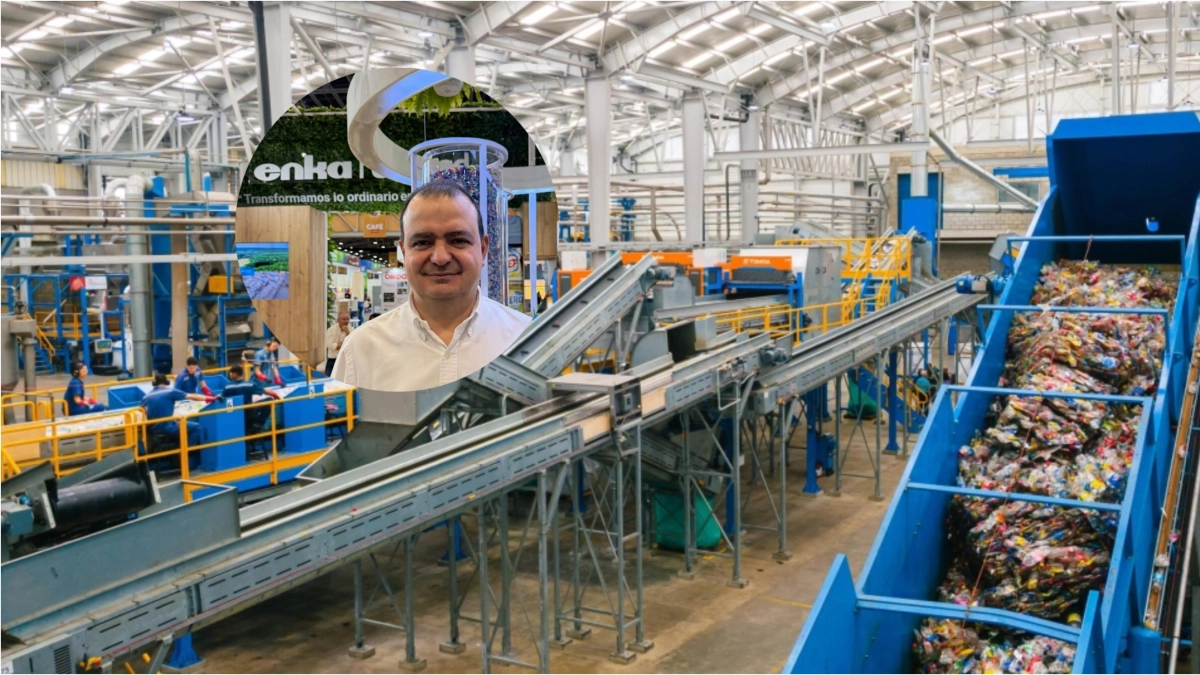
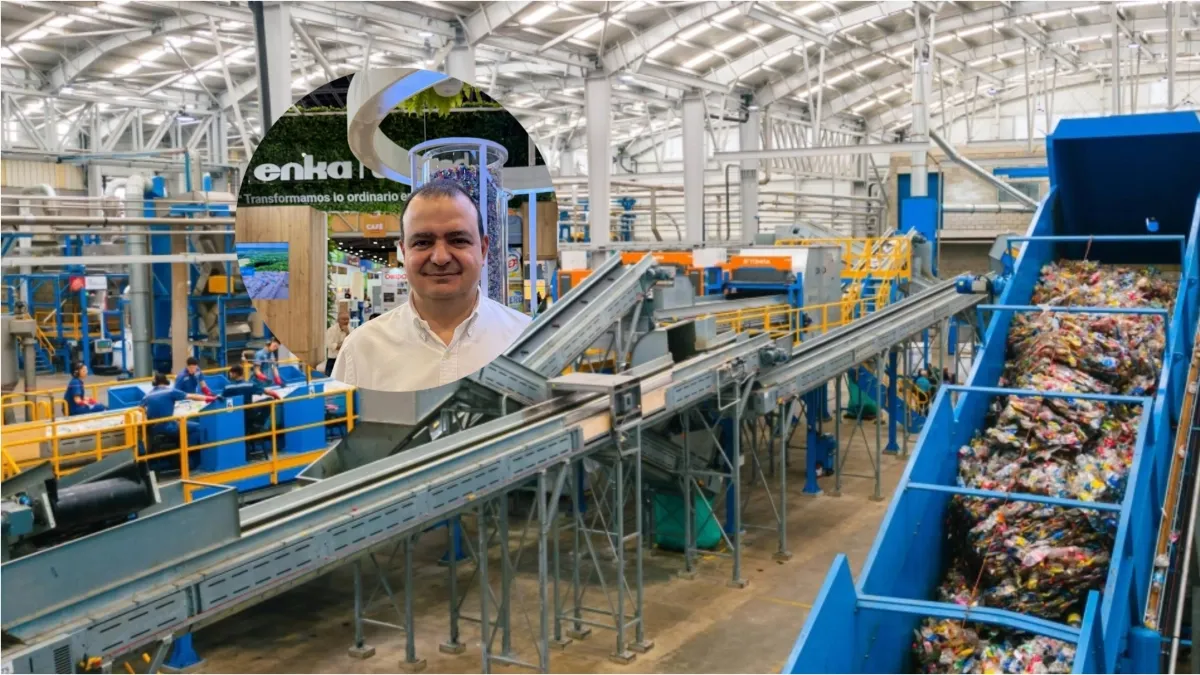
This paradox was laid bare during ColombiaPlast 2026, held at Corferias in Bogotá. According to Jorge López, Vice President of Sales at Enka de Colombia—one of the region’s premier recycling and polymer transformation firms—the primary constraint facing the industry is no longer technological adaptation or market demand, but the sheer complexity and cost of large-scale waste collection.
While Enka’s state-of-the-art facilities boast the capacity to transform over six million PET (polyethylene terephthalate) bottles daily, a significant portion of the country’s discarded plastic remains trapped in regions where traditional freight economics fail. López notes that while collecting and compacting bottles in urban hubs like Medellín is a streamlined process, doing so in geographically challenging territories such as Nuquí, Bahía Solano, Apartadó, or the Amazon basin introduces prohibitive logistical costs.

Without permanent, subsidized, or structurally supported supply chains capable of moving recycled materials out of these remote areas, Colombia’s capacity to scale its exports and fully satisfy growing international deficits for recycled PET and polyethylene remains stifled.
Chronology: The Evolution of Colombia’s Recycling Landscape
To understand where Colombia stands in 2026, it is crucial to retrace the trajectory of its recycling sector over the past two decades. What is today a multi-million-dollar industrial ecosystem began as an informal, fragmented arrangement of grassroots scrap collectors.

- 2002 (The Baseline): At the turn of the century, formal recycling rates for PET bottles in Colombia hovered at a meager 2 percent. Plastic waste was overwhelmingly treated as refuse destined for municipal landfills or natural ecosystems.
- The 2010s (Corporate Commitments and Integration): Spurred by early corporate social responsibility pledges and mounting pressure from multinational brands operating within Latin America, major domestic players began investing heavily in recycling infrastructure. Formal collection networks started expanding across urban centers, integrating thousands of independent recyclers into nascent supply chains.
- Early 2020s (Regulatory Convergence): Voluntary sustainability targets adopted by multinational consumer-goods giants began bleeding into public policy. The Colombian government introduced formal regulations establishing mandatory minimum thresholds for recycled content in packaging, legally binding the broader market to circular economy standards.
- 2024–2025 (Certification and Full-Cycle Innovation): Companies like Enka accelerated technological diversification. Beyond processing clear PET bottles, firms began cracking the code on auxiliary materials, utilizing automated sorting and chemical partnerships (such as Enka’s alliance with Dow) to transform bottle caps and labels into functional polypropylenes and polyethylenes. Enka also secured critical international credentials, including the RecyClass certification, validating the traceability of its non-food grade EKO®PET resins.
- September–October 2026 (ColombiaPlast Milestone): Marking a dramatic leap over 24 years, national PET recycling rates surge to 46 percent. However, industry leaders speaking at ColombiaPlast 2026 signal that the sector has hit a structural ceiling dictated by geography and transport economics, shifting the national debate from industrial capacity to logistical connectivity.
Supporting Data: Scale, Savings, and Industrial Metrics
The quantitative footprint of Colombia’s modern recycling apparatus demonstrates both its immense environmental potential and the sheer magnitude of the missed opportunities caused by logistical isolation.
Enka’s Daily Processing Capacity
- PET Bottle Transformation: Over 6,000,000 bottles processed daily across four specialized industrial plants.
- Material Recovery Reach: Through subsidiary networks like Ekored, collection points penetrate 32 departments and over 900 municipalities, though active throughput in the most remote areas remains sporadic.
- Energy Efficiency: Utilizing recycled PET rather than virgin raw material yields a 92 percent reduction in energy consumption—an energy savings equivalent to the annual power consumption of approximately 600,000 Colombian households.
- Carbon Mitigation: The transformation process slashes CO2 emissions by 72 percent, a carbon offset equivalent to permanently removing more than 21,000 passenger vehicles from urban streets.
Macro-Recycling Growth
- PET Recycling Rate: Climbed from 2% in 2002 to 46% by 2026.
- Total Component Lifecycle: Modern facilities capture more than just the primary bottle body. Labels are successfully converted into recycled polypropylene products (such as motorcycle storage trunks and clothing hangers), while caps are transformed via chemical integration into flexible packaging for household cleaning goods.
Official Responses: Perspectives from Industry Leadership
Addressing the pressing issues at ColombiaPlast 2026, Jorge López offered a candid assessment of the realities governing the polymer market.
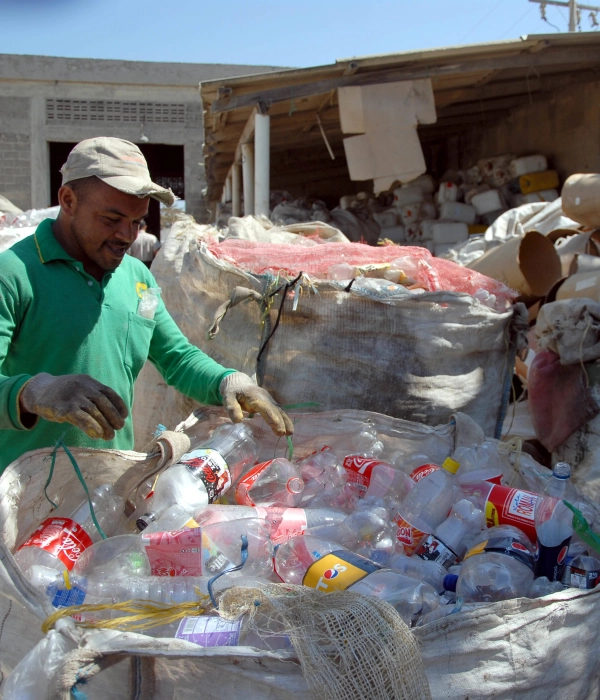
"I believe the grand challenge of this sector continues to be collection," López stated during his address. "If there were greater collection capacity, we could potentially access many more international markets."
Emphasizing the export readiness of Colombian enterprises, López noted that nations across North America and Western Europe are actively grappling with structural deficits of post-consumer resins.

"Right now, there is excess capacity within the country to export," he affirmed.
However, López underscored that sporadic, short-term logistical patches—such as occasional assistance from private air-freight carriers or localized coastal shipping arrangements in San Andrés—are insufficient for building a globally competitive export engine. He called for a coordinated, permanent coalition involving the national government, packaging producers, and private logistics operators.

"It would be wonderful to establish permanent logistical assistance to help extract these materials, even if it has to be done by sea," López remarked, outlining a vision where state incentives match corporate ambition to clear out coastal and jungle-bound waste.
Implications: Economic Horizons and Environmental Imperatives
The hurdles facing Colombia’s circular economy carry profound implications for the nation’s economic development, trade ambitions, and environmental integrity.
1. The Export Opportunity and Global Competitiveness
International markets are increasingly penalizing brands that fail to meet strict ESG (Environmental, Social, and Governance) compliance metrics. With certifications like RecyClass backing Colombian resins, and major multinational clients like Coca-Cola verifying that Enka’s recycled polymers match the mechanical integrity and clarity of virgin plastics, Colombia holds a distinct competitive advantage. Unlocking the logistical chains in remote areas is the single gateway required to convert this industrial capacity into lucrative export streams.
2. Regulatory Compliance vs. Raw Material Deficits
As Colombian environmental legislation tightens—mandating that consumer goods companies incorporate high percentages of recycled materials into their packaging—competition for domestic post-consumer scrap will intensify. If collection networks cannot expand efficiently beyond the major Andean metropolitan areas (Bogotá, Medellín, Cali), domestic manufacturers may face artificial shortages of raw materials, driving up production costs and threatening compliance with national packaging mandates.
3. Biodiversity and Ecosystem Protection
Beyond corporate balance sheets and trade metrics, the failure to establish permanent waste-extraction logistics in regions like the Amazon, Chocó (Nuquí and Bahía Solano), and the Urabá region (Apartadó) carries a devastating ecological toll. Unmanaged plastics in these sensitive biodiversity hotspots routinely breach aquatic ecosystems, choking marine life and degrading pristine rainforests. Solving the logistics of recycling is, therefore, as much an act of wildlife conservation as it is an industrial strategy.
Ultimately, Colombia has proven that it possesses the technological vision, industrial infrastructure, and entrepreneurial drive to lead Latin America’s circular economy. The realization of a truly sustainable, export-oriented polymer market now rests on bridging the final mile—connecting the most isolated corners of the nation to the global movement for a waste-free future.