By Juan Pablo Penagos Ramírez / Political Desk Analysis Published: September 14, 2026
Main Facts
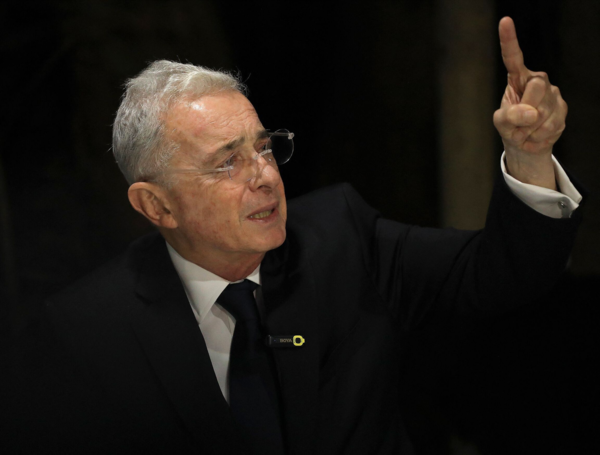
The political landscape of the Colombian right is undergoing a profound and turbulent restructuring. Months after the presidential triumph of Abelardo De La Espriella, the two most influential political forces within his governing coalition—Salvación Nacional and the Centro Democrático—are locked in an intense, highly public battle for ideological hegemony.
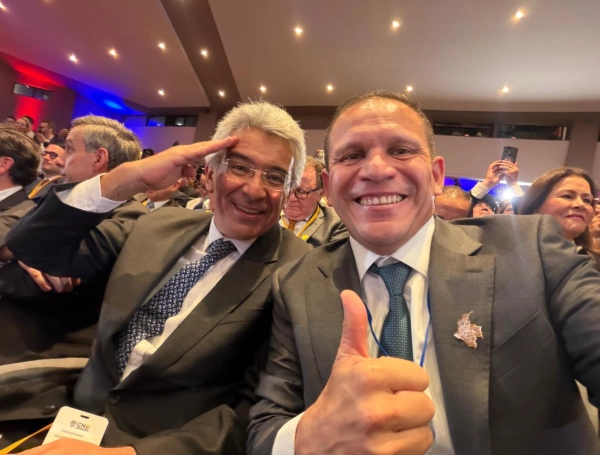
The friction, which has steadily escalated over the past several months, flared up once again following sharp remarks by Enrique Gómez, director of Salvación Nacional. Gómez publicly questioned the ideological purity of the Centro Democrático, characterizing the party founded by former President Álvaro Uribe Vélez as having drifted into "center-left, social-democratic" territory.
This ongoing feud is far more than a mere exchange of political insults; it represents a strategic, high-stakes contest to capture the ideological leadership of Colombia’s conservative movement. With the upcoming regional and local elections of October 2027 rapidly approaching, both parties are aggressively positioning themselves to inherit and mobilize the disillusioned bases of the traditional right, threatening to fracture the very coalition that propelled President De La Espriella to power.
Chronology of a Fractured Alliance
To understand the depth of the current crisis between Salvación Nacional and the Centro Democrático, one must examine the timeline of shifting loyalties and escalating rhetoric that defined the pre- and post-electoral periods:
The Presidential Campaign (Early 2025): While the Centro Democrático struggled to coalesce around a unified, winning narrative during the presidential primary and general election phases, Salvación Nacional positioned itself as an early, fervent supporter of Abelardo De La Espriella. During this period, social media accounts and figures aligned with De La Espriella’s movement began lobbing indirect critiques at Uribe and his party, creating deep-seated resentment within the uribista ranks.
The Legislative Integration Push (Late 2025/Early 2026): In a bid to consolidate legislative power ahead of congressional elections, Enrique Gómez reportedly visited former President Álvaro Uribe at his Llanogrande estate. Gómez sought to merge Salvación Nacional’s electoral lists with those of the Centro Democrático. Despite these negotiations, Salvación Nacional ran independently, ultimately securing a modest five curules (seats) in Congress. However, due to their strategic alignment with the incoming executive, they punched well above their weight, capturing critical legislative leadership posts, including the presidencies of the Senate’s First and Third Committees, the Intelligence and Counterintelligence Commission, and a seat on the National Electoral Council (CNE).
The Presidential Triumph of Abelardo De La Espriella (Mid-2026): De La Espriella’s victory fundamentally redrew the political map of the Colombian right. While the Centro Democrático retained its status as the largest officialist bloc in Congress, Salvación Nacional leveraged its early backing of the president to aggressively challenge the Centro Democrático’s historical monopoly over the conservative electorate.
Late July 2026: Salvación Nacional Senator Germán Rodríguez poured fuel on the fire by declaring publicly: "In this country right now, there is only one true right-wing party, and that is Salvación Nacional. The Centro Democrático is center-right, and that’s not bad… but those are distinct points of view."
The September 2026 Flare-Up: Enrique Gómez intensified his offensive, openly mocking his coalition partners: "Many colleagues in the Centro Democrático look uncomfortable in the new skin of their party—the skin of a centrist, center-left, social-democratic party." Gómez also resurrected past criticisms of Uribe’s economic legacy, accusing his administrations of fostering a "rampant growth of the State."
Supporting Data and Institutional Dynamics
The structural weight of both political movements reveals a complex dynamic of legislative distribution and electoral positioning:
Legislative Footprint: The Centro Democrático remains the dominant institutional force on the right in terms of raw parliamentary numbers. However, Salvación Nacional has maximized its strategic leverage within the De La Espriella administration. By securing pivotal committee presidencies (Senate First and Third Committees) and representation in the CNE, Salvación Nacional wields influence disproportionate to its five congressional seats.
Past Ties and Personal History: The feud carries a heavy personal subtext. Centro Democrático leaders have been quick to point out the hypocrisy of Gómez’s attacks, noting his recent pilgrimage to Uribe’s home to beg for list-coalition. Furthermore, the uribismo camp highlights that Nicolás Gómez—Enrique Gómez’s son—previously worked within the Centro Democrático, where he was reportedly "received and treated with generosity and respect," and now serves as secretary to President Abelardo De La Espriella.
Electoral Realignment: Political analysts point to a shifting electorate. According to data from recent electoral cycles, a substantial segment of conservative and right-wing voters felt unrepresented by the Centro Democrático’s traditional machinery during the presidential race, paving the way for alternative formations to stake their claim.
Official Responses
The war of words has triggered sharp rebuttals from the leadership of both political organizations, exposing deep personal and ideological animosities.
Gabriel Vallejo, director of the Centro Democrático, did not mince words when responding to Enrique Gómez’s latest provocations:
"The moral and ideological superiority of certain political sectors that call themselves the ‘new right’ is not only obnoxious and repellent, but it contributes nothing to moving Colombia forward or solving citizens’ problems. At the end of the day, they end up being identical to those they claim to oppose politically."
Vallejo’s statement underscores the exasperation within the uribista camp, who view Salvación Nacional’s rhetoric not as a constructive debate within the coalition, but as an opportunistic campaign of poaching and political sabotage.
On the other side, figures like Senator Germán Rodríguez doubled down on the narrative that the Centro Democrático has abandoned true conservative principles in favor of programmatic moderation. Salvación Nacional defends its posture as an ideological necessity, arguing that true conservative governance requires a smaller state, uncompromised free-market principles, and a clear break from what they term "palliative social democracy."
Implications for the Future of the Colombian Right
Political experts consulted for this analysis emphasize that this intra-coalition warfare is far from an isolated squabble; it carries profound structural implications for the governance of President Abelardo De La Espriella and the stability of the Colombian right.
1. The 2027 Regional Elections as the Ultimate Battleground
According to political scientist Alejandro Chala, the core motivation behind this schism is the upcoming territorial and regional elections in October 2027.
"This has a tremendous amount to do with the reorganization process taking place within the new rights and uribismo following the triumph of Abelardo De La Espriella. Both political movements are actively competing for direction and leadership," Chala explains.
He adds: "All these movements are trying to hunt down militants disillusioned with uribismo and start building their own bases precisely with the aim of accessing local and regional power spaces."
2. The Danger of Fragmentation
Political communication specialist Carlos Arias notes that while this friction is a natural exercise for an evolving electorate, it carries a dangerous strategic blind spot.
"Salvación Nacional, without being the president’s official party, was perhaps the first to support him and is now showing its teeth to reaffirm that mandate from the electorate," Arias points out.
However, external observers warn that if Salvación Nacional, the Centro Democrático, and emerging factions like Defensores de la Patria continue to cannibalize each other’s bases, they risk handing an opening to the political left. Despite suffering a major national blow with the defeat of Iván Cepeda in the presidential race, the left is already quietly organizing its counter-offensive. Evidence of this strategic regrouping was put on display recently when Gustavo Petro and former Bogotá Mayor Claudia López held high-profile closed-door meetings to plot a unified front for the regional contests.
3. Challenges for President De La Espriella
For the administration of Abelardo De La Espriella, the bickering within his own legislative backbone poses a governance risk. While a divided right gives the president maneuvering room to act as a suprapartisan arbiter, persistent open warfare in Congress could paralyz his reform agenda, bogging down critical legislative initiatives in petty partisan turf wars.
As the road leads toward the 2027 departmental and municipal ballots, the fragile truce of the Colombian right is fraying. Whether Salvación Nacional and the Centro Democrático can forge a pragmatic coexistence or tear each other apart in the battle for ideological purity will ultimately determine whether the conservative era inaugurated by De La Espriella solidifies into a lasting hegemony or collapses under the weight of its own internal contradictions.
Main Facts BOGOTÁ, Colombia – A new political chapter commenced this Monday, July 20, as the Colombian Congress was officially installed for the 2026-2030 legislative period. This inauguration signals the dawn of a new era…
By Juan Pablo Penagos Ramírez (Redacción Política) / Adapted and Expanded for International Coverage Published: September 14, 2026 Main Facts In a hard-hitting address before the Second Commission of the Senate on Monday, September 14,…
By Juan Pablo Penagos Ramírez Political Desk Updated: September 11, 2026 Main Facts Pestered by years of public bitter rivalries, accusations of corruption, ideological clashes, and a history of mutual betrayal, former Colombian President Gustavo…