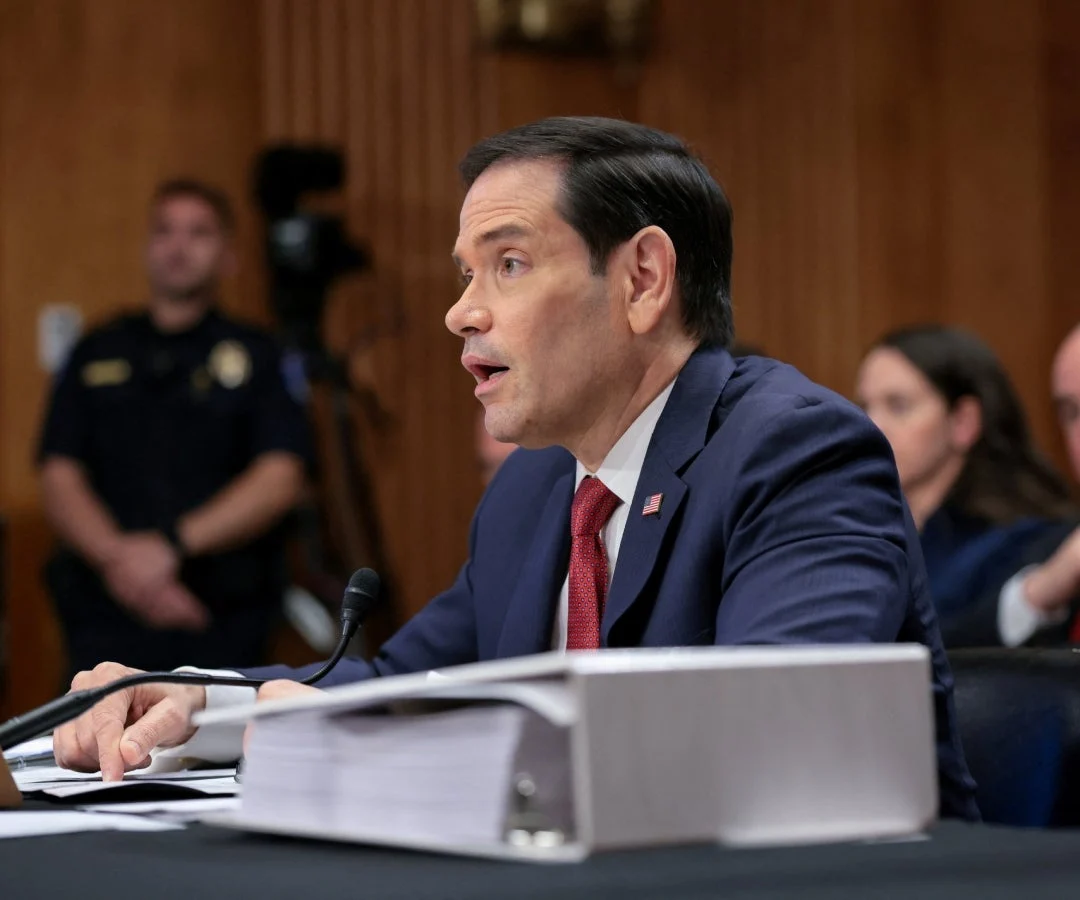
QUITO, ECUADOR — In a significant bolstering of bilateral relations and regional security cooperation, United States Secretary of State Marco Rubio announced a sweeping package of financial aid, military equipment, and targeted sanctions during a diplomatic visit to Ecuador on Wednesday. The visit underscored the deepening strategic alignment between Washington and the administration of Ecuadorian President Daniel Noboa, focusing heavily on dismantling transnational cartels and countering rising criminal insurgencies in South America.
Secretary Rubio’s diplomatic stop in Quito is part of a broader three-nation Latin American tour. The itinerary specifically targets countries whose leaders maintain a close ideological and strategic alignment with U.S. foreign policy objectives under President Donald Trump’s administration. The overarching goal of the tour is to reaffirm U.S. leadership, enhance security partnerships, and aggressively counter the operational capabilities of transnational criminal syndicates that threaten both hemispheric stability and U.S. national security.
Following extensive closed-door discussions with President Noboa and high-ranking security officials, Rubio emphasized that Washington views the security crisis in Ecuador not merely as a domestic law enforcement issue, but as a regional security threat demanding a concerted, high-intensity international response.
Main Facts
The high-stakes diplomatic visit yielded several major policy announcements, financial commitments, and punitive measures aimed at neutralizing criminal networks operating within Ecuador:
- Financial Assistance: Secretary Rubio announced that the U.S. State Department will formally request $45 million in additional security funding from the U.S. Congress. These funds are explicitly earmarked to strengthen Ecuador’s military and law enforcement capabilities in their ongoing campaign against drug trafficking organizations.
- Anti-Illegal Mining Initiative: Alongside the primary security package, Rubio unveiled a $10 million initiative dedicated specifically to combating illegal mining operations—a lucrative illicit revenue stream heavily exploited by armed criminal factions.
- Naval and Maritime Hardware: The United States committed to delivering critical maritime assets to the Ecuadorian Navy, including a 110-foot Coast Guard patrol boat and five high-speed interceptor vessels. These additions complement the seven interceptor boats already transferred to Ecuador earlier this year to interdict drug shipments along Pacific maritime routes.
- Terrorist Designation: The U.S. government officially designated the notorious Ecuadorian street gang "Los Tiguerones" as a Foreign Terrorist Organization (FTO). This designation follows similar counterterrorism measures implemented last year against other major Ecuadorian criminal syndicates.
- Targeted Sanctions: In a dual-pronged approach targeting both violent cartels and systemic corruption, the State Department imposed strict visa and financial sanctions on seven former Ecuadorian government officials implicated in severe bribery and corruption scandals.
Chronology
The events leading up to and unfolding during Secretary Rubio’s pivotal visit to Ecuador reflect a rapid escalation of bilateral security coordination:
- Early 2024: Ecuador experiences an unprecedented wave of domestic violence, culminating in a dramatic armed takeover of a live broadcast at TC Televisión in Guayaquil by masked gang members. The incident prompts President Noboa to declare an "internal armed conflict" and mobilize the military against transnational criminal groups.
- Mid-to-Late 2024: Washington and Quito quietly expand intelligence-sharing frameworks. The U.S. State Department begins implementing initial terrorist designations against prominent Ecuadorian gangs, laying the groundwork for deeper institutional cooperation.
- Early 2025: The administration of President Donald Trump prioritizes hemispheric security and the containment of drug trafficking cartels. Secretary Marco Rubio plans a strategic three-nation tour of Latin America, prioritizing leaders aligned with U.S. counter-narcotics and regional dominance objectives, with Ecuador designated as a primary stop.
- Wednesday (Day of Visit):
- Morning: Secretary Rubio arrives in Quito and engages in bilateral meetings with President Daniel Noboa, defense ministers, and law enforcement heads.
- Midday: The U.S. State Department officially designates "Los Tiguerones" as a Foreign Terrorist Organization, citing their involvement in narco-trafficking and high-profile acts of domestic terror.
- Afternoon: During a joint press appearance, Rubio announces the $45 million Congressional funding request, the $10 million illegal mining initiative, the transfer of naval patrol assets, and sanctions against seven former Ecuadorian officials.
Supporting Data
To contextualize the urgency of Secretary Rubio’s announcements, security analysts point to the profound evolution of Ecuador’s criminal landscape over the past half-decade. Once considered an island of peace nestled between two of the world’s largest cocaine producers—Colombia and Peru—Ecuador has rapidly transformed into a vital global logistics hub for international drug trafficking syndicates.
- Geographic Vulnerability: Deep-water ports in cities such as Guayaquil and Esmeraldas are heavily exploited by transnational cartels to ship multi-ton quantities of cocaine hidden within containerized cargo destined for North America and European ports.
- The Scale of "Los Tiguerones": Originally emerging as a local prison gang and extortion racket in the coastal province of Esmeraldas, Los Tiguerones evolved into a highly militarized criminal enterprise. The group has forged alliances with foreign cartels, engaging in contract killings, arms trafficking, extortion, and brazen acts of public terrorism designed to intimidate the Ecuadorian judiciary and state institutions.
- Maritime Interdiction Metrics: The infusion of U.S. maritime assets builds upon existing counter-narcotics operations. Earlier this year, the Ecuadorian Navy received seven interceptor vessels, which have already contributed to record-breaking maritime seizures along the country’s extensive coastline. However, naval commanders have consistently noted a deficit in long-range patrol capabilities—a gap that the newly pledged 110-foot Coast Guard cutter aims to fill.
- Corruption Metrics: Transparency International and domestic anti-corruption watchdogs have long highlighted how systemic corruption within judicial, legislative, and law enforcement branches has facilitated the growth of organized crime in Ecuador. The sanctioning of seven former officials represents a direct effort by Washington and Quito to purge compromised elements from state institutions.
Official Responses
The diplomatic mission and its associated announcements drew strong reactions from both U.S. and Ecuadorian officials, who emphasized the shared stakes involved in confronting regional cartel networks.
Speaking directly to the nature of the threat, Secretary Rubio articulated a decisive shift in how Washington categorizes and responds to modern Latin American criminal organizations:
"Esto no son grupos comunes. Obviamente participan en crimen común, pero tienen capacidad terrorista a nivel de la región, y eso hay que enfrentarlo. Eso hay que desmantelarlo, eso hay que derrotarlo, y nosotros estamos comprometidos a eso," declared Secretary Rubio during the joint press briefing in Quito.
("These are not ordinary groups. Obviously they engage in common crime, but they possess regional-level terrorist capabilities, and that must be confronted. That must be dismantled, that must be defeated, and we are committed to that.")
Emphasizing the financial mechanism behind the security strategy, Rubio added: "Le vamos a pedir al Congreso norteamericano US$45 millones adicionales para seguir contribuyendo a este esfuerzo de desmantelar estos grupos y acabar con ellos para siempre." ("We are going to ask the U.S. Congress for an additional $45 million to continue contributing to this effort to dismantle these groups and finish them off for good.")
President Daniel Noboa’s administration welcomed the announcements as a vital validation of Ecuador’s domestic security policies. Since taking office, Noboa has staked his political capital on an uncompromising stance against criminal gangs, utilizing emergency powers and constitutional measures to deploy the Armed Forces into the streets and prisons. Ecuadorian officials noted that the U.S. designation of Los Tiguerones as a terrorist organization provides crucial international legal instruments—such as the ability to freeze assets, prosecute financial facilitators, and share advanced intelligence—that will severely restrict the gang’s operational mobility.
Furthermore, Ecuador’s Ministry of Foreign Affairs expressed appreciation for the measures taken against corrupt former officials, framing institutional integrity as a non-negotiable prerequisite for winning the war against organized crime.
Implications
The commitments made by Secretary Rubio carry profound geopolitical, legal, and operational implications for Ecuador and the broader Andean region.
1. Enhanced Legal and Financial Warfare
The designation of Los Tiguerones as an FTO under U.S. law goes far beyond symbolic condemnation. It subjects the organization and its financial backers to stringent U.S. counterterrorism statutes. Financial institutions globally that process transactions in U.S. dollars—a currency officially adopted by Ecuador—must comply with asset-freezing mandates regarding designated entities. This effectively cuts off the gang’s access to international banking networks and money-laundering channels.
2. Deepening U.S. Military and Intelligence Footprint
The provision of $45 million in congressional funding, combined with naval hardware and the separate illegal mining initiative, signals a permanent institutional entrenchment of U.S. security assistance in Ecuador. For years following the closure of the U.S. Forward Operating Location in Manta in 2009, bilateral military cooperation had experienced periods of stagnation. Rubio’s visit signals a decisive return to close operational integration, likely involving expanded joint intelligence-sharing, tactical training, and border security coordination.
3. Regional Domino Effect
By focusing his diplomatic tour on nations closely aligned with Washington’s strategic priorities, Secretary Rubio is actively seeking to construct a unified regional front against transnational crime. As Ecuador receives advanced naval assets and counterterrorism support, criminal organizations are increasingly pressured within its borders. This dynamic may trigger a "balloon effect," pushing cartel operatives into neighboring nations like Colombia and Peru, thereby necessitating the broader regional security architecture that the U.S. State Department is working to forge.
4. Domestic Political Stakes for President Noboa
For President Daniel Noboa, tangible backing from the United States serves as a major political endorsement ahead of future electoral cycles. By securing millions in new aid and high-profile terrorist designations, Noboa can present himself to the Ecuadorian electorate as an effective statesman capable of marshalling global superpowers to restore domestic peace, law, and order. However, heightened involvement by Washington also carries domestic sensitivities, requiring the Noboa administration to carefully balance national sovereignty against the necessity of foreign security assistance.
As the U.S. Congress reviews the $45 million funding request and the newly assigned naval assets prepare for active deployment, the security apparatus in Quito stands poised to enter a new, highly intensified phase in its ongoing campaign to dismantle the syndicates threatening the nation’s democratic stability.