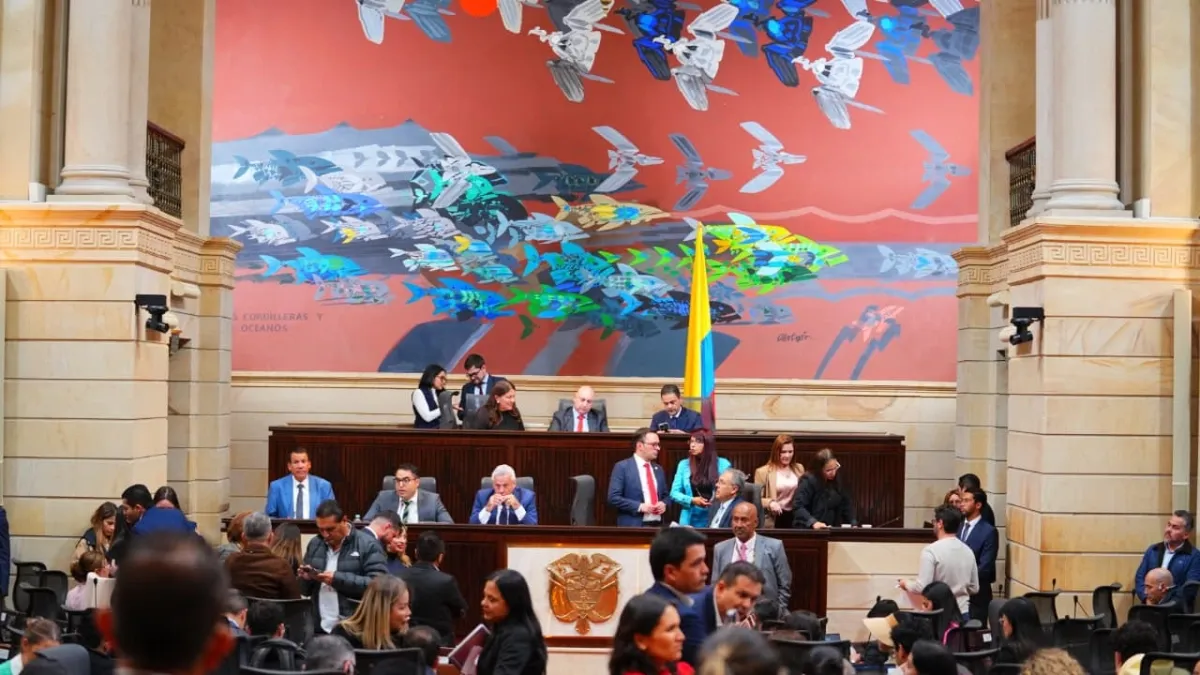
As the Colombian Congress enters the final stretch of debates for the 2027 General Budget, a critical disconnect persists: the government’s ambitious $635 trillion COP spending plan remains decoupled from its highly anticipated "Rescue Law," leaving markets and fiscal analysts concerned about the country’s long-term economic consistency.
The Core Dilemma: Budgeting in the Dark
The Colombian legislative branch is currently navigating the most consequential fiscal debate of the year. With a proposed General Budget of the Nation (PGN) for 2027 reaching approximately 635 trillion pesos, the pressure on the government to demonstrate fiscal responsibility is at an all-time high. However, the process is clouded by a significant structural gap: the absence of the government’s proposed "Rescue Law," which is slated for introduction in October.
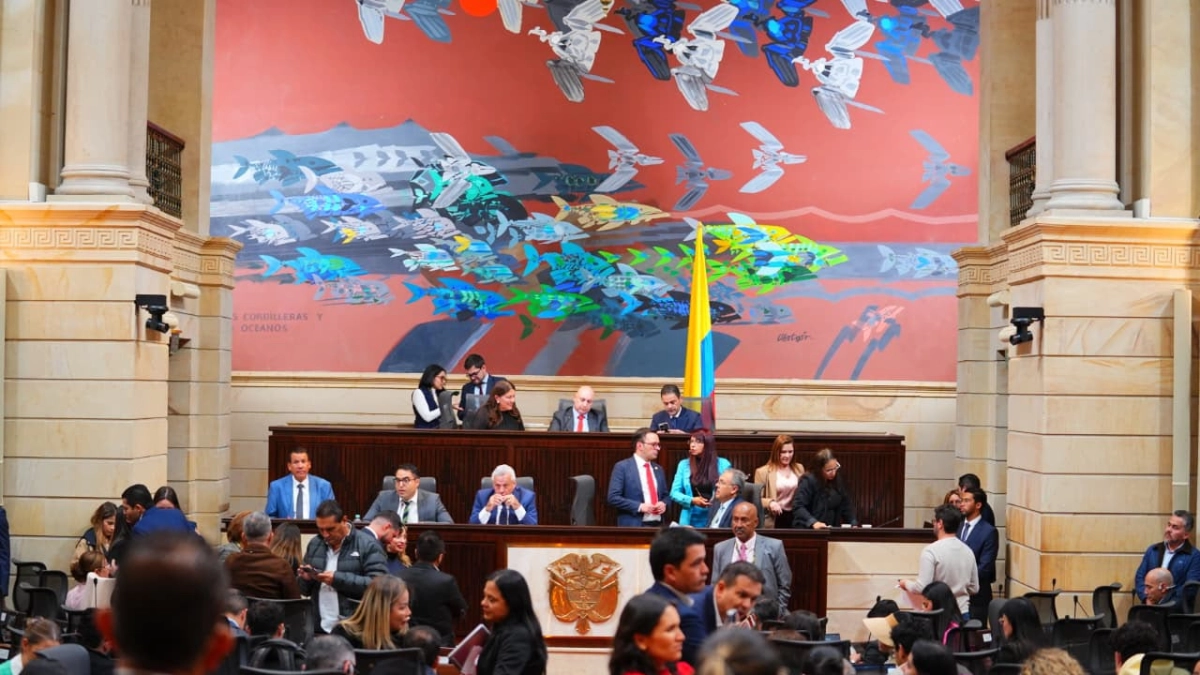
The legislative clock is ticking. Having cleared the initial hurdles in the joint economic commissions of the Senate and the House, the budget must reach final approval by October 20. This deadline forces a paradoxical situation where Congress is being asked to authorize nearly 635 trillion pesos in spending without a clear roadmap of how the government intends to generate the savings or structural reforms required to bridge the deficit and satisfy massive financing needs.
Economists and market analysts argue that approving this budget without a granular understanding of the "Rescue Law" is equivalent to signing a blank check. The lack of visibility into the government’s fiscal strategy is generating uncertainty, as the current budget proposal—characterized by high debt service obligations—requires a level of revenue certainty that is currently missing.

Chronology of a Fiscal Crossroads
The path to the 2027 budget has been marked by a series of technical and political maneuvers that have left little room for error:
- September 2026: The joint economic commissions approve the initial budget ponencia. The discussion moves to the plenaries of the Senate and House.
- Late September 2026: Market experts, including Luis Fernando Mejía, president of Lumen Economic Intelligence, raise alarms regarding the "sequence and fiscal consistency" of the government’s approach.
- Early October 2026 (Expected): The executive branch is scheduled to unveil the "Rescue Law," a legislative initiative intended to address the structural deficit.
- October 20, 2026: The statutory deadline for the Congress to pass the budget. If the legislative branch fails to do so, the government is empowered to adopt the budget by decree.
- Post-October 2026: The implementation phase, where the government must reconcile the spending authorizations with the actual revenue collected via the Rescue Law and other tax initiatives.
Supporting Data: The Anatomy of a Stretched Budget
The composition of the 2027 PGN reveals a precarious balancing act. An in-depth analysis by the Institute of Political Science (ICP) highlights that the significant increase in the budget compared to 2026 is largely driven by debt servicing, which has ballooned from 100.5 trillion to 155.4 trillion pesos.

The Debt Burden
If one strips away the debt service component, the budget’s growth is a more modest 5.3 percent. More concerning, however, is the reduction in investment capital, which is projected to drop from 89.5 trillion to 87 trillion pesos. This shift signals a potential contraction in the government’s ability to stimulate growth through public works and social development programs.
Financing and Liquidity Needs
The reliance on capital resources is staggering. Out of the 287 trillion pesos listed as capital resources, a significant portion is dedicated to the refinancing of existing obligations. Total credit disbursements are programmed to hit 238.6 trillion pesos, split between 150.9 trillion in domestic credit and 87.7 trillion in external funding.

Furthermore, the projected current revenue shows a 6.6 percent decline compared to the 2026 forecast, exacerbating the need for the "Rescue Law" to act as a significant revenue generator or a mechanism for deep expenditure cuts.
Official Responses and Expert Perspectives
The government, led by Minister of Finance Miguel Gómez, faces the difficult task of defending a budget that markets view as overly optimistic.

The Expert View
Luis Fernando Mejía has been vocal about the risks inherent in the current trajectory. "The problem is not necessarily the budget in isolation, but that it must form part of a credible, multi-year plan to reduce the deficit and stabilize debt levels," Mejía noted. He argues that before the final vote, the administration should disclose the "full fiscal content" of the Rescue Law: the specific amount of savings, the sources of these savings, the timeline for implementation, and the projected impact on the deficit.
Henry Amorocho, a professor at the Universidad del Rosario, points to specific areas where the government could find relief. He suggests that the state must address the proliferation of service-based contracts and unnecessary goods procurement. He also advocates for a more aggressive stance against tax evasion and smuggling, which could theoretically compensate for some of the revenue shortfalls.

The Problem of Rigidity
A significant hurdle identified by the ICP is that approximately 85 percent of the budget is "inflexible." Mandatory transfers, pension obligations, health sector commitments, debt interest payments, and existing subsidies lock the majority of the budget, leaving the government with very little room to maneuver if revenues underperform.
Strategic Implications: Debt Management and Future Stability
Beyond the immediate budget numbers, the government’s strategy for managing its debt profile is under scrutiny. Mejía warns against the temptation to reduce the cost of financing at the expense of increasing "refinancing risk."

"The government must prioritize extending the average life of its debt," Mejía explains. "It is essential to avoid the concentration of maturity dates in the short term and to maintain a balanced composition between internal and external debt, as well as multilateral financing."
The "Authorization" Trap
There is a common misconception that the budget represents a mandatory spending list. In reality, it is an authorization. If tax collection improves or if debt management operations reduce the need for cash, the government does not necessarily have to issue the full amount of debt contemplated in the budget. However, experts warn that the administration cannot build its fiscal strategy on the "hope" that it will not need to utilize the full borrowing authority. Relying on such assumptions creates an environment of instability that investors are unlikely to reward.

Conclusion: A Window of Opportunity
The final weeks of October will be decisive. The simultaneity of the budget’s final debate and the unveiling of the Rescue Law creates a unique, if pressurized, window of opportunity. If the government can present a plan that is both technically sound and politically viable—one that outlines clear, permanent spending cuts and a credible path to deficit reduction—it may be able to restore confidence in the fiscal trajectory of the nation.
Failure to provide this clarity, however, could result in a budget that is legally approved but economically hollow, potentially triggering higher borrowing costs and a loss of market confidence. As the Colombian Congress prepares for the final vote, the eyes of international analysts and domestic stakeholders remain fixed on the Ministry of Finance, waiting to see if the government can indeed provide the "rescue" the nation’s finances so urgently require.