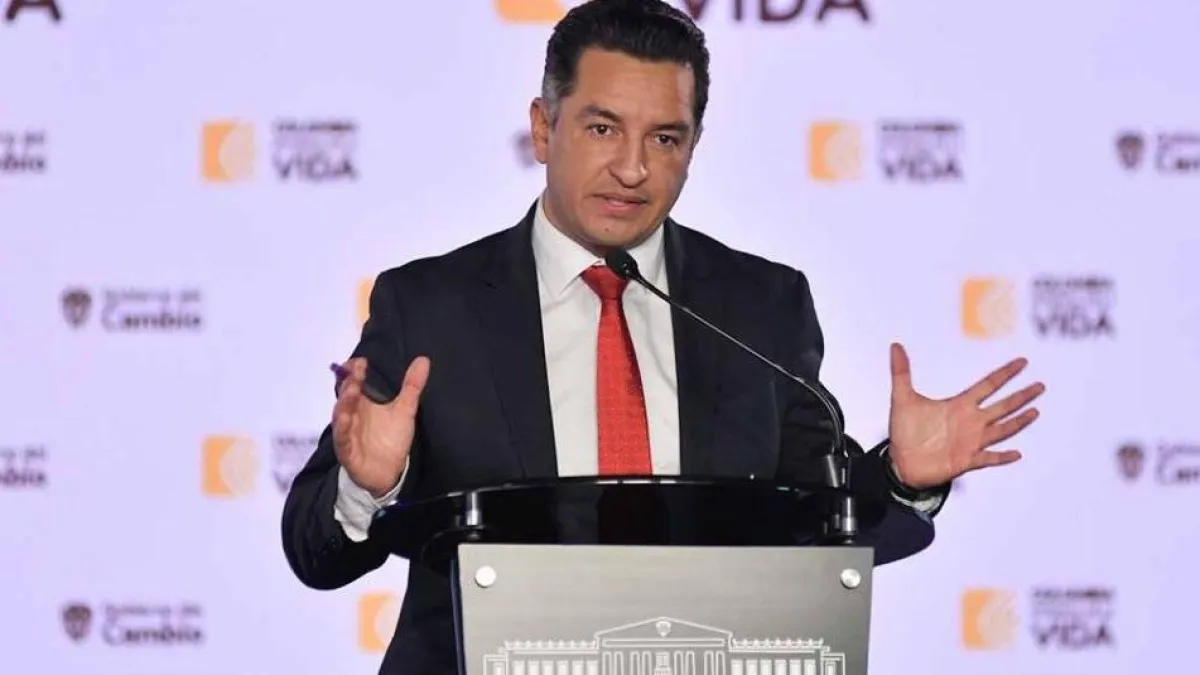
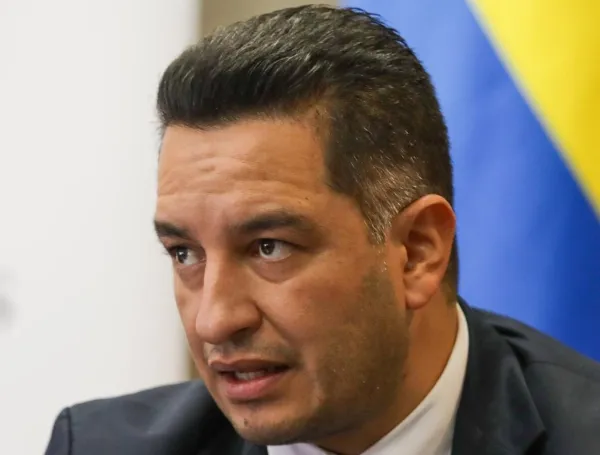
Bogotá, Colombia – July 21, 2026 – In a significant political development just weeks before a change of presidential guard, Andrés Idárraga, the Secretary of Transparency of the Presidency of Colombia, submitted his "irrevocable" resignation today, July 21, 2026. His departure, effective August 6, 2026, strategically precedes the inauguration of President-elect Abelardo De La Espriella, scheduled for August 7, marking the end of his tenure as a key official in President Gustavo Petro’s "Government of Change."
Idárraga’s resignation closes a chapter that began with the ambitious anti-corruption agenda of the Petro administration in 2022. His tenure, characterized by a commitment to institutional integrity, now concludes with a reflective statement hinting at the complexities of governance. In his resignation letter, shared publicly, Idárraga expressed profound gratitude for the trust placed in him and the opportunity to serve within the outgoing administration. "I express my sincere gratitude for the trust placed in me, and for the opportunity to be part of this Government of Change. I wish the greatest success to the Dapre [Administrative Department of the Presidency] and the Secretariat of Transparency in the fulfillment of their institutional mission," he wrote.
Further elaborating on his decision via his X (formerly Twitter) account, Idárraga highlighted his unique position as one of the few officials to serve throughout the entire Petro presidency. "I complete the entire government term in the position of Secretary of Transparency. I leave on August 6 as one of the (few) officials who remained by President Petro’s side throughout the government, to whom I deeply thank for his trust, the opportunity to accompany him in government, and his teachings," he stated. This emphasis on his full-term service underscores a rare consistency in an administration that, like many, has experienced its share of cabinet reshuffles and high-level departures.
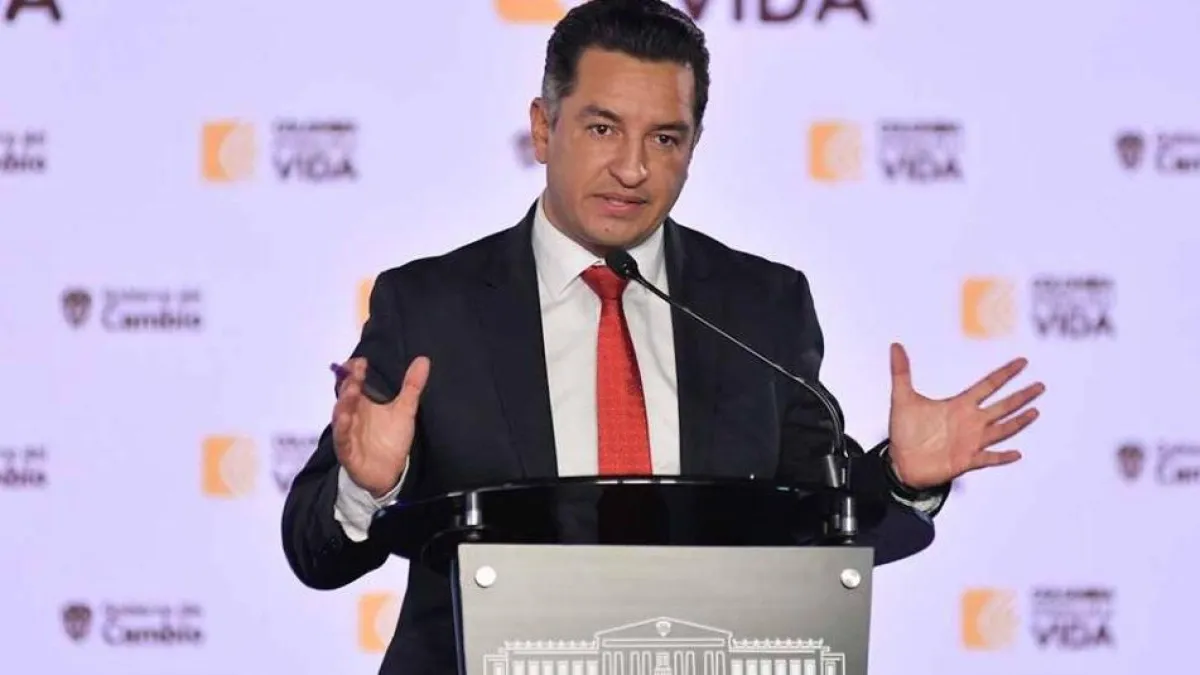
His parting words also carried a deeper, more introspective tone, suggesting a nuanced understanding of his role and its limitations. Idárraga affirmed that he departs "with a critical and self-critical vision of the exercise of government," coupled with "the satisfaction of duty fulfilled." These phrases invite interpretation, potentially hinting at the inherent challenges and perhaps unfulfilled aspirations in the arduous battle against corruption within the labyrinthine corridors of power. His departure signals not just a change in leadership for a crucial anti-corruption body, but also provides a moment for reflection on the successes and hurdles encountered during the "Government of Change’s" commitment to transparency.
Chronology of a Tenure: Andrés Idárraga’s Path in the Petro Administration
Andrés Idárraga’s journey within the Petro administration commenced in August 2022, shortly after President Gustavo Petro took office. His appointment as Secretary of Transparency was a cornerstone of Petro’s promise to usher in an era of unprecedented integrity and accountability, a central tenet of his "Government of Change" platform. The Secretariat of Transparency, a vital entity within the executive branch, is tasked with designing, coordinating, and implementing anti-corruption policies, fostering a culture of transparency, and preventing illicit activities within public administration. Idárraga, with a background likely steeped in legal and public policy expertise, was seen as a fitting choice to lead this critical charge.
Initial Mandate and Challenges
Upon his appointment, Idárraga was thrust into an environment ripe with public expectation for profound change. The Petro government had campaigned heavily on combating systemic corruption, which has long plagued Colombian institutions and eroded public trust. Idárraga’s initial mandate was broad and ambitious: to strengthen mechanisms for public information access, promote ethical conduct among public servants, and actively detect and report potential acts of corruption. This involved working closely with various ministries, state entities, and civil society organizations to embed transparency principles across the entire governmental apparatus.
However, the path of a transparency secretary is rarely smooth. The office frequently faces resistance from entrenched interests, bureaucratic inertia, and the sheer complexity of untangling decades-old corruption networks. Throughout his tenure, Idárraga and his team would have been involved in reviewing government contracts, monitoring public procurement processes, and advocating for legislative reforms aimed at increasing accountability. While specific initiatives from his office are not detailed in the original report, a typical transparency agenda would include developing digital platforms for public oversight, training programs for public officials on ethics, and collaborating with international bodies on anti-corruption best practices. The "critical and self-critical vision" he references in his resignation could reflect the formidable nature of these challenges and the often-slow pace of institutional transformation.

The Interim Role as Justice Minister
A notable interlude in Idárraga’s tenure came between November 2025 and February 2026, when he temporarily assumed the role of acting Minister of Justice. This temporary appointment followed a period of instability within the Justice Ministry. The original article mentions that he stepped in after César Julio Valencia, a former Supreme Court President, declined the government’s offer to replace the then-incumbent, Eduardo Montealegre. This sequence of events suggests a period of difficulty for the Petro administration in securing a permanent head for such a crucial portfolio.
Idárraga’s interim appointment to the Ministry of Justice, even if brief, speaks volumes about the trust President Petro placed in him and his perceived competence. The Justice Ministry is a pivotal department, responsible for judicial policy, legislative reforms, and the administration of justice. For a Secretary of Transparency to temporarily lead this ministry underscores the Petro government’s commitment to ensuring that even in an acting capacity, the ministry would be guided by principles of integrity and good governance. During this period, Idárraga would have overseen critical legal frameworks, potentially engaging with high-profile judicial matters and contributing to the government’s broader legislative agenda, all while maintaining his primary responsibilities for transparency. This dual role undoubtedly expanded his understanding of the intricate relationship between executive power, legal institutions, and the persistent fight against corruption.
Supporting Data and Context: Colombia’s Transparency Landscape
Andrés Idárraga’s resignation occurs against a backdrop of ongoing efforts and persistent challenges in Colombia’s fight against corruption. The Secretariat of Transparency is not merely a symbolic office; it is a strategic entity designed to fortify democratic institutions by ensuring public resources are managed with integrity and that government actions are open to public scrutiny. Understanding its role, and the broader context of anti-corruption efforts in Colombia, illuminates the significance of Idárraga’s departure.
The Institutional Importance of the Secretariat of Transparency
The Secretariat of Transparency operates under the direct purview of the Presidency, granting it a unique position of influence and access. Its mandate typically includes:
- Policy Formulation: Designing national anti-corruption and transparency policies.
- Coordination: Ensuring these policies are implemented across all government branches and agencies.
- Prevention: Developing mechanisms to prevent corruption, such as ethical guidelines, conflict-of-interest rules, and whistleblower protection.
- Public Access: Facilitating citizen access to public information and promoting civic oversight.
- International Cooperation: Engaging with international bodies and conventions to align Colombia’s anti-corruption efforts with global best practices.
The effectiveness of this office hinges significantly on the political will of the sitting president and the credibility of its leader. Idárraga’s sustained presence throughout the Petro administration suggests he enjoyed this confidence, positioning him as a central figure in the government’s integrity agenda.
Transparency and Anti-Corruption Landscape in Colombia
Colombia has historically grappled with high levels of corruption, which has affected various sectors, from infrastructure and healthcare to electoral processes and security. International indices, such as Transparency International’s Corruption Perception Index (CPI), consistently highlight the country’s ongoing struggle. While Colombia has made some progress over the years, perceived corruption remains a significant barrier to development and social trust. The public often expresses deep skepticism regarding the integrity of political institutions, making the role of a transparency secretary particularly arduous yet crucial.
For instance, recent reports by organizations like Transparency for Colombia (which was linked in the original article’s "LEA TAMBIÉN" section) often reveal the scale of the challenge. Such reports frequently detail instances of irregularities in public contracting, illicit campaign financing, and the penetration of organized crime into state structures. These findings underscore the immense pressure and responsibility placed on officials like Idárraga to enact meaningful change in a deeply complex environment.
The "Government of Change’s" Anti-Corruption Agenda
President Gustavo Petro’s "Government of Change" came to power on a strong platform of social justice and anti-corruption. Petro’s rhetoric consistently emphasized the need to dismantle corrupt networks, recover stolen public funds, and restore faith in democratic institutions. The appointment of Idárraga, and his subsequent long tenure, was a direct reflection of this commitment.
The administration’s anti-corruption agenda likely focused on several key areas:
- Strengthening Oversight Bodies: Empowering control entities like the Attorney General’s Office and the Comptroller General’s Office.
- Digitalization of Public Services: Reducing opportunities for corruption by minimizing human interaction in administrative processes.
- Public Procurement Reforms: Enhancing transparency in government contracts to prevent kickbacks and favoritism.
- Citizen Participation: Creating avenues for citizens to report corruption and participate in oversight.
Idárraga’s "critical and self-critical vision" could be a testament to the internal struggles faced in translating these ambitious policy goals into tangible results, often encountering systemic resistance or the sheer scale of the problem. It highlights the often-frustrating reality of institutional reform in a country deeply scarred by corruption.
Presidential Transition Dynamics
The timing of Idárraga’s resignation, effective just one day before the inauguration of President-elect Abelardo De La Espriella, is particularly noteworthy. It is customary for high-level officials to resign as an administration concludes its term, facilitating a smooth transition for the incoming government to appoint its own team. However, the Secretary of Transparency is not just any official; it is a position that embodies the integrity and ethical compass of the executive branch.
This transition period is inherently sensitive. The outgoing administration is keen to finalize its legacy, while the incoming team is eager to set its own agenda. Idárraga’s departure ensures that President-elect De La Espriella will have a clean slate to appoint his own Secretary of Transparency, one who aligns with his administration’s vision and priorities for combating corruption. It prevents any potential awkwardness or perceived conflict of interest if an official from the previous administration were to remain in such a sensitive post, even temporarily. The handover of this office will be crucial for maintaining continuity in anti-corruption efforts, regardless of the political shift.
Official Responses and Public Reaction
Andrés Idárraga’s resignation, while expected at the close of an administration, has generated interest among political observers and anti-corruption advocates, particularly given the sensitive nature of his role. His public statements provide a window into his reflections, while official and public reactions will further shape the narrative surrounding his departure.
Analyzing Idárraga’s Full Statement
Idárraga’s resignation letter and subsequent social media post are carefully worded, balancing professional courtesy with personal reflection. His expression of "sincere gratitude" to President Petro and for the "opportunity to be part of this Government of Change" is standard protocol for a departing official. However, his emphasis on being one of the "few" officials to serve the "entire government" alongside President Petro highlights a sense of steadfast loyalty and dedication. In a political landscape often characterized by frequent ministerial changes, this continuity is a point of pride and suggests a deep commitment to the administration’s core objectives.
More intriguing are the phrases "critical and self-critical vision of the exercise of government" and "satisfaction of duty fulfilled." The "satisfaction of duty fulfilled" can be interpreted as a confident assertion of having met his responsibilities to the best of his abilities. It suggests a belief that, despite the inherent difficulties, his office made meaningful contributions to the transparency agenda.
The "critical and self-critical vision of the exercise of government," however, is more nuanced. This phrase can imply several things:

- Realistic Assessment: A recognition of the limitations and complexities inherent in governing, especially when trying to implement profound changes in a country like Colombia. It might acknowledge that not all goals were achieved, or that the process revealed unexpected hurdles.
- Internal Critique: A subtle hint at internal frustrations, disagreements, or perhaps a perceived lack of full support for certain initiatives within the administration or from other branches of government. It could suggest an awareness of areas where the "Government of Change" itself could have been more transparent or effective.
- Personal Growth: A reflection on his own performance and the challenges he faced, indicating a capacity for introspection and learning from his experience in a high-stakes public office.
Without further elaboration from Idárraga, these phrases remain open to interpretation, but they certainly elevate his resignation beyond a mere bureaucratic formality into a statement of political reflection.
President Petro’s Expected Response
As of the immediate reporting, President Gustavo Petro’s office had not issued an official statement regarding Idárraga’s resignation. However, given Idárraga’s explicit thanks to Petro for his "trust, the opportunity… and his teachings," it is highly probable that President Petro will publicly acknowledge Idárraga’s service. A presidential statement would likely commend Idárraga’s dedication to the anti-corruption fight, his loyalty throughout the administration, and his contributions to the "Government of Change." Such a response would be consistent with maintaining a harmonious transition and recognizing the efforts of a key team member. It would also implicitly validate Idárraga’s claim of having been a consistent and trusted ally throughout the administration’s four-year term.
Reactions from Political Analysts and Civil Society
Political analysts are likely to view Idárraga’s resignation as a natural conclusion to his role at the end of an administration. However, his reflective language could prompt deeper analysis. Commentators might speculate on the exact nature of his "critical and self-critical vision," perhaps linking it to specific policy challenges or controversies that emerged during the Petro presidency. Some might interpret it as a dignified way to acknowledge the often-slow and frustrating pace of anti-corruption reforms, even with strong political will.
Civil society organizations dedicated to transparency and anti-corruption, such as Transparency for Colombia, will likely assess Idárraga’s tenure based on measurable outcomes, such as legislative advancements, improved public access to information, and the handling of corruption cases during his time. They might issue statements acknowledging his service while also calling for continued vigilance and strong leadership from the incoming administration’s transparency chief. For these groups, the focus will quickly shift to President-elect De La Espriella’s choice for the position and his commitment to an aggressive anti-corruption agenda. Opposition parties, meanwhile, might seize on the "critical and self-critical vision" to underscore perceived shortcomings of the outgoing administration, depending on their political objectives.

Implications and Future Outlook
Andrés Idárraga’s departure marks a significant moment for the Secretariat of Transparency and for Colombia’s anti-corruption efforts as a new presidential term dawns. The implications extend from the immediate operational challenges to the broader political landscape and the trajectory of anti-corruption reforms under President-elect Abelardo De La Espriella.
Impact on the Secretariat of Transparency
The immediate impact of Idárraga’s resignation will be the temporary leadership vacuum within the Secretariat of Transparency. While the effective date of August 6 provides a short transition window, the incoming administration will need to move swiftly to appoint a successor. During this interim period, the office’s routine operations, ongoing investigations, and policy development initiatives may experience a slowdown or a shift in focus. The challenge for the new administration will be to ensure institutional continuity, retaining experienced staff, and maintaining the momentum of existing anti-corruption programs. A delayed appointment or a significant change in the office’s strategic direction could potentially disrupt progress and signal a different level of commitment to transparency. The incoming Secretary will inherit the ongoing projects and challenges faced by Idárraga, requiring a rapid assimilation into complex issues.
Challenges for the Incoming Administration
President-elect Abelardo De La Espriella will face the crucial task of selecting a new Secretary of Transparency who not only possesses the necessary expertise and integrity but also aligns with his own administration’s vision for combating corruption. This appointment will be closely watched by civil society, international observers, and the public as an early indicator of De La Espriella’s commitment to transparency.
The new Secretary will face a myriad of challenges:

- Maintaining Public Trust: Rebuilding or sustaining public confidence in institutions amidst persistent corruption allegations.
- Policy Continuity vs. Innovation: Deciding whether to build upon the policies and initiatives of the Petro administration or to introduce entirely new approaches.
- Political Will: Navigating the complex political landscape to garner support for anti-corruption reforms from legislative bodies and other government entities.
- Resource Allocation: Ensuring the Secretariat has adequate resources and autonomy to effectively carry out its mandate.
- Technological Advancement: Leveraging technology to enhance transparency in public procurement, financial disclosures, and data accessibility.
De La Espriella’s choice will also be scrutinized for their independence and their willingness to tackle corruption across the political spectrum, including within their own party if necessary.
Andrés Idárraga’s Future
Having served a full term in a demanding and high-profile position, Andrés Idárraga’s future trajectory is a subject of speculation. His "critical and self-critical vision of the exercise of government" suggests a reflective individual with a deep understanding of governance challenges. He could potentially leverage his experience in several ways:
- Academia or Think Tanks: Contributing to policy research, teaching, or advising on governance, transparency, and anti-corruption issues.
- International Organizations: Working with multilateral bodies focused on good governance and institutional strengthening.
- Civil Society: Joining or leading an anti-corruption non-governmental organization, using his insider perspective to advocate for reforms.
- Private Sector: Offering his expertise in compliance, ethics, or risk management to private companies.
- Political Commentary: Becoming a voice in public discourse, offering insights into the workings of government and the challenges of reform.
His clean departure, marked by gratitude and a sense of duty fulfilled, leaves open various avenues for his future contributions to public life or professional endeavors.
Broader Political Landscape
Idárraga’s resignation and the subsequent appointment process for the Secretariat of Transparency will contribute to the broader narrative surrounding both the outgoing and incoming administrations. For the Petro government, it signifies the official conclusion of a key aspect of its "Government of Change" agenda. The assessment of Idárraga’s tenure will inevitably feed into the overall evaluation of Petro’s legacy regarding transparency and anti-corruption.

For President-elect De La Espriella, the appointment of a new Secretary of Transparency will be an early and crucial signal to the nation and the international community about his administration’s priorities and approach to good governance. It will set the tone for how his government intends to tackle one of Colombia’s most enduring challenges. The continuity, or departure, from the previous administration’s strategies will be a key point of interest, shaping perceptions of the new government’s commitment to building a more transparent and accountable state. This transition at a critical anti-corruption post underscores the ongoing, evolving nature of the fight for integrity in Colombian public life.
Pedro A. Sánchez
Redacción Últimas Noticias